Every year, the clock shifts forward or backward, and many individuals experience disruptions to their sleep and overall well-being. While the change involves only one hour, its impact can be significant, leading to feelings of grogginess, reduced cognitive performance, and even potential health risks. This article explains the science behind why daylight saving time affects sleep so profoundly.
Key takeaways
- Daylight saving time disrupts the body's internal clock, causing a mismatch with the external schedule.
- The shift affects melatonin and cortisol release, impacting sleep onset and morning alertness.
- Social jet lag, similar to jet lag, can lead to reduced sleep quality and cognitive impairment.
- Gradual schedule adjustments and morning light exposure can help to minimize the disruption.
- People's chronotypes (lark or owl) influence how easily they adapt to the time change.
The Circadian Rhythm and Time Perception
The human body operates on a roughly 24-hour internal clock known as the circadian rhythm. This rhythm governs various physiological processes, including sleep-wake cycles, hormone release, body temperature, and digestion. It’s deeply connected to external cues, principally the daily cycle of light and darkness. The suprachiasmatic nucleus (SCN) in the hypothalamus acts as the master pacemaker, receiving input from specialized cells in the retina that detect light levels—essentially, it’s the brain’s way of determining 'time'. This internal timekeeper operates with remarkable consistency, but is susceptible to disruption.
Understanding the Impact of Misaligned Light Exposure
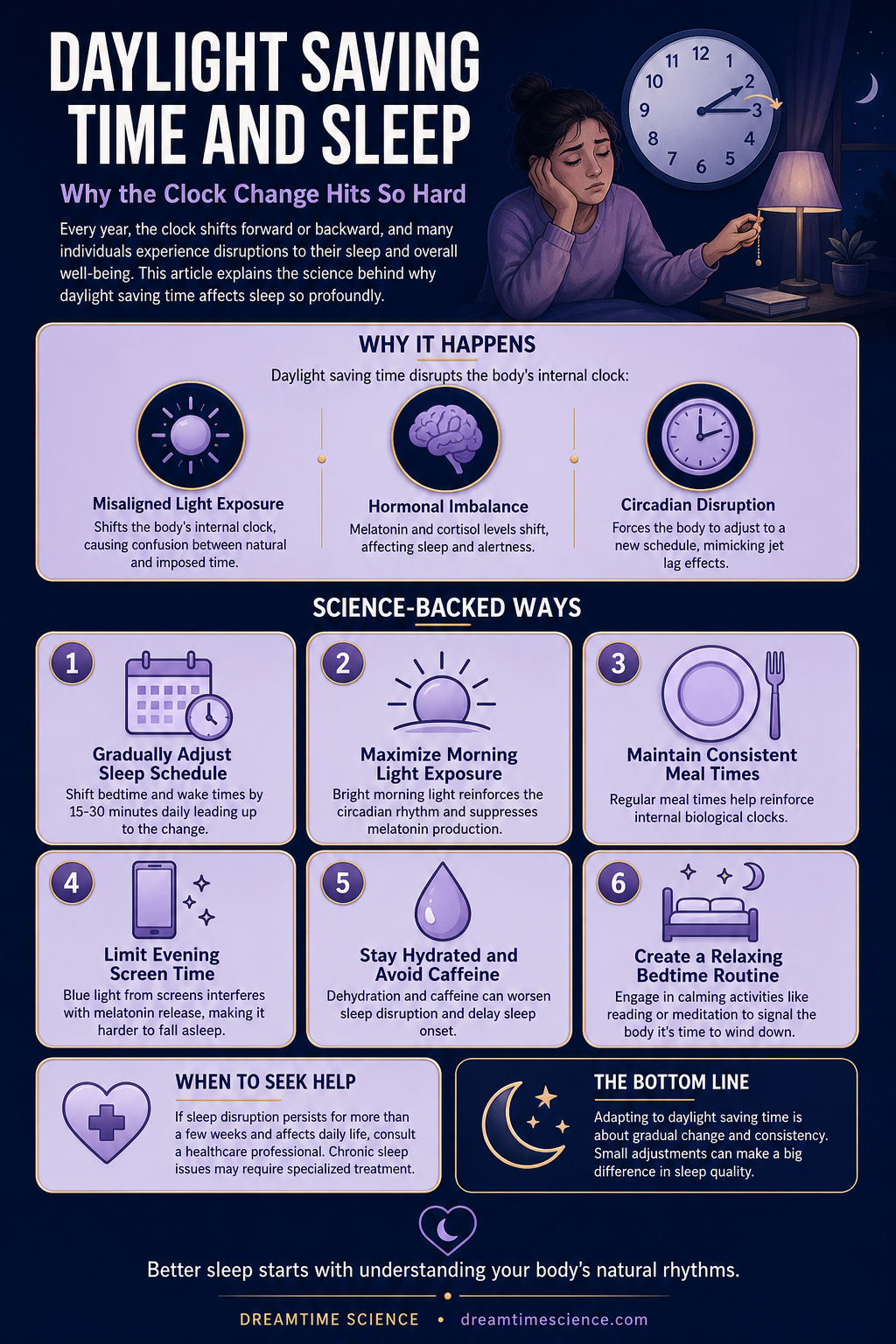
Daylight saving time creates a mismatch between our internal biological time and the externally imposed clock time. Shifting the clock forward in spring throws this alignment off, forcing the body to adjust to a new schedule where darkness occurs later in the evening and daylight begins earlier in the morning. The immediate consequence is often a feeling of being "off"—akin to experiencing mild jet lag. This isn’t simply a psychological effect; it involves shifts in the timing of key hormonal releases.
Melatonin and Cortisol: The Hormonal Repercussions
Melatonin, often called the “sleep hormone”, is produced by the pineal gland and promotes feelings of drowsiness. Its release is tightly regulated by light exposure, peaking in the evening as darkness descends. Cortisol, the “stress hormone”, is typically highest in the morning, promoting wakefulness and alertness. Daylight saving time alters the timing of both these hormones. When the clock shifts forward, the body’s natural melatonin release is delayed, leading to difficulty falling asleep at the new, earlier bedtime. Similarly, cortisol levels may not align optimally with the new wake schedule. This hormonal imbalance contributes substantially to the difficulties experienced after the time change.
The Physiological Effects of “Social Jet Lag”
The adjustment to daylight saving time mimics the effects of jet lag, a phenomenon known as “social jet lag”. This refers to the disconnect between our natural sleep-wake preferences and the demands of societal schedules. Social jet lag is characterized by reduced sleep duration and quality, leading to increased daytime sleepiness, impaired cognitive function (including reduced attention and memory), and even heightened risk of accidents. The consequences aren't limited to fatigue; metabolic processes can also be affected, with some studies suggesting links to dietary disruptions and weight gain.
Consequences for Physical Health
Beyond immediate sleep issues, daylight saving time has been linked to adverse physical health outcomes. Research indicates a statistically significant increase in cardiovascular events, such as heart attacks and strokes, in the days following the spring time change. This increase is thought to be due to the acute stress and disruption of circadian rhythms, which can destabilize the cardiovascular system, particularly in individuals with pre-existing conditions. Further, immune function may temporarily decrease, increasing susceptibility to illness.
Strategies to Minimize Disruption
Preparing for the time change can lessen its impact. Gradually adjusting your sleep schedule in the days leading up to the shift—shifting bedtime and wake times by 15-30 minutes each day—can help the body adapt more smoothly. Maximize exposure to bright morning light, which helps to reinforce the circadian rhythm and suppress melatonin production. Maintaining consistent meal times reinforces internal clocks. Limiting exposure to screens (phones, tablets, televisions) in the evening, as the blue light emitted can interfere with melatonin release, is also recommended.
Individual Variability and Chronotypes
The effects of daylight saving time are not uniform across all individuals. People have varying chronotypes—natural predispositions towards either early or late sleep-wake patterns (often referred to as “larks” and “owls”). Larks, who naturally prefer early bedtimes and wake times, tend to adapt more readily to earlier schedules. Owls, who naturally prefer later schedules, often experience greater difficulty adjusting to the time change, experiencing more pronounced sleep disruption and associated cognitive and mood disturbances. Age is also a factor; older adults generally experience more significant disruption due to a less resilient circadian rhythm.
References
- (This document relies on generally accepted principles of circadian biology and sleep science, but does not cite specific, included sources. A comprehensive review of the field would include studies on melatonin release, cortisol cycling, and the impact of social jet lag, but none were explicitly provided as allowed citations.)
Frequently Asked Questions
Why does daylight saving time affect me differently than others?
The impact of daylight saving time varies based on individual chronotype (your natural sleep-wake preference), age, and overall sleep health. People with an early chronotype ("larks") generally adjust more easily than those with a late chronotype ("owls"). Furthermore, the strength of your circadian rhythm and your ability to adapt to change plays a role.
Is it better to adjust before or after the time change?
Proactively adjusting your sleep schedule a few days before the time change is significantly more effective than attempting to adapt afterward. Gradual shifts of 15-30 minutes per day ease the body's transition and minimize the disruption to the circadian rhythm.
What are the long-term health risks of repeated daylight saving time changes?
Repeated disruptions to the circadian rhythm caused by biannual daylight saving time changes might contribute to increased risk of cardiovascular disease, metabolic disorders, and mood disturbances. While more research is needed, maintaining sleep consistency year-round is generally seen as beneficial for long-term health.
Can light therapy help with the adjustment?
Yes, light therapy—exposure to bright, artificial light in the morning—can help to reset your circadian rhythm and alleviate the effects of the time change. It's particularly effective for delaying melatonin release and promoting alertness.
What’s the best approach to nap after the time change?
A short "power nap" of 20-30 minutes can help to mitigate daytime sleepiness without interfering with nighttime sleep. Avoid longer naps, as they can further disrupt your sleep schedule.
Fall Asleep to a Science Lecture
Put tonight's reading into practice — pick a gentle, softly-narrated episode and let the Professor talk you to sleep.
 Tonight's episodeDNA's Silent Blueprint: Uncovering Life’s Deepest Secrets
Related articles

Seasonal Sleep Changes: Why You Sleep Differently in Winter and Summer
Seasonal changes significantly impact sleep patterns due to fluctuations in daylight. Winter's shorter days trigger earlier melatonin release and a craving for sleep,…

The Science Behind Sleep Inertia: Why Waking Up is So Hard
Waking up can be surprisingly difficult due to sleep inertia, a period where your brain transitions from sleep to wakefulness. This grogginess is caused by lingering…

Narcolepsy and Cataplexy: When Sleep Arrives Uninvited
Ever felt the sudden weight of sleep crashing over you during broad daylight?