
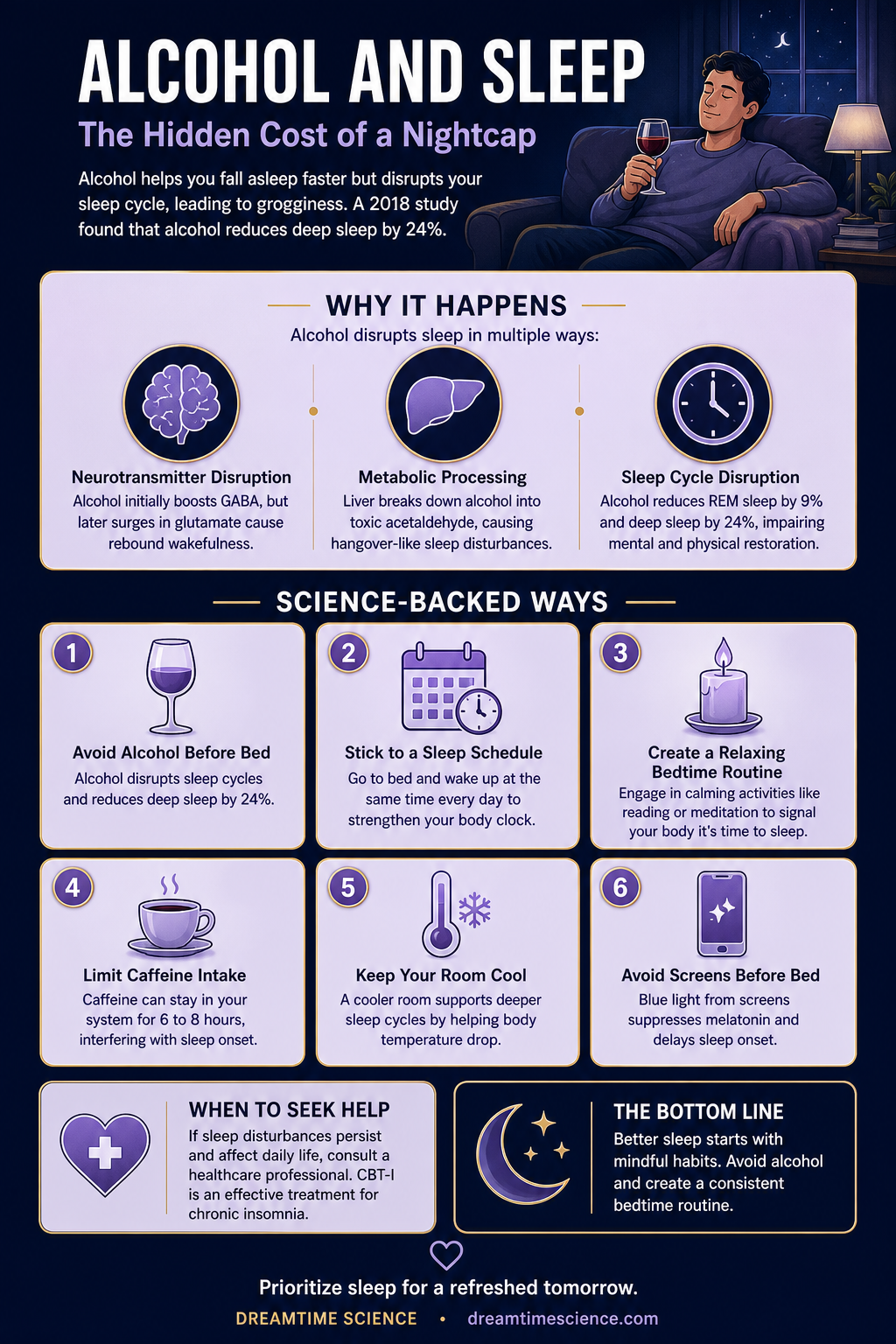
Alcohol initially sedates the body, facilitating a faster onset of sleep, but it ultimately disrupts sleep architecture and diminishes overall sleep quality. This disruption arises from alcohol’s complex interaction with neurotransmitters and its metabolic processes, leading to fragmented sleep, reduced restorative phases, and next-day impairment.
Key takeaways
- Alcohol may initially help you fall asleep faster, but it disrupts sleep later.
- Alcohol suppresses slow-wave sleep, which is important for physical recovery.
- It reduces REM sleep, affecting memory and emotional processing.
- Alcohol metabolism produces toxic compounds that further disturb sleep.
- Frequent alcohol use can negatively impact your circadian rhythm and overall health.
How Alcohol Impacts Sleep Stages
Alcohol consumption alters the normal progression through sleep stages. While it may shorten sleep latency – the time it takes to fall asleep – alcohol predominantly impacts the deeper stages of sleep, particularly slow-wave sleep (SWS) and rapid eye movement (REM) sleep. SWS, crucial for physical restoration and immune function, is suppressed during the first half of the night following alcohol intake, while REM sleep is often significantly reduced, particularly in the latter half of the night. This imbalance can prevent the body from completing essential restorative processes.
The Neurochemical Effects of Alcohol on Sleep
Alcohol exerts its initial sedative effect by enhancing the activity of gamma-aminobutyric acid (GABA), a neurotransmitter responsible for inducing relaxation and reducing neuronal excitability. This potentiation initially promotes drowsiness. However, as the body metabolizes alcohol, GABAergic activity subsides, leading to a rebound excitation due to disinhibition of glutamate, another key neurotransmitter. This shift creates sleep fragmentation and increases the likelihood of awakenings during the second half of the night. The resulting neurochemical imbalance further impedes the consolidation of sleep memories and may contribute to daytime cognitive deficits.
Alcohol Metabolism and Sleep Disruption
The liver metabolizes alcohol at a relatively constant rate of approximately one standard drink per hour, but individual variations based on factors like body weight, sex, and enzyme levels significantly affect this process. As alcohol is broken down, it produces acetaldehyde, a toxic intermediate compound that can trigger sleep disturbances and contribute to hangover symptoms. Furthermore, the metabolic effort required to process alcohol can disrupt the normal physiological processes that regulate sleep-wake cycles, and stimulate cortisol release, contributing to fragmented sleep and early morning awakenings.
REM Sleep Deprivation from Alcohol Consumption
REM sleep is essential for cognitive function, emotional processing, and memory consolidation. Alcohol significantly reduces the duration and quality of REM sleep, particularly during the latter portion of the night when the effects of the alcohol have begun to wear off. This deprivation can result in impaired learning, reduced problem-solving abilities, and mood disturbances. Repeated disruption of REM sleep through frequent alcohol consumption may contribute to long-term cognitive deficits.
Impact on the Circadian Rhythm
Alcohol can also disrupt the circadian rhythm, the body’s internal clock that regulates sleep-wake cycles. While a small amount of alcohol may initially overlap with the circadian “sleep window,” larger amounts interfere with the timing of melatonin secretion and core body temperature regulation. This interference can make it difficult to fall asleep at a regular time and to maintain consistent sleep patterns, exacerbating insomnia and daytime fatigue.
The Effects of Alcohol on Sleep and Physical Health
The combination of disrupted sleep stages and circadian rhythm dysregulation has downstream impacts on physical health. Reduced deep sleep and impaired REM sleep diminish hormone regulation, including growth hormone and cortisol, vital for muscle repair and immune function. Chronic sleep disruption stemming from regular alcohol use is associated with increased risk of cardiovascular disease, weakened immune response, and metabolic disorders. Additionally, the dehydrating effects of alcohol can induce headaches and worsen pre-existing sleep conditions..
Alcohol and Existing Sleep Disorders
Individuals with pre-existing sleep disorders, such as insomnia or sleep apnea, are particularly vulnerable to the negative effects of alcohol. Alcohol may initially mask the symptoms of insomnia by inducing sedation, but it ultimately exacerbates the underlying condition due to its effects on sleep architecture. Similarly, for individuals with sleep apnea, alcohol relaxes throat muscles, potentially worsening airway obstruction and increasing the frequency and severity of apneic events, leading to reduced oxygen saturation and increased cardiovascular risk.
Frequently Asked Questions
Does drinking alcohol before bed actually help me sleep?
While alcohol might initially help you fall asleep faster, it significantly disrupts sleep quality later in the night. The initial sedative effect is followed by fragmented sleep, reduced slow-wave and REM sleep, and increased likelihood of awakenings.
How long do the negative effects of alcohol on sleep last?
The duration of alcohol’s impact on sleep depends on the amount consumed and individual metabolic rates. However, even a single episode of heavy drinking can result in sleep disruption for one or more nights, and chronic alcohol use can lead to persistent sleep problems.
Why do I feel so tired the day after drinking, even if I slept for 8 hours?
The fatigue experienced after drinking, despite adequate sleep duration, is a result of reduced sleep quality. The disruption of restorative sleep stages, like slow-wave and REM sleep, prevents the body from fully recovering, leaving you feeling groggy and unrefreshed.
Can I counteract the negative effects of alcohol on sleep by drinking more water?
While hydrating can help mitigate some of the mild symptoms associated with alcohol, like headache and dehydration, it will not fully reverse the negative effects on sleep architecture and circadian rhythm. The best strategy involves limiting alcohol intake and allowing sufficient time for the body to metabolize it.
Is it safe to combine alcohol with over-the-counter sleep aids?
Combining alcohol with sleep aids is generally not recommended and can be dangerous. Both substances depress the central nervous system, potentially leading to increased sedation, respiratory depression, and other adverse effects.
What is the best way to improve sleep quality if I regularly consume alcohol?
Reducing or eliminating alcohol consumption is the most effective strategy for improving sleep. If you choose to drink, do so in moderation and avoid consumption at least 3-4 hours before bed. Prioritizing a consistent sleep schedule, creating a relaxing bedtime routine, and maintaining a sleep-conducive environment can also help maximize sleep quality.
Fall Asleep to a Science Lecture
Put tonight's reading into practice — pick a gentle, softly-narrated episode and let the Professor talk you to sleep.
 Tonight's episodeDNA's Silent Blueprint: Uncovering Life’s Deepest Secrets
Related articles

Sleep and Digestion: Why You Shouldn't Eat Right Before Bed
Eating a meal too close to bedtime forces your body to digest while it should be resting, potentially leading to restlessness and delayed sleep. A 2015 study found…

Sleep and Blood Sugar: How Rest Affects Your Glucose Levels
Insufficient sleep significantly impacts blood sugar regulation. Studies show individuals sleeping less than six hours a night face a 32% higher risk of type 2…

How Caffeine Affects Your Sleep and When to Stop Drinking It
Caffeine's half-life averages 5 to 6 hours, meaning that consumption even six hours before bedtime can significantly disrupt sleep.