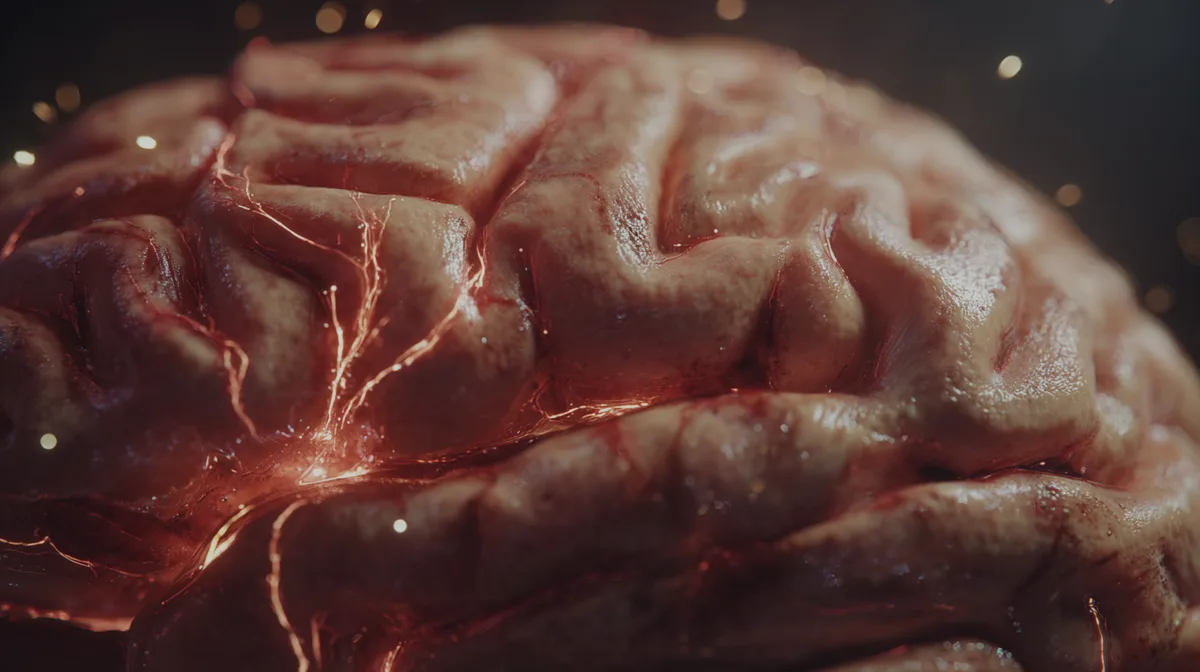
The short answer: You cannot learn entirely new information while asleep, but sleep plays a critical role in consolidating what you learned while awake. During slow-wave sleep, the hippocampus replays memories and transfers them to long-term cortical storage. Studies show that targeted memory reactivation using sounds or scents during sleep can strengthen specific memories by 10-20%.
The assertion that one can learn entirely new information during sleep is inaccurate, though sleep is undeniably critical for the consolidation of memories formed during wakefulness. During slow-wave sleep (SWS), the hippocampus replays recent experiences, facilitating the transfer of these memories to long-term cortical storage [1]. While comprehensive learning during sleep remains improbable, research, particularly involving Targeted Memory Reactivation (TMR), demonstrates a potential for strengthening established memories through carefully timed external cues [1].
Key takeaways
- Sleep primarily strengthens existing memories, rather than creating new ones.
- Studying information before sleep improves recall by reinforcing memory consolidation.
- Targeted Memory Reactivation can enhance recall of previously learned material.
- Implicit learning, like unconscious preferences, can occur during sleep but is limited.
- Sleep, especially SWS and REM, is crucial for consolidating motor skills.
Can You Learn While Sleeping?
Early attempts at “sleep learning” – specifically, delivering educational content via audio playback during sleep – were largely unsuccessful [3]. Current evidence clarifies that explicit learning—the conscious recall of new facts, concepts, or skills—is considerably limited during sleep. However, the brain is not inactive during sleep; rather, it remains capable of processing information, notably during SWS [1]. During SWS, the hippocampus repeatedly replays recently formed memories, suggesting an active role in memory organization, integration, and transfer, though this replay does not constitute the acquisition of novel knowledge [4]. The brain exhibits a distinct physiological state during sleep, conducive to specific types of processing, but not wholesale learning.
Learning While Sleeping: The Mechanism of Memory Consolidation
Memory consolidation is the primary mechanism driving observable effects from attempts to “learn while sleeping”. The core process involves the transfer of memories from the hippocampus, responsible for short-term storage, to the neocortex, enabling long-term retention [1, 2]. Studying before sleep leverages this process, consistently leading to improved recall compared to equivalent study periods preceding wakeful activity [2]. This replay during SWS effectively reinforces neural connections, increasing their resistance to forgetting [7]. The quality of sleep demonstrably impacts the effectiveness of consolidation; sleep deprivation directly hinders declarative memory formation and retention [8]. Chronic sleep disturbances, as seen in conditions like Myalgic Encephalomyelitis/Chronic Fatigue Syndrome, further exemplify this link between sleep quality and cognitive function [3].
Sleep Learning and Targeted Memory Reactivation
Targeted Memory Reactivation (TMR) is a technique designed to manipulate the endogenous memory consolidation process. This involves re-exposing individuals to cues associated with previously learned information while they are asleep. For example, playing a sound that was present during the initial learning phase can trigger the replay of the related memory [3]. Studies show TMR can improve recall of paired-associate learning—remembering associations between stimuli—by reactivating neural activity linked to the original learning experience [4]. The effect size is variable, dependent on factors such as the complexity of the material and the precise timing of cue presentation within the sleep cycle, but overwhelmingly demonstrates strengthening of existing memories, not the generation of new ones.
Implicit Learning in Sleep: Evidence and Limitations
While explicit learning is minimal during sleep, research suggests the sleeping brain can engage in some forms of implicit learning. A study demonstrated that participants exposed to word pairings during SWS exhibited an unconscious preference for the associated terms during a subsequent test, despite lacking conscious recall of the pairings [4]. This suggests the brain can establish new associations even without conscious awareness. However, this implicit learning is limited in scope and does not translate to the acquisition of complex skills or knowledge, and is therefore not a viable method of comprehensive learning.
Motor Skill Consolidation & Sleep's Role
Sleep is particularly vital for consolidating motor skills. Research consistently shows that sleep following the practice of a new motor task leads to improvements in performance exceeding those observed after equivalent periods of wakeful rest [7]. During sleep, brain regions associated with motor control replay the learned task, refining neural circuits and optimizing performance. This consolidation process is thought to involve the reactivation of task-specific neural patterns, enhancing skill acquisition [7]. This benefit of sleep extends to different types of motor learning, from sequence recall to precise movement calibration.
The Significance of Sleep Stages for Effective Learning
Distinct stages of sleep contribute differentially to memory consolidation. Slow-wave sleep (SWS) is critical for the consolidation of declarative memories—facts and events [1]. Rapid eye movement (REM) sleep, conversely, appears more important for consolidating procedural memories—skills and habits [2]. Replay activity is observed in both SWS and REM sleep, highlighting the interactive role of these stages in overall consolidation [1, 4]. Precise timing of external cues during these stages is critical for effective TMR; optimal effects often occur during specific phases of SWS [3]. Understanding these stage-specific roles allows for targeted interventions, maximizing consolidation efficiency.
References
- Antony JW, Schechtman E (2023). Reap while you sleep: Consolidation of memories differs by how they were sown.. Hippocampus. doi:10.1002/hipo.23526
- Flavell SW, Raizen DM, You YJ (2020). Behavioral States.. Genetics. doi:10.1534/genetics.120.303539
- Bested AC, Marshall LM (2015). Review of Myalgic Encephalomyelitis/Chronic Fatigue Syndrome: an evidence-based approach to diagnosis and management by clinicians.. Reviews on environmental health. doi:10.1515/reveh-2015-0026
- Mar'i J, Zhang R, Mircic S et al. (2025). Study while you sleep: using targeted memory reactivation as an independent research project for undergraduates.. Advances in physiology education. doi:10.1152/advan.00056.2024
- Yin C, Zhang M, Jin S et al. (2024). Mechanism of Salvia miltiorrhiza Bunge extract to alleviate Chronic Sleep Deprivation-Induced cognitive dysfunction in rats.. Phytomedicine : international journal of phytotherapy and phytopharmacology. doi:10.1016/j.phymed.2024.155725
- Barley BK, Walter C, Orselli P et al. (2023). Rapid sleep education: If you could tell people one thing about sleep, what should it be?. Journal of sleep research. doi:10.1111/jsr.13765
- Stickgold R (2006). Neuroscience: a memory boost while you sleep.. Nature. doi:10.1038/nature05309
- Sengpiel F (2001). Cortical plasticity: learning while you sleep?. Current biology : CB. doi:10.1016/s0960-9822(01)00383-9
Frequently Asked Questions
Can you learn a new language while sleeping?
No, acquiring fluency through passive listening during sleep is highly improbable. However, sleep can assist in consolidating vocabulary learned while awake. Listening to a language before bed may reinforce recently acquired words through leveraging the mechanisms of memory consolidation.
What exactly happens during memory consolidation?
During sleep, the hippocampus replays recent experiences, transferring information from short-term to long-term storage in the neocortex. This process strengthens synaptic connections, making memories more durable and accessible for later recall.
Is it better to study before bed than during the day?
Yes, multiple studies indicate that studying before sleep significantly enhances memory retention. Sleep acts as a natural memory consolidator, effectively solidifying learned material.
Can you learn while you sleep using sounds or scents?
Research on TMR suggests that cues associated with previously learned information—such as specific sounds or scents—can enhance recall when presented during sleep. This strengthens existing memories, but does not facilitate the acquisition of entirely new concepts.
Does sleep learning work for all types of memory?
Sleep appears particularly effective for consolidating declarative (facts and events) and procedural (skills and habits) memories. The optimal sleep stage for consolidation varies depending on the nature of the information being learned, with SWS prioritizing declarative memories and REM prioritizing procedural memories.
Why is sleep so important for learning and memory?
Sleep provides a dedicated period for the brain to replay, process, and consolidate information acquired during wakefulness. Insufficient sleep impairs the brain’s ability to efficiently transfer memories into long-term storage, resulting in reduced recall and diminished learning capacity [8].
Fall Asleep to a Science Lecture
Put tonight's reading into practice — pick a gentle, softly-narrated episode and let the Professor talk you to sleep.
 Tonight's episodeHow Gravity Can Bend Time: The Cosmic Clock Puzzle
Related articles

Sleep Learning: Optimizing Memory Consolidation During Sleep
Sleep learning aims to strengthen existing memories or facilitate the consolidation of recently learned information while asleep, rather than acquiring entirely new…
Learn in Your Sleep: The Science of Sleep-Dependent Memory Consolidation
While you can't learn entirely new, complex information during sleep, research shows that memory consolidation, particularly for declarative facts and procedural…
Sleep Deprivation's Impact on Memory, Learning, and Your Immune System
After 24 hours without sleep, cognitive impairment equals a blood alcohol level of 0.10%, beyond the legal driving limit. Reaction times slow by 300%, emotional…