You might not even know it's happening.
But your jaw does.
Teeth grinding, or bruxism, is the midnight symphony that's more clatter than lullaby. If you've ever woken up with an aching jaw or a headache that shouldn't be there, it might be your body's way of telling you your sleep isn't as peaceful as it seems.
Bruxism is the name for this nocturnal gnashing, and it's surprisingly common. But why does it happen, and what can you do to ease the cacophony?
The Silent Sleep Saboteur
Most people think of sleep as a still, silent time. Yet for those who grind their teeth, the night is far from quiet.
Bruxism often sneaks up on you. You're asleep, after all. But your jaw has a mind of its own, clenching and grinding, sometimes with the force strong enough to crack a walnut. Your teeth are soldiers, standing guard against the stressors of the day, even when you're supposed to be at rest.
This isn't just an adult issue. Kids can grind too. Stress, anxiety, misaligned teeth, or even hyperactivity can trigger that nocturnal jaw dance.
But, you ask, how can something that happens when I'm unconscious be so impactful? The answer lies in the physical toll it takes on your body.
The Science of Stress
You're not imagining it: stress is a major player in the bruxism saga.
Your day might be filled with silent stressors, lurking behind deadlines, personal worries, or even unresolved emotions. When night falls, your conscious mind might sleep, but your subconscious simmers.
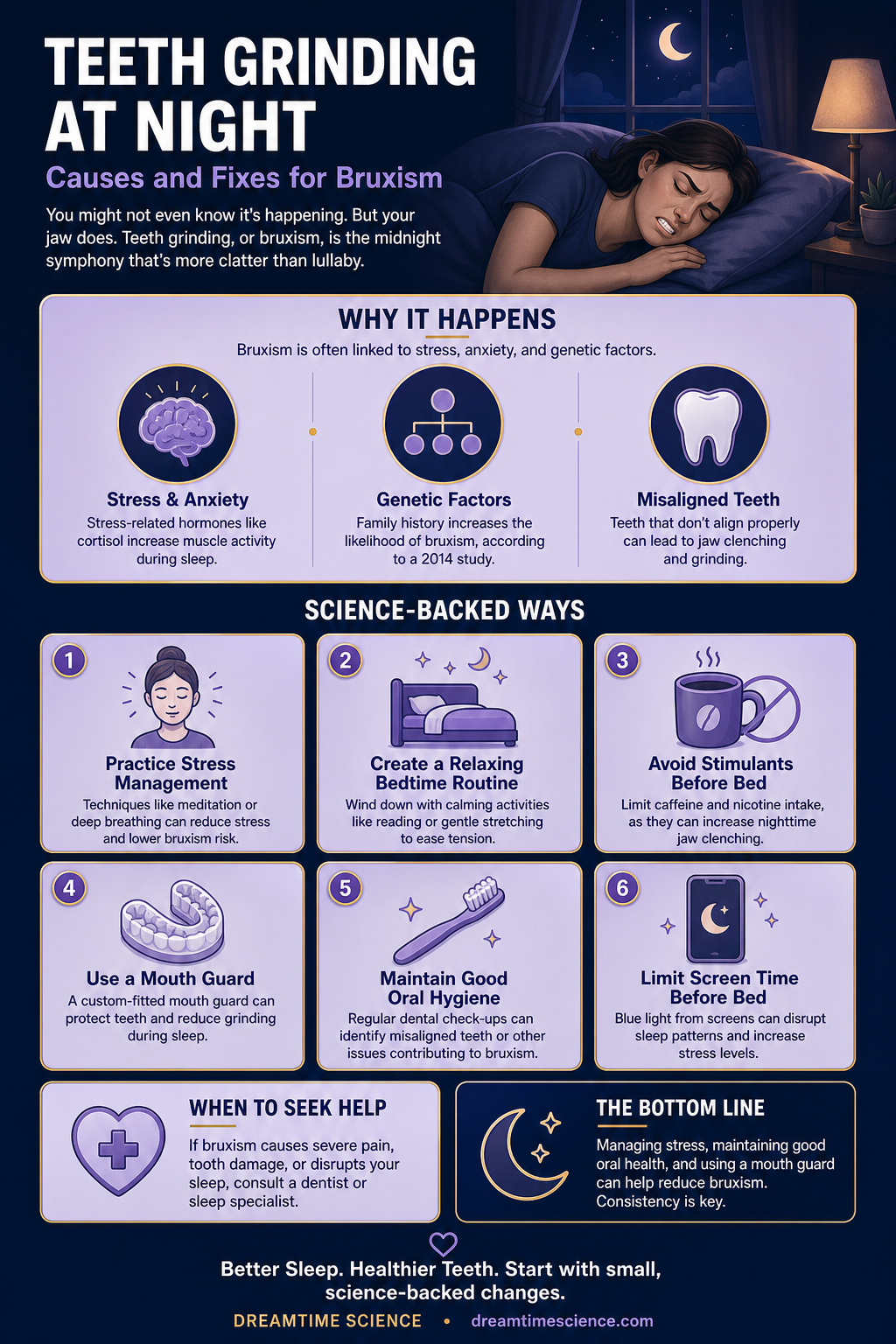
Enter bruxism, the body's ill-fated attempt to process stress, manifesting as jaw clenching and teeth grinding. It's not just a bad dream—it's a sign your mind is still working overtime. According to a 2019 study in the Journal of Oral Rehabilitation, stress and anxiety are significant predictors of bruxism, with the condition affecting approximately 8-31% of the population depending on stress levels.
When we clench our teeth during sleep, we're often unconsciously responding to the tension built up during waking hours. This tension triggers the release of stress-related hormones like cortisol, which can increase muscle activity during sleep—a vicious cycle that keeps the grind going.
What This Means for You
So what can you do? In the next sections, we'll explore practical steps like stress management techniques and lifestyle changes that can help reduce bruxism. Creating a relaxing bedtime routine is a great start, as we discuss in The Perfect Bedtime Routine According to Sleep Scientists.
Habit or Heredity?
Here's a twist: you might have inherited this nocturnal habit.
Bruxism isn't just nurtured by stress; it can be a gift (or curse) from your family tree. A 2014 study in the Journal of Dental Research found that individuals with a family history of bruxism are more likely to exhibit this behavior themselves.
But genetics isn't the only factor. Habits formed over time, like chewing gum excessively or biting nails, can condition your jaw muscles to be perpetually primed for action. It's a complex dance between nature and nurture. Yet, the impact is undeniable: worn teeth, sore jaws, and disrupted slumber.
What This Means for You
Understanding your personal triggers for bruxism can guide your approach to treatment. If family history plays a role, consider discussing it with your dentist for tailored advice.
Night Guard: Your Sleep Savior
A beacon of hope in the world of bruxism comes in the form of a night guard. Picture it as armor for your teeth, cushioning the relentless grind.
Night guards are custom-made shields, fitting snugly and comfortably. They create a barrier between your upper and lower teeth, reducing wear and tear. A 2017 study in the Journal of Prosthetic Dentistry demonstrated that night guards significantly decrease the force of grinding, protecting teeth from damage.
But more than protection, they offer peace of mind. You can drift into dreamland knowing your teeth are safe, your jaw is resting, and the symphony of grinding is silenced.
Beyond the Guard: Lifestyle Adjustments
A night guard isn't the only player in the bruxism ballet.
Lifestyle tweaks can be as effective as they are simple. Reducing caffeine and alcohol, especially before bed, can calm the mind. This ties into our discussion on How Caffeine Affects Your Sleep and When to Stop Drinking It. Practicing relaxation techniques like meditation or deep breathing before sleep can soothe an overstimulated nervous system, as outlined in Breathing Techniques for Sleep: How Your Breath Affects Rest.
Even something as straightforward as a warm bath can ease tension, signaling to your body that it's time to unwind, not wind up.
Quick Lifestyle Adjustments:
1. Limit stimulants: Avoid caffeine and nicotine close to bedtime. 2. Manage stress: Engage in calming activities like reading or listening to music. 3. Create a sleep-friendly environment: Dim the lights, and use white noise if necessary. 4. Consistent sleep schedule: Go to bed and wake up at the same time every day.
The key is creating an environment—and a routine—that encourages both body and mind to let go.
Your Path to Quieter Nights
Bruxism doesn't have to own your nights.
Understanding its root causes, whether stress, heredity, or habits, is the first step to reclaiming restful sleep. With the right tools and adjustments, you can transform your nights from a clatter of teeth to a symphony of silence.
Remember, teeth grinding isn't just noise—it's a message your body is sending. Listen, adapt, and with time, find your way back to peaceful dreams.
Conclusion
Bruxism is more than just a nighttime nuisance—it's a signal of stress or inherited patterns. By understanding its causes and implementing gentle lifestyle shifts, you can protect your teeth and reclaim restful nights.
Want to experience these sleep science concepts with our soothing narration and ambient soundscapes? Check out our latest video on YouTube @dreamtimescience.
Frequently Asked Questions
What causes bruxism?
Bruxism is primarily caused by stress and anxiety. Other factors include genetic predisposition and habits like gum chewing or nail biting. According to a 2019 study in the Journal of Oral Rehabilitation, stress is a significant predictor of bruxism. Additionally, sleep disorders such as sleep apnea can exacerbate bruxism, as noted in research published in the Journal of Clinical Sleep Medicine.
Can children experience bruxism?
Yes, children can also grind their teeth. Stress, misaligned teeth, and hyperactivity are common triggers for pediatric bruxism. It's essential to monitor and consult a pediatric dentist if symptoms persist. The prevalence in children can be as high as 40%, according to a study in the International Journal of Pediatric Dentistry.
How do I know if I grind my teeth at night?
If you wake up with jaw pain, headaches, or notice worn-down teeth, you might be grinding your teeth at night. A dentist can confirm this diagnosis through a detailed examination. They may also recommend a sleep study to rule out other sleep disorders that could be contributing to the issue.
Is bruxism harmful?
Yes, prolonged teeth grinding can lead to dental damage, jaw pain, and headaches. A 2017 study in the Journal of Prosthetic Dentistry found that night guards can significantly reduce grinding force, minimizing harm. Chronic bruxism can also lead to temporomandibular joint disorder (TMJ), which requires further medical intervention.
Can lifestyle changes reduce bruxism?
Absolutely. Incorporating stress management techniques and reducing stimulant intake can help. Creating a relaxing bedtime routine is crucial to minimize nighttime grinding. Regular exercise and cognitive behavioral therapy (CBT) have also shown promise in reducing stress-induced bruxism, as discussed in the Journal of Clinical Psychology.
Fall Asleep to a Science Lecture
Put tonight's reading into practice — pick a gentle, softly-narrated episode and let the Professor talk you to sleep.
 Tonight's episodeUnveiling the Mind's Labyrinth