
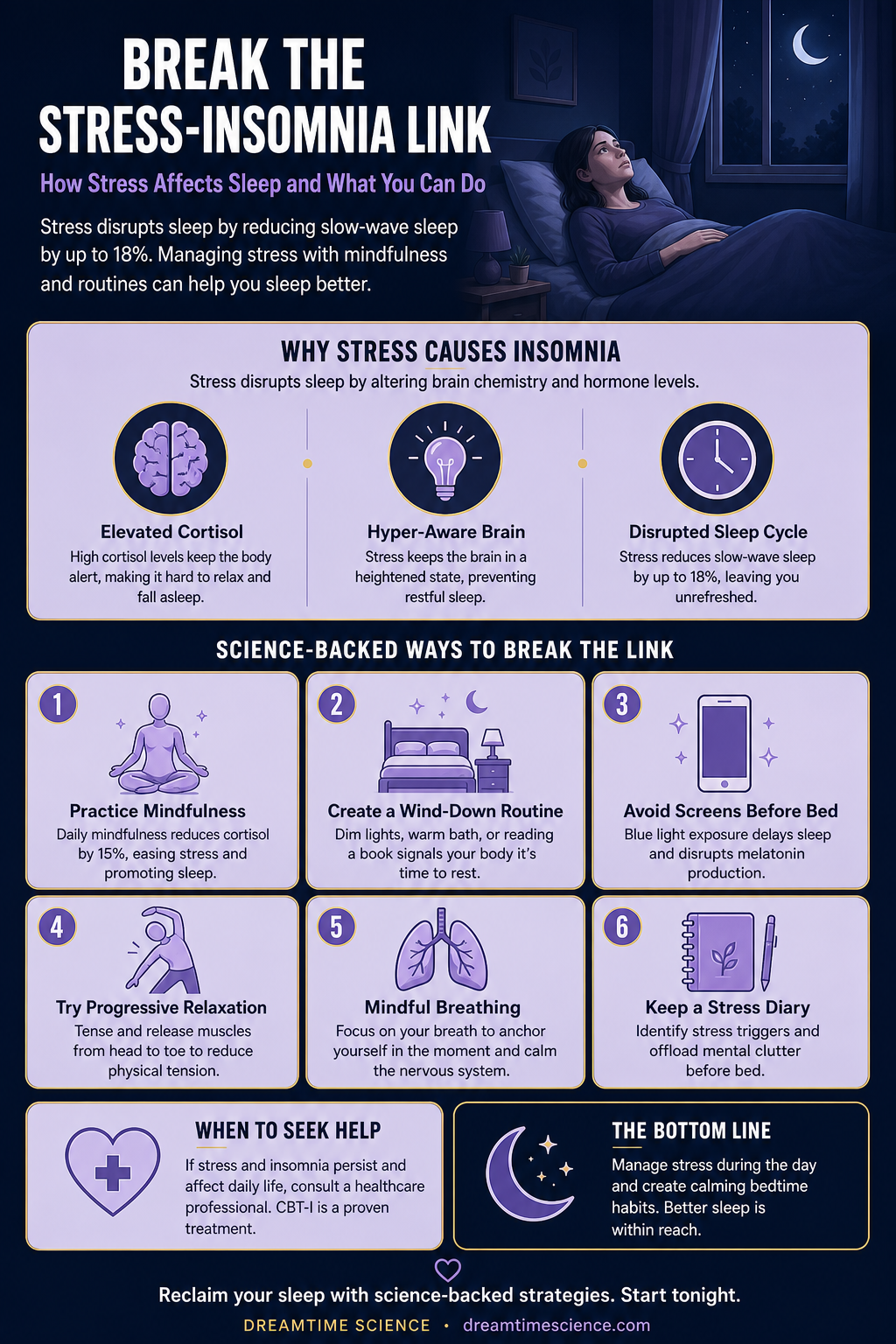
The short answer: Stress significantly disrupts sleep architecture, notably reducing slow-wave sleep, a restorative stage, by up to 18% according to a 2016 study. Elevated cortisol levels, driven by stress, keep the body in a heightened state of alert, making it difficult to relax and fall asleep. Breaking this cycle involves daily stress management techniques like mindfulness, which can lower cortisol levels by 15%, and establishing a relaxing bedtime routine to signal your body it's time to rest.
Stress significantly disrupts sleep architecture, notably reducing slow-wave sleep, a restorative stage, and elevated cortisol levels keep the body in a heightened state of alert, inhibiting the onset of sleep [1]. Breaking this cycle requires consistent stress management strategies and establishing behavioral routines that promote relaxation and sleep homeostasis.
The Reciprocal Relationship Between Stress and Insomnia
Stress and insomnia commonly coexist in a reciprocal relationship; stress is a significant contributor to the development and maintenance of insomnia, and conversely, insomnia can exacerbate perceived stress levels [1]. This creates a feedback loop where the challenges of falling or staying asleep actively increase stress, further impairing sleep. The impact of even minor stressors can be amplified when sleep is compromised, leading to a chronic state of hyperarousal.
How the Stress Response Impacts Sleep Stages
The physiological response to stress involves the activation of the hypothalamic-pituitary-adrenal (HPA) axis, resulting in the release of cortisol. While cortisol is essential for adaptive responses during acute stress, chronically elevated levels interfere with typical sleep patterns. Specifically, stress reduces the proportion of slow-wave sleep (SWS), also known as deep sleep, by as much as 18% [1]. SWS is critical for physical restoration, immune function, and memory consolidation, and its reduction leads to subjective feelings of unrefreshed sleep upon waking. Additionally, increased cortisol can also suppress the production of melatonin, a hormone essential for regulating the sleep-wake cycle.
The Role of Negative Mood in the Stress-Insomnia Cycle
The experience of stress is often accompanied by negative affect – feelings of anxiety, depression, and irritability. A recent study demonstrated that negative mood mediates the relationship between perceived stress and vulnerability to insomnia among student pharmacists [1]. This suggests that the cognitive and emotional consequences of stress are pivotal to the development of sleep difficulties. Rumination, worry, and catastrophic thinking are frequently associated with nighttime wakefulness and contribute to hyperarousal, making it more difficult to initiate and maintain sleep.
Physiological Mechanisms Linking Stress to Sleep Disruption
Beyond cortisol and melatonin, several other physiological changes drive the stress-insomnia connection. Increased heart rate and blood pressure, typical of the stress response, promote alertness and prevent the transition into sleep. Activation of the sympathetic nervous system, responsible for the “fight or flight” response, further inhibits sleep-promoting brain activity. The orexin system, which regulates wakefulness, tends to be overactive in individuals experiencing chronic stress, overriding the homeostatic drive for sleep.
Key Takeaways for Breaking the Cycle
Successfully addressing stress-related insomnia requires a multifaceted approach focused on both reducing stress and improving sleep hygiene. Daytime stress management techniques – including exercise, mindfulness meditation, and social support – are critical for dampening the HPA axis and mitigating the negative emotional consequences of stress. Behavioral interventions, such as stimulus control therapy and sleep restriction therapy, help to re-establish a strong association between the bed/bedroom and sleep. A consistent sleep schedule, even on weekends, also helps synchronize the body’s internal clock.
References
- Salahuddin MF, Samuel BI, Bugingo R et al. (2025). The Mediating Role of Negative Mood Affect in the Relationship Between Perceived Stress and Vulnerability to Insomnia Among Student Pharmacist Shift Workers.. Nature and science of sleep https://doi.org/10.2147/nss.s515923
Frequently Asked Questions
Why does stress make it difficult to fall asleep?
Stress triggers the release of cortisol and activates the sympathetic nervous system, both of which promote alertness and prevent the relaxation necessary for sleep onset. This physiological arousal makes it harder to quiet the mind and body, delaying the start of sleep.
Can mindfulness and meditation help with insomnia related to stress?
Yes, mindfulness and meditation have been demonstrated to reduce cortisol levels, decrease negative affect, and promote relaxation [1]. Regular practice can help individuals detach from worrisome thoughts and cultivate a sense of calm, improving sleep quality and duration.
What is stimulus control therapy and how does it address insomnia?
Stimulus control therapy aims to strengthen the association between the bed and sleep. This involves going to bed only when sleepy, using the bed only for sleep and sex, and getting out of bed if unable to fall asleep within 20 minutes.
How does sleep restriction therapy work for stress-related insomnia?
Sleep restriction therapy temporarily limits the amount of time spent in bed, creating mild sleep deprivation that increases sleep drive. This can lead to more consolidated sleep when the individual eventually returns to bed, improving sleep efficiency. It's best done with guidance from a sleep specialist.
Is it possible to manage stress-related insomnia without medication?
Yes, many individuals successfully manage stress-related insomnia through behavioral interventions, stress management techniques, and improved sleep hygiene practices. These non-pharmacological approaches address the underlying causes of insomnia and promote long-term sleep improvements.
What role does a regular sleep schedule play in managing stress and sleep?
Maintaining a consistent sleep schedule, even on weekends, helps synchronize the body’s circadian rhythm, which regulates sleep-wake cycles. This can improve the timing and quality of sleep, as well as reduce daytime stress levels.
Fall Asleep to a Science Lecture
Put tonight's reading into practice — pick a gentle, softly-narrated episode and let the Professor talk you to sleep.
 Tonight's episodeDNA's Silent Blueprint: Uncovering Life’s Deepest Secrets
Related articles

Cognitive Behavioral Therapy for Insomnia (CBT-I): Evidence-Based Sleep Fixes
CBT-I is the gold-standard treatment for chronic insomnia, recommended as first-line therapy over sleeping pills by every major medical body. It combines sleep…

The Science of Meditation for Sleep: How Mindfulness Impacts Rest
Meditation offers a powerful, accessible tool for improving sleep quality by calming mental chatter and promoting relaxation. A 2015 study showed mindfulness…

The Science of Why You Can't Sleep: Understanding the Insomnia Cycle
Insomnia becomes self-perpetuating because worrying about sleep triggers a stress response that makes sleep impossible. This creates a conditioned arousal where the…