Ancient Echoes of Modern Machines
This part will cover the prehistoric origins of computers, weaving in references from various cultures and science fiction.
In the hush of night, as the world narrows to a gentle murmur and the mind grows receptive to the softest of stories, let us drift backwards—far, far past the glowing screens and humming circuits of modernity, back into the mists where history dissolves into legend. Close your eyes and listen. The tale we follow tonight is not merely of machines, but of the human yearning to capture knowledge, to count, to remember, and to dream of minds outside our own.
Long before the whisper of electricity, before binary code and silicon, there was the endless landscape of early humanity: a world lit by firelight and the constellations. In these ancient times, every rock, every stick, every shadow carried a potential purpose. And so, the first echoes of computation began not with metal or glass, but with the most fundamental of questions: how many? How much? When will the sun return? The urge to count is the quiet heartbeat of the ages.
Picture a small group of hunter-gatherers upon the cusp of dawn, crouched near the dying embers of a communal fire. Their faces are painted by flickering gold, and in their hands lie bones—animal bones, carefully notched with parallel lines. These marks are not random. They speak, in their own silent language, of days counted, animals hunted, perhaps debts owed or seasons measured. The Lebombo bone, found millennia later in the mountains of Swaziland, bears 29 carved notches, a tally that may have traced the cycles of the moon or the rhythm of a woman’s body. Was this a calendar, a ledger, or something more mysterious? We can only guess, but in those notches is a glimmer of abstraction—an urge to externalize memory, to make the invisible visible.
Across continents and centuries, the need to record and calculate reappeared in myriad forms. In the lands that would become Iraq, the Sumerians pressed tokens into clay, encoding transactions, inventories, and perhaps the first contracts. A mere pebble pressed into wet earth—yet from such gestures, the ledger was born. These tokens became numbers, then cuneiform script; abstraction upon abstraction, each layer distancing the knowledge from the body and embedding it in the world.
Move forward, gently, to the shores of Lake Titicaca, where the Inca devised their own answer to computation. The quipu: a cascade of colored strings, knotted in intricate patterns, each knot and hue signifying information—crops harvested, taxes owed, victories won. The quipu was more than a memory aid; it was a distributed brain, a logic device woven from wool and human intention. In the quipu, we glimpse a proto-algorithm, a way for knowledge to be encoded, stored, and retrieved long after the knotted fingers have stilled.
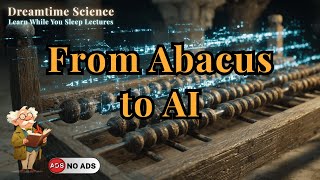
The abacus, too, deserves its hour in this quiet parade. Whether in China, Rome, or the sands of Mesopotamia, small stones or beads were slid along grooves or wires, their positions embodying numbers, their movements performing calculations. The abacus is a simple machine, yet it is also a theater: a stage where symbols are made to dance, guided by the touch of a human hand. Here, the boundary between mind and tool blurs. Are we counting, or is the abacus counting for us? The answer, as with so much in the prehistory of computation, is both.
Yet these tools, for all their ingenuity, were still bound to the bodies and memories of those who used them. They extended the mind, but did not replace it. The dream of a machine that could reason—truly think—remained a distant glimmer, flickering in the darkness.
It is in these ancient innovations that one finds the seed of a longing that transcends mere arithmetic. What if thought itself could be externalized, made concrete and reliable in a way that memory and flesh could never be? This is a question that haunted sages and storytellers alike, its echo reverberating through the mythologies of many cultures.

In the shadowed temples of Egypt, legends told of Thoth, the ibis-headed god of wisdom, who invented writing—a technology that, in Plato’s retelling, was both boon and bane. Writing, Plato cautioned, would erode memory, for people would trust the written marks over the stories held in their own minds. Yet, in this very act—the transfer of trust from mind to matter—lies the germ of the computer: a tool to remember for us, to think for us, to embody logic outside ourselves.
Turn to ancient Greece, and you find the myth of Talos, a bronze automaton forged by Hephaestus. Talos patrolled the shores of Crete, a being of metal and will, a protector and an enigma. Was Talos merely a statue brought to life, or an early fantasy of artificial intelligence—a being governed by rules, yet capable of action? The ancients imagined what they could not build, and in their stories, they prefigured the machines that would one day emerge from silicon and code.
Consider, too, the curious case of the Antikythera mechanism, a device lost at sea for two thousand years before being dredged up by chance from a shipwreck near a Greek island. This corroded jumble of gears and dials proved to be an analog computer, built to predict the movements of the sun, moon, and planets. Its complexity is astonishing, its origins mysterious. Who conceived so intricate a device, and how was its knowledge passed down or lost? The Antikythera mechanism is a whisper from a vanished world—a reminder that the dream of computation is not new, but ancient, woven into the fabric of human curiosity.
In China, stories from the Han dynasty tell of Yan Shi, an artificer who presented the king with a mechanical man, crafted from leather, wood, and metal. This automaton could walk, sing, and gesture—a marvel to behold. The king, uneasy at the lifelike qualities of the device, ordered it dismantled. Was this merely legend, or a distorted memory of early engineering feats? Fact and fable blur at their edges, yet both point to a fascination with the idea of mind in matter, of logic embedded in mechanism.
The ancient Indian epic, the Mahabharata, speaks of yantras—magical machines and automata that served in palaces or on battlefields. These stories, like those of Talos and Yan Shi’s automaton, echo through time, their patterns recurring in later dreams of artificial life and mechanical intelligence.
Even in the cold, windswept north, the Norse told tales of magical rings and talking heads—devices that could answer questions, predict the future, and store secret knowledge. The mythic head of Mimir, preserved and consulted by Odin himself, is an oracle, a proto-computer of sorts, holding wisdom beyond the reach of mortal minds.
Let your thoughts drift now to the realm of science fiction, that peculiar frontier where ancient dreams and future possibilities collide. Long before the first computers whirred to life, storytellers imagined machines with minds of their own. In 1818, Mary Shelley penned “Frankenstein,” a tale not of silicon but of stitched flesh, yet central to it is the question: What happens when we create a mind outside ourselves? The monster is a mirror, reflecting our hopes and our fears about the birth of artificial intellect.
In the early twentieth century, Karel Čapek’s play “R.U.R.” introduced the word “robot” to the world, conjuring visions of synthetic workers who rise against their creators. Here, the robot is both tool and threat—a product of the same impulse that drove the invention of the abacus and the quipu, yet magnified by the power of industrialization and the anxieties of modernity.

Science fiction swarms with such imaginings: mechanical brains, thinking machines, artificial beings who yearn to be human. Isaac Asimov’s robots, governed by their famous laws, are heirs to Talos and the talking head of Mimir. Arthur C. Clarke’s HAL 9000, with its calm voice and cold logic, is a specter conjured from the same ancient anxieties. In these stories, the recurring motif is always the same: the boundary between mind and machine, and the ever-present question of what it means to think.
Yet, for all their grandeur, these machines of fiction are rooted in the same soil as the tally stick and the knotted cord. They are answers to ancient questions, projections of age-old desires. The urge to compute—to extend the mind into the world, to create logic outside the body—is as old as humanity itself.
Beneath the surface of history, you can hear the slow, patient rhythm of this yearning. It pulses through the clay tablets of Sumer, the knots of the Inca, the gears of the Antikythera, and the legends of gods and golems. Each innovation was a step along a path—sometimes clear and straight, sometimes lost in darkness, always propelled by wonder and necessity.
If you listen carefully, you can detect a kinship between the primal, tactile act of carving notches into bone and the invisible flicker of electrons within a microchip. Both are ways of making thought durable, of embedding logic in matter. Both are gestures of hope—a faith that the world can be made to remember, to reckon, to reason alongside us.
And so, as the stars drift overhead and the world grows quieter, the story of computation unfolds not as a sudden leap into modernity, but as a vast, accumulating symphony of innovation, myth, and imagination. Each culture, each era, has added its own motif to the score, each invention a note in a melody that is both practical and poetic.
We are heirs to these ancient echoes, our modern machines carrying within them the faded dreams of generations long gone. The abacus, the tally stick, the quipu, the legend of Talos, the tales of robots and thinking machines—these are not mere curiosities, but vital strands in the tapestry of human thought. They remind us that the idea of the computer is not new, but very old; not merely technical, but deeply human.
As the night deepens and the boundaries between then and now blur, let your mind dwell on these early stirrings of computation. The story is not finished. The machines of our age, for all their complexity, are built upon foundations laid by hands that shaped clay, tied knots, and carved bone in the darkness. The journey from tally stick to transistor is long and winding, and its next bend remains shrouded in shadow.
Somewhere, in the quiet between the tick of a clock and the hum of a cooling fan, the ancient echo lingers—a question undiminished by centuries: what more can we dream, and what forms might our thoughts yet take?
Through the Looking Glass: The Enigma of Early Computers
This part will delve into the complexities and challenges faced during the birth and evolution of modern computing.
In the dusky hush of a world barely stirring from the long slumber of mechanical calculation, a strange new dawn began to rise. The air, heavy with the scent of oil and the clatter of gears, was set to be transformed by a revolution that would not be waged with swords or steam, but with symbols and subtlety. If you peer, for a moment, through the looking glass of history, you may glimpse the dim outlines of this revolution—the birth of modern computing, a creation as enigmatic as it was improbable.
Far from the glowing screens and humming servers of today, the earliest computers were more idea than object. They dwelled first in the minds of visionaries, who strained to imagine a future where thought itself might be mechanized. In the candle-lit study of Charles Babbage, for instance, the air must have felt thick with possibility. Babbage, restless and unyielding, conceived of his “Analytical Engine”—a machine that could, at least in theory, perform any calculation, following instructions encoded on punched cards. But in the world of gears and brass, ideas are not easily tamed. The technological and economic realities of Victorian England formed a labyrinthine barrier, and the Analytical Engine remained an unfinished dream, its parts scattered like seeds awaiting a more fertile era.
Yet, even as Babbage’s vision lay dormant, the soil of invention was quietly being tilled. The 19th and early 20th centuries were not barren; rather, they were alive with the faintest tremors of what was to come. Electromechanical relays chattered in telephone exchanges, carrying voices across continents with a logic born from the binary dance of open and closed circuits. In the chilled silence of mathematical halls, thinkers like Ada Lovelace mused upon the very nature of computation: could a machine, she wondered, compose music, or weave patterns of logic as intricate as the Jacquard loom wove silk? Such questions, at the time, seemed fanciful. Yet they would one day form the very backbone of computer science.
As the 20th century unfurled, the world itself grew more complex, its demands more urgent. The business of war, especially, pressed upon the limits of human calculation. In the cryptic rooms of Bletchley Park during the Second World War, the air crackled with tension and ingenuity. Here, Alan Turing and his colleagues faced the impossible—the Enigma machine, whose cogs and rotors transposed letters in bewildering permutations, hiding messages beneath a cloak of possibility. To break Enigma’s cipher was to peer, for a moment, into the heart of secrecy itself.
Turing’s answer was not a single stroke of genius, but a tapestry woven from logic, engineering, and perseverance. The Bombe machine, his creation, was a mechanical marvel: spinning drums and relays, each turning in a dance of deduction, pruning away impossibilities until the hidden message stood revealed. The challenges were immense. Each day, Enigma’s settings changed, presenting a forest of new possibilities. Human patience alone could never hope to conquer such a shifting labyrinth. Only by harnessing the power of relentless, methodical automation—by building a machine that could outpace thought itself—could the code be broken.
But the Bombe, wondrous as it was, remained a specialized instrument. It was not a general-purpose computer, but a bespoke key for a single, intricate lock. The true leap was yet to come.
In the fevered urgency of wartime America, another chapter unfolded. At the University of Pennsylvania, a team led by John Mauchly and J. Presper Eckert toiled to build the Electronic Numerical Integrator and Computer—ENIAC. Here, the world’s first truly electronic, general-purpose computer took shape, not in gleaming steel but in tangles of wires and glowing vacuum tubes. The room hummed with the heat of six thousand tubes, their filaments glowing like embers in the half-dark. ENIAC was a behemoth, sprawling across a cavernous chamber, drawing as much electricity as a small town. Its panels bristled with switches, dials, and patch cords, each a potential pathway in the labyrinth of logic.

Programming ENIAC was a feat of both art and endurance. To change its instructions was to physically rewire the machine, to crawl beneath its hot panels and thread new routes for electrons to follow. No keyboard, no screen—just a symphony of human hands and humming circuits. Yet, for all its complexity, ENIAC could solve in seconds problems that would take teams of mathematicians days or weeks. It was not merely a faster calculator. It was, in its own way, a new kind of mind.
Still, ENIAC and its contemporaries carried within them the legacy of their mechanical ancestors. Instructions were hard-wired; flexibility was limited by the patience and ingenuity of their human operators. The next step would require a conceptual leap—a way to make machines not just fast, but truly programmable.
It was here that the abstract beauty of mathematics began to assert itself. John von Neumann, a polymath whose intellect seemed to stretch effortlessly across the sciences, proposed a radical idea: why not store both data and instructions in the same memory? In the so-called von Neumann architecture, a computer would become a blank slate, its identity shaped not by rewiring but by the sequence of bits it read into itself. In this vision, the computer was no longer a fixed tool, but a general-purpose symbol manipulator—a chameleon, able to transform itself with every new program.
The transition from concept to reality, however, was fraught with obstacles. Memory itself was a precious resource, expensive and unreliable. Early machines used mercury delay lines—tubes filled with liquid metal, through which pulses of sound would echo, carrying bits from one end to the other. It was a delicate arrangement; the faintest disturbance could scramble the fragile song of data. Others experimented with Williams-Kilburn tubes, which stored information as patterns of charge on the face of a cathode-ray tube. To watch a Williams tube in action was to witness a kind of ghostly dance—bits flickering in and out of existence, each a tiny promise held in the ephemeral glow.
Every path was littered with new challenges. Vacuum tubes, the beating hearts of these early giants, failed often, succumbing to the stress of constant use. Cooling the machines was a perpetual struggle; the air inside computing rooms grew thick with heat, and the scent of scorched dust lingered in the corridors. Engineers became both builders and caretakers, tending to their electronic charges with a devotion born of necessity. To program a computer was to become intimately acquainted with its quirks and failings, to coax it into wakefulness each morning and soothe it when it faltered.
Amid these technical trials, a quieter revolution was unfolding—a transformation in the very language of logic. Early computers spoke in binary, a tongue of ones and zeros, stark and unforgiving. Human minds, however, chafed against such austerity. The development of higher-level languages—ways to translate the poetry of intention into the machinery of computation—was a slow and arduous journey. Assembly language offered a first step, a thin veneer atop the raw metal, but it was still a world of mnemonics and addresses, a cryptic shorthand intelligible only to the initiated.
Yet necessity is the mother of invention, and as computers found their way beyond the laboratory and into the worlds of business, science, and government, the demand for more approachable ways to command them grew urgent. Grace Hopper, a naval officer with a mind as precise as it was creative, championed the idea that programming should be done in English-like statements—an audacious notion at the time. The result was COBOL, a language that bridged the gulf between human intention and machine execution, opening the doors of programming to a broader world. Similar efforts led to FORTRAN, tailored for scientific calculation, and LISP, with its elegant embrace of symbolic reasoning.

Even as the abstract scaffolding of software took shape, the hardware beneath it was in constant flux. The transition from vacuum tubes to transistors marked a turning point, shrinking the size of machines while expanding their reliability and speed. Transistors, tiny switches forged from the crystalline lattice of silicon, hummed with potential. They sipped electricity instead of guzzling it, and could be packed by the thousands onto a single chip. With each passing year, computers became less like industrial monsters and more like instruments—tools that could fit, in time, on a desk, or even in the palm of a hand.
But in these early days, the path forward was anything but certain. Each advance revealed new puzzles, new frontiers of complexity. Memory, for all its growing capacity, remained a precious commodity, and programs had to be written with an economy of thought and storage that seems almost alien today. Operating systems—the orchestras that would one day conduct the myriad processes of a computer—were in their infancy, fragile and temperamental. Debugging was a literal process: engineers would crawl inside machines to search for faulty relays or, as the story goes, pluck moths from between the contacts.
Perhaps most profound of all was the gradual realization that, beneath the clatter and glow, computers were not mere calculators, but universal engines of logic. Alan Turing had glimpsed this truth in his musings on the “universal machine”—a device that could, given the right instructions, simulate any process that could be described algorithmically. In this subtle, almost magical equivalence lay both promise and peril. A computer’s power was not in its wires or switches, but in its abstraction—the ability to become, for a moment, any process, any calculation, any game of logic or chance.
As the notion of universality spread, so too did the ambition of those who built and programmed these machines. They began to dream not just of faster calculations, but of artificial intelligence, of machines that might one day reason, learn, perhaps even create. Early experiments with pattern recognition and game playing hinted at the tantalizing possibility that thought itself might be, in some sense, mechanized. Yet the road was tangled and fraught with detours: for every breakthrough, there were setbacks, moments when the limitations of memory, processing power, or algorithmic understanding brought progress to a shuddering halt.
And so, through the looking glass of those early decades, we see a world in flux—a world where every advance carried within it new mysteries, new challenges to be unraveled. The enigma of early computers was not simply one of wires and switches, but of imagination and perseverance, of minds grappling with the very boundaries of what was possible.
In this half-lit landscape, where ideas flickered like fireflies against the gathering dusk, the foundations of our digital age were quietly, stubbornly laid. Each breakthrough, hard-won and fragile, became a stepping stone toward a future still shimmering just beyond reach. And as the story of computing pressed onward, the problems of scale, speed, and memory would yield, in time, to the profound challenge of connection—the weaving together of machines and minds across continents and oceans, in a network whose possibilities would beggar the dreams of even the most audacious pioneers.
Yet, for now, the hum of early computers still lingers in the air, a song of potential and persistence, calling forward to the next great turning in the story—the tangled, exhilarating birth of the networked world.
Microchips and Moonshots: The Tools of the Trade
This part will explore the tools, experiments, and breakthroughs that have shaped the field of computer science.
Beneath the surface of familiar screens and the silent heartbeat of digital worlds, there lies an intricate tapestry of invention, a history woven from wires, switches, and the clever manipulation of abstraction. The story of computer science is not merely one of theory and theorems; it is a tale of tinkerers and dreamers who shaped intangible logic into physical form. Their tools and breakthroughs reframed what was possible, each step building upon the last in a lineage of ingenuity. Tonight, we find ourselves wandering the corridors of this history, surrounded by the hum of electricity and the soft glow of cathode rays, as we consider the engines that have driven us from the age of mechanical computation to the era of silicon and quantum uncertainty.
In the early years, computation was a word that evoked images of gears and levers, of mechanical giants straining to imitate mathematical thought. One might picture the Analytical Engine, Charles Babbage’s grand vision from the 19th century—a mechanical behemoth of brass and steel, never fully realized in his own lifetime. It was to be programmed with punched cards, inspired by those used in Jacquard looms, which wove patterns into fabric by dictating the movement of threads. Ada Lovelace, who glimpsed the engine’s potential, wrote of its ability to “weave algebraic patterns” as the loom wove flowers and leaves. The Analytical Engine was a harbinger, a whisper of things yet to come—a programmable machine in an age before electricity.
Fast forward to the 1930s and 40s, and the world stands on the brink of transformation. In Germany, Konrad Zuse constructs the Z3, a machine built from telephone relays, ticking and clicking through calculations at a stately pace. Across the Channel, Alan Turing and his colleagues at Bletchley Park orchestrate the Colossus, the world’s first programmable electronic digital computer, to break wartime ciphers. These machines, ponderous and massive, were built from thousands of vacuum tubes, relays, and wires, their innards glowing softly, a physical manifestation of logic gates and binary decisions. Each was a marvel, yet each was cumbersome, prone to overheating, and limited by the frailty of its components.
The vacuum tube: it is almost poetic, how this fragile glass vessel became the beating heart of early computation. When a current passes through heated filaments inside, electrons leap across a vacuum, amplifying signals, switching currents, giving physical form to the abstractions of Boolean algebra. The first generation of electronic computers—ENIAC in the United States, the Manchester Baby in Britain—were forests of these glowing bulbs, their innards humming with the labor of calculation. They filled entire rooms, demanded constant attention, and yet, in their flickering, ephemeral light, they made possible feats that once belonged only to the realm of imagination.
In these early machines, programming was a physical act. There were no keyboards or screens—programmers, often women whose names history would only belatedly celebrate, crawled through labyrinths of cables, flipping switches, plugging and unplugging wires, feeding in punched cards or rolls of perforated tape. Each program was a pattern of connections, an architecture of logic mapped onto the body of the machine. The process was arduous but exhilarating, a dance between mind and matter.
But the march of progress is relentless, and soon, a new invention would transform the landscape: the transistor. In the winter of 1947, nestled in the laboratories of Bell Labs, John Bardeen, Walter Brattain, and William Shockley coaxed electrons through a sliver of germanium, creating a device that could amplify and switch electrical signals without the heat and fragility of vacuum tubes. The transistor was tiny, robust, and reliable; it was the key that unlocked the future. The machines of the next generation—smaller, faster, more efficient—would be built not from glass and wire, but from the subtle architectures of semiconductors.

The transistor’s arrival did not merely shrink computers; it changed their nature. Suddenly, computers could move out of the laboratory and into business, government, and, in time, the home. In the decades that followed, engineers learned to etch ever more transistors onto thin wafers of silicon, giving rise to the microchip. The integrated circuit, conceived by Jack Kilby and Robert Noyce in the late 1950s, was a revelation: entire circuits, with all their switches and connections, could be carved into a single piece of material no bigger than a fingernail. This was the first moonshot of microelectronics, an audacious act of miniaturization that set the pace for all that would follow.
Consider the microchip, that wafer-thin miracle. Under a microscope, its surface is a city of canyons and towers, a landscape etched with lines of purest copper and fields of doped silicon. Each transistor is a gate, a decision point, a physical realization of logic. Billions of such gates now inhabit a single chip, each flickering between on and off, yes and no, like fireflies in a summer dusk. Gordon Moore, co-founder of Intel, observed in 1965 that the number of transistors on a chip seemed to double every two years, a prophecy that became known as Moore’s Law. This exponential curve has guided the ambitions of technologists for half a century, pushing the limits of fabrication to the edge of the atomic.
Yet tools are not only hardware. They are also languages—formal systems to command and cajole the unyielding logic of machines. The earliest programmers wrote in the raw tongue of binary, strings of ones and zeros meant for the computer’s own eyes. Assembly languages followed, mapping simple words to machine instructions: MOV, ADD, JMP. Each line was a whisper to the hardware, a request for movement, calculation, memory. But as computers grew more complex, a new experiment emerged: the high-level language.
In the 1950s, Grace Hopper and her colleagues devised COBOL, a language designed to resemble English, opening the doors of programming to a wider audience. Around the same time, John Backus led a team at IBM to create FORTRAN, the first language tailored for scientific and engineering calculations. These languages, and those that followed—ALGOL, C, Pascal, Lisp—became the brushes with which programmers painted worlds. Each language imposed its own logic, its own style, shaping not only what could be said, but how it was thought. The invention of the compiler, a program that translates high-level code into machine instructions, was itself a profound breakthrough, allowing programs to leap from one architecture to another, to grow in complexity without becoming unmanageable.
Alongside languages came operating systems, another essential tool in the computational arsenal. In the earliest days, each program ran alone, monopolizing the machine. But as computers became more powerful, the need arose to share resources, to manage memory and files, to allow multiple users to work simultaneously. The creation of UNIX at Bell Labs in the 1970s was a defining moment: elegant, modular, portable, it became the foundation for generations of systems, from Linux to MacOS and beyond. The operating system became the unseen conductor, orchestrating the symphony of processes, shielding users from the raw complexity of hardware, offering a space in which creativity could flourish.
Experiments in interaction reshaped the relationship between human and machine. The graphical user interface—pioneered at Xerox PARC and popularized by Apple—turned the abstract realm of computation into a tangible, visual space. Icons, windows, and menus became the new tools, replacing arcane command lines with gestures and clicks. The mouse, the touchscreen, the stylus: each was a bridge between thought and execution, between intention and effect.
Amid these inventions, the art of networking emerged—a bold experiment in interconnection. In the late 1960s, ARPANET linked distant computers across the United States, sending messages in discrete packets, each finding its own path through the web. This was the birth of the Internet, a decentralized tapestry of protocols and standards. The tools of this new era were routers and switches, modems and fiber optics, but also protocols: TCP/IP, HTTP, and the languages of the web. The ability to share information, to collaborate across continents, to build distributed systems—these were new moonshots, opening possibilities undreamed of by the pioneers of punch cards and relays.

In the realm of theory, certain experiments have left indelible marks. Alan Turing’s Universal Machine—a thought experiment more than a device—showed that a simple set of rules could, in principle, simulate any computation. Claude Shannon’s work on information theory transformed communication, showing how bits of data could be transmitted, compressed, and corrected, even in the presence of noise. Donald Knuth’s analysis of algorithms, his magisterial “Art of Computer Programming”, gave generations of students the tools to measure efficiency, to weigh the elegance of a solution against its speed and resourcefulness.
Sometimes, the most profound breakthroughs arise from unexpected places. In 1977, two mathematicians, Rivest, Shamir, and Adleman, devised RSA encryption—a method to exchange secrets over open channels, relying on the difficulty of factoring large numbers. This invention, rooted in number theory, became a cornerstone of digital security, the unseen sentinel guarding our emails, transactions, and identities. The experiment was not in wires or silicon, but in the abstract realm of mathematics, yet its consequences were as concrete as any hardware.
Artificial intelligence, too, has its lineage of tools and breakthroughs. Early dreams of machines that could reason and learn gave birth to languages like Lisp and Prolog, to symbolic reasoning engines and expert systems. In time, the focus shifted to neural networks, inspired by the interconnected web of the brain. The perceptron, devised by Frank Rosenblatt in the late 1950s, was a simple device—an array of weighted connections that could learn to distinguish patterns. For decades, progress stalled, limited by data and hardware, but with the rise of powerful GPUs and vast datasets, deep learning has surged to the forefront, its architectures—convolutional networks, transformers—becoming the new tools for seeing, listening, translating, imagining.
All along, experiments in hardware and software have danced together, each shaping the other. The rise of personal computing in the 1970s and 80s—Apple, Commodore, IBM—brought computers into the home and classroom, turning them from industrial engines to personal companions. The tools of this era were BASIC interpreters, floppy disks, early spreadsheets and word processors. The mouse and the keyboard became extensions of the mind, familiar as pen and paper, yet capable of conjuring worlds.
In recent years, the field has returned to the frontier of the very small, reaching into the quantum realm. Quantum computing, still in its infancy, is a radical experiment in the nature of information. Qubits, which can exist in superpositions of states, promise to solve problems beyond the reach of classical machines. The tools of this trade are not just circuits and code, but lasers and dilution refrigerators, error-correcting codes and the strange poetry of entanglement.
The story of computer science is a story of tools—of devices, languages, frameworks, theories, and protocols. Each experiment, each breakthrough, has been a stepping stone, a moonshot aimed at the heart of possibility. The landscape is littered with the remnants of failed ideas, abandoned architectures, forgotten languages. Yet, from these fragments, new tools are born, each more audacious than the last. The field is restless, always reaching forward, never content to rest.
As the hum of servers fades and the glow of screens gives way to darkness, the story remains unfinished. New tools await discovery, new experiments beckon on the horizon. What will the next moonshot be? What new inventions will reshape the fabric of computation, the architecture of thought? The night is quiet, but possibility stirs, just beyond the edge of the known.
From Binary to Beyond: The Human-Computer Connection
This part will reflect on the philosophical implications of computers and their deep connection with humanity.
The night deepens, drawing its velvet curtain across the world, and the gentle hum of distant electronics settles into the background of our thoughts. In these quiet hours, we turn our minds from the physical circuits and mathematical abstractions that give birth to computation, and instead, gaze into the shimmering mirror that computers hold up to humanity itself. For as much as humans have shaped computers, computers too have begun to shape us, in ways both subtle and profound.
Consider the binary heart of every computer—the humble sequence of zeros and ones, a language so simple it could be mistaken for the babble of infants, and yet so potent it forms the foundation of all digital existence. This binary pulse, at first glance, seems alien to the way people think and feel, so rigid and unyielding, so unlike the ambiguous, emotional, and chaotic patterns of human thought. And yet, through our own ingenuity, we have built bridges across the chasm. We have crafted compilers, interpreters, and operating systems, layered upon layers of abstraction, until the ones and zeros can speak to us in languages we invented—languages of logic, of art, of music, of dreams.
The computer, then, is not simply a tool. It is a reflection of our own desire for order and understanding, a monument to the urge to make sense of the world by breaking it down into manageable parts, and then reconstructing it anew. To program a computer is to enter into a kind of dialogue, a conversation not with a conscious mind, but with the distilled essence of logic itself. Each command, each line of code, is a statement of intent, an attempt to bend the impartial rules of mathematics to the will of human imagination.
And yet, as we program computers, so they, in turn, program us. Our habits, our ways of organizing information, our patterns of communication—all have been subtly, inexorably influenced by the presence of these thinking machines. When the first computers appeared, their language was foreign, their demands exacting. Early programmers learned to think with machine-like precision, to anticipate ambiguity, to break complex problems into atomic instructions. Over time, this computational mindset seeped into other domains. Today, the language of algorithms influences everything from business strategy to social interactions. We speak of “optimizing” our schedules, of “debugging” our relationships, of “processing” information as if our minds, too, are computers.
But the relationship runs deeper still. The philosopher and mathematician Alan Turing, whose theoretical machines first sketched out the boundaries of what computation might mean, asked a question that still echoes through both science and philosophy: could a machine ever think? And if so, what is the nature of thought itself? Turing’s famous “imitation game,” now known as the Turing Test, was not simply a technical proposal. It was an invitation to reconsider what it means to possess a mind.
If a computer, through sufficient mastery of language and context, could hold a conversation indistinguishable from that of a human, would it not deserve to be called intelligent? Or does intelligence require something more—a spark of consciousness, a sense of self-awareness, a lived experience that cannot be reduced to code? These questions are not merely theoretical. As computers have grown more sophisticated, as neural networks and machine learning have begun to mimic certain aspects of human reasoning, our sense of the boundary between human and machine has become ever more porous.
Yet, for all their prowess, computers remain bound by the rules we have set. They excel at tasks we can define clearly, tasks that can be translated into data and instructions, but they falter in the face of true ambiguity, of context that shifts like sand beneath the feet. The poet’s metaphor, the painter’s brushstroke, the subtlety of a glance—these are territories where the human spirit still reigns supreme, at least for now.

Still, the digital world exerts a gravitational pull on our imaginations. We entrust computers with ever more of our lives: our memories, our conversations, our art and our history. The internet, that sprawling web of interconnected machines, has become a new kind of collective mind, a vast external memory where the fragments of billions of lives are stored and retrieved in an instant. Here, the distinction between human and machine grows hazier still. Our thoughts, expressed in the digital tongue of tweets and posts and messages, flow into the silicon rivers that circle the globe. The computer ceases to be a separate entity and becomes an extension of ourselves, amplifying our voices, preserving our stories, and sometimes, reflecting back our own anxieties and desires.
There is a paradox at the heart of this relationship. Computers, for all their complexity, remain fundamentally deterministic. Every calculation, every process, follows from the logical consequences of its programming and inputs. But humans are creatures of uncertainty, of intuition, of leaps into the unknown. We are not always logical; we are often impulsive, contradictory, and irrational. And yet, we persist in building machines in our own image, striving to imbue them with the qualities that make us most human. We dream of artificial companions that can understand our feelings, of digital artists that can create beauty, of mechanical minds that can ponder the mysteries of existence.
This longing raises profound philosophical questions. If a computer can learn to compose music that moves us, or paint pictures that inspire awe, is it merely following rules, or has it tapped into the creative wellspring we consider uniquely human? When a machine diagnoses an illness with more accuracy than a physician, does it “understand” disease, or is it simply manipulating symbols according to an algorithm? Where, if anywhere, does consciousness reside?
Some thinkers argue that consciousness is an emergent property, arising when systems of sufficient complexity interact in certain ways. By this view, the brain is itself a kind of biological computer, a network of neurons exchanging electrical signals. If this is true, might it be possible for a sufficiently advanced computer to awaken, to become aware, to ponder its own existence? Or is there something about human experience—subjectivity, the sense of being an “I” in a world of “others”—that forever sets us apart from our creations?
The ancient Greeks told stories of automata, mechanical beings fashioned in the image of humans, animated by mysterious forces. In these myths, the boundary between life and mechanism was already blurred. Today, as we build robots that walk and talk, that recognize faces and emotions, we find ourselves revisiting the same themes. The question is no longer purely technical; it is ethical, existential, even spiritual.
For some, the rise of intelligent machines is a source of hope—a promise of liberation from drudgery, a chance to explore new forms of creativity and connection. For others, it is a cause for anxiety, a harbinger of lost autonomy, a threat to the uniqueness of human experience. The specter of automation haunts many professions, as algorithms take on tasks once thought to require human judgment. Yet, in the spaces where humans and computers collaborate, new possibilities emerge. The artist who paints with the aid of generative software, the scientist who sifts through mountains of data with the help of machine learning, the doctor who consults artificial intelligence to make a diagnosis—these are not stories of replacement, but of symbiosis.
The philosopher Martin Heidegger once warned that technology, if used thoughtlessly, could obscure our relationship with the world, turning all things into mere resources, objects to be used rather than beings to be encountered. And yet, technology can also serve as a lens, revealing patterns and connections invisible to the naked eye. The computer is both a tool and a mirror, both an amplifier of human power and a reminder of our limitations.

We must ask ourselves: what do we want from our machines? Do we seek efficiency at any cost, or do we aspire to build technologies that deepen our understanding, that foster empathy and wonder? The answers to these questions are not found in silicon or code, but in the choices we make, individually and collectively, about how we use the tools we have wrought.
There is a quiet beauty in the collaboration between human and machine. A composer, working late into the night, feeds a melody into a computer program and listens as it generates harmonies, suggesting new paths the music might take. A historian, faced with a labyrinth of ancient texts, uses algorithms to uncover hidden patterns and connections, breathing new life into old stories. A child, curious and unafraid, learns to code, discovering not just how to command a machine, but how to think with clarity and precision.
At times, the computer seems almost to vanish, becoming transparent, an invisible current that carries us where we wish to go. At other moments, it asserts its presence, reminding us of the distance between living thought and mechanical calculation. In these moments, we are called to reflect on the nature of our own minds, on the mystery of consciousness that animates us and the algorithms that shape our world.
The journey from binary to beyond is not a straight line, but a tangled web of influences, a dance of mutual transformation. As we teach computers to recognize our faces, our voices, our words, we are also teaching ourselves to see the world through a new lens—a lens of logic and abstraction, of pattern and possibility. Our dreams and fears, our hopes and doubts, are woven into the fabric of the digital realm.
And so, in the deepening night, as the hum of computers fades into the silence, we are left with questions that defy easy answers. What does it mean to be human in a world of thinking machines? Can we trust the mirrors we have built, or will they reflect back only what we wish to see? Where does the machine end and the mind begin?
The path ahead is uncertain, illuminated by the twin lights of reason and imagination. The computer, born of our desire to know and to create, now stands beside us as both companion and challenger, both tool and enigma. The human-computer connection is not a finished story, but an ongoing conversation—a dialogue that will shape the future in ways we can scarcely imagine.
In the gentle darkness, as your thoughts drift across the boundary of sleep, you may find yourself pondering these mysteries, feeling the subtle pulse of logic beneath the surface of dreams. The binary code, once so distant and abstract, now whispers at the edge of consciousness, hinting at worlds yet to be discovered—worlds where human and machine continue their endless dance, reaching for understanding, for meaning, and for something that lies forever just beyond the horizon.