The Ringed Wanderer
This part will introduce Saturn, a familiar sight in the night sky, and the opera 'Dido and Aeneas' by Henry Purcell.
The light has settled now, hasn’t it? A particular kind of stillness, the way things look just before the full dark. If you turn your gaze toward the south on a clear night, a little above the horizon, there’s a steady, pale point of light that isn’t quite like the others. Not as insistent as Mars, not as bright as Venus, but holding its place with a quiet dignity. That is Saturn.
It’s a world we’ve known for a long time, of course. Not known in the way we know a place on Earth, with maps and histories and stories woven into every stone, but known as a presence, a constant companion in the night sky. And for centuries, that presence was a puzzle. It wasn’t the planet itself that drew the eye, not at first, but the subtle elongation, the sense that it wasn’t quite a single point of light. It looked as though it were… attended.
Galileo Galilei, observing with a telescope in 1610, was the first to truly notice this strangeness. He couldn’t resolve the details, not with the instruments of his time, but he saw that Saturn wasn’t alone. He described it as a triple body, a central sphere flanked by two smaller ones, and for a time, that was the accepted understanding. It wasn’t until 1655, with Christiaan Huygens and better optics, that the true nature of those flanking ‘bodies’ began to emerge. He described them not as spheres, but as a thin, continuous disk surrounding the planet, a flat ring.
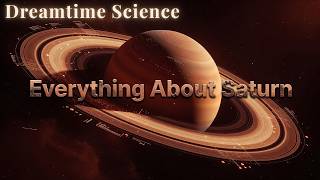
Imagine, for a moment, standing on a shore, looking out over a vast, calm sea. The water stretches to the horizon, seamless and unbroken. Now, imagine that horizon is not water, but a shimmering, uncountable multitude of tiny, individual particles, each one orbiting a distant world. That is the essence of Saturn’s rings. They aren’t a solid structure, not a single band of rock and ice, but a swirling, chaotic dance of countless fragments, ranging in size from dust motes to houses, all held in place by the invisible hand of gravity.
And it is the sheer number of them that is so astonishing. Billions upon billions of particles, spread across hundreds of thousands of kilometers, yet collectively no thicker than a film of smoke. They reflect the sunlight with an almost unbearable brilliance, creating the spectacle that has captivated observers for centuries. The rings aren't uniformly bright, either; they are laced with subtle variations in density, dark gaps and brighter bands, a complex tapestry woven by the gravitational influence of Saturn’s moons.
It’s easy to think of these rings as permanent features, as inherent to Saturn’s nature. But they aren’t. They are, in fact, relatively recent arrivals in cosmic terms, and they are constantly changing. The Cassini spacecraft, which arrived at Saturn in 1997, revealed a dynamic system, with particles colliding and interacting, with moons carving out gaps and shaping the rings with their gravity. The rings are not static, but a restless, evolving landscape.
The material that makes up these rings is almost entirely water ice, with a trace component of rocky material. It’s a remarkably pure form of ice, almost free of impurities, and its origin remains a subject of ongoing research. One theory suggests that it’s the remnants of comets, asteroids, or even moons that ventured too close to Saturn and were torn apart by its gravity. Another proposes that it’s the debris of ancient collisions, fragments of larger bodies shattered by impacts in the distant past.
But whatever their source, these particles are constantly bombarded by micrometeoroids, by radiation from the Sun, and by the gravitational forces of Saturn and its moons. They are in a perpetual state of erosion, slowly losing their material and drifting inward toward the planet. This process isn’t fast, not on a human timescale, but over millions of years, it’s inexorable. The rings are slowly, steadily disappearing.
And that raises a profound question, doesn’t it? If the rings are not permanent, then when did they form? And what will happen to Saturn when they are gone? The answer, it seems, lies in the planet’s atmosphere, in the delicate balance of gases and particles that surrounds it.
Saturn’s atmosphere is composed primarily of molecular hydrogen and helium, with trace amounts of ammonia, acetylene, ethane, propane, phosphine, and methane. The upper clouds are composed of ammonia crystals, while the lower level clouds appear to consist of either ammonium hydrosulfide or water. These clouds are not uniform, either; they are arranged in bands and zones, driven by powerful jet streams and turbulent eddies.
And it is within these clouds that the story of the rings begins to unfold. The methane in Saturn’s atmosphere is constantly broken down by ultraviolet radiation from the Sun, leading to a series of hydrocarbon chemical reactions. These reactions produce a variety of complex molecules, which are carried downward by eddies and diffusion. And it’s these molecules, these fragments of atmospheric gases, that are thought to be the source of the ring particles.
The idea is that, at some point in Saturn’s history, the atmosphere became saturated with these particles, and they began to coalesce, forming the rings. This process may have been triggered by a collision with a large object, or by a change in Saturn’s orbit, or by some other unknown event. But whatever the cause, the result was the creation of a spectacular ring system, a swirling disk of ice and rock that has captivated observers for centuries.
But even as the rings form, they are also being destroyed. The particles are constantly bombarded by micrometeoroids, by radiation from the Sun, and by the gravitational forces of Saturn and its moons. And as they lose their material, they drift inward toward the planet, eventually colliding with the atmosphere and being consumed.
This process is not uniform, either. Some particles are more vulnerable to erosion than others, and some regions of the rings are more susceptible to bombardment. As a result, the rings are constantly changing, evolving, and disappearing. The Cassini spacecraft revealed that the rings are losing mass at a rate of several tons per second, a seemingly insignificant amount, but over millions of years, it’s enough to have a significant impact.
And that brings us back to the question of when the rings formed. If they are disappearing, then they must have formed relatively recently in Saturn’s history. And the current estimates suggest that they are only a few hundred million years old, a mere blink of an eye in cosmic terms. This means that Saturn spent most of its 4.5 billion-year existence without rings, a world without the spectacular adornment that we see today.
It’s a humbling thought, isn’t it? That the rings, the most iconic feature of Saturn, are a temporary phenomenon, a fleeting moment in the planet’s long history. They are a reminder that everything in the universe is in a state of flux, constantly changing, evolving, and disappearing.
But perhaps there’s something more to it than that. Perhaps the rings are not just a byproduct of atmospheric processes, but a necessary component of Saturn’s climate. The rings may help to regulate the planet’s temperature, to distribute its heat, and to maintain its atmospheric stability. And if that’s the case, then their disappearance will have profound consequences for Saturn’s future.
And it’s here, amidst the swirling clouds and the countless particles, that a curious thought begins to take shape. The rings, the atmosphere, the moons, the planet itself – they are all interconnected, all part of a single, complex system. And that system is not static, but dynamic, evolving, and constantly changing.
The music of Henry Purcell, specifically his opera *Dido and Aeneas*, composed no later than July 1688, offers a strange echo of this interconnectedness. The opera tells the story of a queen, Dido, who is torn between her duty to her kingdom and her love for a Trojan prince, Aeneas. The story unfolds with a tragic inevitability, driven by forces beyond Dido’s control, by the will of the gods and the demands of fate.
And in the opera’s final aria, “When I am laid in earth,” Dido laments her fate, accepting her death with a quiet dignity. It’s a moment of profound sorrow, but also of acceptance, a recognition that everything in life is temporary, that even the most powerful kingdoms and the most passionate loves must eventually come to an end.
The music itself mirrors this sense of loss and acceptance. The slow, mournful melody, the haunting harmonies, the delicate orchestration – all contribute to a feeling of profound sadness. But there’s also a sense of beauty, of resilience, of the enduring power of the human spirit.
And perhaps that’s the connection to Saturn. The planet, like Dido, is subject to forces beyond its control, to the relentless march of time and the inevitable decay of its rings. But even as its rings disappear, it will continue to exist, to evolve, to find new ways to maintain its balance. The rings are a part of Saturn’s story, a beautiful and tragic chapter, but they are not the whole story.
Saturn, like the aria, holds a quiet dignity, a sense of acceptance in the face of change. It is a reminder that even in the midst of loss, there is beauty, and even in the face of decay, there is resilience. The planet continues, a pale point of light in the night sky, a constant companion, a silent witness to the unfolding drama of the cosmos. And it does so not in isolation, but as part of a larger, interconnected system, a system that is constantly changing, evolving, and finding new ways to maintain its balance.
Orbits and Tides
This part will explain the core mechanisms that drive Saturn's unique characteristics.
The light has softened further, hasn’t it? The blue hour deepens, and the steady, distant glimmer of Saturn feels less like a pinpoint of light and more like a presence, a quiet weight in the dark. It’s a strange thought, to consider a world so immense, so far removed, and yet still touched by the same laws that govern the smallest things here. We spoke last time of its rings, of that sea of particles, of the delicate balance holding them suspended—a balance that feels, perhaps, as precarious as a single note held against the vastness of silence.
But a sea, however vast, is still a surface. And what lies beneath that surface, what drives the currents and the tides of that shimmering multitude? It begins, as so many things do, with gravity. Not as a simple pull, a force acting in a straight line, but as a curvature, a bending of the very fabric of space itself. Imagine, if you will, a stretched canvas—smooth, taut, undisturbed. That is space, in its simplest form. Now, place a weight upon it. A small stone, perhaps, and the canvas dips, curves inward. That dip is gravity, the effect of mass on the surrounding space. And if you were to roll a smaller bead across that canvas, it would no longer travel in a straight line. It would curve towards the weight, drawn in by the distortion.
That, in essence, is an orbit. Saturn, immensely massive, creates a deep well in the space around it. And the rings—those countless particles—are simply following the contours of that well, each one tracing its own path, its own curve through the distorted space. But it is not a static path. It is a dance, a constant negotiation between the pull of Saturn and the momentum of the particle itself. A particle moving faster will resist the pull more strongly, tracing a wider, more distant orbit. A particle moving slower will fall inward, closer to Saturn.
And then there are the moons. Saturn is encircled by dozens of them, each a world in its own right, each exerting its own gravitational influence. They are not simply passengers in Saturn’s orbit, but active participants in the dance, subtly tugging at the rings, carving out gaps and shaping their structure. It was Giovanni Domenico Cassini, an Italian-French astronomer born in 1625, who first noted a significant gap within the rings, a division that now bears his name. He didn’t understand the mechanism behind it—the concept of moons embedded within the rings was still centuries away—but he observed the effect, meticulously charting its position and its influence. His work, conducted over decades of careful observation, laid the groundwork for future discoveries.
But gravity alone doesn’t explain everything. The rings are not uniform. They are not a solid sheet of ice, but a complex, dynamic system of particles of varying sizes and compositions. And those particles are constantly colliding, bumping into one another, exchanging energy. This is where the tides come in, though not in the way we typically think of them on Earth. On Earth, tides are primarily caused by the gravitational pull of the Moon and the Sun on our oceans. But within the rings, the tides are driven by the gravitational interactions between the particles themselves.
Imagine those particles, each one a tiny world with its own internal structure, its own gravitational field. As they pass near one another, they exert a subtle pull, stretching and distorting each other’s shapes. This distortion creates internal stresses within the particles, and those stresses release energy in the form of heat. And that heat, over time, can cause the particles to change their composition, to break apart, to reform. It’s a slow process, unfolding over millennia, but it is a constant one.
The outer atmosphere of Saturn, a swirling mass of hydrogen and helium, plays a role as well. It contains trace amounts of ammonia, acetylene, ethane, propane, and methane, and ultraviolet radiation from the Sun causes methane photolysis in the upper atmosphere, leading to a series of hydrocarbon chemical reactions. These products drift downward, contributing to the overall composition of the rings. The upper clouds are composed of ammonia crystals, while the lower level clouds appear to consist of either ammonium hydrosulfide or water. The quantity of heavier elements, those not hydrogen or helium, is estimated to be 19–31 times the mass of Earth, with a significant fraction located in Saturn’s core region.
This isn’t a simple, one-way process. The rings aren’t just losing particles; they are also gaining them. Some of the moons are actively shedding material, releasing dust and debris into the surrounding space. And some of that material eventually finds its way into the rings, replenishing the supply. It’s a delicate balance, a constant exchange of energy and matter. The rings are not permanent structures, but temporary phenomena, evolving and changing over time.
Christiaan Huygens, the Dutch mathematician and physicist who first described the rings as a disk surrounding Saturn in 1655, also made crucial observations about Titan, Saturn’s largest moon. He noted its hazy atmosphere and its slow orbital period, hinting at a complex and dynamic world. But it was only much later, with the advent of modern space probes, that we began to understand the true nature of Titan—a world with lakes of liquid methane, a thick nitrogen atmosphere, and a complex organic chemistry.
The Cassini–Huygens mission, a joint effort by NASA, the European Space Agency, and the Italian Space Agency, provided an unprecedented glimpse into the Saturnian system. The Cassini spacecraft, launched in 1997, spent thirteen years orbiting Saturn, meticulously mapping its rings, studying its moons, and analyzing its atmosphere. The Huygens probe, deployed by Cassini, landed on Titan in 2005, providing the first direct measurements of its surface and atmosphere. The data collected by Cassini and Huygens revolutionized our understanding of Saturn and its moons, revealing a world far more complex and dynamic than we had ever imagined.
The rings themselves are not uniform in density. They are composed of numerous ringlets, each one a distinct band of particles. Two of these are cleared by moons embedded within them, and many others are at resonance with larger moons, creating gaps and disturbances in the structure. These moons act as shepherds, gravitationally confining the particles and preventing them from spreading out. It’s a beautiful example of orbital mechanics, a delicate dance between gravity and momentum.
The concept that Saturn’s rings are made up of a series of tiny ringlets can be traced to Pierre-Simon Laplace, a French mathematician and astronomer who developed a comprehensive theory of the solar system in the late 18th century. He proposed that the rings were formed from the debris of a shattered moon, and that the particles were constantly colliding and interacting with one another. His theory, though not entirely accurate, laid the groundwork for future research.
But even with all of our observations, there are still mysteries surrounding the rings. How did they form? How old are they? What is their ultimate fate? These are questions that continue to challenge scientists today. The rings are not static structures, but dynamic systems, constantly evolving and changing. They are losing mass, slowly but surely, due to collisions, radiation, and gravitational interactions. And eventually, they will disappear altogether.
The loss of mass isn’t a sudden event, but a gradual process, unfolding over millions of years. Particles are constantly being pulled inward by Saturn’s gravity, forming a faint, diffuse ring that extends far beyond the visible rings. This ring, known as the E ring, is composed of ice particles ejected from Enceladus, one of Saturn’s moons. Enceladus has a subsurface ocean of liquid water, and geysers erupting from its south pole release ice particles into space. These particles form a vast, diffuse cloud around Saturn, creating the E ring.
The E ring is a dynamic structure, constantly being replenished by Enceladus. It is also subject to gravitational interactions with other moons, creating disturbances and variations in its density. It’s a beautiful example of a complex system, a delicate balance between creation and destruction. And it’s a reminder that the rings are not permanent structures, but temporary phenomena, evolving and changing over time.
What this means, ultimately, is that the beauty we see in Saturn’s rings is a transient beauty, a fleeting moment in the history of the solar system. The rings are not eternal, but temporary, destined to disappear eventually. But even as they fade away, they will continue to inspire wonder and awe, a silent testament to the power and complexity of the universe. The gravitational interactions, the collisions, the subtle tugs of the moons—all these forces are working together to create a dynamic, evolving system, a delicate dance of particles and energy. And it’s a dance that will continue, for as long as Saturn remains a presence in the night sky, a quiet weight in the dark. The rings are a reminder that change is the only constant, that even the most beautiful things are temporary, and that the universe is always in motion, always evolving, always creating and destroying.
The Enigmatic Hexagon
This part will explore the deeper structures of Saturn's atmosphere and the limits of our understanding.
The light has softened now, hasn't it? A stillness settles between the books, a quiet in the air that feels almost… expectant. It’s a good stillness, the kind that lets things unfold slowly, without demanding to be filled. We’ve been looking at Saturn, at the vast, shimmering architecture of its rings – a spectacle of light and shadow, of countless fragments caught in a delicate dance. And in the last turn, we began to understand that dance, not as a fixed pattern, but as a consequence of gravity, of the ceaseless pull and release between Saturn itself and the moons that orbit it.
But that picture, as beautiful as it is, as true as it goes, is still only a surface. It describes the *what* of the rings, the graceful curves and the subtle shifts, but it doesn’t touch the *how*. It doesn’t explain the deeper structures, the currents and eddies that flow within those icy particles, or the limits of our ability to truly know what’s happening down there. It’s a bit like looking at the ocean from a great height – you see the waves, the swells, the vastness of it all, but you don’t feel the cold, the currents, the hidden life that teems beneath the surface.
And it’s in those hidden depths, in the things that resist measurement, that the real mysteries lie.
Saturn’s atmosphere, for instance. We know it’s composed almost entirely of hydrogen and helium, with trace amounts of ammonia, acetylene, ethane, and methane. The upper clouds are crystals of ammonia, bright and white, while the lower clouds seem to be made of ammonium hydrosulfide, or perhaps even water. But knowing the ingredients doesn’t tell you the recipe, doesn’t explain the complex weather patterns that swirl across the planet’s face, the storms that rage for centuries.
The deeper you go, the less certain we become. The total mass of these heavier elements, those not hydrogen or helium, is estimated to be somewhere between nineteen and thirty-one times the mass of Earth. A vast quantity, hidden within the swirling gases. But *where* is it located? How is it distributed? The assumptions are that a significant fraction is located in Saturn’s core, but that’s just an assumption, a best guess based on our understanding of how planets form.
And the core itself… that’s a region we’ve only glimpsed indirectly, through gravitational measurements and theoretical models. It’s likely composed of rock and metallic hydrogen, but the exact composition and structure remain elusive. It’s a world hidden from view, shrouded in layers of gas and pressure.
This isn’t a failure of our instruments, not exactly. It’s a fundamental limit of observation. The deeper you go into a gas giant, the denser the atmosphere becomes, the more opaque it is to light and radio waves. It’s like trying to see through a fog, or to listen to a sound muffled by layers of cloth. The signal gets weaker and weaker, until it’s lost in the noise.
And even if we could somehow pierce that fog, even if we could send a probe all the way to the core, we’d still face challenges. The pressure and temperature at those depths are extreme, far beyond anything we can replicate on Earth. Any probe we sent would be crushed and melted, its instruments destroyed before it could gather meaningful data.
It’s a paradox, isn’t it? We can send probes to other planets, to the surface of Mars, to the moons of Jupiter. We can analyze their composition, map their terrain, even search for signs of life. But Saturn, with its breathtaking rings and its swirling atmosphere, remains stubbornly opaque, a world hidden from our direct observation.
Consider the work of Giovanni Domenico Cassini, whose name is forever linked to this planet. He discovered four of Saturn’s moons – Iapetus, Rhea, Tethys, and Dione – and meticulously observed the rings, noting the gap that now bears his name. He was an astronomer of extraordinary patience and skill, a master of observation. But even with his powerful telescopes, he couldn’t discern the true nature of the rings. He thought they might be a solid disk, or perhaps a collection of smaller rings separated by dark spaces. It wasn’t until nearly two centuries later, with the work of Pierre-Simon Laplace, that the concept of countless tiny ringlets was proposed.
And even Laplace’s model, as elegant as it was, didn’t fully capture the complexity of the rings. It was Christiaan Huygens who first described them as a disk surrounding Saturn, a crucial step in understanding their true nature. Huygens, a polymath of remarkable breadth, also made seminal contributions to optics and mechanics, and invented the pendulum clock – a testament to his ability to combine theoretical insight with practical ingenuity. But even he couldn’t have foreseen the intricate dance of particles that we now know governs the rings.
The rings aren’t a static structure, you see. They’re a dynamic system, constantly evolving, constantly changing. Particles collide with each other, creating dust and debris. They’re affected by the gravitational pull of Saturn’s moons, which carve out gaps and create resonances. They’re bombarded by micrometeoroids, which erode their surfaces and alter their composition. It’s a chaotic process, a ceaseless interplay of forces.
And within that chaos, there are currents and eddies, flows of particles that move in complex patterns. These currents are driven by a variety of factors, including the planet’s rotation, the gravitational pull of the moons, and the interactions between the particles themselves. They’re like the currents in the ocean, or the winds in the atmosphere, but far more complex and difficult to study.
The Cassini–Huygens mission, launched in 1997, gave us the most detailed view of the rings yet. The spacecraft spent thirteen years orbiting Saturn, gathering data on its atmosphere, its moons, and its rings. It revealed a wealth of new information, including the discovery of tiny moons embedded within the rings, which help to shape their structure. It also showed us that the rings are far more porous than we thought, composed of countless particles separated by vast empty spaces.
But even Cassini couldn’t fully unravel the mysteries of the rings. The currents and eddies remained elusive, difficult to map and understand. The composition of the particles remained uncertain, with trace amounts of rocky material mixed in with the water ice. And the origins of the rings – how they formed, how long they’ve been around – remained a subject of debate.
It's a bit like the opera *Dido and Aeneas* by Henry Purcell, isn't it? A beautiful and tragic story, full of passion and loss. But even after centuries of analysis, we still don’t know the exact dates of its composition and first performance. The details are lost in the mists of time, obscured by uncertainty and speculation. We can reconstruct the story, analyze the music, interpret the themes, but we can never fully know the context in which it was created.
The rings of Saturn are like that opera, a beautiful and enigmatic phenomenon that resists complete understanding. We can study them, analyze them, model them, but we can never fully know their secrets.
And perhaps that’s okay. Perhaps the mystery is part of their beauty. The rings are a reminder that there are limits to our knowledge, that there are things in the universe that will always remain beyond our grasp. They're a silent witness to the cosmos, a shimmering multitude of tiny particles caught in a delicate dance.
The ultraviolet radiation from the Sun, for example, causes methane photolysis in the upper atmosphere, breaking down the methane molecules into smaller fragments. These fragments then undergo a series of hydrocarbon chemical reactions, creating a complex mixture of organic compounds. These compounds are carried downward by eddies and diffusion, contributing to the overall composition of the atmosphere. It’s a slow, subtle process, but it has a profound effect on the planet’s chemistry.
The deeper you go, the more complex it becomes. The lower level clouds appear to consist of either ammonium hydrosulfide, or water. But the exact composition is uncertain, and it may vary depending on the altitude and latitude. The atmosphere is constantly changing, with storms that rage for centuries and currents that flow in complex patterns.
And within that complexity, there are resonances, regions where the gravitational pull of the moons amplifies the effects of other forces. These resonances can create gaps in the rings, or create waves and ripples. They’re like the harmonics in a musical instrument, subtle but powerful effects that shape the overall sound.
The magnetosphere of Saturn, the cavity created in the flow of the solar wind by the planet’s internally generated magnetic field, adds another layer of complexity. Discovered in 1979 by the Pioneer 11 spacecraft, it’s the second largest of any planet in the Solar System after Jupiter’s. The magnetopause, the boundary between Saturn’s magnetosphere and the solar wind, is a dynamic region, constantly shifting and changing.
What this means is that the simple picture of rings as icy particles orbiting a planet is just the beginning. Beneath the surface, there’s a complex, evolving system of forces, currents, and resonances. And even with our most powerful instruments, we can only glimpse a fraction of that complexity. The rings of Saturn are a reminder that the universe is full of mysteries, that there are things we may never fully understand. A vastness of hidden depths, a silent, shimmering dance that continues, regardless of our attempts to decipher its secrets. The rings are not merely something to be observed, but a world to be wondered at, a testament to the enduring power of the unknown.
Cassini's Grand Finale
This part will focus on the Cassini space probe and its instruments, which revealed Saturn's secrets through direct observation.
The light has softened further, hasn’t it? A stillness settles now, not just in the room, but in the way things seem to hold their shape – as if even the shadows are becoming reluctant to move. It is a good stillness for listening, for letting the mind turn inward, and for allowing the scale of things to shift. We spoke last time of a silence, a witnessing from a distance, and the faint echo of a tragedy played out across the rings of Saturn. Tonight, we turn closer, to the hands and eyes that reached for that silence, to the instruments they built and the slow, patient unraveling of what they found.
For centuries, Saturn hung in the night sky as a mystery framed by wood and glass. Galileo, with his small telescope in the early years of the 17th century, was the first to truly *see* the rings, though as he described it, they appeared not as structures, but as a curious elongation of the planet's form. He sketched them, puzzled over their appearance, unable to resolve them into anything comprehensible. It was Christiaan Huygens, decades later, who first understood them as a disk, a flattened ring encircling the planet, a vast collection of particles held in orbit. He saw Titan, Saturn's largest moon, a pale companion orbiting within this strange geometry.
But to *know* the rings, to understand their composition, their dynamics, their age, required a different kind of seeing altogether – a seeing that reached beyond the visible spectrum, beyond the limits of human perception. It required, in essence, to build a second, more sensitive set of senses, and to send them across the gulf of space. That is what the Cassini–Huygens mission was, at its heart: an extension of ourselves, a suite of instruments designed to translate the silent language of Saturn into something we could comprehend.
Let us imagine, for a moment, the Composite Infrared Spectrometer, or CIRS. It wasn’t a single lens or a sweeping telescope, but a carefully calibrated array of detectors, tuned to the wavelengths of infrared light. This is light we cannot see, light that feels like warmth, light that carries the signature of molecules vibrating at different frequencies. Saturn’s atmosphere, as we touched on, is largely hydrogen and helium, but it is the trace elements, the subtle impurities, that hold the key to its history. CIRS was designed to measure the abundance of these elements, to map their distribution, to understand how they interact with sunlight and with each other.
The process itself is a slow accumulation of signal. The instrument must first orient itself toward the planet, filtering out the glare of sunlight and the background radiation of space. Then, it opens a small aperture, allowing a sliver of infrared light to enter. This light is then split into its component wavelengths by a prism, each wavelength directed toward a different detector. The detectors, cooled to near absolute zero to minimize interference, measure the intensity of the light at each wavelength. The more intense the light at a particular wavelength, the more abundant that element is in the atmosphere.
Imagine the data stream, a continuous flow of numbers representing the intensity of infrared light at thousands of different wavelengths. It is a raw, meaningless jumble until it is processed by complex algorithms, until it is translated into a map of Saturn’s atmosphere, layer by layer. The upper clouds, composed of ammonia crystals, are relatively easy to detect, their signature a strong peak in the infrared spectrum. But the lower clouds, hidden beneath layers of haze, are more challenging. CIRS had to use a technique called spectral radiance mapping, analyzing the way light is reflected and absorbed by the atmosphere to infer the composition of the deeper layers. It took years of observations, countless orbits around Saturn, to build a complete picture, to reveal the subtle variations in composition and temperature that govern the planet’s weather.
And what did it reveal? A planet far more complex than anyone had imagined. The upper atmosphere, it turned out, is not a uniform layer of ammonia crystals, but a series of distinct bands and zones, each with its own unique composition and temperature. These bands are driven by powerful jet streams, winds that circle the planet at hundreds of kilometers per hour. Beneath these clouds, the atmosphere becomes denser, warmer, and more opaque. Here, the dominant clouds appear to consist of ammonium hydrosulfide, a compound of ammonia, hydrogen, and sulfur, or perhaps even water ice. The exact composition of these lower clouds remains a subject of debate, a testament to the difficulty of probing the depths of a gas giant.
Another instrument, the Ion and Neutral Mass Spectrometer, or INMS, took a different approach. While CIRS measured the light emitted by Saturn’s atmosphere, INMS measured the particles that *left* it. Saturn, like all planets, is surrounded by a tenuous atmosphere of ions and neutral atoms, particles that have been stripped of their electrons by sunlight or by interactions with the planet’s magnetic field. INMS collected these particles, separating them by their mass-to-charge ratio, and then measured their abundance.
The process begins with an electric field, carefully tuned to attract ions and neutral atoms. These particles enter the instrument through a small aperture, passing through a series of focusing lenses that separate them by their mass-to-charge ratio. This separation is crucial, because particles with different masses and charges will follow different trajectories in the electric field. Once separated, the particles are directed toward a detector, which measures their abundance.
Imagine the instrument as a miniature particle accelerator, carefully guiding and sorting the particles that stream from Saturn’s atmosphere. It took years of observations, countless passes through Saturn’s rings and magnetosphere, to build a complete catalog of the ions and neutral atoms that surround the planet. What did it reveal? A surprising abundance of organic molecules, the building blocks of life. These molecules, including methane, ethane, and propane, are thought to originate in Saturn’s atmosphere, carried upward by powerful eddies and diffusion. They are also found in Saturn’s rings, suggesting that the rings may be a reservoir of organic material.
The Radio and Plasma Wave Science instrument, or RPWS, listened to the planet, not for signals from intelligent life, but for the faint crackle of electromagnetic waves. Saturn, like Earth, generates a powerful magnetic field, which interacts with the solar wind, creating a complex plasma environment. RPWS measured the intensity and frequency of these electromagnetic waves, searching for clues about the planet’s internal structure and the dynamics of its magnetosphere.
The process begins with a series of antennas, carefully positioned to detect electromagnetic waves from all directions. These waves are then amplified and filtered, removing noise and interference. The filtered waves are then analyzed by a spectrum analyzer, which separates them into their component frequencies. Each frequency carries a unique signature, revealing the source and characteristics of the waves.
The instrument detected a chorus of waves, a complex symphony of electromagnetic noise. These waves, it turned out, are generated by electrons spiraling along Saturn’s magnetic field lines. The frequency of these waves is determined by the energy of the electrons, which is in turn determined by the strength of the magnetic field. By analyzing the frequency of these waves, RPWS was able to map the structure of Saturn’s magnetosphere, revealing the presence of a series of concentric shells, each with its own unique characteristics. The data showed, with startling clarity, the magnetic field lines were not smooth and symmetrical, but twisted and distorted by the planet’s internal dynamics.
These instruments, and many others aboard Cassini–Huygens, worked together, each providing a different piece of the puzzle. The mission was a triumph of engineering and scientific collaboration, a testament to the power of human curiosity. But it also revealed the limits of our understanding. The core of Saturn remains a mystery, hidden beneath layers of gas and pressure. The exact composition of the lower clouds is still unknown. The origin of the rings remains a subject of debate.
And yet, even in the face of these uncertainties, Cassini–Huygens provided a wealth of new information, transforming our understanding of Saturn and its system. It revealed a planet far more complex and dynamic than anyone had imagined, a world of swirling clouds, powerful jet streams, and hidden oceans. It showed us that the rings are not a static structure, but a constantly evolving system, shaped by gravitational forces and the interplay of countless particles. It hinted at the possibility of life, in the form of organic molecules found in Saturn’s atmosphere and rings. The sheer volume of data collected is still being analyzed, still yielding new insights, decades after the mission’s end. The echoes of its discoveries will resonate for generations to come, a silent testament to the enduring allure of the ringed wanderer.
The legacy of Cassini is not just in the data it collected, but in the questions it raised, in the mysteries it revealed. It showed us that the universe is full of surprises, that there is always more to learn, that the pursuit of knowledge is a never-ending journey. The rings, once a distant enigma, now feel closer, more tangible, more real. And as we continue to explore the cosmos, as we continue to build new instruments and new senses, we will undoubtedly uncover even more secrets, revealing the hidden wonders that lie beyond our reach. The planet's atmosphere, so vast and turbulent, continues to hold its secrets, awaiting further exploration, further revelation, and the slow, patient accumulation of knowledge.
Lullaby of the Rings
This part will reflect on Saturn's enduring fascination and its place in our cosmic neighborhood.
The light has softened further now, hasn’t it? A stillness settles in the spaces between thought, a quietness that feels less like the absence of sound and more like a holding of it, a potential for resonance. We’ve been tracing the story of Saturn, a world that seems to invite that kind of quiet attention, a world whose very being is a slow unfolding, a gentle, almost imperceptible dance of particles and fields. And it’s a dance that has held human fascination for centuries, long before the instruments we spoke of last time – the sensitive ears and eyes of the Cassini probe – began to unravel its secrets. Before the spectra, before the magnetic maps, there was simply the sight of it, hanging in the night sky, a pale golden orb marked by those astonishing rings.
It's easy to forget, now that we have such detailed images, that for a very long time, those rings were a mystery. Galileo Galilei, in the year after his first observations with a telescope, saw them, yes, but he couldn’t resolve them into their true nature. He described them as a kind of disk, a flattened shape surrounding the planet, but the details remained elusive, a shimmering ambiguity. It wasn’t until decades later, in 1655, that Christiaan Huygens, with a telescope of his own making, was able to definitively describe them as a solid ring, a circumambient disk. And even then, the question of what that disk *was* remained. Laplace, much later still, proposed the idea that the rings weren’t a single solid structure, but a multitude of tiny ringlets, each orbiting Saturn independently, a vast collection of fragments held in place by gravity.
The image is a compelling one, isn’t it? A sea of particles, each one a world in miniature, orbiting a giant, a shimmering, uncountable multitude of tiny witnesses to the passage of time. And that, perhaps, is the most enduring quality of Saturn – its sheer scale, its immensity, its ability to dwarf our own sense of perspective. It’s a world that forces us to confront the limits of our understanding, to acknowledge the vastness of the cosmos and our own small place within it.
We touched on the composition of those rings, the almost pure water ice, the trace amounts of rocky material, the subtle variations in density and color. But it’s worth dwelling on the ice itself, on the simple, elegant beauty of its molecular structure. Water, as we know, is a remarkably versatile substance, capable of existing in three states – solid, liquid, and gas – and each state possesses unique properties. Ice, in its crystalline form, is a testament to the power of order, a precise arrangement of molecules held together by the delicate bonds of hydrogen and oxygen. And the ice particles that make up Saturn’s rings are not simply frozen water; they are coated in a layer of organic molecules, hydrocarbons formed by the interaction of ultraviolet radiation with methane in the atmosphere. These molecules, tiny as they are, are the building blocks of life, the very foundation of complexity.
And it's that complexity, that subtle interplay of forces and elements, that truly defines Saturn. The atmosphere, with its swirling bands of clouds, its powerful winds, its hidden depths, is a dynamic system, constantly evolving and changing. The outer atmosphere is predominantly hydrogen and helium, but the proportions are subtly different from those found in the Sun, a hint of the planet’s unique history. Trace amounts of ammonia, acetylene, ethane, propane, and phosphine mingle with the methane, creating a complex chemical soup. The upper clouds are composed of ammonia crystals, while the lower clouds are thought to consist of either ammonium hydrosulfide or water. Ultraviolet radiation from the Sun drives a series of chemical reactions in the upper atmosphere, breaking down methane molecules and releasing hydrocarbons that descend into the deeper layers.
Giovanni Domenico Cassini, centuries after Galileo and Huygens, dedicated much of his life to the study of Saturn. Born in Perinaldo, in what was then the County of Nice, he discovered four of Saturn’s moons, each one a tiny world orbiting the giant, and meticulously charted the division within the rings that now bears his name. He was also a pioneer in the field of cartography, creating the first scientific map of the Moon and working on a detailed topographic map of France. It's a testament to his dedication and meticulous observation that his name is still associated with this planet today, a recognition of his enduring contribution to our understanding of the cosmos.
But it was perhaps the rings themselves that captivated Cassini the most. He observed them for decades, charting their movements, measuring their dimensions, and attempting to unravel their secrets. And he, like Galileo before him, was limited by the technology of his time. He could see the rings, he could describe their shape and size, but he couldn’t see the individual particles that made them up. It wasn’t until the advent of modern telescopes and space probes that the true nature of the rings was revealed.
And it’s that revelation, that ability to see beyond the limitations of our own senses, that is the hallmark of scientific progress. The Cassini probe, with its suite of instruments, allowed us to peer into the depths of Saturn’s atmosphere, to analyze the composition of its rings, and to map its magnetic field with unprecedented detail. The Composite Infrared Spectrometer, the Ion and Neutral Mass Spectrometer, the Radio and Plasma Wave Science instrument – each one a sensitive ear or eye, listening to the silent language of Saturn.
We spoke of the magnetic field, a vast cavity carved into the flow of the solar wind, protecting the planet from the harmful effects of radiation. Discovered in 1979 by the Pioneer 11 spacecraft, Saturn’s magnetosphere is the second largest in the Solar System, after Jupiter’s. And it’s a dynamic system, constantly changing and evolving in response to the flow of the solar wind and the interactions with the planet’s moons. The magnetopause, the boundary between Saturn’s magnetosphere and the solar wind, is a region of intense activity, where particles and fields collide and interact.
And it’s within that magnetosphere, within that protective shield, that Saturn’s moons reside, each one a unique world with its own distinct characteristics. Titan, the largest of Saturn’s moons, is a world unlike any other in the Solar System, with a dense atmosphere, liquid methane lakes, and a complex organic chemistry. It's a world that may hold clues to the origins of life, a potential glimpse into the early Earth.
The weather on Saturn, too, is a marvel of complexity. Powerful winds, driven by the planet’s internal heat, circulate the atmosphere, creating swirling bands of clouds and massive storms. The winds can reach speeds of over 1,800 kilometers per hour, faster than any hurricane on Earth. And those storms, some of which are larger than our own planet, can rage for months or even years. It’s a world of extremes, a place of constant change and upheaval.
But beneath the storms, beneath the clouds, lies a deeper mystery. The core of Saturn, hidden from view by layers of hydrogen and helium, is thought to be composed of rock and metal. The total mass of these heavier elements is estimated to be 19–31 times the mass of Earth, a significant fraction of which is located in the core region. But the exact composition and structure of the core remain unknown, a tantalizing puzzle for future generations of scientists to solve.
And it’s that puzzle, that sense of the unknown, that truly defines Saturn. It’s a world that challenges our assumptions, that forces us to confront the limits of our knowledge, that invites us to explore the vastness of the cosmos and to unravel its secrets. Henry Purcell, composing his opera *Dido and Aeneas* centuries ago, captured something of that sense of tragedy and beauty, of loss and longing. The story of Dido and Aeneas, a tale of love and betrayal, resonates with the sense of impermanence that pervades the universe, a reminder that all things must eventually come to an end.
The rings themselves, as we now know, are not eternal. They are slowly dissolving, gradually being pulled into Saturn by gravity. The Cassini probe measured the rate of this dissolution, finding that the rings are losing mass at an alarming rate. And it’s likely that they will be gone within a few hundred million years, a relatively short period of time on a cosmic scale.
And yet, even as they dissolve, they continue to captivate us, to inspire us, to remind us of the beauty and fragility of the universe. The rings are a temporary phenomenon, a fleeting moment in the history of Saturn, but they are a moment of exquisite beauty, a testament to the power of gravity and the delicate balance of forces that shape our cosmos.
The story of Saturn is not just a story of particles and fields, of moons and storms. It’s a story of human curiosity, of our relentless pursuit of knowledge, of our desire to understand the universe and our place within it. It’s a story that began with Galileo and Huygens, with their telescopes and their meticulous observations, and continues today with the Cassini probe and its suite of instruments. And it’s a story that will continue to unfold for generations to come, as we continue to explore the vastness of the cosmos and to unravel its secrets.
The rings, a shimmering multitude, each particle a tiny world in its own right, orbiting a giant, a slow, graceful dance of light and shadow. The atmosphere, a swirling ocean of hydrogen and helium, with its hidden depths and its powerful storms. The magnetosphere, a protective shield, guarding the planet from the harmful effects of radiation. And the core, hidden from view, a tantalizing puzzle for future generations of scientists to solve. It's a world that invites us to slow down, to listen, to observe, to contemplate the vastness of the cosmos and our own small place within it.
And as the light continues to soften, as the stillness deepens, perhaps it’s time to simply let go, to surrender to the quiet beauty of Saturn, to allow the image of those rings to settle into the spaces between thought. The particles continue their dance, orbiting the giant, a slow, graceful rhythm that has continued for billions of years. The atmosphere continues to swirl, the storms continue to rage, the magnetosphere continues to protect. And the core, hidden from view, remains a mystery, a silent witness to the passage of time. A slow, gentle rhythm, a quiet, enduring beauty, a world that invites us to rest, to contemplate, to simply be. The ice particles, illuminated by the distant sun, shimmer and glow, a vast, uncountable multitude of tiny witnesses, each one a world in miniature, orbiting a giant, a slow, graceful dance of light and shadow, continuing, endlessly continuing, a quiet, enduring beauty, settling now, settling softly, settling into the stillness, a quiet, enduring beauty, holding the light, holding the silence, holding the mystery, settling, finally, settling into the quiet, dark embrace of the cosmos.