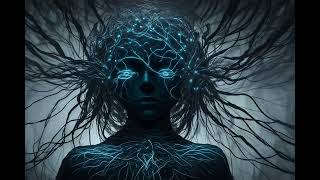
The Spark of Consciousness
The first act will introduce the concept of neurons and their role in thought transmission, drawing connections to the cultural and sci-fi concept of 'mind control'. The audience will be intrigued by the idea that these tiny cells hold the key to our thoughts, emotions, and memories.
In the quiet hush of a darkened room, the mind drifts—untethered from the daylight world, seeking the gentle embrace of sleep. Yet, even as eyelids flutter and consciousness falters, a universe within continues its ceaseless work. This universe is not forged of distant stars or spinning planets, but of something much closer, infinitely more intimate: a forest of cells, alive with silent lightning and whispering currents. The neurons, those slender, branching sentinels of the nervous system, are the architects and custodians of our every thought, emotion, and memory.
Let your imagination settle, not in some far-off galaxy, but deep within the folds of your own brain, among the labyrinthine corridors of gray and white. Here, in the soft hum of neural nightfall, the story of consciousness begins—not as a single, blinding flash, but as a patient flicker, a spark leaping from one cell to another in a perpetual ballet of electrical and chemical exchange.
Neurons. The word itself is almost onomatopoeic, hinting at the nervous energy it describes. Each neuron is a cell, yes, but not just any cell. Picture them as fantastical trees, their trunks slim and their branches reaching out in every direction, seeking communion with their neighbors. These branches are called dendrites—delicate, feathery structures, each designed to receive signals from the world around them. The trunk, known as the soma or cell body, is the neuron’s command center, housing the nucleus and the machinery of life. From this soma extends a single, slender cable: the axon. Like the main trunk of a tree reaching out toward distant soil, the axon can stretch a millimeter or, in some cases, a full meter, carrying signals to distant lands within the body.
The brain is home to roughly 86 billion of these neurons, each weaving its own story, each connecting to thousands of others in a glimmering network more intricate than any city, any web, any man-made machine. It is here, in the dense thicket of the cortex and the winding paths of the hippocampus, that the mysterious phenomenon we call consciousness takes shape—a symphony composed not of sound, but of signals, of patterns coded in pulses of electricity.
For centuries, humanity gazed at the skull and wondered: what is the seat of the self? Ancient cultures often attributed thought and feeling to the heart, believing the brain to be little more than a cooling organ for the blood. But as the centuries unfurled, as steel met bone and ink met parchment, the brain’s true nature began to emerge. Yet even as anatomical drawings captured the convolutions of its surface, the real marvel—the neuron, and the spark of thought—remained elusive, hidden from view by size and subtlety.
It was not until the late nineteenth century that the neuron revealed itself to human eyes. Santiago Ramón y Cajal, an artist and scientist of rare vision, peered through his microscope at tissue stained with silver nitrate and saw, not a uniform mass, but a network of individual cells, each distinct, each connected by the finest of threads. He drew what he saw, his sketches capturing the essence of the neuron: the branching dendrites, the singular axon, the point of contact with another cell. It was Cajal who first understood that the brain is not a single, undivided mass, but a congress of individual cells, each whispering to its neighbors through a language of signals.
But what, precisely, is a thought? How does a fleeting feeling, a memory of childhood, or the sensation of warmth on your skin arise from the silent machinery of cells? The answer lies in the nature of the neuron itself, and in the remarkable way these cells communicate—both within themselves and with each other.
Each neuron is, in essence, an excitable cell. It maintains a delicate difference in electrical charge across its membrane, like a battery primed and waiting. On one side of the membrane, the inside of the cell, there is a relative abundance of negatively charged ions; on the outside, a surplus of positive ions. This state, known as the resting potential, is maintained by the tireless work of protein pumps and channels, shuttling ions back and forth in a precise, regulated dance.

But neurons are not meant to rest forever. When a signal arrives—perhaps from a neighboring cell, perhaps from the touch of a fingertip or the glimmer of light on the retina—it triggers a sudden shift. Ion channels open, and positive ions rush into the cell, depolarizing the membrane. If this depolarization reaches a certain threshold, an action potential is born: a wave of electrical change that races down the length of the axon at remarkable speed, sometimes as fast as 120 meters per second. This is the spark of consciousness, the literal flash of electricity that underpins every thought, every movement, every dream.
But the action potential is only half the story. When the electrical wave reaches the end of the axon, it encounters a narrow gap—the synapse—that separates it from the next neuron. Here, electricity gives way to chemistry. Tiny sacs, called vesicles, fuse with the cell membrane and release their cargo of neurotransmitters into the synaptic cleft. These molecules drift across the gap, binding to receptors on the receiving neuron, and in doing so, they may trigger another action potential, another spark, and the cycle continues.
It is this pattern—electrical within, chemical between—that allows neurons to communicate with astonishing speed and precision. Each neuron may form thousands of synapses, and these connections are not fixed. As we encounter new experiences, learn new skills, or recall old memories, the strength and number of these synapses can change, a phenomenon known as synaptic plasticity. This is the cellular basis of learning and memory, the means by which the brain adapts, changes, and, in a sense, rewrites itself.
Such complexity invites awe, but also tempts the imagination toward speculation. Throughout history, the idea that the mind could be influenced, even controlled, by external forces has haunted our stories and our fears. In the shadowy corridors of science fiction, mind control is a familiar specter: a villain’s device that bends others to their will, a neural interface that allows memories to be erased or implanted, a dystopian future where individuality itself is at risk.
What gives such tales their enduring power is the kernel of truth they contain. For if the mind is the sum of its neural activity, if thoughts and feelings are patterns of electrical and chemical exchange, then, in theory, to control these patterns would be to control the mind itself. In the real world, the boundary between science and science fiction is not as clear as we might wish.
Consider the humble experimenter, placing electrodes into the brain of a rodent, a primate, or, with ever more subtlety, a consenting human volunteer. By delivering tiny pulses of electricity to precise locations, researchers have evoked memories, induced sensations of pleasure or fear, even triggered movements of limbs. Such experiments reveal, with unsettling clarity, the causal relationship between neural activity and the contents of consciousness.
Yet, the leap from stimulation to control is vast. The brain’s complexity is staggering; every thought is not the work of a single neuron, but of millions, firing in orchestrated patterns. Our best efforts to intervene—to implant memories, to erase trauma—are crude compared to the subtlety of the brain’s native language. Still, the possibility lingers, and with it, the ethical questions that have preoccupied philosophers and storytellers alike.
What does it mean to be the author of one’s own thoughts? If a machine could stimulate pleasure or suppress pain, would the experience be any less real? If memories could be rewritten, would identity itself unravel? These questions do not yield easy answers. They nest within the folds of the cortex, elusive as dreams, awaiting the slow, patient work of science.

But for now, let us return to the neuron itself, to its quiet heroism, its patient labor. Each cell, though tiny—barely a hundredth the width of a human hair—contains all the machinery required for life: a nucleus, packed with DNA; mitochondria, the powerhouses that fuel the cell’s activity; ribosomes, spinning proteins from the genetic code. The axon, often insulated by a fatty sheath called myelin, transmits its signals with speed and fidelity. At the synapse, the ballet of neurotransmitters unfolds with every thought.
Some neurotransmitters, like dopamine and serotonin, are familiar even to those outside the field of neuroscience. They are the molecules of mood, reward, and desire. Others, like glutamate and gamma-aminobutyric acid (GABA), are the workhorses of excitation and inhibition, shaping the balance between activity and rest. The precise choreography of these molecules dictates the brain’s rhythms—wakefulness and sleep, joy and sorrow, attention and distraction.
Imagine, for a moment, the ceaseless activity within your own mind. Even as you lie still, neurons fire in intricate patterns—processing the day’s events, weaving new memories, regulating the rhythms of breath and heart. In the moments before sleep, as the world recedes and thought grows diffuse, the brain shifts its rhythms, guided by the interplay of neurons and neurotransmitters. Slow waves rise and fall, synchronizing vast networks of cells, preparing the mind for the journey into dreams.
The neuron, for all its intricacy, does not exist in isolation. Glial cells—once thought to be mere support—play their own roles, nourishing neurons, clearing debris, modulating the flow of information. The blood-brain barrier shields this delicate ecosystem from the chaos of the body, allowing only select molecules to pass. Within this protected enclave, the drama of consciousness unfolds.
It is here, in this tangled forest, that the self is born. Every memory you cherish, every word you speak, every feeling that stirs within your chest—each is mirrored in the patterns of neural activity, the sparks leaping from cell to cell. The sum of your experience is written not in ink, but in the shifting architecture of synapses, in the fleeting patterns of electrical fire.
Yet, for all our knowledge, much remains mysterious. We can trace the pathways of neurons, map the circuits that underlie vision, movement, emotion. We can measure the electrical storms that sweep across the brain’s surface, decode the rhythms of sleep and wake. But the leap from physical process to subjective experience—the mystery of qualia, of what it is like to be—remains just out of reach, shimmering at the edge of understanding.
Still, the neuron offers a place to begin. It is the elemental unit, the spark from which consciousness arises. It is the guardian of memory, the messenger of sensation, the architect of thought. In its silent labor, we glimpse the possibility that the mind—so intangible, so elusive—might one day be understood, not as magic, but as the emergent property of countless sparks, countless cells, working in concert.
As the night deepens and the mind grows quiet, the neurons continue their work, unseen but unceasing. They carry the echoes of your day, the whispers of your dreams, the silent music of your being. In their sparks, the story of consciousness is written—and the tale is only beginning to unfold.
For even deeper in the night, beneath the surface calm, a question stirs: How do these countless neurons, each firing in isolation, give rise to the unified tapestry of perception and self? What mysterious code binds sensation to meaning, memory to identity? The neurons spark and fire, but somewhere within their network, a pattern emerges—a fleeting glimpse of coherence, of mind. And so, the story continues, descending ever further into the heart of the neural labyrinth, where the boundaries between self and world begin to blur, and the true nature of consciousness awaits, unresolved, just out of reach.
The Whispering Web
In the second act, we'll dive into the intricate network of neurons, exploring the complexities of synapses, neurotransmitters, and the electrochemical signals they convey. We'll dispel the myth that we only use 10% of our brains, highlighting the ceaseless activity and interconnectivity within our neural networks. The audience will learn how every thought is a symphony of signals, a delicate dance of electricity and chemistry.
Beneath the gentle curve of your skull, the world grows dense and luminous—a labyrinth woven from living threads, each as slender as a spider’s silk, yet pulsing with the power to conjure memory, sensation, and dream. The brain’s architecture, so elegantly folded to fit within its bony shell, is more than a mass of gray matter; it is a whispering web, a tapestry of ceaseless conversation. In this dim-lit realm, neurons—the brain’s ancient messengers—reach out to one another as if seeking kin, their slender arms touching, turning, and entwining in patterns as old as thought itself.
Let us travel inward, not as a single observer, but as a mote of wonder, drifting through this tangled forest. Imagine gliding along the length of a neuron, tracing its billowing cell body, the soma, from which radiate dendrites like the gnarled branches of an oak. Each dendrite reaches out, bristling with tiny spines, each one a door to another neuron. The neuron’s axon, long and slender, extends away from the cell body, sometimes branching, sometimes stretching for more than a meter in the case of those that run along the spinal cord. The axon’s journey ends in a spray of delicate tendrils, each tipped with a bulbous terminal—presynaptic, waiting, poised to speak.
Yet, in this world, speech is not of words, but of impulses. Here, the language is electricity and chemistry, a dialect as precise as mathematics and as fleeting as a sigh. When a neuron fires, it is not a shout but a ripple, a sudden reversal of electrical charge that races down the axon—a wave known as an action potential. This pulse is born from a ballet of ions: sodium and potassium, positive and negative, flowing through gates that open and close with exquisite timing, orchestrated by the membrane’s changing voltage.
As the action potential speeds along the axon, it encounters a boundary—a synapse, the slender gap between one neuron’s axon terminal and the next neuron’s receptive dendrite. This cleft is impossibly narrow, less than a millionth of a centimeter across, yet it is here that the mind’s magic unfolds. The electrical signal cannot leap the gap unaided, so it is translated into a new language: the language of neurotransmitters. Vesicles, tiny sacs filled with these chemical messengers, drift toward the membrane, fuse, and spill their contents into the synaptic cleft. In a breath, molecules of dopamine, serotonin, glutamate, or GABA—each with its own story—float across the divide, seeking their matching receptors on the far side.
If the neurotransmitter finds its partner, a new electrical ripple is born in the postsynaptic neuron. Sometimes the effect is excitatory, urging the neuron closer to firing its own action potential; sometimes it is inhibitory, coaxing it to remain silent. The sum of these influences, arriving from thousands of synapses at once, determines whether the neuron will join the chorus or withdraw into stillness. This is the essence of neural computation—a vast and restless voting process, every millisecond a new tally.
Now, let us dwell for a moment on the scale of this network. In the human brain, there are roughly 86 billion neurons, each connecting to thousands of others, yielding a total of perhaps a hundred trillion synapses. It is a number beyond reckoning, a system whose complexity rivals that of the cosmos. The myth that we use only ten percent of our brains, so often repeated, shrinks to nothing in the face of this relentless connectivity. In truth, even as you rest or slip toward the gentle waters of sleep, the vast majority of your neurons are active, whispering across the synaptic gulf, tending to the endless upkeep of thought and being.
Consider, for a moment, the ceaseless hum of this living web. Some neurons pulse with regular rhythms—the oscillators, setting the tempo for sleep and wakefulness, for attention and reverie. Others burst into sudden, irregular flurries when you see a friend’s face, taste something bitter, or recall a childhood song. Specialized cells in the visual cortex fire in response to the edge of a shadow, the angle of a line, the glimmer of a color; elsewhere, in the hippocampus, cells encode the places you have been and the journeys you have yet to take.

Each moment, billions of signals flash along the axons, leap across synapses, and are received, amplified, or silenced. The pattern of activation is never exactly repeated, always shifting, always new. Like the wind rippling through a field of grass, the movement is at once chaotic and deeply ordered, following laws written in the language of biology, honed across eons of evolution.
It is tempting to imagine that the brain is a static map, its connections fixed like the wiring in a machine. But the reality is far stranger and more beautiful. The web is alive, its architecture ever-changing. Synapses strengthen or weaken depending on how often they are used—a phenomenon known as synaptic plasticity. When you learn a new skill or recall an old memory, the synapses involved may grow more sensitive, their receptors multiplying, their response heightened. Others, neglected, may wither away, making room for new paths, new associations. In this way, the brain rewrites itself with each experience, each thought, each dream.
Let us pause at a single synapse, as if listening with the patience of a stone. Here, on one side, the presynaptic terminal teems with vesicles, each like a minuscule bottle sealed with potential. On the other, the postsynaptic membrane bristles with receptors, each sensitive to a specific neurotransmitter. As the action potential arrives, calcium ions rush into the terminal, triggering the vesicles to fuse and release their chemical cargo. The neurotransmitters drift across the cleft, some binding to receptors, others swept away, broken down or reabsorbed to await another call.
The binding of neurotransmitter to receptor can open ion channels, allowing charged particles to flow, subtly altering the voltage of the postsynaptic neuron. Sometimes this is enough to tip the neuron into firing; other times, the effect is dampening, a gentle hush in the ongoing murmur. The entire process is over in milliseconds, yet it is repeated trillions of times each second throughout your brain. This is the base rhythm of consciousness, the pulse behind perception, action, and memory.
Zooming out, the brain’s regions communicate through bundles of axons—white matter tracts that arc and twist through the gray. These tracts are insulated by myelin, a fatty sheath that speeds electrical conduction, allowing signals to travel long distances with little loss. Neurons in the cortex—where reasoning, language, and imagination reside—send their axons to distant targets: the thalamus, the brainstem, the cerebellum, and back again. Information is not ferried along a single track but is distributed, braided, and recombined in a thousand ways. The result is a network of networks, a fractal web whose patterns echo at every scale.
Within this web, neurotransmitters act not just at the synapse but on a grander stage. Consider dopamine, released in the deep folds of the midbrain. It does not simply pass from one neuron to the next, but can diffuse across broad regions, modulating whole circuits involved in motivation, reward, and movement. Serotonin, rising from clusters in the brainstem, bathes the cortex in a wash of calm or tension, influencing mood, appetite, and dreams. These chemicals are the colors in the brain’s palette, blending and separating to paint the shifting hues of emotion and desire.
There are synapses that work not with rapid, moment-to-moment transmission, but with slower, more diffuse signals. These are the modulatory synapses, where the arrival of a neurotransmitter may tweak the sensitivity of a neuron for seconds, minutes, even hours, altering how it responds to subsequent inputs. Through this mechanism, the brain can adjust its own receptivity—turning up the gain in one region, dampening another—balancing alertness and rest, focus and reverie.
It is here, in this interplay of fast and slow, local and global, that the myth of the idle brain fades away. Even as you drift into the calm of night, networks deep within your cortex replay the day’s events, reinforcing memories, pruning unwanted connections, and readying the mind for tomorrow’s challenges. The so-called “default mode network,” a constellation of regions spread across the brain, is more active when you are at rest, weaving together fragments of experience, daydreaming, imagining futures not yet lived.

The brain’s activity is not confined to a single locus. There is no one seat of thought or feeling; instead, each faculty emerges from the coordinated firing of vast assemblies of neurons, each contributing its own thread to the grand tapestry. When you recall a melody, neurons in your auditory cortex, your motor cortex, your limbic system, and your frontal lobes join in a fleeting alliance, their rhythms synchronizing for an instant before dissolving again into the wider web.
To be conscious, to think, to feel, is not the work of a single neuron or even a single region, but of patterns that arise and dissipate, like eddies in a stream. These patterns are shaped by the structure of the network—by which neurons connect to which, by the strength of their synapses, by the ever-changing tides of neurotransmitters. Yet the network is not static. It is sculpted by use, by experience, by the simple act of being alive.
As you lie in the quiet dark, consider the symphony playing within your skull. Each note is the firing of a neuron, each harmony the activation of a network. The score is written in pulses of electricity, in bursts of chemical release, in the ebb and flow of ions across membranes. The music is never the same twice, yet always it is yours—a living record of your thoughts, your feelings, your memories.
The whispering web is not only a marvel of connection but of adaptability. It is what allows you to learn, to heal, to change. When injury or illness damages part of the network, other regions can sometimes take over, forging new paths, rerouting the flow of information. This plasticity is greatest in childhood, but it persists throughout life, a silent promise of renewal woven into the brain’s very fabric.
Yet, even as the web adapts, it is fragile. Too much excitement—such as in epilepsy—can send the network spiraling into chaos, a storm of uncontrolled firing. Too little activity, as in some neurodegenerative diseases, can leave regions silent, their connections eroding away. The balance is delicate; the harmony, hard-won.
And so the brain’s activity is not a matter of all or nothing, of using ten percent or one hundred. Rather, it is a matter of patterns—of which regions are engaged, when, and how. At any moment, some networks blaze with activity while others rest, only to change roles in the next instant. There is no wasted space here, no silent majority; even the quietest neuron may hold the key to a memory, a movement, a feeling.
In this intricate dance, the boundaries between self and world, between thought and action, blur into one another. The web does not simply process information; it shapes the very nature of experience. It is the ground of consciousness, the seat of imagination, the architect of dreams.
As the night deepens, the whispering web continues its work, unseen but unceasing, weaving the fabric of mind from the raw stuff of matter, electricity, and time. The story does not end here, for within the heart of this network lies the secret of learning, of memory, of how the past is folded into the present, and how the self, so seemingly unified, emerges from the delicate interplay of trillions of silent, singing threads.
Decoding the Enigma
The third act will focus on the tools and techniques we use to study neurons, from the humble beginnings with Ramón y Cajal's drawings to modern neuroimaging methods like fMRI and PET scans. We'll discuss the clever yet ethically complex experiments that led to monumental discoveries in neuroscience, such as the famous case of Phineas Gage. The audience will gain an appreciation for the ingenuity and persistence of scientists in their quest to understand the brain.
There is a certain hush, a respectful silence that descends when the mind turns inward—when we contemplate not just the workings of our neurons, but the ingenious ways in which humanity has dared to peer into that hidden world. In this act, we walk alongside those who, armed with little more than patience, curiosity, and whatever tools lay at hand, set out to decode the very fabric of thought itself. The journey is both meticulous and bold: part gentle observation, part daring experiment, a story of how we have wrested secrets from the brain’s tangled forest.
In the late nineteenth century, the Spanish anatomist Santiago Ramón y Cajal sat hunched over his microscope, eyes straining in the dim lamplight. Around him, the air must have hummed with the quiet intensity of discovery. His hands, steady and disciplined from years of training, guided a delicate paintbrush across paper. What emerged were not mere sketches, but intricate portraits of the nervous system: branching neurons, like ancient trees, reaching out to one another with tentative, whispering filaments.
Cajal’s genius was twofold: he was both an artist and a scientist. He made use of a technique called “Golgi staining,” developed just a few years earlier by the Italian physician Camillo Golgi. This method involved bathing thin slices of brain tissue in a silver nitrate solution, which had the peculiar property of staining only a small fraction of neurons, but doing so in exquisite detail. The rest remained ghostly and invisible, as if the mind itself were inviting the observer to glimpse only fragments of its secrets at a time.
With this method, Cajal traced the paths of individual neurons, mapping their shapes and connections with the precision of a cartographer charting a new continent. His drawings—delicate, sprawling, almost botanical in their beauty—still adorn the walls of neuroscience departments today. They are not just scientific records; they are love letters to the mystery of the mind. From Cajal’s careful hands flowed the realization that neurons are discrete cells, communicating across tiny gaps: the synapses. This singular insight, painstakingly drawn out on parchment, cracked open the door to the electrifying world of modern neuroscience.
As decades passed, scientists built upon Cajal’s foundations. They sought not just to see the neurons, but to listen to them, to hear the electrical murmurs that danced along their membranes. Early electrophysiologists devised ingenious apparatuses: glass pipettes thinner than a human hair, filled with salty fluid, were slipped into neurons to record the faintest flickers of voltage. Oscilloscopes—their green lines winking and leaping across black screens—translated these electrical signals into visible traces. Each spike, each burst, was a word in the private language of the brain.
But to understand how the brain gives rise to mind, it was not enough to observe the healthy and the ordinary. Sometimes, it took the tragedy of injury to reveal the architecture of thought. So it was, in the summer of 1848, that a railway foreman named Phineas Gage became an unwitting pioneer in the annals of neuroscience.
The tale is as dramatic as it is sobering. Gage, a robust and capable man, was preparing a railroad bed in Vermont, tamping explosive powder into a hole with a heavy iron rod. A spark, a flash—then catastrophe. The tamping iron, over a meter long and several centimeters thick, blasted upward through Gage’s cheek, traversed the base of his skull, and exited through the top of his head. Incredibly, Gage did not die. He staggered away, bloodied but conscious, and would later recount the event in lucid detail.
Yet Gage was changed. The injury had destroyed a portion of his frontal lobes. Where once he had been disciplined and amiable, now he was impulsive, profane, and capricious. Those who knew him remarked: “Gage was no longer Gage.” His story, though tragic, became a living experiment—a case study in how specific regions of the brain underpin aspects of personality, judgment, and social behavior. The lesson was indelible: the brain is not a uniform mass, but a patchwork of specialized territories. Through Gage’s misfortune, the world glimpsed the brain’s internal geography, the subtle demarcations that make us who we are.
The nineteenth and early twentieth centuries saw a flourish of similar investigations—some accidental, some deliberate. Surgeons operating on epileptic patients sometimes discovered, by necessity, which regions of the cortex governed movement, sensation, or speech. The Canadian neurosurgeon Wilder Penfield, for instance, mapped the so-called “homunculus”—a grotesquely proportioned figure representing how different body parts are represented in the brain—by stimulating regions of exposed cortex with tiny electrical currents during surgery. Patients, conscious under local anesthesia, described tingling in their fingers, flashes of light, or the sudden urge to move a limb. With each patient, Penfield’s map grew more precise, a living atlas of the mind’s territory.

Not all these explorations were gentle. Some, by modern standards, skirted the edge of ethical acceptability. In the early days of psychosurgery, procedures like the frontal lobotomy were undertaken in hopes of alleviating severe psychiatric symptoms. The results were often tragic; the cost in lost faculties and diminished lives was incalculable. These chapters in the history of neuroscience remind us that the quest for knowledge is fraught with responsibility, and that every experiment, every intervention, echoes on in the lives of real people.
As the twentieth century advanced, our tools grew more sophisticated, and our reach extended far beyond what could be seen with the naked eye or even the finest microscope. The advent of electron microscopy, for instance, made it possible to visualize the intricate ultrastructure of synapses themselves—the vesicles packed with neurotransmitters, the labyrinthine folds of membranes, the networks of supporting glial cells. We could see, at last, the very machinery that allows neurons to converse in their chemical dialect.
Yet even these images, as revelatory as they were, remained static: snapshots of a living, writhing process. The brain is not a fossil; it is a river in motion, thought flowing ceaselessly from moment to moment. How, then, to watch it think? How to trace the swift passage of an idea, a memory, an impulse to move?
The answer came, in part, from the subtle power of radioactivity. In the mid-twentieth century, scientists learned to introduce tiny amounts of radioactive isotopes—tracers—into the bloodstream. These tracers, carried by the blood, illuminated active regions of the brain. Devices such as the positron emission tomography scanner, or PET, could detect the faint gamma rays emitted as these tracers decayed, painting a picture of which regions were bustling with metabolic activity during specific tasks.
PET scans revealed, for the first time, the choreography of the living brain: the flutter of visual cortex as subjects gazed at images, the surge of language centers as they read or spoke, the quiet glow of the prefrontal cortex as they contemplated a moral problem. Every thought, every emotion, every fleeting intention left its signature in colored clouds of radioactivity.
But PET scans, while powerful, required the injection of radioactive compounds—a limitation for repeated studies or vulnerable populations. Scientists yearned for a way to peer into the brain noninvasively, to watch its workings unfold in real time without risk or discomfort. It was magnetic resonance imaging, or MRI, that would fulfill this dream.
MRI is a marvel of physics and engineering. It relies on the property of nuclear spin: the protons in the hydrogen atoms that saturate our bodies behave, in the presence of a strong magnetic field, like tiny compass needles. When a pulse of radio waves is applied, these protons are nudged out of alignment; as they relax back, they emit faint signals that can be detected and assembled into detailed images of soft tissue. Traditional MRI reveals the brain’s anatomy—the folds and fissures of the cortex, the hidden depths of the thalamus and hippocampus.
Yet it was the refinement known as functional MRI, or fMRI, that truly transformed our view. fMRI exploits the fact that oxygenated and deoxygenated blood respond differently to magnetic fields. When a region of the brain becomes more active, it demands more oxygen; blood flow surges, and the balance shifts. By tracking these subtle changes, fMRI offers a window into the brain at work. Subjects in the scanner might listen to music, solve puzzles, recall memories, or simply rest, their brains flickering with activity as researchers watch the patterns unfold.
The images produced—vivid, color-dappled renderings of the living mind—are both beautiful and humbling. They reveal not only which regions are involved in a task, but how networks across the brain cooperate, split, and recombine in the orchestration of thought. The elegance of the approach lies in its noninvasiveness; the subject lies motionless, encased in a humming, clattering tunnel, while their brain’s hidden conversations are laid bare.

Other techniques have joined the arsenal of neuroscience, each with its particular strengths and limitations. Electroencephalography, or EEG, captures the electrical rhythms that sweep across the scalp—waves of synchronized firing that underlie sleep, attention, and even the fleeting spark of recognition. Magnetoencephalography, or MEG, detects the infinitesimal magnetic fields generated by neuronal currents, offering millisecond precision in tracking the brain’s electrical storms. Each method, whether electrical, magnetic, or metabolic, adds a new layer to our understanding, like lenses of different colors revealing the same landscape in shifting light.
Still, even the most advanced tools are blunt instruments before the brain’s complexity. The signals we detect—whether electrical spikes or metabolic surges—are the sum of countless individual neurons, tangled together in ways we have only begun to decipher. To bridge this gap, scientists have devised clever experiments, borrowing techniques from mathematics, engineering, even computer science.
Consider the field of “connectomics,” which seeks to map the full wiring diagram of the brain, neuron by neuron, synapse by synapse. Using automated microscopes and powerful algorithms, researchers trace the paths of axons and dendrites through cubic millimeters of tissue, reconstructing three-dimensional maps of connectivity. These maps are mind-boggling in their intricacy: a single cubic millimeter of cortex contains tens of thousands of neurons, each forming thousands of connections. The scale is staggering—the brain is not merely a network, but a vast, ever-shifting cosmos.
And then there are the more recent marvels: optogenetics, a technique born from the fusion of genetics and optics, allows scientists to control the activity of individual neurons with pulses of light. By engineering neurons to express light-sensitive proteins, researchers can activate or silence specific circuits with exquisite precision, unraveling the causal links between activity and behavior. In laboratory animals, this has made it possible to trigger memories, induce movements, or silence pain, all at the flick of a switch.
Yet as our tools grow more powerful, we are forced to confront the ethical dimensions of our work. The experiments of the past—whether the accidental insights of injury, or the deliberate interventions of surgery—remind us that the brain is not just a biological organ, but the seat of consciousness, identity, and selfhood. Each discovery brings new questions: How far should we go in probing the mind’s secrets? What responsibilities do we bear toward those whose brains we study, whose stories we record?
And so, as the night deepens and the world grows quiet, the story of neuroscience becomes one not only of technical achievement, but of humility before the mystery that remains. The tools and techniques we have devised are, in the end, only the beginning. Each experiment, each image, each fleeting voltage is a clue—a piece of a puzzle whose outlines we are only just beginning to discern.
Somewhere, in a laboratory bathed in blue-green light, a researcher peers into a microscope, tracing the silhouette of a neuron with steady hand. Elsewhere, a patient lies quietly in an MRI scanner, mind wandering as radio waves echo through their skull, their thoughts rendered in shifting patterns of color. In a data center, algorithms sift through mountains of numbers, searching for the hidden order that underlies sensation, memory, consciousness.
The quest to decode the brain is a tapestry woven from these moments: the patience of observation, the boldness of experiment, the humility of not-knowing. Each discovery opens new vistas, new questions, new mysteries. For every answer, the brain offers a thousand riddles more.
In the silence that follows, we find ourselves poised on the edge of understanding, gazing into the depths, wondering what secrets await in the next turn of the spiral. The methods and machines we have built are lanterns in the darkness, casting flickering light on the labyrinth within. But the heart of the enigma—the leap from neuron to mind, from pattern to self—remains, for now, just beyond our grasp, beckoning us onward, ever deeper into the mystery.
The Symphony of Self
The final act will reflect on the profound implications of our understanding of neurons. We'll ponder on the mystery of consciousness, the philosophical implications of free will, and the enigma of dreams. We'll explore how neuroscience intersects with art, literature, and our everyday lives, and speculate on the future of brain-computer interfaces and artificial intelligence. The audience will be left with a sense of awe for the complexity and beauty of the mind, and a deeper understanding of what it means to be human.
There is a hush that settles over the mind when one contemplates its own machinery. A hush not born of certainty, but of reverence: for the tangled forest of neurons, for the whispered currents of ions, for the slow unfurling of thought into awareness. Now, as we turn our gaze inward, as if standing at the edge of a vast and silent lake, we find ourselves peering into the shimmering surface of consciousness itself—a surface that reflects back not only the world, but the ineffable sensation of being.
Throughout the winding passages of the brain, trillions of signals dart and flicker, crossing synaptic thresholds with the rhythm of a cosmic symphony. Each neuron, in its ancient wisdom, participates in patterns so intricate that they defy simple reckoning. But what emerges from this cacophony is not mere noise, nor a simple chorus. Instead, we behold the phenomenon of the self: the feeling of “I am,” the sense of presence, the continuous inner monologue that narrates our days, that dreams our nights, that wonders at its own existence.
What is this consciousness? Is it a ghost in the machine, a secret whispered by the neurons but never fully articulated? Or is it the sum of our parts, a tapestry woven from electrochemical threads, so tightly bound that the pattern itself takes on a life beyond its fibers? This question—at once scientific, philosophical, and deeply personal—has haunted thinkers for centuries. Ancient philosophers marveled at the mind’s ability to contemplate itself; modern neuroscientists trace the filigree of awareness through functional MRI and calcium imaging, mapping the neural correlates of thought and subjective experience.
Consider, for a moment, the simple act of seeing a red apple. Photons strike the retina, electrical impulses travel through the optic nerve, the visual cortex hums with activity. Somewhere in this cascade, the redness of red is conjured—the qualia, as philosophers call it, the raw feel of experience. No matter how precisely we map the neural pathways, there remains an elusive gap: the chasm between mechanism and meaning, between the firing of cells and the subjective taste of existence. This is sometimes called the “hard problem” of consciousness, and it stands as one of science’s most profound mysteries.
Yet, even within this mystery, we find hints and clues. Patterns of neural activity correspond with awareness; disruptions to these patterns—be it through sleep, anesthesia, or injury—alter or erase the experience of self. Split-brain patients, whose corpus callosum has been severed, reveal that the unity of consciousness is not absolute; under certain conditions, the mind can fracture, giving rise to parallel streams of awareness, each unaware of the other’s secrets. Such experiments urge us to see the self not as a monolith, but as an emergent property, a fragile truce negotiated by the brain’s many competing voices.
From these shifting patterns arises not only consciousness, but the sense of agency—the feeling that we, as selves, choose and act upon the world. Here, the currents of neuroscience swirl into the ancient debate about free will. Are we the authors of our actions, or merely passengers, watching as decisions bubble up from the secret depths of the brain? Libet’s famous experiments, in which the readiness potential in the brain appears before conscious intention, have fueled debates for decades. The brain seems to prepare for action before the mind reports making a choice, as if the conscious self is a latecomer to its own decisions, narrating events it never truly controlled.

And yet, the story is not so simple. Neuroscience has revealed that the brain is not a deterministic machine but a probabilistic one, its circuits shaped by both biology and experience, by genes and by stories, by the slow accretion of memory and meaning. The feeling of agency may be, in part, a construction—a narrative the brain weaves to give coherence to its actions. But it is a narrative with real consequences, shaping our sense of responsibility, morality, and selfhood.
Dreams offer another window into the symphony of self. In sleep, as the waking mind recedes, the brain spins wild tales, stitching together fragments of memory and imagination into landscapes both familiar and strange. Here, neurons fire in patterns reminiscent of waking life, and yet the logic of the world is turned inside out: time stretches and contracts, the impossible becomes mundane, the self is multiplied or dissolved. The study of dreams, from Freud’s fanciful speculations to the careful recordings of sleep laboratories, has revealed the protean nature of consciousness—a mind that can reshape itself in the dark, conjuring worlds from the silence.
The neural orchestra that produces a dream is not so different from the one that constructs waking reality. During REM sleep, the brain’s visual and emotional centers blaze with activity, while the prefrontal cortex—the seat of rational judgment—slinks into the background. This shifting balance allows for the vividness and strangeness of dreams, for the freedom of thought unshackled from the tyranny of logic. Some neuroscientists propose that dreams serve as a playground for the brain, a rehearsal space for the scenarios of life, a crucible for the forging of new connections. In dreams, the self is tested and renewed, its boundaries redrawn, its stories rewritten.
But the mind does not live in isolation, nor is it a mere machine to be dissected. It is also a wellspring of creativity, a source of art, literature, and meaning. From the earliest cave paintings to the symphonies of Beethoven, from the poetry of Sappho to the algorithms of modern digital art, the brain has given rise to culture—a tapestry woven not just from neurons, but from dreams and longings, fears and aspirations. Neuroscience has begun to trace the neural underpinnings of creativity, revealing that artistic inspiration is not the product of a single brain region, but the result of dynamic interplay between networks: the default mode network, associated with mind-wandering and imagination; the executive network, guiding focus and decision; the emotional centers, infusing ideas with feeling.
When a poet finds the right word, or a painter the perfect stroke, what occurs within the brain is both ordinary and miraculous. Synapses fire, memories surface, patterns are recognized and transformed. But the result—a poem, a painting, a piece of music—takes on a life beyond its origins, resonating with other minds, crossing the silent gap between self and other. In this way, the symphony of neurons becomes a symphony of selves, a chorus that echoes across time and culture.
Art and science, so often seen as opposites, are in truth intertwined. The neuroscientist’s map of the brain is not so different from the artist’s sketch of a face: both seek to capture the invisible, to render the inner workings of mind and emotion into something that can be seen, shared, understood. Literature, too, offers its own insights into the mind’s machinery. The stream-of-consciousness prose of Virginia Woolf or James Joyce mimics the ebb and flow of thought, the way memories surface and dissolve, the way the self narrates and doubts and dreams. These works are not just stories: they are acts of neural mimicry, invitations to inhabit another mind.
In the quiet of the night, as you listen to these words, you may sense the gentle overlap of science and story, of neuron and narrative. The brain, in telling its own tale, becomes both subject and author, both the singer and the song.

Yet, for all we know, the mind remains an unfinished symphony. Even as neuroscience maps the circuits of emotion, perception, and memory, the enigma of subjective experience endures. The future promises new instruments—tools to peer ever more deeply into the living brain. Already, the interface between brain and machine has begun to blur. Electrodes record the flicker of thought; algorithms translate neural signals into movement, restoring motion to paralyzed limbs, giving voice to those who have lost speech. Brain-computer interfaces—once the stuff of speculative fiction—are inching into reality, raising profound questions about identity, agency, and the boundaries of self.
Imagine a future where memories can be recorded and replayed; where thoughts are transmitted without words; where the border between brain and technology is porous and shifting. Will the self expand to fill these new domains, or will it fragment, its unity tested by the influx of artificial signals? Will artificial intelligence, modeled on neural networks, ever attain the spark of consciousness, the feeling of being, the ineffable “I am”? These questions hover at the edge of science and philosophy, at the threshold where neurons meet the unknown.
Artificial intelligence, inspired by the architecture of the brain, has already begun to reshape our world. Deep learning algorithms, patterned after networks of neurons, recognize faces, translate languages, compose music, and write stories. They learn, in their own fashion, by adjusting the strength of connections, echoing the plasticity of the biological brain. Yet, for all their prowess, they remain alien—without sensation, without experience, without the inner light of awareness. The mystery of consciousness, it seems, is not so easily replicated. The mind is more than a pattern of signals; it is a pattern felt from within.
This raises questions that are not merely technical, but existential. What does it mean to be human, in an age when machines can mimic so many of our abilities? Is consciousness an emergent property, waiting to arise wherever complexity blooms? Or is it bound to the peculiar chemistry of life, to the dance of cells and molecules, to the slow evolution of brains over deep time? As we build ever more sophisticated machines, we are forced to confront the boundaries of our own nature, and to ask where, in the orchestra of mind, the music truly begins.
In our everyday lives, the discoveries of neuroscience ripple outward, shaping how we see ourselves and each other. Understanding the brain’s plasticity reveals the potential for change, for healing, for growth. Recognizing the biological roots of emotion and behavior can foster compassion and reduce stigma. Yet, there is a danger, too, in reducing the self to mere machinery, in forgetting the poetry that animates the prose. The brain is not a cold computer, but a living, breathing symphony—a dance of cells and signals, of memory and meaning, of story and song.
In quiet moments, when the world is hushed, you may sense the symphony within: the pulse of blood, the whisper of thought, the flicker of memory. Each of us is both conductor and audience, shaping and being shaped by the music of the mind. The story is never finished; the song never truly ends. There are always new harmonies to discover, new mysteries to explore.
Perhaps, as you drift toward sleep, your own neurons will begin their nightly dance, weaving the fragments of the day into dreams, composing new melodies in the darkness. The symphony of self continues, unbroken, ever evolving—a testament to the beauty and complexity of the mind, and to the endless wonder of being. And somewhere, in the silent spaces between thoughts, in the hush that follows the music, the next question waits, gentle and unresolved, inviting you onward.