Songs of Stones and Stars
This part will cover the intrigue and allure of Stonehenge, its association with ancient astronomy, and its cultural and sci-fi pop culture references.
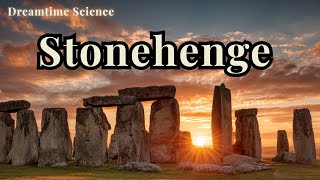
There is a hush that falls over Salisbury Plain in the gentle slant of dawn, when the mists still coil low and the grass holds the secrets of a thousand dew-soaked mornings. Out on this ancient canvas, a circle of stones rises like the bones of a dream, their silhouettes etched against the waking sky. Stonehenge, as it is called now—its name a modern tongue’s attempt to wrap around the mysteries of ages past—stands as both monument and riddle, a sentinel of time that has watched centuries swirl and fade around it like the ceaseless wind.
To approach Stonehenge in the mind, let us first allow the world to slow. Imagine the chill of the first morning, the breath of wildflowers mingling with the musk of earth, and the silhouettes of those great stones—bluestone and sarsen—casting long, uncertain shadows. They are arrayed in concentric circles, lintels balanced atop uprights with ancient precision, some toppled, some standing, all marked by the patient caress of rain and frost and sun. Each stone looms taller than a person, yet it is not their size alone that draws the eye, but the intention in their arrangement—a pattern that whispers of knowledge, of cosmic cycles, of a people listening closely to the sky.
Stonehenge is old beyond reckoning, its story reaching back to the Neolithic era, over four thousand years ago. Long before the written word, before iron or kingdoms or compass, hands shaped these monoliths, moving them across miles of hill and marsh. The bluestones, dense and dark, came from the Preseli Hills of Wales, nearly two hundred kilometers distant; the larger sarsens, from a closer but still formidable range to the north. The very act of transporting such immense stones, especially over such distances, is staggering when one considers the tools available—simple levers, sledges, and ropes, perhaps aided by ingenious wooden tracks or the frozen ground of winter. In their toil, those ancient builders left no written account, only the stones themselves, which speak in the silent language of alignment and shadow.
What compelled those early people to such effort? The landscape of Wiltshire is dotted with burial mounds and ceremonial avenues, but none command attention so completely. To walk among the stones is to sense that they were arranged for a purpose we only partly understand, a purpose that links earth and sky in a great, slow dance. For Stonehenge is a monument not only to human will, but to the cycles of the heavens. Every solstice, when the sun rises or sets at its farthest reaches, its light threads a corridor through the heart of the monument, illuminating faces and lintels with gold. The Heel Stone, a solitary sentinel just outside the main circle, frames the rising sun at midsummer as precisely as the sight on an ancient instrument.
This celestial choreography is no accident. The builders of Stonehenge were keen astronomers, although the word itself would not have existed in their time. They watched the sun wheel across the sky, the moon wax and wane, the stars drift in their patient courses. They marked the turning of seasons, the ebb and return of light, and encoded this knowledge in stone. The axis of Stonehenge aligns almost perfectly with the solstitial sunrise and sunset, and the stones themselves may have served as markers for lunar and solar cycles—an early observatory, as much as a temple. The Aubrey Holes, a ring of shallow pits within the circle, may have tracked the movements of the moon, predicting eclipses and guiding the rhythm of ritual.
Yet, for all this, Stonehenge is more than a scientific instrument. It is a place of gathering and memory, a theater for ceremony, a site where the boundary between the earthly and the celestial becomes thin. In the imagination of later ages, it has become a wellspring of myth. Some have called it the work of giants, or the handiwork of Merlin, the wizard of Arthurian legend, who was said to have conjured it by magic from distant Ireland. Others have seen it as a druidic temple, a place of sacrifice, or a healing sanctuary, its stones imbued with powers that reach beyond the mortal. The truth, as ever, is layered and elusive, woven from the threads of archaeology, folklore, and the always-shifting needs of those who gaze upon its form.

Stonehenge has a curious relationship with time—a monument to the past that remains stubbornly present, continually reinterpreted by each generation. In the 18th and 19th centuries, antiquarians measured and mapped it with meticulous care, puzzling over its purpose and construction. The Victorians, with their taste for the romantic and the mysterious, wove it into tales of lost races and vanished wisdom. In the modern era, the monument has become a symbol of endurance, of mystery, and of the human urge to reach beyond the visible.
It is perhaps in popular culture that Stonehenge has taken on its most protean forms. The stones have appeared in the fevered dreams of science fiction, as portals to other worlds or artifacts left by ancient visitors from the stars. In films and literature, Stonehenge is often cast as a node of power, a place where the fabric of reality is thin. The iconic silhouette—those upright stones capped by horizontal lintels—has become shorthand for the enigmatic and the ancient, a visual glyph that signals secrets and strangeness.
In the realm of music, Stonehenge has inspired both reverence and parody. The heavy metal band Spinal Tap famously invoked the monument in a tongue-in-cheek performance, their stage set featuring a diminutive model of the stones—a playful nod to the monument’s mythic status. Other artists have drawn upon its aura of ancient wonder, weaving its image into lyrics and album covers, seeking to tap the same well of mystery that drew the Neolithic builders. The stones, it seems, are as much a part of the modern imagination as they were of the ancient landscape.
Beyond the stage and screen, Stonehenge’s allure has drawn seekers and pilgrims, especially at the solstices, when the rising sun once more pierces the axis of the circle. Druidic revivalists, New Age practitioners, and the simply curious gather in the pale dawn, their faces upturned, echoing the silent veneration of those who came before. There is a sense, in these gatherings, of a thread that runs unbroken through time—a recognition of the rhythms that govern both stone and star.
Yet, for all that is known or imagined, Stonehenge remains a place of questions—a monument that resists final explanation. Archaeologists continue to unearth new clues: the remains of feasts and burials; traces of timber circles and processional avenues; evidence of far-flung connections that hint at a wider web of meaning. The stones themselves are marked by the passage of time, their surfaces scored by lichen and frost, their forms softened by centuries of exposure. But they endure, their presence a kind of song—one that hums just beneath the audible, a melody of earth and sky.
This song is not only one of stone, but of stars. For the people who built Stonehenge, the sky was a living tapestry, its changing patterns both mystery and guide. The constellations that arc overhead—the Pleiades, Orion, the great river of the Milky Way—were woven into myth and ritual, their risings and settings marking the passage of time. At Stonehenge, this cosmic music was given form in earth and stone, the cycles of the heavens anchored to the soil of Salisbury Plain. The monument becomes, in this sense, a kind of instrument: a way to hear the song of the stars in the language of shadows and light.
This interplay of stone and sky has inspired countless stories, both ancient and new. In science fiction, Stonehenge is often imagined as a machine—a device left by an unknown intelligence, its true purpose hidden until some future day. In Arthur C. Clarke’s tales, or in the swirling visuals of films, the monument becomes a gateway, a puzzle, a message written in the universal grammar of geometry. Even in more grounded interpretations, there is a sense that Stonehenge is a kind of code—a riddle set in stone, waiting for the right mind to unlock its meaning.

The reality is both more prosaic and more profound. The builders of Stonehenge were people much like us, possessed of curiosity and awe, of the desire to understand and to commemorate. They watched the heavens, measured the shadows, and shaped their world in response. Their stones are both a record and a question, a testament to what can be achieved with vision and persistence. In their labor, they linked themselves to the cosmos, inscribing the cycles of sun and moon into the landscape itself.
That landscape, too, is part of the story. The rolling hills and chalky soils of Wiltshire, the rivers that wind through the valleys, the ancient forests now mostly vanished—these shaped the lives of those who built Stonehenge, just as surely as the stars above. The monument is not isolated, but part of a web of sites: burial mounds, timber circles, processional avenues that stretch for miles. To walk the land is to sense the presence of the past, layered and persistent, echoing the slow rhythms of growth and decay.
Every year, new discoveries add to the tapestry. Beneath the soil, radar and magnetometry reveal traces of long-buried structures—ditches, pits, postholes that speak of vanished rituals and forgotten plans. Bones and pottery, beads and tools emerge from the earth, each a fragment of a larger story. The study of pollen and sediments tells of changing climate, of forests felled and fields sown. Stonehenge stands at the heart of this landscape, a witness to the patient work of centuries.
In science fiction, the stones are sometimes imagined as a beacon, a signal to the stars. In real life, they are a signal to us—a reminder that the urge to understand, to measure and to celebrate, is as old as humanity itself. The monument’s alignment to the solstices is both practical and poetic, a way of tying the lives of people to the great cycles that shape all life. It is a song in stone, sung across generations, harmonizing with the music of the spheres.
And so, the allure of Stonehenge endures—a place where history, science, and story weave together, where the boundary between the known and the unknown is always shifting. The stones beckon, their shadows stretching across the ages, inviting us to listen, to ponder, to dream. The song they sing is not finished, their meaning not exhausted. The sunrise at midsummer, the hush of twilight at midwinter, the endless procession of stars above—they are all part of the same ancient melody.
The story of Stonehenge is not only about the stones themselves, but about the gaze that rises from earth to sky—the impulse to seek patterns, to find meaning in the turning of the heavens. It is a story that continues, even now, as new generations gather in the chill dawn, watching the sun rise between the ancient lintels, feeling the pulse of time stretch backward and forward. The stones wait, patient as ever, their song echoing in the silence, hinting at mysteries yet to be unraveled.
And so we stand at the edge of understanding, the stones looming in the mist, the sky wheeling overhead. In their silent music, Stonehenge holds the promise of more—of secrets yet to be uncovered, of patterns yet to be traced in the interplay of shadow and light. The night deepens, the stars begin their ancient dance, and the song of stones and stars lingers, unresolved, in the cool air.
Echoes of Celestial Whispers
This part will unravel the deeper complexities of Stonehenge's astronomical alignment and the limits of our understanding about its purpose.
A hush settles over the Salisbury Plain as twilight deepens, and the stones of Stonehenge, ancient sentinels, cast long, enigmatic shadows across the dew-laden grass. The air grows dense with the perfume of wild herbs, mingling with an almost tangible sense of anticipation, as if the earth itself is holding its breath. For thousands of years, people have stood among these megaliths, watching the slow arc of the sun and the silent procession of the stars, searching for meaning within the interplay of shadow and light. Tonight, as we wander among the stones in our imagination, we allow ourselves to listen for the echoes of celestial whispers—the subtle language by which the sky and earth once spoke to those who gathered here.
Stonehenge is more than a ring of ancient stones; it is a kind of dialogue between humankind and the cosmos, a silent conversation written in geometry and shadow. Its construction, begun over four millennia ago, coincides with a time when the cycles of the heavens dictated the rhythms of daily life: the sowing and reaping of crops, the migrations of animals, the timing of ritual and remembrance. To understand why Stonehenge was raised, we must first understand how its builders read the sky, and how they sought to inscribe cosmic order upon the landscape.
Stand within the great sarsen circle. Feel the weight of the trilithons—massive uprights supporting horizontal lintels, their surfaces weathered by ages of wind and rain. Each stone is a monument to patience and perseverance, quarried from distant hills and hauled across miles of marsh and plain. Yet their arrangement is not arbitrary. There is a precision here that belies the brute enormity of the stones. In the heart of the circle, the so-called Altar Stone lies prone, aligned with the central axis of the monument. This axis, running northeast to southwest, is not chosen at random. It is a pointer, a cosmic needle, aligned with the point on the horizon where the midsummer sun will rise.
Imagine the dawn of the summer solstice. The sky begins to pale, etched with the first delicate streaks of sunlight. In the northeast, a gap between two upright stones—the Heel Stone and a companion—frames a narrow view of the horizon. As the earth turns and the sun climbs, its first rays slip through this portal, painting the heart of the monument with gold. For the onlookers gathered within the circle, this is no ordinary sunrise. It is a moment of cosmic symmetry, as if the universe itself is acknowledging their presence, bestowing light and warmth in a gesture of renewal.
But the solstice is only the most dramatic of Stonehenge’s astronomical alignments. Recent archaeological and archaeoastronomical studies have revealed a tapestry of celestial connections woven through the site. The layout of the stones encodes not only the path of the sun but also the cycles of the moon. Some pairs of stones mark the extreme positions—the ‘standstills’—of the moon’s rise and set during its 18.6-year cycle, a subtle and elusive rhythm that few outside of careful observers would ever notice. Other alignments hint at the tracking of eclipses, or the phases by which the moon waxes and wanes, a ghostly companion to the more assertive march of the sun.
It is tempting to picture Stonehenge as an ancient observatory—a kind of prehistoric calendar in stone. And in many ways, it is. The monument’s architecture embodies a sophisticated understanding of geometry and sightlines, a knowledge handed down through generations who watched the sky with patient, unwavering attention. Yet, just as the stones themselves are weathered and incomplete, our understanding of their purpose is partial, shadowed by the passage of millennia and the silence of those who built them.

Consider for a moment the circular earthwork that encircles the stone setting, a ditch and bank forming a great ring nearly one hundred meters in diameter. Just inside this embankment, a series of shallow pits—the Aubrey Holes—form a perfect circle. When first excavated, these holes were thought to hold timber posts, perhaps marking out the space for ritual gatherings. Later, they were found to contain the cremated remains of the dead, a silent testament to the monument’s role as a place of remembrance and mourning. Some have proposed that the Aubrey Holes could also serve as a counting device, a way to track the cycles of the moon or predict eclipses by moving markers from one hole to another, following patterns known only to those initiated in the monument’s secrets.
The stones themselves are not uniform. The great sarsens, rough-hewn from sandstone, form the outer circle and the central horseshoe. Within and around them, smaller stones of a different kind—the bluestones—are placed in rings and clusters. These bluestones, some weighing several tons, were brought from the distant Preseli Hills of Wales, two hundred and fifty kilometers away. Their journey across land and water is a feat of logistics and determination, their presence a mystery that deepens the monument’s already formidable enigma. Were they valued for their color, their resonance, their supposed magical properties? Or did they represent a bridge to distant lands, a way to bind the fate of disparate communities to the enduring order of the cosmos?
The arrangement of the bluestones, too, seems to follow celestial logic. Some researchers have argued that the horseshoe of bluestones within the sarsen circle points towards the winter solstice sunset, a mirror to the summer solstice sunrise alignment. If so, Stonehenge becomes a place of balance—of dark and light, death and rebirth, the turning of the year marked not by a single moment, but by the full sweep of the sun’s annual journey. Perhaps, as the days grew short and the cold deepened, people gathered to witness the sun’s apparent death, and then, with the return of light, to celebrate the promise of renewal.
Yet, even as we trace these alignments and speculate about their meaning, we encounter the profound limits of our knowledge. The stones do not speak. The people who built them left no written records, no stories inscribed in clay or stone, no explicit explanations for why they labored so mightily. What little we know comes from the indirect testimony of bones and charcoal, pollen trapped in ancient soils, the faint impressions of tools and fires. The rest is conjecture, shaped by our own hopes and fears, our own longing to find order in the silence of antiquity.
Some scholars warn against the danger of projecting too much of our own logic onto the past. Perhaps the alignments we see were not intended as astronomical markers at all, but as symbols, invitations to contemplate the mystery of being. Perhaps the act of gathering, of moving stones and shaping earth, was itself the point—a way for disparate peoples to forge community, to remember their dead, to negotiate alliances or settle disputes under the unblinking gaze of the stars. The monument’s grandeur, its refusal to yield a single, definitive meaning, is part of its power. It is an echo chamber for human aspiration, a place where questions outnumber answers and the horizon of understanding always recedes a little further.
There are other, subtler mysteries as well. The very geometry of Stonehenge is a puzzle. The sarsen circle is not a perfect circle, but an ellipse, its proportions carefully chosen. The main axis, oriented toward the solstice sunrise, is not quite aligned with true northeast; it is offset by a few degrees, a discrepancy that has fueled decades of debate. Was this a result of shifting horizons, changes in the tilt of the earth’s axis, or merely the limitations of available surveying techniques? Or did it hold some deeper significance, perhaps related to the landscape itself, the contours of distant hills, the course of rivers or the rising of particular stars?

Within the circle, the spacing of the stones is deliberate, yet not uniform. The gaps between the uprights are not all equal, and some stones are missing entirely, their absence marked by shallow hollows in the turf. Did these gaps matter? Were they windows for observing specific celestial events, or simply the result of later disturbance and decay? The monument’s symmetry is at once precise and elusive, a kind of cosmic music played in a mode we only half remember.
Even the stones themselves are riddled with secrets. Many bear strange markings—shallow grooves, cup marks, and tool scars—that hint at both practical and symbolic uses. Some have suggested that these marks are tally marks, records of time or ritual, though no consensus has been reached. The surfaces of the sarsens are pitted with ancient weathering, their contours shaped by the slow abrasion of wind-blown sand, the steady drip of rain, and the frost of countless winters. In this way, the stones themselves become a kind of chronicle, their scars a testament to the passage of time, the endurance of matter, the patience of the earth.
In recent decades, new technologies have begun to peel back the layers of the monument’s past. Geophysical surveys reveal traces of other, now vanished features—avenues leading from the stones to the river, postholes marking the sites of vanished timber structures, pits dug for purposes unknown. Lidar scans and ground-penetrating radar uncover patterns invisible to the naked eye: faint traces of ditches, banks, and enclosures spreading across the plain. Some of these features align with the stones, suggesting a choreography of movement and gathering that extended far beyond the central circle. Stonehenge was not an isolated monument, but the heart of a vast ritual landscape, a node in a web of meaning that stretched across fields and rivers, linking the living and the dead, the present and the eternal.
Yet, for all our advances, for all the precision of our instruments and the sophistication of our models, the essential mystery endures. We can map the alignments, measure the angles, reconstruct the probable courses of ancient processions. But we cannot recover the thoughts of those who watched the solstice sun rise through the Heel Stone, or felt the hush of the moon’s shadow as it slid across the circle. We cannot know what music was played, what words were spoken, what prayers were uttered into the cold mist of dawn.
Stonehenge, in its silence, reminds us of the limits of knowledge. It is a reminder that not all questions yield to reason, that some truths are meant to be contemplated rather than solved. Perhaps that is its greatest gift: an invitation to humility, to wonder, to the acceptance that the universe is vast and old, and that our place within it is both fleeting and precious.
As darkness falls and the stones recede into shadow, the echo of celestial whispers lingers in the air. The monument is empty now, save for the wind and the quiet scurrying of night creatures. Yet in the mind’s eye, the ring is alive with firelight and song, with figures moving between stone and sky, measuring time by the turning of the heavens. The questions remain, suspended in the night: what did they see, those ancient watchers? What did they know, that we have forgotten? And what, beneath the silent gaze of the stars, shall we discover next?
Reading the Stones
This part will cover how we study Stonehenge and ancient astronomy, including the tools, methods, and historical breakthroughs.
Night gathers quietly around the Salisbury Plain, that ancient rolling sweep of grass and sky. The stones, cool and unmoving, lie scattered across their green cathedral, shadows deepening in their weathered flanks. Each block, each lintel and solitary pillar, is a page in a book written with neither ink nor words. To read it, one must learn the language of stones and sunrises, the careful grammar of shadows and alignments, and the subtle punctuation of ancient endeavor. This night, in the slow hush before dreams, we become archaeologists and astronomers, learning to read what the old earth has written.
The study of Stonehenge, and indeed of all ancient astronomy, is not a single discipline but a tapestry woven from many threads. Archaeologists kneel in the soil, brushing away centuries with delicate hands; astronomers raise their eyes to the heavens, measuring angles and cycles; physicists and chemists peer at atoms and isotopes, weighing the very breath of time. Each approaches the same mystery from a different angle, as if circling the monoliths, lanterns in hand, seeking the secret at their core.
The earliest efforts to understand Stonehenge were, in their way, as mythic and mist-shrouded as the monument itself. Medieval chroniclers spun tales of giants and wizards, of Merlin lifting stones with spells; antiquarians of the seventeenth and eighteenth centuries drew careful sketches and debated whether Romans or Druids had built this ring. Their questions, though naive to us now, were the seeds from which methodical inquiry would grow. In those days, to study Stonehenge meant to walk among the stones with notebook and pencil, measuring by paces, speculating by candlelight, and sometimes trusting more to imagination than to evidence.
It was not until the nineteenth century that more rigorous tools began to shape our reading of the stones. Theodolites—those precise instruments of brass and glass, capable of measuring minute angles between points on the earth—were introduced to the field. Surveyors set up their tripods among the sarsens, mapping the positions of every stone with a geometric fidelity the builders themselves might have admired. The great circle, the horseshoe, the twin rings of bluestone—each was plotted and measured, their proportions compared with Greek temples and Roman roads, seeking some key to their arrangement.
Yet it was in the interplay between earth and sky that a new chapter began. In the mid-twentieth century, a new breed of investigator arrived on the plain: the archaeoastronomer. They came armed not only with tape measures and theodolites, but with ephemerides—tables of the rising and setting of sun, moon, and stars— and with a conviction that Stonehenge was not merely a monument of stones, but a calendar in stone, a vast, enduring observatory.
Gerald Hawkins, an English astronomer working in America, was among the most influential of these pioneers. In the early 1960s, he brought to bear the most advanced tool of his time: the computer. Feeding into its circuits the measured positions of Stonehenge's stones, and the calculated risings and settings of celestial bodies, Hawkins sought patterns that might reveal the intentions of its builders. His results, published in “Stonehenge Decoded,” electrified the world: he argued that the monument encoded an astonishing array of astronomical alignments, tracking not only the summer solstice sunrise and winter solstice sunset, but the complex cycles of the moon and even eclipses.
Hawkins’s methods were both simple and profound. He mapped the sightlines formed by pairs of stones and gaps, then calculated which celestial events these lines would have pointed to, thousands of years ago. For this, he needed to account for the slow drift of the Earth’s axis—precession—which shifts the position of sunrise and moonrise over millennia. His computer, primitive by today’s standards but revolutionary then, churned through the numbers, spitting out tables and probabilities. Some alignments, he argued, could not be by chance.

Yet, as with all great discoveries, Hawkins’s claims were met with both excitement and skepticism. Critics pointed out that with enough stones and enough lines, one might find coincidences anywhere. The debate grew heated, yet it forced a new rigor: archaeoastronomy blossomed into a science, demanding careful statistics, precise surveying, and a deep understanding of how ancient people might have looked at the sky.
While Hawkins’s computer was a marvel for its day, the human eye remains a powerful instrument. Even now, visitors at midsummer gather in the pre-dawn chill to watch the sun climb over the Heel Stone, that solitary sentinel standing apart from the main ring. The alignment is undeniable—the main axis of Stonehenge, running through the great entrance, points directly to the spot where the midsummer sun rises. This is no accident of chance, but the result of deliberate human design, a message carved in stone and sunlight.
To understand how such alignments are detected and measured, consider the tools of modern archaeoastronomy. The transit theodolite, descended from those nineteenth-century surveyors’ instruments, allows for precise measurement of azimuth—the compass direction—of each stone and gap. Laser scanners, swirling beams of light across the ancient pillars, capture their positions to within millimeters, building three-dimensional models that can be examined from any angle and under any simulated sky. Drones hover overhead, mapping the contours of the landscape, revealing subtle earthworks invisible from the ground.
But tools alone are not enough; one must understand what to look for. Ancient observers, lacking compasses or clocks, relied on the cycles of sun and moon to orient themselves. The most important events in their year were the solstices and equinoxes—the turning points of the seasons. At Stonehenge, the summer solstice sunrise and winter solstice sunset are marked not only by the axis of the stones, but by subtle features in the surrounding earthworks. The Avenue, a broad processional causeway, sweeps away from the circle, its bends and curves aligning with the path of the rising sun at midsummer.
It is not only the sun that is written into this landscape. The moon, too, leaves its traces. Unlike the sun, which rises and sets in roughly the same places each solstice, the moon follows a more complex path, shifting over an 18.6-year cycle known as the lunar standstill. At its major and minor standstills, the moon rises and sets at its most extreme northern and southern points, a pattern that would have been visible—and perhaps significant—to careful watchers on the plain. Some believe the enigmatic Aubrey Holes—fifty-six pits circling Stonehenge—may have served as markers for tracking this cycle, though the evidence remains tantalizingly incomplete.
To test such theories, modern researchers use both observation and simulation. Computer models, far more powerful than Hawkins’s original mainframe, can recreate the sky as it would have appeared thousands of years ago, correcting for precession, atmospheric refraction, and even the slow sinking of the horizon as the land changes. By standing within a virtual Stonehenge, researchers see the sun and moon rise where the ancient builders saw them, testing whether the stones frame these events with deliberate precision or with the randomness of chance.
Beyond the alignment of stones, the very bones of the ground hold secrets. Archaeologists dig with trowel and brush, uncovering the postholes and pits that mark earlier phases of construction. Radiocarbon dating, that quiet revolution of twentieth-century science, allows them to assign ages to charcoal, bone, and antler found in these layers. By measuring the decay of radioactive carbon-14, they build a timeline of activity on the site, tracing the shifting patterns of use and meaning across centuries.
Strontium isotope analysis, a newer tool, tells a subtler tale: by measuring the ratios of isotopes in human teeth and animal bones, scientists can determine where those individuals grew up. The bluestones of Stonehenge, dragged from the far hills of Wales, are matched by the teeth of cattle and people who feasted at nearby Durrington Walls, showing that in the monument’s heyday, people and stones alike traveled great distances to assemble here.

Yet the study of ancient astronomy is not confined to the stones themselves. The landscape around Stonehenge is stitched with other monuments—circular henges, long barrows, and avenues—all part of a broader web of meaning. LiDAR, a technology that sweeps the land with laser pulses from the air, reveals these hidden features beneath grass and plough. Patterns emerge: lines of sight between distant mounds, alignments along ancient trackways, suggesting that Stonehenge was but one node in a wider sacred geography, its astronomical meanings echoed and amplified across the plain.
Historians, too, play their part, combing through ancient texts and folklore for hints of how the sky was understood. Though no written records survive from Stonehenge’s builders, later cultures—Babylonians, Egyptians, Greeks—left behind star charts and myths, calendars and tales. By comparing these stories, researchers glimpse the ways in which the heavens shaped the imagination of early societies, turning the slow dance of stars and seasons into ritual and architecture.
Even the stones themselves speak, if one knows how to listen. Petrographers examine their mineral structure, tracing the origins of each block; weathering patterns reveal the passage of rain and frost, the slow erosion of millennia. Marks chiseled into the sarsens—tool scars, cup marks, even faint carvings of axes and daggers—hint at rituals long vanished. Through microscopic analysis, scientists detect traces of ochre, ash, and pollen, reconstructing the environment as it was when the stones first rose.
The breakthroughs that have emerged from this confluence of disciplines are as varied as the tools themselves. The realization that Stonehenge’s axis aligns with the solstices; the uncovering of burial remains, suggesting the site was both temple and tomb; the mapping of trade and migration across ancient Britain, all have come from the patient marriage of measurement and imagination. Each discovery opens new questions, new puzzles to be solved.
Yet, for all our modern sophistication, there is a humility in this work. The people who built Stonehenge lived in a world where sky and earth were bound together, where the turning of the year was not measured by clocks but by the rising of stars and the lengthening of shadows. We, with our lasers and satellites, can only approximate the knowledge they held in their bones and stories. In reading the stones, we are not only scientists, but pilgrims, seeking to bridge the gulf of time.
As the night deepens, let your thoughts wander among the tools and methods, the breakthroughs and debates. Picture the surveyor at dawn, measuring angles against the horizon; the archaeologist brushing away soil to reveal a posthole older than the pyramids; the astronomer watching the solstice sun rise over the Heel Stone, heart pounding with the certainty that here, in this place, earth and sky once met in perfect harmony. They are all readers of the stones, each interpreting the text in their own way, each adding a line to the story.
Yet the book is not finished. New methods still emerge—DNA analysis, high-resolution geophysics, the modeling of ancient soundscapes. Each allows us to ask new questions, to hear new echoes from the past. The stones themselves endure, silent but eloquent, awaiting the next reader, the next insight.
And so, as you drift toward sleep, imagine the work unfinished, the questions still rippling across the plain. The stones have more to say; the sky, more stories to tell. In the hush before dawn, we stand poised between earth and heaven, ready to listen for what comes next, and to follow the faint trail of wonder into the heart of the ancient night.
Stone, Sky, and Soul
This part will reflect on the connection between Stonehenge, ancient astronomy, and our human need to seek meaning in the cosmos.
The hush of twilight settles over the Salisbury Plain. The colossal stones of Stonehenge cast long, silent shadows across the rippling grass, their ancient faces gazing eternally toward horizons both familiar and unfathomable. In the cool, still air, the monument seems to breathe—a vast, slow exhalation of stories and secrets, of questions too large for words, of a yearning as old as humanity itself. Here, at this crossroads of stone and sky, one is drawn not only to the mechanics of construction or the precision of celestial alignments, but to the deeper, more elusive currents that flow between these enduring rocks and the cosmos above. The same impulse that led hands to haul and raise these monoliths thousands of years ago still pulses within us: a desire to reach outward, to read meaning in the movements of sun and star, to ask—quietly, stubbornly, again and again—where do we fit in this vast and restless universe?
Stonehenge, with its intricate geometry and astronomical precision, is more than a monument to engineering or even to ritual. It is a dialogue between earth and sky, a testament to the persistent human urge to make sense of the heavens. When you stand within its ancient circle, your gaze naturally follows the lines the stones suggest—tracing the rising of the midsummer sun, the arc of the winter solstice, the wanderings of the moon. You become, for a moment, a participant in an ageless act: the act of turning your face to the sky and wondering what lies beyond, and what it all might mean.
Consider the world as it was when the first stones were raised. There were no lights to drown out the stars, no screens to distract the eye. Night truly belonged to the sky, and the sky was alive with movement and mystery. The sun’s daily journey, the waxing and waning of the moon, the slow drift of constellations—these were not mere backdrops, but central actors in the dramas of survival and belief. To track the heavens was to reckon with time itself: to anticipate the coming of seasons, to know when to plant and when to harvest, to predict the return of warmth or the descent into cold. Yet beyond this practical wisdom, there was something more—a sense that the sky was woven with stories and signs, that the turning of celestial wheels carried meaning for those below.
This yearning for meaning finds tangible form in the stones themselves. The sarsens and bluestones of Stonehenge are silent, yet eloquent. Their arrangement encodes knowledge: the axis aligned to the solstices, the horseshoe of trilithons framing the rising sun, the shadowed avenue guiding the gaze outward. Through these alignments, the builders inscribed their attentiveness to the sky into the landscape itself. It is as if the stones became instruments—lenses through which to observe, measure, and celebrate the cycles of earth and cosmos.
But why, we might ask, did our ancestors go to such lengths? What drove them to shape and move these massive stones, to hone their positioning with such care? The answers are layered, complex, and ultimately inseparable from the human need to belong to something greater than oneself. In the great dark of prehistory, to see the returning sun rise precisely between two stones was to glimpse order in apparent chaos, to feel that the universe could be read and understood, that human lives were not adrift but synchronized with the rhythms of nature itself. The stones became not only markers of time, but anchors of meaning—places where the temporal and the eternal met.
Across cultures and epochs, this urge has surfaced again and again. From the megalithic circles of Brittany to the pyramids of Egypt, from the great kivas of Chaco Canyon to the observatories of ancient China, people have raised monuments to the sky. Each structure is shaped by its own tradition and environment, yet all are linked by a common thread: the drive to chart the heavens, to map the invisible onto the visible, to draw the language of stars and seasons into the world of stone and earth. In this way, Stonehenge is both unique and universal—a local expression of a cosmic longing.

Within this longing, astronomy and spirituality become intertwined. The act of watching the sky is at once a scientific and a sacred endeavor. To measure the solstice is to understand the mechanics of the solar year, but it is also to participate in a kind of cosmic ritual—a cyclical renewal, a reaffirmation of the world’s continuity and our place within it. For the builders of Stonehenge, as for so many after them, the observation of the heavens was not a cold calculation but a deeply felt communion. The stones, standing silent in the grass, are thus both observatories and altars, both instruments for knowing and vessels for wonder.
In the soft light of dawn, when the first rays spill across the plain and touch the weathered lintels, the air seems to shimmer with possibility. The boundary between the everyday and the extraordinary thins. One can imagine ancient gatherings—figures wrapped against the chill, breath mingling with the mist, eyes fixed on the narrow gap where the sun would soon appear. The rising light would have been not just a signal, but a revelation: a sign that time was turning, that the world was renewed, that the great cycles continued. Songs might have been sung, offerings placed, stories told—each act a way of weaving human life into the fabric of the cosmos.
Yet Stonehenge is not just a relic of distant belief. It endures as a touchstone for our own search for meaning. Even in this age of satellites and particle accelerators, of streaming data and distant probes, we are not so different from those who raised these stones. We still look up and wonder if the patterns we see mean something—if we are witnesses to a grand design, or if meaning is something we must create for ourselves. The night sky, once mapped in stone, is now mapped in code, but the impulse is the same: to seek understanding, to find our bearings, to reach for what lies beyond.
This impulse runs through the history of science and art alike. Astronomers plot the motions of planets, poets write of the music of the spheres, philosophers ponder the place of consciousness in a universe of stars. Each discipline, in its own way, circles the same question: how do we fit in? Are we mere accidents of chemistry, or is there a thread that connects us to the turning heavens? The stones of Stonehenge, mute but enduring, offer no final answers—only an invitation to keep asking, to keep watching, to keep seeking.
The stones themselves bear the marks of time and weather, their surfaces pitted and scarred. Lichens trace slow, intricate patterns across their faces; rain etches grooves that deepen year by year. In these marks is a record of patience, of endurance, of centuries turning under an unchanging sky. And yet, for all their solidity, the stones are not untouched by the human soul. Each generation that visits brings its own questions, its own interpretations. Pilgrims, archaeologists, artists, astronomers—all have stood in the circle and tried to read its meaning. The monument is thus both fixed and fluid: a place where the past presses against the present, where the personal and the cosmic meet.
At night, when the last visitors have gone and the plain is left to the wind and the stars, Stonehenge seems to return to its oldest role. The sky above it opens wide, filled with the cold fires of distant suns. The Milky Way arches overhead, a river of light flowing from horizon to horizon. In the hush, one might sense the presence of those who once gathered here—watchers and dreamers, their faces upturned, their hopes and fears as real as our own. The stones stand witness, their silence deeper than any words.

Yet even as we marvel at their endurance, we are reminded of our own fleetingness. Human lives are brief compared to the slow weathering of sarsen and bluestone, briefer still when measured against the cycles of stars and galaxies. And yet, in our short span, we strive to leave marks—songs and stories, monuments and memories—that will outlast us. In this, we are kin to those ancient builders. We too seek to bind ourselves to the world, to inscribe our meaning upon the land, to reach for the sky with hands of stone and spirit alike.
Science, at its heart, is an expression of this same yearning. To map the movements of the heavens, to decipher the chemistry of distant worlds, to trace the origins of life and consciousness—these are acts of wonder as much as inquiry. The drive to understand is inseparable from the desire to belong, to find our place in the vastness. Stonehenge, with its alignments and enigmas, reminds us that the search for knowledge is also a search for connection. Each calculation, each observation, each carefully placed stone is a way of saying: I am here. I see. I wonder.
It is tempting, as we gaze upon the stones and consider their age, to imagine that meaning was clearer in the past—that ancient people, closer to the land and sky, felt a certainty we have lost. Yet the evidence suggests otherwise. The builders of Stonehenge were not immune to doubt or complexity. Their monument was revised and rebuilt across generations; its purpose shifted, its alignments recalibrated. The act of seeking meaning was ongoing, unfinished, open to reinterpretation. In this way, Stonehenge is not a fossilized answer but a living question—a space where each era brings its own curiosity, its own longing, its own tentative answers.
The dialogue between stone, sky, and soul continues. In the quiet of the plain, beneath the slow drift of clouds and the eternal turning of stars, we find ourselves drawn into its orbit. The stones do not speak, but they invite us to listen—to the rhythms of the earth, to the stories of the sky, to the restless pulse of our own searching hearts. And as we listen, we become part of the circle, participants in a tradition that stretches back to the dawn of human thought.
Beyond Stonehenge, the world is filled with other circles—rings of stone and rings of meaning. Each is a reminder that we are not alone in our wondering, that across time and place others have looked up and asked the same questions. The universe is vast, but not indifferent; it is a place where meaning is made, again and again, through the meeting of human curiosity and cosmic mystery.
As the night deepens and the stars wheel overhead, the stones seem to dissolve into shadow, their outlines softened by the dark. The sky grows richer, more complex, a tapestry of light and silence. In this darkness, the imagination finds room to roam. Perhaps, in the spaces between stars, in the gaps between stones, we might glimpse the shape of an answer—not final, not complete, but enough to sustain the journey. For meaning is not a destination but a path, traced in stone and sky and soul alike.
So the circle remains open, the dialogue ongoing. The stones stand, the stars turn, and we, like those before us, look up and ask, and listen, and dream.