The Char of Culture: Steak in Myth and Memory
This part will cover the cultural and science fiction associations behind the cooking of steak. From the primal appeal of fire-kissed meat, to the sci-fi future where synthetic meat challenges our culinary traditions. We'll explore the curious connections between cooking, culture, and the cosmos.
There is an ancient and enduring magic to the sizzle of meat over flame—a story older than the written word, older perhaps than language itself. In the hush of evening, when the world is painted with the ruddy glow of embers, humanity has long gathered around the warmth of a fire, drawn by the aroma of fat and protein transforming in the heat. The act of cooking steak over an open flame is not merely a ritual of sustenance. It is a drama, a memory, a signal fire from our most distant ancestors to the restless present, flickering with myth and wonder and the quiet hum of science beneath its charred crust.
Let us begin with the primal theater: the fire, the meat, and the hands that turn it. Long before cities rose from the dust, before the calendar was scratched on stone or bark, there was this elemental trinity. Archaeologists have uncovered the blackened bones of ancient feasts, evidence that Homo erectus may have tamed fire nearly a million years ago. To sear flesh was to claim mastery over both nature and hunger, to transform what was raw and wild into something safer, softer, more fragrant. Here, in the glowing heart of the hearth, the first stories were told and the first myths born—a sacred communion of heat and life.
The charred exterior of a steak is more than mere crust; it is the sum of countless chemical reactions that speak in the language of molecules. When meat meets fire, a symphony of change unfolds: sugars and amino acids dance together in the Maillard reaction, releasing a kaleidoscope of new flavors, browning to a hue that stirs appetite and memory. Fat renders and drips into the flames, sending up sparks and smoke, perfuming the air with aldehydes and ketones, the unseen messengers of flavor. In these moments, there is a feeling both ancient and immediate, as if the boundaries between the tribal past and the digital present have momentarily dissolved.
Throughout history, the cooking of meat—especially the esteemed steak—has been tangled in the roots of culture and ceremony. In Homer’s epics, heroes feast on roasted oxen, their banquets a testament to power and hospitality. In the highlands of Scotland, the sizzling of beef is as much a marker of clan as of cuisine. Each society has endowed its own cuts and customs with meaning, from the sacred cattle of India to the sizzling asado of the Argentine pampas, where the fire is tended with near-religious devotion. Even today, the grilling of steak is a communal act, often performed in the open, under the watchful eyes of friends and kin. The sharing of charred meat is an offering, a reaffirmation of bonds, a celebration of abundance—or, at times, a remembrance of hardship and survival.
Yet, beneath these rituals and stories lies a deeper resonance, one that thrums through the marrow of our collective memory. Fire was not only a tool for nourishment; it was a source of protection, a ward against the darkness and the prowling beasts beyond its light. To gather around the grill, to share food seared by flames, is to partake in a reenactment of survival, a brief return to the circle of safety that defined our earliest communities. The steak on the plate is both a meal and a memoir, a smoky echo of fireside gatherings stretching back through millennia.
As cultures evolved, so did the steak itself, acquiring layers of meaning and association. In the United States, the steakhouse became an emblem of prosperity, a place where deals were struck and milestones celebrated. The marbled ribeye or the formidable porterhouse—these were not simply cuts of meat, but symbols of achievement, of rugged individualism, of the mythic West with its boundless prairies and cattle herds. In Japan, the artistry of beef reached new heights in the marbled splendor of wagyu, each bite a meditation on texture, patience, and the quiet luxury of time.
But even as steak became a canvas for cultural identity, it also entered the realm of the imagination, the speculative, the science fictional. The future of meat—and in particular, of steak—has long haunted the dreams of writers and thinkers, who see in its sizzle a crossroads of technology and tradition. In the gleaming kitchens of tomorrow, the act of cooking steak is reimagined, its meaning refracted through the lens of science and possibility.
Science fiction, that most speculative of genres, has often returned to the question of what we eat—and what that says about who we are. In a world of dwindling resources and burgeoning populations, the steak becomes a symbol of both nostalgia and ethical dilemma. The idea of synthetic meat, conjured from vats or printed layer by layer in humming machines, is not merely a technical challenge. It is a question posed to the very heart of culture: What becomes of our myths when the cow is no longer part of the story? When the fire is replaced by a sterile bioreactor, and the marbling of fat is designed by algorithm, does the steak still carry the same weight, the same aroma of memory and meaning?
Consider the fictional futures imagined by writers such as Arthur C. Clarke or Philip K. Dick, where food is replicated or synthesized, where the pleasures of the table are decoupled from the messy realities of agriculture and animal husbandry. In these worlds, the steak is still desired—a luxury, perhaps, or a relic, or a simulated experience rendered with digital perfection. There are stories in which a synthetic steak is indistinguishable from the real, yet something ineffable is lost: the memory of sunlight on hide, the sound of hooves in grass, the ancient lineage of fire and flesh. The char of culture, once kindled by flame, now flickers behind glass, a ghost of what once was.
Yet, even as technology advances, the primal appeal of steak remains stubbornly resistant to erasure. There is something about the transformation of raw to cooked, of muscle to meal, that anchors us to the earth, to the animal, to ourselves. The sound of a steak hitting a hot pan, the savory haze that fills the air, the anticipation that gathers as the crust forms—these are not easily simulated. They are the result of an intricate dance of physics and chemistry, of sensory memory and cultural longing.
The science behind this transformation is a symphony of heat and time. As the steak cooks, heat travels from the surface inward, denaturing proteins, unraveling collagen, coaxing moisture from the fibers. The temperature gradient within the meat determines the doneness, each degree a new threshold: rare, medium rare, well done. The surface, exposed to direct heat, undergoes pyrolysis, a process that chars and blackens, creating the coveted crust that is both barrier and invitation. The juices, once locked within the cells, mingle with rendered fat, pooling beneath the steak as it rests, ready to be reclaimed in a final, savory bite.
This interplay of elements—muscle, flame, fat, and time—forms the basis of a ritual that transcends mere nutrition. It is a performance, a meditation, an act of creation and destruction. The cook becomes both artist and scientist, wielding tongs and thermometer with equal reverence, seeking that elusive balance between sear and succulence. In the kitchen or by the campfire, the act of cooking steak is a moment suspended between past and future, a bridge between the tangible and the imagined.
In recent years, this bridge has been tested by the advent of cultured meat—flesh grown not on the bone, but in the petri dish. The promise is profound: a steak without slaughter, a meal with a lighter footprint on the planet. Companies race to perfect the process, coaxing stem cells into muscle fibers, engineering fat for marbling, striving to recreate the texture and taste that tradition demands. The first lab-grown steaks, fragile and expensive, were milestones of ingenuity—a glimpse of a world where the pleasures of the table are decoupled from the cycles of birth and death.
Yet, for all its promise, the synthetic steak raises questions that are both practical and philosophical. What is lost when the animal is removed from the equation? Can the rituals of fire and sharing survive when the origin of the meat is a steel tank rather than a living pasture? Will new myths arise to replace the old, or will the memory of the charred crust linger as a ghost in the machinery of progress?
There is a peculiarly cosmic aspect to this transformation, as if the act of cooking steak is a microcosm of the universe itself—matter reshaped by energy, order rising from chaos. The heat that chars the surface is a sibling to the fires of stars, the very process that forges carbon and nitrogen, the building blocks of all flesh. In the crackle of the grill, there is a faint echo of cosmic creation, a reminder that we are, in the end, children of fire and dust, seeking meaning in the transformation of the ordinary into the extraordinary.
Throughout the ages, the steak has served as a canvas for our desires and anxieties, our dreams of abundance and our fears of loss. In myth, the roasting of meat is an offering to gods and spirits, a prayer for favor or forgiveness. In memory, it is the taste of homecoming, of feast days and quiet evenings, of hands reaching across the table. In the future—imagined or impending—it is a site of negotiation between tradition and innovation, between the world that was and the world to come.
And so, the char of culture persists, smoldering in the stories we tell and the meals we share. The act of cooking steak, whether on an open fire or in the gleaming machinery of tomorrow, remains a dialogue between the sensory and the symbolic, the physical and the imagined. Each steak, each sear, is a palimpsest—a surface inscribed with the history of its making, layered with meaning, waiting to be tasted and remembered.
As the night deepens and the embers cool, the questions linger in the air, fragrant and unresolved. How will our rituals of fire and flesh evolve in the face of scientific progress? Will the future’s synthetic steaks carry the same weight of memory and myth, the same aroma of longing and belonging? Or will new stories rise from the smoke, unimagined and yet to be savored, as the cosmos continues its slow, inexorable dance of transformation?
The journey of steak, from the first flicker of flame to the speculative feasts of the future, is far from over. In the unquiet hush between tradition and innovation, between hunger and invention, the char of culture glows on—its warmth a beacon for those who seek meaning in the simplest, most elemental acts of transformation. And somewhere, whether in memory or anticipation, the sizzle of steak over fire endures, beckoning us onward into the next chapter of its improbable, unending story.
The Dance of Heat and Meat: Unraveling the Maillard Reaction
This part will delve deeper into the science behind cooking a steak, exploring the complexities of the Maillard Reaction. We'll discuss the ballet of heat and protein, the intricate interplay between amino acids and sugars that turns raw meat into a mouthwatering meal. We'll bust the myth that 'searing seals in the juices' and explore the limits of our understanding of this gastronomic phenomenon.
In the hush of a kitchen, as the skillet warms and the steak awaits its transformation, a quiet anticipation fills the air. The sizzle soon to come is more than a herald of flavor—it is the overture to a complex and beautiful dance, one choreographed not by chefs alone, but by the hidden chemistry of the Maillard reaction. This reaction, named after the French chemist Louis-Camille Maillard who first described it in 1912, is the alchemy that turns the pale, supple flesh of raw meat into the richly browned, aromatic crust we so crave.
Let us drift, for a moment, into the world that exists on the surface of a steak as it meets a hot pan. Here, the laws of physics and the subtleties of chemistry come alive in a delicate interplay. The Maillard reaction is at its heart a conversation between amino acids—the building blocks of proteins—and reducing sugars, those reactive carbohydrates with a free, hungry carbonyl group. When exposed to sufficient heat, typically above 140 degrees Celsius (284 degrees Fahrenheit), these two classes of molecules find each other and enter into a courtship of astonishing complexity.
The initial spark is a simple one: the carbonyl group of a sugar reacts with the amino group of an amino acid, forming what is called a Schiff base—an unstable compound that quickly rearranges itself into a more stable, yet still reactive, Amadori product. This is only the beginning. From here, a branching path of chemical possibilities unfurls, leading to hundreds, even thousands, of distinct compounds. Some of these are small volatiles that waft upward as the aroma of roasting meat; others are larger, pigment-rich molecules, giving the steak its deep, appealing crust.
At this microscopic scale, time seems to dilate. In the blink of a human eye, the surface of the steak becomes a crowded stage. The proteins that once formed the muscle fibers begin to denature, their carefully folded structures unfurling, exposing new reactive sites. Water, once held within the meat’s network, begins to evaporate, carrying with it some of the molecules that contribute to the savory, almost primal scent. The sugars present, though in smaller quantities than in many other foods, are enough to fuel the Maillard reaction’s fireworks.
It is easy to imagine that this process is simple, a straightforward browning. Yet, the Maillard reaction is not a single, linear pathway. Rather, it is a maze of branching tunnels, a network of reactions whose products feed into one another, diverge, and recombine. The outcome depends on the specific amino acids and sugars present, the temperature and pH, the presence of water, and the duration of heat. Even a slight change in these factors can send the reaction down a different course, leading to a different palette of flavors, aromas, and colors.
Within this chemical labyrinth, certain products stand out. Among them are the melanoidins, the deeply pigmented polymers responsible for the rich brown crust on a seared steak. Their formation is the culmination of many sequential reactions, and their structure is so complex and variable that chemists still struggle to define it precisely. Melanoidins not only provide the visual appeal of a well-cooked steak but also contribute to its flavor, offering subtle bitterness and depth.
But the Maillard reaction is not solely a matter of color. The real magic lies in the creation of flavor molecules. Some of the earliest products are aldehydes and ketones, which bring notes of nuttiness and caramel. As the reaction continues, more complex molecules are formed—pyrazines, which lend roasted, earthy aromas; furans, with their sweet, burnt-sugar notes; and thiophenes, which give a sense of savoriness and umami. The particular mixture of amino acids and sugars determines which of these molecules are created in abundance, which lie dormant in the background, and which never appear at all.
Consider, for instance, the amino acid cysteine, which contains sulfur. When cysteine is involved in the Maillard reaction, it can lead to the formation of sulfur-containing heterocycles—compounds that provide the meaty, brothy, almost onion-like aroma that is so essential to the character of cooked meat. This is why the aroma of seared beef is distinct from that of baked bread or roasted coffee, even though all three foods undergo the Maillard reaction: the starting materials are different, and so the resulting bouquet of flavors is unique.
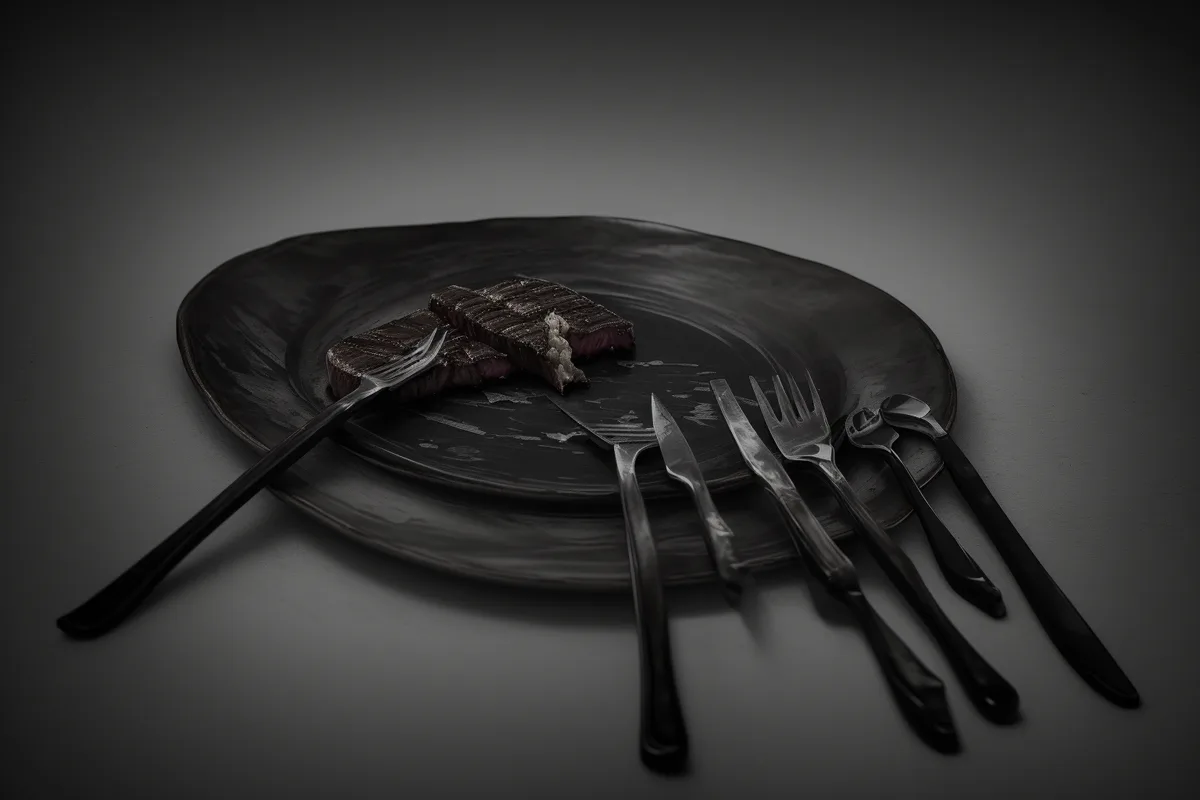
Yet, as we marvel at these transformations, it is important to dispel one of the most persistent myths in the lore of cooking: the idea that “searing seals in the juices.” This phrase, repeated in kitchens and cookbooks for generations, is a seductive one. It suggests that the browning of the exterior creates a barrier, locking the moisture within the meat. Alas, careful experiments betray the truth. Searing does not, in fact, prevent the loss of water from a steak. Moisture is driven out primarily by heat, and a seared steak will lose as much, if not more, water than one cooked by gentler means. What searing does accomplish is to develop flavor and aroma through the Maillard reaction, creating a crust that contrasts beautifully with the tender interior. The myth, though persistent, is but a poetic misunderstanding of the real science at play.
Why, then, do we so cherish the crust on a steak? The answer lies not only in chemistry but in the way our senses are wired. The Maillard reaction produces a symphony of flavors that our brains associate with nourishment, satisfaction, and pleasure. These compounds, evolved in nature as signals of cooked, energy-rich food, trigger deep-seated responses in us. The contrast between the crisp, flavorful exterior and the succulent, yielding interior is a result of careful control over heat, time, and technique.
Let us turn, for a while, to the physical dance of heat itself. When a steak is placed on a hot surface, energy is transferred rapidly from metal to meat. The initial sizzle is the sound of water vaporizing—energy breaking the bonds that hold liquid water to the protein matrix. At the surface, where temperatures can soar far above the boiling point of water, the Maillard reaction takes place with greatest intensity. Yet, just a few millimeters beneath, the temperature falls away, and a different set of reactions begin to unfold.
The interior of the steak remains shielded from the highest heat. Here, the proteins denature and coagulate, forming a tender matrix that traps some water, fat, and dissolved flavor molecules. Collagen, the tough connective tissue that laces through many cuts of meat, begins to break down into gelatin if the temperature is high enough for long enough. The gradient of temperature from surface to center creates a spectrum of textures and doneness, from the caramelized crust to the rosy pink interior.
The Maillard reaction itself is sensitive to these conditions. It is most vigorous in low-moisture environments; water, after all, acts as a heat sink, keeping the temperature pinned to 100 degrees Celsius until it is driven off. This is why a dry surface is essential for good browning—a wet steak will steam rather than sear, and the Maillard reaction will be muted. Chefs often pat their steaks dry before cooking, or even let them air-dry in the refrigerator, to give the reaction its best chance.
Within the network of reactions, some products are fleeting, too volatile to linger on the plate. These are the aroma compounds that rise in the steam, carrying the promise of flavor to the nose before the first bite is ever taken. Others are more stable, remaining on the surface as part of the crust, waiting to be liberated by the crunch of a knife or the heat of the tongue. The balance of these products is what separates a mediocre steak from a masterpiece.
Despite over a century of study, the Maillard reaction remains, in many ways, a frontier of food science. The sheer number of possible products defies easy cataloging. Each combination of amino acid and sugar can yield a different suite of flavors, and the reaction can proceed down divergent paths with the slightest nudge from temperature or acidity. In the laboratory, chemists have identified thousands of compounds formed during Maillard browning, but they suspect there are many more, their identities still cloaked in the aromatic haze above a sizzling pan.
Curiously, not all Maillard products are welcome. Some can be bitter, acrid, or even toxic in large amounts. Acrylamide, for instance, is a compound formed during high-temperature cooking that has raised concerns due to its potential health risks. In practice, the amounts found in steak are small, and the pleasure of a well-seared crust far outweighs the minuscule danger. Nevertheless, it is a reminder that the chemistry of cooking is not always benign, and that the line between delicious and dangerous is a narrow one.
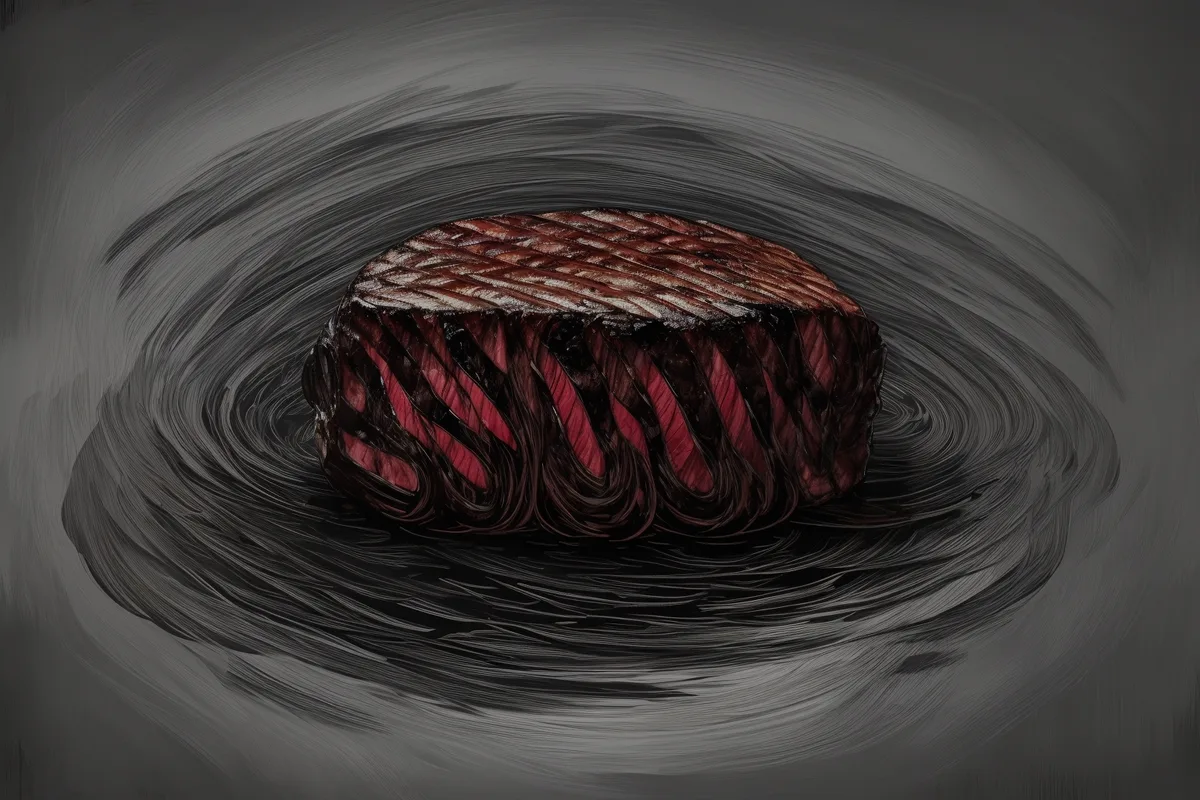
The Maillard reaction is also responsible for the darkening of many foods beyond meat: the golden crust of bread, the deep hues of roasted coffee, the tempting browns of baked cookies. Yet, in each case, the specific flavors and aromas are shaped by the unique mixture of amino acids and sugars present. In bread, the abundance of lysine and glucose gives rise to the comforting scent of toasting grain. In coffee, a riot of different amino acids and carbohydrates, along with a high roasting temperature, produces a complex tapestry of aromas—nutty, smoky, floral, and bitter.
But the experience of a steak is singular. The combination of muscle proteins, modest levels of sugars, and the presence of fats and connective tissue creates a flavor profile that is both robust and nuanced. The Maillard reaction, in concert with caramelization and fat oxidation, produces a flavor that is unmistakably meaty, a taste that resonates with something deep in our evolutionary memory.
Pause, then, to consider the sensory journey that begins with the first sizzle and ends with the last bite. The aroma rises, carried on invisible currents, rich with the promise of umami and sweetness, of char and savor. The crust, crisp and dark, gives way to the tender meat beneath. Each chew releases a new wave of flavor, a cascade of Maillard products dissolving and diffusing, binding to receptors in the mouth and nose, sending signals to the brain that speak not only of nourishment, but of pleasure, of home, of memory.
What is perhaps most remarkable is that much of this complexity arises from such humble beginnings: a handful of amino acids, a pinch of sugars, a spark of heat. The Maillard reaction is a testament to the creativity of nature, to the endless inventiveness that can arise from even the simplest ingredients when given time and energy.
Just as the surface of a steak is a battlefield of molecules—competing, combining, transforming—so too is the act of cooking a negotiation between control and chaos. The cook wields the pan and the flame, but the true artistry lies in understanding, even if only intuitively, the invisible chemistry at work. Each steak is a new canvas, each sear a fresh experiment.
As we dwell on the Maillard reaction, one cannot help but marvel at its universality and its mystery. Despite decades of research, despite the precision of modern analytical tools, there remain compounds whose structure eludes us, whose role in flavor is only dimly understood. The dance of heat and meat is an old one, older than civilization itself, yet it is still unfolding, still surprising us with new nuances, new aromas, new pleasures.
Ahead lies the interior of the steak, the world beneath the crust, where heat moves more slowly and transformations are subtler. The ballet of muscle fibers, the slow unraveling of collagen, the shifting tides of water and fat—all wait to be explored. The Maillard reaction may rule the surface, but beneath, other mysteries beckon: the tenderization of meat, the conversion of toughness to silk, the ways in which heat can coax flavor from the depths of tissue. To understand these, we must look beyond the sizzle, into the heart of the steak itself, where time, temperature, and biology conspire to create tenderness from strength.
And so, as the kitchen settles into silence, and the aroma of seared meat lingers in the air, the story of the steak continues, leading us onward—deeper, and ever further—into the heart of culinary transformation.
In Pursuit of Perfection: The Tools and Techniques of Steak Science
This part will cover the tools and techniques used to study and perfect the art of cooking steak. From sous-vide to infrared thermometers, we'll delve into the history of culinary innovation and the clever experiments chefs use to push the boundaries of taste. We'll explore how science has transformed the kitchen into a laboratory, and the chef into a researcher.
In the half-lit hush of early morning, before the first sizzle leaps from pan to air, the kitchen is a place of quiet anticipation. Yet just below the surface of this tranquility, a revolution is underway—a gentle, persistent tide of curiosity and invention that has, over centuries, transformed the humble act of cooking into something far more profound. For as long as humans have gathered around fire, we have sought to not merely satiate hunger, but to perfect the act of transformation itself. It is here, among the gleaming surfaces and softly humming devices of the modern kitchen, that one finds the true spirit of steak science: an endless pursuit of perfection, guided by both tradition and the restless ingenuity of the human mind.
Consider for a moment the earliest tools of the cook. In ages past, the mastery of steak was limited by the bluntness of our implements and the unpredictability of our heat. Open flames and rough-hewn spits, heated stones and primitive clay ovens—these were the instruments with which our ancestors first engaged in the alchemy of meat and fire. The results were often wondrous, yet always fraught with uncertainty. One could only guess at the temperature of the coals, estimate the doneness of the meat by sight and touch, and hope for the best. The senses—smell, touch, sight, sound—were the chef’s only guides.
As centuries unfurled and civilizations rose and fell, the pursuit of culinary mastery grew more refined. The invention of the thermometer in the early 18th century marked a subtle, profound shift. No longer would cooks be bound to the vagaries of instinct alone; now, the temperature of a roast could be measured, cataloged, and controlled. This transition from art to artful science was not immediate, nor universally embraced, but it set in motion a gradual awakening. The kitchen, once the domain of superstition and inherited wisdom, began its transformation into a laboratory.
Today, the modern chef stands at the intersection of tradition and technology, wielding tools that would astonish the cooks of old. Chief among these is the sous-vide immersion circulator—a device whose origins lie not in the kitchens of Paris or Rome, but in the laboratories of French physicists. The phrase “sous-vide” means “under vacuum,” and it describes a technique as elegant as it is precise. Here, the steak—seasoned and sealed within a plastic pouch—rests in a gently swirling bath of water, held at a temperature so meticulously controlled that the margin for error is measured in tenths of a degree.
The genius of sous-vide lies in its patience. Rather than subjecting the steak to the raging heat of a pan or grill, which can easily overshoot the point of perfection, the immersion circulator ensures that every molecule of the meat reaches an identical temperature, from surface to center. The collagen within tough muscle fibers softens, the fat slowly renders, and the proteins denature just so, resulting in a texture and juiciness that would be nearly impossible to achieve through conventional means. To the observer, the process is almost meditative—a silent, invisible transformation, guided by the unerring hand of physics.
Yet sous-vide is but one chapter in the ongoing story of steak science. The modern kitchen brims with inventions both subtle and spectacular, each designed to wrest a bit more control from the chaos of heat and time. Take, for example, the infrared thermometer—a sleek, laser-guided tool that allows the chef to measure the surface temperature of a steak without ever touching it. With a simple squeeze of the trigger, a beam of invisible light dances across the searing crust of the meat, returning a digital readout accurate to the decimal. No longer must one rely on guesswork or intuition; now, the precise interplay of Maillard reactions—the browning that imparts flavor and aroma—can be monitored, predicted, and harnessed.
Beneath the glow of halogen lamps and the whir of convection ovens, the kitchen has become a space of experimentation, where variables are isolated and hypotheses tested with the rigor of any scientific endeavor. Chefs, once artists in the most traditional sense, now don the mantle of researcher, their white jackets reminiscent not only of the baker’s apron but also the scientist’s lab coat. They wield pipettes and scales, timers and thermocouples, all in service of understanding—and eventually mastering—the complex chemistry of steak.

One of the most fascinating arenas of this culinary research is the study of heat transfer. The act of cooking steak is, at its core, an exercise in manipulating the movement of energy. Pan-searing, for instance, delivers a ferocious burst of radiant and conductive heat, producing a crust that crackles with flavor. Yet this same intensity can betray the cook, burning the exterior before the interior is warmed through. The challenge, then, is to balance the opposing needs for a caramelized surface and a tender, evenly cooked interior.
To solve this riddle, chefs and scientists alike have turned to the concept of “reverse searing.” In this method, the steak is brought slowly to its target temperature—either in a low oven or via sous-vide—before being finished with a brief, furious sear in a hot pan or under a broiler. This approach minimizes the risk of overcooking, ensuring a uniform doneness throughout while still delivering the coveted Maillard crust. Studies using thermocouples—tiny wire probes that measure temperature within the steak—have shown the remarkable consistency of this approach, as gradients of doneness are smoothed away, replaced by a gentle, rosy uniformity.
The exploration does not end with temperature and timing. The composition of the steak itself, shaped by breed, feed, age, and cut, becomes another variable to be studied and optimized. Chefs have adopted the language and methods of biochemistry to understand how enzymes like calpains and cathepsins tenderize muscle fibers during aging, or how fat marbling influences juiciness and flavor release. In some kitchens, you might find vacuum chambers for dry-aging, controlled-humidity environments that foster the slow breakdown of connective tissue, coaxing out nutty, complex flavors that only time and careful stewardship can produce.
Even the humble salt—the first and oldest seasoning—has been subjected to scientific scrutiny. Through careful experimentation, we have learned that salting a steak well in advance of cooking allows salt crystals to draw out moisture, dissolve, and then be reabsorbed, carrying flavor deep into the meat and altering the texture at a molecular level. Chefs have experimented with brines, rubs, and curing salts, measuring the effects not by taste alone, but with penetrometers and refractometers, instruments that quantify tenderness and water content.
In the search for the perfect steak, experimentation is key. Chefs set up side-by-side tastings, preparing identical cuts of meat with minute variations in seasoning, cooking time, or temperature. Panels of tasters, sometimes trained to identify subtle differences in texture or flavor, record their impressions, and the data is analyzed for patterns. Statistical methods borrowed from psychology and food science are deployed to sift signal from noise, identifying the elusive combination of variables that yields the most exquisite result. The process is slow, iterative, and endlessly fascinating—a reminder that even the simplest pleasures can be the product of profound complexity.
And yet, for all the sophistication of our tools and techniques, there remains a certain humility in the face of steak. The living animal from which it comes, the particularities of muscle and fat, the interplay of heat and time—these are variables that refuse to be fully mastered, no matter how advanced our technology becomes. The chef, like the scientist, must contend with uncertainty, learning not only to control, but also to adapt and respond.
This humility has given rise to new kinds of experimentation, where failure is not merely tolerated, but celebrated as a necessary step on the road to understanding. In the kitchens of innovative restaurants and the home laboratories of curious amateurs, one finds a spirit of playful inquiry. Chefs try aging steaks in beeswax, infusing them with smoke, or bathing them in umami-rich marinades. Some have even experimented with enzymes derived from tropical fruit—papain from papaya, bromelain from pineapple—using them to tenderize otherwise intractable cuts, with results that are sometimes sublime, sometimes disastrous.

The boundaries between kitchen and laboratory have grown porous, as researchers collaborate with chefs to unravel the mysteries of flavor and texture. Universities now offer courses in molecular gastronomy, where students learn the physics of heat transfer alongside the poetry of plating. Food scientists use gas chromatographs to analyze the aromatic compounds released during searing, revealing the hidden symphony of molecules responsible for the steak’s intoxicating aroma. The findings are published in journals, shared at conferences, and, inevitably, find their way back into the kitchens where the next generation of steak cooks stands ready to experiment anew.
One might imagine that this march of progress would strip the act of cooking of its romance, replacing the chef’s intuition with a cold calculus of numbers and graphs. Yet, in truth, the opposite has occurred. With every new tool, every clever trick or carefully-controlled experiment, we draw closer to the essence of what makes steak so captivating. The science does not diminish the experience; rather, it heightens it, revealing new layers of wonder in an act as old as civilization itself.
The tools of steak science are as varied as they are ingenious. There are the high-powered blowtorches, once reserved for metalwork, now wielded in the pursuit of the perfect sear. There are the vacuum sealers and water baths, the laser-guided thermometers and precision scales. Even the pan itself—cast iron, carbon steel, or stainless—becomes an object of study, its thermal properties catalogued and compared, its performance measured against the ever-shifting standards of culinary excellence.
Yet for all their precision, the tools serve only as extensions of the chef’s intent. It is the question—What if?—that drives innovation, that propels the pursuit of steak perfection forward. The answer is never final, the horizon always just beyond reach. As new discoveries are made and new techniques refined, the boundaries of possibility expand, inviting ever more ambitious experiments. The kitchen becomes a workshop of dreams, a place where tradition and technology meet in the glow of the stove and the quiet anticipation of the next great meal.
As you drift in the gentle current of these thoughts, consider the hands that wield these tools—the steady grip of the chef, the curious touch of the scientist, the patient care of the craftsman. Each brings their own perspective, their own hopes and questions, to the task of cooking steak. Together, they form a lineage that stretches back through time, a tapestry of innovation woven from fire and curiosity.
In the quiet moments between experiment and meal, when the kitchen is bathed in the golden light of evening, there is a sense that the pursuit of perfection is not merely about the steak, but about understanding the world itself. Every sizzle, every carefully measured degree, every tiny adjustment to salt or timing, is an act of reverence—a way of paying homage to the mysteries of nature and the ingenuity of human hands.
And so the story continues, each tool and technique a new chapter in an endless quest. The kitchen is alive with possibility, the boundaries between science and art dissolving in the dance of heat and flavor. What lies ahead, just beyond the reach of our current knowledge, remains to be explored. In the flickering shadows and the soft hum of machinery, new questions are forming, new experiments waiting to unfold. The journey is far from over, and the pursuit of steak perfection draws us ever onward, into deeper mysteries yet to be revealed.
The Last Sizzle: Reflections on Steak, Science and Sustenance
This part will reflect on the meaning and mystery of steak cooking, its connection to humanity's past, present and future. We'll ponder the philosophical questions that arise from the crackling dance of flame and meat. What does our love for steak tell us about our relationship with nature, with technology, and with each other? How will the science of cooking evolve in a world grappling with sustainability and ethical consumption?
The room is quiet now, save for the faint echo of that last sizzle—an ephemeral sound, lingering on the thresholds of memory and sense. In the presence of a rested steak, still radiating the warmth of its journey from rawness to perfection, we pause at the end of a process both ancient and ever-renewed. The final wisp of steam curls away like a spirit, and there is a hush in the air, as if the meal, the fire, and the very act of cooking are asking us to reflect. What is it, truly, that transpires when flesh meets flame? Why does the transformation of meat over heat stir such deep currents within us—currents of pleasure, nostalgia, and sometimes even awe?
To contemplate the meaning of steak is to peer through a window into the tangled tapestry of humanity’s story. Cooking, after all, is not merely a matter of taste or nutrition; it is a ritual that has shaped what it means to be human. Our distant ancestors, huddled around their fires beneath unfamiliar stars, discovered in the act of roasting meat a power that would change the course of evolution. The control of fire, the harnessing of heat, and the deliberate transformation of raw food into something safer, tastier, and more nourishing—these were revolutionary steps. Through cooking, our ancestors unlocked new sources of energy, shrinking the time spent chewing and digesting, fueling the growth of larger brains, and freeing hands and minds for other pursuits.
It is easy, amid the conveniences of modern kitchens and the artistry of fine dining, to forget how profound a leap this was. But every time we lay a steak upon the grill, we participate in a lineage stretching back hundreds of thousands of years. The act is both a remembrance and a renewal. The sizzle is a signal, not just of Maillard reactions and rendered fat, but of kinship across the ages. In that moment, the boundaries of time blur, and we stand beside those first cooks, feeling the same anticipation, the same hope that this meal will satisfy hunger and bring people together.
Yet, for all its ancient roots, steak cooking is also a mirror for the present—a reflection of our technological prowess and our shifting values. The tools at our disposal today would seem like sorcery to those who first tamed fire. Infrared thermometers, sous-vide circulators, and precision induction burners allow us to manipulate temperature and timing with a degree of accuracy once unimaginable. We have mapped the molecular landscapes of flavor, charted the pathways of heat through muscle fibers, and learned to coax forth the subtlest notes of umami and sweetness from within a simple cut of meat.
But for all this knowledge, the process remains, at heart, a negotiation with the unpredictable. Even the most controlled environment cannot eliminate the quirks of nature: the marbling of fat, the uneven thickness, the idiosyncratic behavior of proteins under heat. Each steak is a singularity, a set of variables that resists easy calculation. There is, as ever, a space for intuition, for artistry, for the cook’s steady hand and attentive eye. Technology extends our reach, but it does not abolish the mystery. It is in this interplay—between control and chaos, method and magic—that cooking retains its hold on our imagination.
Consider, too, the social dimensions that swirl around the steak. In cultures across the world, the sharing of meat has long marked occasions of celebration, of treaty and alliance, of mourning and remembrance. To gather around a table, to pass a platter of sliced steak, is to enact not just a meal, but a ceremony of connection. The flavors and aromas, the warmth of the room, the hum of conversation—all these weave together into a fabric of belonging. The act of eating, so often dismissed as a mere necessity, becomes a form of communion.

Yet, it is not just with each other that we commune. The steak is also a point of contact with nature: the animal whose life it once was, the grass it grazed, the rain and sun that nourished it, the soil that anchored its world. When we bite into a piece of perfectly seared beef, we taste not only the cook’s labor, but the whole web of life that made this moment possible. This realization brings gratitude, but it can also bring discomfort—a reminder of the costs and consequences inherent in eating, especially in a world of finite resources and fragile ecosystems.
It is here, perhaps, that the meaning of steak cooking becomes most complex. For centuries, the abundance of meat has been a symbol of prosperity, a reward for hard work or good fortune. The sizzle of steak on the grill is, for many, the sound of success, of arrival. But as our understanding of the world deepens, so too does our awareness of the shadows that accompany this abundance. The environmental footprint of livestock agriculture—its demands on land, water, and atmosphere—now looms large in the collective mind. The ethical questions surrounding animal welfare, the health implications of dietary choices, and the inequalities embedded in our food systems all press in on the once-simple pleasure of a grilled steak.
Against this backdrop, the science of cooking is evolving. Laboratories now cultivate muscle tissue in bioreactors, seeking to create meat without the animal. Plant-based analogues, engineered for texture and flavor, vie for a place at the table. The very definition of steak begins to blur. What is essential—a certain structure of protein and fat, a recognizable flavor profile, or the cultural meanings that cluster around the idea of steak? Can the crackle of a plant-based patty ever evoke the same primal satisfaction as a ribeye? Will future generations taste nostalgia for something they have never truly known?
These are not simple questions, and the answers will be written not just in laboratories and policy papers, but in the small choices of millions of cooks and diners. For some, the pursuit of sustainability means turning away from steak altogether, seeking fulfillment in legumes or grains or the bounty of the sea. For others, it means cherishing steak as an occasional luxury, a rare treat to be savored rather than a daily staple. And for many, the challenge is to find a path that honors both pleasure and responsibility—a path that threads its way between hunger and restraint, tradition and innovation.
In this shifting landscape, the act of cooking steak becomes a kind of meditation. The rituals persist, even as their meanings change. The selection of a cut, the preparation of the fire, the patient watch for the telltale signs of doneness—these are opportunities for mindfulness, for gratitude, for reflection. There is wisdom to be found in the rhythm of the process, in the acceptance of imperfection, in the celebration of what is given and the mourning of what is lost.
Indeed, cooking at its best is an act of stewardship. To choose a steak is to accept a certain responsibility: to honor the animal, to waste nothing, to savor every bite. The science that underpins our techniques—our understanding of proteins and heat, of chemistry and flavor—is a tool not just for maximizing pleasure, but for deepening respect. When we tend carefully to the details, when we seek to understand rather than merely consume, we transform the act of eating into a gesture of care.
The future will bring new challenges, and new marvels. Perhaps one day, the sizzle we hear will come from a steak grown without harm, its flavor perfected by algorithms and its texture tailored to individual desire. Or perhaps it will come from a cut of meat raised on regenerative pastures, its carbon footprint offset by the flourishing of wildlife and the renewal of soil. Or perhaps, for some, it will come from a memory—a taste recalled in the mind’s eye, as vivid and fleeting as the smoke rising from the grill.

Yet, even as the particulars change, the essence endures. The steak is more than a food; it is a story, told in heat and time, in muscle and memory. It is a bridge between the wild and the cultivated, between the immediate and the eternal. The act of cooking it, of transforming it, of sharing it, binds us to the world and to each other in ways both humble and profound.
In the end, the crackling dance of flame and meat is a conversation—a dialogue with nature, with tradition, with the future yet to come. Each steak is a question posed and answered, a moment of creation and destruction, a fleeting harmony snatched from the jaws of entropy. The science that illuminates this process does not diminish its mystery; rather, it deepens our sense of wonder. To know, for example, that the browning of a steak involves a cascade of molecular transformations, or that the marbling of fat is the legacy of genetics and husbandry, is to see the world in finer detail, to appreciate the hidden patterns that underlie the surface of things.
And still, there is always more to learn, more to ponder. The perfect steak is an asymptote, always approached, never quite attained. With every meal, we refine our techniques, adjust our expectations, and discover new pleasures in the familiar. The act of eating becomes a practice, a lifelong journey through the landscapes of flavor and meaning.
Perhaps this is the true gift of steak, and of cooking more broadly: the invitation to attend, to wonder, to participate in the unfolding of the world. In an era of abundance and anxiety, of technological marvels and ecological peril, this attention is a form of hope—a way of rooting ourselves in the present, even as we acknowledge the debts we owe to the past and the obligations we bear toward the future.
So, as the last sizzle fades, and the room grows still, we are left with questions as much as answers. What will the next meal bring? How will we honor what we have been given, and what we must leave behind? In the quiet that follows the feast, the mind wanders—back to the fires of our ancestors, forward to the kitchens yet to be built, outward to the fields and forests and laboratories where the food of tomorrow is being imagined.
The plate before us is a microcosm, a world in miniature, shaped by forces both seen and unseen. In every bite, there is a memory of sunlight, of rain, of labor and love. In every meal, a possibility for connection, for celebration, for grief. The science of cooking gives us tools to shape these experiences, but it does not contain them. The meaning of steak—of any meal—resides not just in molecules and reactions, but in the spaces between people, in the stories we tell, in the values we embody.
As you drift toward sleep, let your mind linger on the mysteries still unsolved: the flavor that eludes description, the perfect texture just out of reach, the balance between hunger and restraint, tradition and change. The world is vast, and every meal is a chance to taste its wonders anew. The sizzle may fade, but the questions endure, shimmering at the edge of consciousness, calling us onward—always onward—into the unknown.