The Enigma of Choice
This part will cover the cultural and sci-fi associations of decision making and the concept of free will. We will delve into the paradox of choice, drawing from the likes of 'The Matrix' and 'Black Mirror', setting the stage for the deep dive into the science behind our decisions.
Beneath the hush of the sleeping world, when the city’s amber lights dim and the hum of daytime fades, a quieter theater opens—a stage upon which each of us, alone in the dark, becomes both audience and protagonist in the enigmatic drama of choice. There is no curtain, no applause. Only the soft flicker of memory and anticipation, the gentle murmurs of what was and what could be, as we ponder the countless decisions that have shaped the winding contours of our lives. In this liminal hour, when the mind drifts and the boundaries between reality and imagination blur, the enigma of choice beckons with a peculiar intensity.
What is it, truly, to choose? Is it a sovereign act—the mind’s triumphant assertion of its will? Or are we, as so many stories have wondered, mere actors reading lines from a script we never saw written, following a choreography set in motion long before our first breath? It is no accident that storytellers, philosophers, and scientists alike have all been drawn to this mystery, circling it like moths to a lantern. The question of free will—of whether we are the authors of our fate or the product of unseen forces—echoes through cultures, through centuries, through the very construction of our selves.
To wander into the realm of choice is to traverse a labyrinth lined with mirrors. Each reflection shows us a different possibility, a different self, a different world. In the soft glow of night, with the day’s obligations momentarily suspended, perhaps you have felt the weight of a decision long past, or the ache of one yet to come. Perhaps you have wondered, as so many have, whether you could have chosen differently, or whether, in some shadow universe, a second self walks a parallel path, shaped by that divergent moment.
Our fascination with the mechanics of decision making is as old as storytelling itself. Ancient myth and modern fable alike are saturated with tales of crossroads and choices, of bargains struck and destinies altered. The Greeks spoke of Moirai, the Fates, who measured and cut the threads of mortal lives. In the holy texts of many faiths, choice is both a gift and a burden, a source of both sin and salvation. It is in these stories that we first sense the paradox that clings to the act of choosing: the simultaneous experience of agency and uncertainty, of freedom and doubt. To choose is to open a door, but also to close others forever.
In the modern age, this ancient enigma has taken on new and dazzling forms. Nowhere is this more apparent than in the speculative worlds of science fiction, where the boundaries of reality and possibility are stretched until they shimmer. Within these narratives, the question of choice is not merely philosophical—it is existential, technological, sometimes even cosmic.
Recall, if you will, the arresting moment in the film “The Matrix,” when Neo, the unremarkable office worker turned would-be savior, is offered a choice by Morpheus, the enigmatic guide: the red pill, or the blue. It is a scene that has reverberated far beyond the confines of cinema, embedding itself in the collective imagination. The red pill promises truth, however painful. The blue pill, comfortable ignorance. What is so compelling here is not merely the choice itself, but the suggestion that the very fabric of reality is contingent upon it. Neo’s decision is not just his own; it is a cipher for our yearning to believe that our choices matter, that they can reforge reality itself.
Yet, even as we are drawn to the romance of radical choice, we are haunted by its shadow: the possibility that our choices are, in some sense, illusory. In the world of “The Matrix,” the choices of the characters are shaped by invisible systems of control—by code, by architecture, by hidden intention. The film invites us to wonder: are we, too, walking through a simulation of freedom, our paths mapped out by forces we cannot see? Or is there, buried within us, an irreducible core of autonomy?
This tension between agency and control finds a chilling resonance in the anthology series “Black Mirror,” where the ordinary act of choosing is rendered uncanny by technology. In one episode, a young programmer creates a video game that allows players to make decisions for the protagonist, branching the narrative into multiple outcomes. The episode itself is a labyrinth, offering viewers the chance to make choices for the character, only to reveal, in a series of recursive loops, the illusion of control. No matter how many times we choose, the structure of the story remains unyielding—a prison of possibility masquerading as freedom. Here, the paradox of choice is sharpened to a point: the more options we are given, the less certain we become of our own will.
This is the paradox that has ensnared philosophers and scientists alike. The more we examine the mechanics of decision making, the more elusive the sense of genuine freedom becomes. We are told, on the one hand, that freedom is the essence of being human—that to choose is to assert our individuality, to become the authors of our own lives. Yet, on the other hand, we find ourselves beset by doubts: are our choices truly our own, or are they the predictable consequences of biology, upbringing, circumstance?
Consider the parable of Buridan’s ass, a story from medieval philosophy. A donkey, placed equidistant between two identical piles of hay, is unable to choose between them, and so starves. The tale is absurd, but it reveals something fundamental about the nature of choice: without a reason to choose one option over another, the act of choosing itself becomes paralyzing. In a world saturated with options, as ours so often is, the freedom to choose can become a burden, a source of anxiety rather than liberation.
This is the so-called paradox of choice, a concept explored by psychologist Barry Schwartz and others. In a culture that prizes autonomy and abundance, we are encouraged to believe that more choices mean more happiness. Supermarkets brim with dozens of yogurt flavors, streaming services overflow with endless shows, the digital world offers us a carousel of potential selves. Yet, research suggests that an overabundance of options can cripple our ability to decide, leading to regret, dissatisfaction, and even a kind of existential fatigue. The very freedom we cherish can become its own kind of trap.
Science fiction, with its gift for the uncanny, has made this paradox palpable. In the “choose your own adventure” stories that so many of us encountered as children, the thrill of agency is quickly tempered by the realization that every choice leads to a different branch, but all branches are prewritten. No matter how many times we turn back the pages, the universe of possibilities is finite and circumscribed. The same is true, in a deeper sense, of our own lives. We may imagine an infinity of possible futures, but at each moment, only one is made real by our choice. The others, shadow worlds, fade into the quiet.
Yet, even as we grapple with the burdens of abundance, we are drawn to the romance of the decisive act. The stories that move us most deeply are those in which a single choice changes everything—a leap of faith, a refusal to conform, a moment of courage or of folly. In these tales, the act of choosing becomes sacred, a hinge upon which fate turns. We crave, in storytelling and in life, the sense that our decisions matter, that they are imbued with meaning.
But what of the machinery beneath the surface? What forces shape our choices, quietly, invisibly, before we are even aware of them? The science of decision making, as we shall see, has revealed a landscape both wondrous and disquieting. Neuroscience tells us that the brain is a vast network of competing impulses, that decisions may be set in motion before we are conscious of them. Psychology shows us that our preferences are shaped by context, by bias, by history. Even the simple act of choosing between chocolate and vanilla, between left and right, is freighted with invisible causes.
There is a strange comfort, perhaps, in the idea that our choices are not wholly free—that we are shaped by forces beyond our control. It absolves us, in some measure, of responsibility for the paths not taken. Yet this comfort is shadowed by a deeper unease: if all is determined, where is the self? Are we mere passengers, watching as the train of our lives follows tracks laid down long ago?
Our stories, it seems, cannot rest with simplicity. We oscillate between the thrill of agency and the fear of determinism, between the hope that we are more than marionettes and the suspicion that the strings are hidden, but unbreakable. In literature, in film, in the quiet theater of our own minds, we return again and again to the crossroads, to the moment of decision, searching for evidence of freedom.
This search is not merely theoretical. It is woven into the fabric of daily life. Each morning, we are confronted by a multitude of choices, most of them trivial, some profound. What to wear, what to eat, whom to love, what to believe. The sum of these decisions constitutes a life. Yet, for all the talk of autonomy, many of our choices are made without conscious deliberation. Habit, routine, and social expectation guide us as surely as any explicit intention.
And yet, there are moments—rare, luminous, and often terrifying—when the veil lifts, and we feel the full weight of freedom. These are the moments that philosophers call existential. They are the choices that define us, that break the continuity of routine and force us to confront the abyss of possibility. In these moments, the paradox of choice is laid bare: the recognition that to choose is to risk, to relinquish certainty, to embrace a future unknown.
It is no wonder, then, that our culture is obsessed with stories of alternate timelines, of parallel universes, of lives unlived. In every “what if” there is both longing and regret—the sense that somewhere, another version of ourselves is living out a different destiny. Science fiction, with its virtuoso imagination, makes these possibilities tangible. In the branching narratives of “Black Mirror,” in the recursive loops of “The Matrix,” we are invited to taste the fruit of infinite possibility, even as we are reminded that every choice is also a loss.
But perhaps it is in the very act of choosing, in the willingness to accept uncertainty, that meaning is found. Perhaps the question is not whether our choices are free, but whether, in choosing, we become more fully ourselves. The science of decision making, with all its rigor and precision, has much to tell us about the forces that shape our will. But it cannot, perhaps, fully capture the poetry of the moment—the trembling hush before a leap, the silent calculation of risk and hope, the delicate balance of desire and fear.
As you lie in the darkness, the day’s choices receding into memory, the mind drifts to the horizon of possibility. The enigma of choice remains, unresolved, shimmering at the edge of consciousness. In the next quiet moment, as you stand at some small crossroads—a question, a gesture, a turning—consider the secret machinery at work beneath the surface, the interplay of freedom and fate, of agency and influence.
For beneath the surface of every ordinary moment lies the extraordinary puzzle of choice, waiting to be unraveled, to be lived. And as the night deepens, the mind prepares to travel further, to probe the labyrinth of our own decision making. The journey into the science of choice is only just beginning, and already the landscape ahead glimmers with mystery, beckoning softly through the hush of sleep.
The Labyrinth of the Brain
This part will explore the complexities of decision making within the human brain. We'll journey into the intricate networks of neurons and the role of neurotransmitters, demystifying the myth that decisions are solely a product of logical thinking. This act will push the boundaries of our understanding, questioning the enigmatic role of emotions, subconscious biases, and the limits of human rationality.
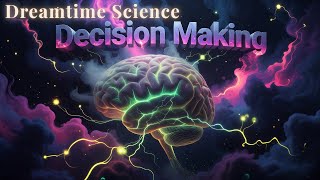
Step quietly into the labyrinth of the brain, a place at once familiar and fantastical, where each corridor brims with electric whispers, and every chamber thrums with secrets older than memory. The journey that unfolds here is not one of straight lines or simple cause and effect, but of winding passageways, subtle influences, and shifting patterns—a landscape shaped by both the clarity of logic and the shadowy depths of feeling. In this twilight realm, decisions are forged not in the cold crucible of reason alone, but within a shimmering tapestry woven from the threads of thought, emotion, and hidden bias.
Let us begin in the heart of this labyrinth, at a crossroads where countless neural pathways converge. Here, a single choice—what to eat for breakfast, whom to trust, whether to take a leap of faith—ignites a cascade of activity across billions of cells. Each neuron, a living filament, pulses with the possibility of yes or no, of now or later. These are the architects of your choices, the silent sculptors of your will.
At first glance, the neuron is a modest thing: a tiny cell, delicate and unassuming, its body stretching slender arms—dendrites—to gather messages from its neighbors. Its axon, a long cable, carries its own decision onward, a spark leaping from one cell to the next. There are nearly a hundred billion of these in the adult human brain, each forming up to ten thousand connections—synapses—with others. The result is a forest so dense, so intricately interlaced, that every thought, every fleeting hunch, is a flicker in a network more vast than the Milky Way.
Within this network, the act of deciding is never the result of a single neuron’s solitary verdict. Instead, decision making is an emergent phenomenon, arising from the concerted activity of entire assemblies—ensembles of neurons that fire together, shaping waves of possibility that ripple through the cortex. The prefrontal cortex, perched behind your forehead, is often thought of as the seat of rational deliberation. Here, abstract thought, planning, and self-control are orchestrated with exquisite finesse. It weighs options, simulates outcomes, reframes problems in the language of logic. Yet even this high court of reason is not alone in its labors.
Deep below, in the ancient folds of the limbic system, a different sort of wisdom reigns. The amygdala, almond-shaped and vigilant, scans the world for emotional salience. It is quick to judge, swift to sound the alarm—its signals coloring every decision with the hues of fear or desire, anticipation or dread. Nearby, the nucleus accumbens and the ventral tegmental area form the core of the brain’s reward circuitry, lighting up with the promise of pleasure, urging you toward choices that might yield satisfaction or delight. The hippocampus, curled like a seahorse, quietly offers memories for consideration, letting past experience whisper into the ear of the present.
It is tempting to imagine these regions as separate actors, each vying for control, but the reality is far more nuanced. These structures are bound together by rivers of neurotransmitters—chemical messengers that modulate the flow of information. Dopamine, for instance, surges when you anticipate a reward, nudging decisions subtly toward what has brought joy or relief before. Serotonin, that ancient molecule of mood, can color the entire landscape, rendering the same choice hopeful or forbidding depending on its ebb and flow. Glutamate excites, GABA soothes, acetylcholine sharpens attention, and norepinephrine readies the mind for action, as if tuning the strings of an orchestra for the next movement.
In this symphony, the myth of pure logic quickly dissolves. For every careful weighing of pros and cons, there is a parallel stream of emotional input, a flood of feelings that shape what the mind will even consider. Antonio Damasio, a pioneer in neuroscience, once observed patients whose emotional circuits had been damaged by injury. They could enumerate the logical consequences of every option, but without the nudge of feeling—without the subtle guidance of what felt right or wrong—they were paralyzed by indecision, forever circling the possibilities but unable to choose. Emotion, it seems, is not the enemy of reason but its indispensable companion, providing the urgency and value judgments that pure calculation cannot supply.
Yet even as the conscious mind weighs its choices, beneath the surface, the subconscious is hard at work. Here, in the shadowed corridors of the brain, biases and heuristics—mental shortcuts honed by evolution—shape perception and judgment before we are even aware. The framing effect, for example, can make a glass seem half-full or half-empty depending on the words used, subtly steering a decision in one direction or another. The availability heuristic causes recent or vivid memories to loom larger than they should, coloring the sense of risk or likelihood. Confirmation bias draws attention to evidence that supports existing beliefs, quietly filtering out what does not fit.
Some of these biases are relics of a distant past, where speed and efficiency mattered more than perfect accuracy. In the wild, a split-second choice—fight or flee, trust or doubt—could mean the difference between life and death. The brain, ever practical, evolved to favor swift, approximate answers over slow, exhaustive searches. Even now, as you ponder whether to invest in a new venture or to trust a stranger, these ancient heuristics nudge your thoughts, their influence subtle but profound.
But the labyrinth grows stranger still. Recent studies using fMRI and intracranial electrodes have revealed that decisions are anticipated in the brain before they reach the threshold of awareness. In a classic experiment, participants were asked to press a button whenever they felt the urge, and to note the precise moment they became aware of their intention. Astonishingly, neural activity predicting the choice was detected up to seven seconds before conscious intention arose. It is as if the decision was being prepared in hidden alcoves, with consciousness arriving late to the scene—a witness rather than a sovereign.
Such findings invite unsettling questions about the nature of free will. If the brain’s networks are already setting the stage before the mind believes it has made a choice, what does it mean to decide? Some philosophers argue that consciousness is the arbiter, able to veto or endorse the options that percolate up from below. Others suggest that free will is a story the brain tells itself, a narrative woven after the fact to make sense of actions already underway.
But perhaps this is too stark a view. For even if much of decision making is shaped by unconscious processes, the conscious mind still plays a vital role. It is here that reflection, imagination, and long-term planning can intervene, altering the probabilities, reshaping the pathways that future impulses will travel. The labyrinth is not static; with each act of will, each moment of self-awareness, its corridors are subtly remodeled, its connections strengthened or pruned. The story of your choices is not written in stone, but etched in the ever-shifting patterns of synaptic change.
Consider, for a moment, the experience of doubt—a signal that the mind is torn between alternatives, that the neural assemblies supporting each option are finely balanced. In such moments, the brain seems to enter a state of heightened activity, as if searching for more evidence, more input, more clarity. The anterior cingulate cortex, a slender ribbon arching above the limbic system, is especially active in times of conflict. It detects errors, monitors uncertainty, and flags situations where the usual rules may not apply. Its signals can prompt a pause for reconsideration, or trigger a flood of anxiety, pushing the mind to resolve the impasse.
Yet even when a decision is reached, the feeling of certainty is often less a measure of objective truth than a product of the brain’s internal harmonies. When the neural evidence supporting a choice is strong and consistent, confidence blooms; when it is weak or conflicting, doubt lingers. The sensation of “rightness” or “wrongness” is itself a kind of feedback, guiding future learning, shaping the contours of what the mind will find plausible or absurd.
At times, the labyrinth can lead to strange and troubling places. In obsessive-compulsive disorder, for example, the circuits of decision making become tangled, looping endlessly over doubts and fears. Each choice is shadowed by the specter of dread, each action haunted by the possibility of error. The normal flow of neurotransmitters is disrupted, and the delicate balance between emotion, habit, and reason is lost. Yet even here, the brain’s plasticity offers hope—through therapy, medication, or simple repetition, new patterns can be learned, new pathways forged.
And so, within this vast and restless network, your every decision is the product of a thousand influences, some clear, others obscure. The logical mind deliberates, the emotional brain colors each option, and the subconscious sifts through memories and biases, all converging on a single act. Sometimes the process is swift and instinctive, a leap across the chasm of uncertainty. At other times, it is slow and ponderous, a careful construction built brick by brick. But always, beneath the surface, the labyrinth is at work, weaving new connections, recalling old lessons, and preparing for the next turning.
What, then, of the limits of human rationality? If our decisions are shaped by forces we only dimly perceive, how can we hope to be wise? The answer lies not in the fantasy of perfect logic, but in the humility of self-awareness. By recognizing the play of emotion and bias, by learning to pause and reflect, we can broaden the field of vision, bringing more of the labyrinth into the light. Tools such as mindfulness, deliberate practice, and feedback from others can reveal hidden patterns, inviting the conscious mind to take a more active role in shaping outcomes.
Yet even with the best of intentions, the brain remains a mystery to itself. Its corridors twist and fold, hiding knowledge in plain sight, springing surprises both delightful and tragic. The very act of introspection can alter the course of thought, the observer reshaping what it observes. And always, new discoveries beckon from further within—unfamiliar regions, uncharted circuits, new molecules and rhythms yet to be named.
As you drift through this intricate maze, you might sense the pulse of your own decisions—minor and major—arising, not from a single place, but from this ceaseless dance of cells and chemicals, feelings and facts. Each choice is a kind of crossroads, a brief moment when the labyrinth opens and closes, its passageways illuminated for an instant before the next question arises. The path ahead is never wholly certain, nor ever the same as before.
In the distance, the murmur of the brain’s inner world continues—a dialogue between reason and emotion, memory and hope. What new patterns might emerge if we look more closely? What secrets still lie hidden, waiting to be found in the endless corridors of mind? The labyrinth stretches onward, its mysteries deepening with each step, calling you to explore further, to follow the next winding path into the unknown.
Decoding Decisions: The Tools of Discovery
This part will showcase the tools and ingenious experiments that have helped us understand the science of decision making. We'll explore the history of cognitive psychology and neuroscience, highlighting key studies from luminaries like Daniel Kahneman and Amos Tversky, and discuss the use of Magnetic Resonance Imaging (MRI) in mapping the decision-making process.
In the cool hush of laboratories and the quiet corners of thoughtful minds, the quest to unravel the nature of human choice has taken on many forms. Like ancient astronomers mapping the heavens with primitive sextants, early scientists of the mind began with simple instruments—questions, observations, and the careful recording of patterns. The very act of studying decision making, of seeking to understand the machinery of choice, has required its own evolution of tools and an ever-deepening ingenuity. Tonight, as your mind settles into the gentle rhythm of inquiry, we turn our gaze to these instruments of discovery, both humble and grand, that have shaped our understanding of how decisions are born.
The roots of this journey reach back to the birth of cognitive psychology itself—a discipline forged from the realization that the mind was not a black box of unknowable processes, but a landscape to be charted and explored. In the mid-twentieth century, as the world reeled from wars and entered the dawn of computation, a new spirit of scientific curiosity took hold. Psychologists began to devise experiments not just to catalog behaviors, but to peer behind the curtain and glimpse the mental processes that gave rise to them.
In the early days, the simplest of tasks became profound sources of insight. A subject might be asked to choose between two objects, to recall a sequence of numbers, or to solve a riddle. Researchers watched with careful patience, noting the time taken, the errors made, the hesitations and the flashes of certainty. These early tools—stopwatches, questionnaires, the measured tone of a question—were the first chisels in the stone of our ignorance.
But it was in the latter half of the twentieth century that the study of decision making took a revolutionary turn. Two names—Daniel Kahneman and Amos Tversky—emerged as guiding stars in this new era. Their partnership, forged in the energy of postwar Israel and later sharpened in the halls of North American universities, would fundamentally reshape our understanding of human judgment.
Kahneman and Tversky were fascinated by the ways in which human decisions stray from the cold logic of mathematics. They saw, with an acute clarity, that people are not perfect calculators. Instead, we are creatures of habit and hunch, of stories and shortcuts. Their experiments were designed not to shame human error, but to explore the landscape of our imperfections.
One of their earliest and most celebrated tools was the “heuristics and biases” paradigm: a series of carefully constructed experiments that illuminated the mental shortcuts—heuristics—that people use when faced with uncertainty. In one such experiment, participants were asked to judge which is more common: words that begin with the letter “K,” or words with “K” as the third letter. Most chose the former, quickly recalling a list of words like “kite,” “kettle,” “kangaroo,” while struggling to summon words like “bake,” “like,” “poker.” The truth, however, is that words with “K” as the third letter are more plentiful. This simple task revealed the power of the availability heuristic: our tendency to judge the frequency of events by how easily examples come to mind.
With each experiment, Kahneman and Tversky exposed the hidden architecture of the mind—how we estimate probabilities, how we evaluate risks, how our memories shape our predictions. They introduced the idea of “framing effects,” demonstrating that the way a problem is presented can dramatically alter our choices. In a now-classic study, they asked participants to imagine a disease outbreak threatening a population. When the options for intervention were framed in terms of lives saved, people preferred the certainty of guaranteed lives spared. But when the same options were framed in terms of deaths, they became risk-seeking, gambling for a chance to avert disaster. The facts had not changed, only their presentation—yet the choices shifted as if buffeted by unseen winds.
Their work, intricate and elegant, relied on the careful construction of scenarios and the meticulous analysis of responses. It was, in its way, the science of storytelling: crafting vignettes and choices that lured participants into revealing the contours of their thought. Each experiment was a window, not just into the mind’s machinery, but into its poetry—its fears, its hopes, its unspoken rules.
As the field matured, new tools emerged to probe the mind in ever greater detail. Computers became indispensable allies, capable of presenting complex tasks and recording every flicker of mouse movement, every hesitation, every half-formed choice. Researchers began to track eye movements, measuring which options drew the gaze, which details lingered in attention, which were discarded unexamined. The laboratory became a theater of the mind, every twitch and pause a subtle clue to the forces at play.
But still, these methods could only infer the workings of the brain from the outside. The true machinery of decision making—the circuits of neurons, the floods of chemical signals—remained hidden beneath the shroud of the skull. For centuries, the brain itself was a silent partner in this quest, its secrets accessible only through the blunt instruments of accident or disease. Phineas Gage, the railway worker whose personality transformed after a tamping iron pierced his frontal lobe, was a tragic and rare window into the role of brain regions in choice. But such accidents were few, and their lessons fragmentary.
Then, in the closing years of the twentieth century, a new dawn arrived: the era of brain imaging. Of these technological marvels, few are as transformative as Magnetic Resonance Imaging, or MRI. Born from the marriage of physics and medicine, MRI uses powerful magnets and radio waves to peer into the living brain, rendering its hidden structures with exquisite precision.
At first, MRI was a tool for anatomy—a means to detect tumors, strokes, and anomalies. But as the technology advanced, a new variant emerged: functional MRI, or fMRI. This technique, by tracking changes in blood flow, could reveal which regions of the brain became active during specific tasks. The mind, for the first time, could be observed in motion.
With fMRI, the study of decision making entered a new and luminous chapter. Researchers invited volunteers to lie within the humming embrace of the scanner, their heads cradled in coils of wire, their bodies motionless. On a screen above, choices appeared: to trust or to doubt, to risk or to play safe, to accept or to reject. As decisions were made, the fMRI recorded the dance of oxygen-rich blood, the subtle choreography of neural activation.
It was here, in the silent ballet of the living brain, that some of the oldest questions found new forms. When a person weighs a risky gamble, which regions light up with anticipation, with anxiety? When a choice is made in defiance of logic, can we see the neural signature of emotion tipping the scales? Time and again, fMRI revealed the interplay of ancient and modern structures: the amygdala, seat of fear and reward; the prefrontal cortex, architect of planning and restraint; the striatum, mediator of habit and learning.
One study, for instance, asked participants to choose between a small but certain reward and a larger, uncertain one. As they deliberated, the fMRI revealed a tug-of-war between the limbic system—quick to seek pleasure—and the frontal lobes, which weighed consequences and future costs. The very struggle between impulse and reason, so familiar in our daily lives, became visible as a shifting pattern of light and shadow across the brain’s surface.
Other experiments used fMRI to explore the effects of framing, echoing the work of Kahneman and Tversky in the new language of neural circuits. When choices were presented in terms of potential gains, regions linked to reward lit up; when framed as losses, circuits of fear and avoidance took command. The same external facts, refracted through different neural pathways, led to different decisions, as if the mind contained multiple selves, each with its own agenda.
Yet the marvel of fMRI is not only in what it reveals, but in what it suggests: that decision making is not the province of a single “center” in the brain, but a symphony of regions, each contributing its own voice. There is no homunculus, no tiny captain steering the ship. Instead, there is a shifting coalition of processes, some conscious, some buried in the depths of the unconscious. The tools of discovery, refined over decades, have shown us the beauty and the complexity of this inner orchestra—a performance unique to each moment, each choice.
Alongside fMRI, other technologies have lent their own insights. Electroencephalography, or EEG, captures the electrical storms that ripple across the scalp as neurons fire in synchrony. With its millisecond precision, EEG can reveal the split-second emergence of a decision, the moment when options collapse into commitment. Researchers have traced the readiness potential, a slow buildup of electrical activity that anticipates voluntary movement—suggesting, tantalizingly, that the brain may prepare for action before the conscious mind becomes aware of the choice. Such findings provoke deep and unsettling questions about the nature of free will, but they are the product of tools that bring us ever closer to the heart of the enigma.
Other experiments have borrowed from the methods of economics, combining laboratory tasks with mathematical models. The “Ultimatum Game,” for example, presents participants with a simple choice: one person proposes how to divide a sum of money, the other accepts or rejects. Rationality would dictate that any non-zero offer should be accepted, yet people routinely refuse “unfair” divisions, sacrificing their own gain to punish perceived injustice. With the addition of neural imaging, researchers have seen that such refusals are accompanied by surges of activity in regions associated with anger and social evaluation. The tools of discovery, in this way, reveal not only how we choose, but why our choices so often defy pure logic.
The story of decision science is thus a tapestry of methods, each strand woven from the ingenuity of those who seek to understand. Some tools are as subtle as a well-turned question; others as grand as a machine the size of a small room, its magnetic coils humming with unseen energy. All share a common purpose: to render visible the invisible, to make sense of the chaos that lies behind each moment of choice.
Yet for all the power of these instruments, the mind retains its mystery. The images produced by fMRI are but shadows, proxies for the true electrical symphony unfolding within. The answers given in a laboratory may differ from those made in the wild confusion of daily life. No tool, however refined, can capture the full poetry of a mind deciding, hesitating, leaping. The science of decision making is a dance between the clarity of measurement and the irreducible complexity of human experience.
And so, as the night deepens, we find ourselves surrounded by the gentle hum of machines and the quiet rustle of data sheets, the soft glow of monitors and the steady rhythm of heartbeats. The tools of discovery have brought us far, illuminating the paths our minds take as we navigate the world of choice. Yet just beyond the reach of measurement, something elusive remains—a flicker of inspiration, a ghost of intuition, a secret logic that binds us to one another and to ourselves.
The journey does not end here. The tools and experiments, wondrous as they are, serve as lanterns along a greater path. Ahead lies the question of how these discoveries change us—how understanding the machinery of decision making might guide our lives, our societies, our dreams. With each choice we make, we are both subject and scientist, actor and observer, forever caught between the known and the unknowable.
As you drift on the edge of sleep, let your thoughts linger in this unfinished field—a place where questions echo and answers shimmer just out of reach. The story of decision making is still unfolding, its next chapter waiting in the breath before the dawn.
The Philosophy of Choices: A Human Connection
This part will reflect on the profound implications of our understanding of decision making. We will ponder upon its connection to our identities, our sense of responsibility, and our understanding of free will. This act will culminate in a philosophical exploration of what our decisions say about us as individuals and as a species, and the mystery that still surrounds this quintessentially human phenomenon.
In the quiet hours when the world seems to slow, and the echoes of our daily lives soften to a gentle hush, the mind sometimes drifts to the nature of the decisions we make. Each choice, whether grand or minute, casts a rippling shadow both forward and backward in the tapestry of our existence. It is here, in this silence, that the true weight and wonder of human decision-making become apparent—not merely as a mechanical process of neurons and pathways, but as a deeply personal phenomenon that speaks to who we are, and who we aspire to be.
As you settle into the softness of night, imagine, for a moment, the complexity of a single human life. From the first tentative steps of childhood, when choices are shaped by curiosity and wonder, to the nuanced, often conflicted decisions of adulthood, our lives are defined by a constant dance of options and outcomes. We stand, perpetually, at the crossroads of possibility. But what does it mean, truly, to choose? Is it simply a computation, a weighing of costs and benefits, or is there something ineffably human at play—a whisper of agency, a reflection of self?
Consider the great philosophers, those who have peered into the heart of human choice with patient curiosity. For millennia, the question of free will has burned at the center of philosophical inquiry. Are we, as some have argued, mere marionettes, our strings pulled by biology, upbringing, and circumstance? Or do we harbor within us a core of autonomy, a capacity to act, to will, in defiance of all determinants?
The neuroscientist’s instruments, sensitive as they are, can map the brain’s electrical cascades as decisions unfold. Yet, even as electrodes trace the luminous path from perception to action, something remains outside their grasp. For when we speak of choices, we speak not only of synapses, but of selves—of identity, meaning, and the stories we tell about who we are.
Our choices, after all, are not made in a vacuum. Each is shaped by an invisible architecture: values, memories, hopes, and fears. When you decide to comfort a friend, to speak out against injustice, or to forgive, the act is more than a calculation. It is a manifestation of the person you are in that moment, forged by a lifetime of experiences, yet open to change. In this way, our decisions are both mirrors and chisels—reflecting our present selves, even as they shape the people we will become.
Pause here and let your mind drift to ancient stories. Humanity has always woven tales of choices: the myth of Hercules at the crossroads, pondering a life of ease or a life of virtue; the parables of wisdom and folly; the great dramas of literature in which a single decision alters the fate of nations. These stories endure not because they offer simple answers, but because they echo our deepest questions. What does it mean to choose well? How should we measure the worth of our decisions? And, perhaps most hauntingly, do we truly have the freedom to choose at all?
Modern science invites us to revisit these questions with new tools. Experiments in psychology and neuroscience reveal the astonishing complexity beneath even the simplest decisions. We know now that much of what we do arises from processes outside of conscious awareness—habits etched into the brain’s circuitry, biases inherited from evolutionary history, influences absorbed from the culture around us. The philosopher Daniel Dennett compares the mind to a committee, a chorus of competing voices, each arguing its case within the theater of the brain. The self, in this view, is not a single captain at the helm, but a dynamic process—a narrative woven from countless threads.
Yet, as the night grows deeper, another perspective emerges. For all the mechanistic explanations, there remains an undeniable sense that our choices matter—that they are, in some essential way, ours. When you stand at a moral crossroads, wrestling with uncertainty, the weight of responsibility presses upon you. You sense the possibility of regret, or pride; the awareness that your actions will echo in the lives of others. This sensation—of ownership, of accountability—is not easily explained away by neuronal firing patterns.
It is here that philosophy and science meet, not in opposition, but in conversation. The neuroscientist’s discoveries do not diminish the mystery of choice; rather, they deepen it. To know that a decision arises from a river of influences—genetic, environmental, subconscious—does not make it less meaningful. Instead, it invites humility and wonder. We are, each of us, the inheritors of a thousand causes, yet capable, sometimes, of transcending them.
Imagine a young woman, standing before a closed door. On the other side lies uncertainty—a new job in a distant city, a leap into the unknown. All the calculations have been made, the risks weighed, the pros and cons tallied. Yet, in the final moment, the decision is more than arithmetic. It is a leap of faith, a statement of who she wishes to become. In that instant, the logic of neurons gives way to the poetry of intention. The act of reaching for the doorknob is both the endpoint of a cascade of influences and the beginning of a new story. This is the paradox of choice: it is both determined and free, shaped and shaping, a product of forces and an assertion of will.
Much has been written about the burden of choice in modern life. With every advance in technology, with every expansion of opportunity, we are presented with more options than our ancestors could have imagined. The supermarket aisle, with its endless varieties; the digital world, with its infinite scroll. This abundance can be paralyzing, and the psychologist Barry Schwartz has spoken eloquently of “the paradox of choice”—how too many options can lead not to liberation, but to anxiety and regret. Yet this very abundance is also a testament to human ingenuity, to the restless creativity that drives us to imagine new possibilities. To choose, in such a world, is to express not only preference, but agency—to carve meaning from the chaos of possibility.
But choices are not made in isolation. Every decision is entangled with others, woven into the fabric of families, communities, and societies. When we choose, we send ripples outward, touching lives we may never know. The philosopher Jean-Paul Sartre once wrote that in choosing for ourselves, we choose for all humanity; our actions, he argued, are a declaration of what we believe it means to be human. This is the profound responsibility of choice: to recognize that our decisions contribute, in ways great and small, to the shaping of our common world.
In the sphere of ethics, this responsibility becomes acute. When confronted with a moral dilemma—whether to speak out, to act with kindness, to resist injustice—we are called to look beyond self-interest, to imagine the consequences for others. Neuroscience has shown that acts of empathy and altruism are rooted in ancient circuits of the brain, yet the decision to act on these impulses is a distinctly human achievement. It is here that the question of free will becomes more than theoretical. For if we are not free—if our actions are nothing more than the sum of biology and circumstance—can we truly be held responsible? And yet, something within us rebels at the notion that we are merely the products of causes. There is, in every act of conscience, a sense of possibility—a recognition that things could have been otherwise.
The debate between determinism and free will is unlikely to be settled soon. Physics tells us that the universe unfolds according to laws, yet quantum mechanics hints at indeterminacy, at randomness at the smallest scales. Biology reveals the power of genes and environment, but also the plasticity of the brain—the capacity for change, for learning, for growth. The philosopher’s task is not to resolve these contradictions, but to dwell within them, to embrace the mystery at the heart of choice.
For perhaps what matters most is not whether we are ultimately free, but how we experience our own agency. The sensation of making a decision—the deliberation, the doubt, the commitment—is a central feature of human life. It is through our choices that we express our values, shape our character, and weave the stories of our lives. Identity itself is, in many ways, a story of choices: the things we have done, the paths we have taken, the promises we have kept or broken. To be human is to be a creature of narrative, and every narrative is built from the bricks of decision.
Let your thoughts wander, now, to the future. The decisions we make today will echo across time, shaping not only our own destinies but those of generations yet unborn. The technologies we develop, the resources we consume, the values we uphold—each is a choice with far-reaching consequences. To reflect on decision-making is, therefore, to confront the question of stewardship: what kind of world do we wish to leave behind? In this light, the act of choosing becomes an act of hope—a belief that our actions matter, that the future is, in some measure, open to our influence.
In the quiet darkness, there is comfort in recognizing that you are not alone in your choices. Each person is engaged in the same silent struggle, navigating the labyrinth of possibility, seeking meaning and connection. The philosopher Martin Buber spoke of the “I–Thou” relationship—the profound encounter between selves, in which each recognizes the other as a center of agency, a being capable of choice. In such moments, decision-making becomes not only a private affair, but a bridge between worlds, a celebration of our shared humanity.
And yet, for all our advances in understanding, a mystery endures. How is it that a collection of molecules, a swirl of electrical impulses, can give rise to the sense of self—the feeling that “I” am the one who chooses? Science can describe the mechanisms, map the circuits, even predict the outcomes with increasing accuracy. But the lived experience of choice—the moment when you stand on the threshold, heart racing, poised to act—remains irreducible. It is here, in the space between knowledge and wonder, that the human spirit resides.
Perhaps, in the end, the significance of decision-making lies not in final answers, but in the questions it inspires. What is it to be free? To be responsible? To be, in the deepest sense, oneself? Each day, we are offered the chance to explore these questions anew, to participate in the unfolding story of humanity. Our choices may not always be heroic or wise, but each is a thread in the grand tapestry, a testament to the enduring mystery of consciousness.
As you drift toward sleep, let your mind rest upon the gentle truth that to be human is to choose, and to choose is, in some way, to affirm your place in the world. The night may be silent, the future uncertain, but within you burns the quiet light of agency—the unquenchable spark that makes each moment, each decision, uniquely your own. And as the stars wheel overhead, indifferent and eternal, remember that the story of choice is not yet finished. There are questions still to ask, paths yet to walk, mysteries that beckon from the horizon of dawn.