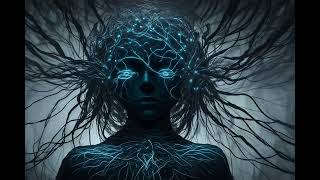
The Tapestry of Time: Remembrance and Fiction
This part will cover the concept of memory from a cultural and science fiction perspective, introducing how memory is often perceived and misunderstood.
In the hush of evening, as the world outside softens and the edges of things blur, let us unwind the first filaments of a subject both intimate and immeasurable: memory. The tapestry of time, woven from threads that slip through our fingers even as we try to grasp them, is both the foundation of our identity and the mystery at the heart of human experience. Before we descend into the intricate machinery of neurons and the biochemistry of recollection, let us drift along the surface of our shared imaginings—the myths, the stories, the dreams with which we have tried to make sense of memory’s elusive power.
Across the centuries, memory has been a subject of awe and suspicion. Ancient civilizations, those first architects of wonder, saw memory not merely as a function of mind but as a divine or magical force. In Greek mythology, memory was personified as Mnemosyne, mother of the nine Muses, whose gifts of poetry, music, and history were all born from remembrance. To remember, then, was to be touched by the sacred; to forget, a kind of exile from the gods’ favor. In the Orphic mysteries, souls were offered the choice to drink from Lethe, the river of forgetfulness, or from Mnemosyne, the wellspring of memory, upon entering the underworld. The choice was momentous: memory meant retaining the self, perhaps even immortality; forgetfulness, dissolution and rebirth. These stories, spun in the flickering firelight of ancient nights, were not just entertainment, but attempts to chart the boundaries of selfhood and time.
The idea of memory as both gift and curse surfaces in every culture. In the epic of Gilgamesh, the hero’s journey is not merely a quest for immortality, but for remembrance—he seeks to leave a name that will outlast his flesh. The Egyptians, masters of ritual and record, constructed tombs and carved heiroglyphs to secure their memories against the ravages of centuries. In the oral traditions of indigenous peoples, memory was the vessel of law, lineage, and landscape—a living archive entrusted to elders and storytellers, recited beneath the stars so that no lesson or ancestor would be lost.
Yet memory, for all its revered status, has always been tinged with uncertainty. Even the ancients noted its fickleness. The philosopher Plato wrote of memory as an impression left on a wax tablet, shaped by experience but easily blurred or erased by time. In Buddhist thought, memory is both the chain that binds us to suffering and the path to liberation—at once the record of past lives and the illusion that veils the truth of the present moment. Memory, in these traditions, is not a simple mirror of reality, but a shifting, fragile construction.
As the centuries unfurled and the world grew more complex, memory’s enigma deepened. The invention of writing was a revolution not merely of communication, but of remembrance. Clay tablets and papyrus scrolls became prosthetic memories, storing what no single mind could hold. The philosopher Socrates, in Plato’s “Phaedrus,” famously warned that writing would lead to forgetfulness, as people relied on external records rather than their own recollections. He feared that the written word would offer “the appearance of wisdom, not true wisdom,” for it would allow us to seem knowledgeable without truly remembering. Even in the earliest days of civilization, then, there was an anxiety that memory might be undermined by the very tools designed to preserve it.
This interplay between inner recollection and external record has only grown more complex. The printing press, the photograph, the magnetic tape, the silicon chip—each has changed the scale and shape of memory. Yet for all our libraries and archives, our hard drives crammed with digital echoes, we remain haunted by the gaps and distortions of personal recall. Here, in the twilight between what is remembered and what is recorded, fiction has staked its richest claims.

Turn, then, to the realm of science fiction, that laboratory of what-ifs and might-have-beens. In these imagined worlds, memory is a currency, a weapon, a commodity to be bought, sold, or stolen. The genre is crowded with amnesiacs and memory thieves, with machines that can rewind or rewrite the past. Philip K. Dick, that chronicler of unstable realities, filled his stories with characters unsure whether their memories were real or implanted. In “Do Androids Dream of Electric Sheep?”—the novel that inspired the film “Blade Runner”—artificial beings yearn for a past they never lived, their identities built on fabricated recollections. The question becomes not only “Who am I?” but “How do I know what I remember is truly mine?”
Films like “Eternal Sunshine of the Spotless Mind” and “Total Recall” probe the tantalizing possibility of editing memory. What if we could choose to erase our sorrows, or to graft on the joys of a life never lived? These stories lure us with the prospect of control, but also warn of the cost: to excise pain is, perhaps, to sever the roots of love; to add memories is to risk fracturing the self. In the universe of science fiction, memory is always slippery—mutable, manipulable, and never entirely trustworthy.
Yet these tales, for all their speculative machinery, rest on a foundation of genuine psychological insight. Even in everyday life, our memories are far less stable than we like to believe. The novelist Vladimir Nabokov, himself a master of memory’s tricks, wrote of the “glimmering web of retrospection,” a phrase that captures the shimmering, ever-shifting nature of what we remember. Neuroscience today confirms that memory is not a static archive, but a process of constant reconstruction. Each time we summon a memory, we do not simply retrieve it; we rebuild it, influenced by our present emotions, our desires, and the stories we have told ourselves before.
This unsettling truth—that memory is more fiction than fact—has profound implications. In courtrooms, eyewitness testimony is prized, yet study after study reveals how malleable and unreliable human recollection can be. The phenomenon of “false memories,” in which people confidently recall events that never happened, is now a well-documented psychological effect. It is disturbingly easy to plant an idea, to subtly reshape a recollection, until invention is indistinguishable from experience. Memory, then, is not the fortress we once imagined, but a landscape of shifting sands.
And yet, for all its flaws, memory is the very ground of selfhood. Without it, we are unmoored. The philosopher John Locke argued that personal identity resides in continuity of consciousness—if you can remember being the person who acted yesterday, you are that person. The tragic case of Clive Wearing, a musician afflicted by profound amnesia, illustrates this poignantly. Each moment, for him, is a fresh beginning; his past is lost, his present a perpetual “now.” And yet, fragments persist: he can play the piano, feel love for his wife, respond to music with undiminished passion. Memory, it seems, is layered—some parts more deeply etched than others, some resistant to even the cruelest erasures.
In literature and art, memory is both the theme and the medium. Marcel Proust’s monumental novel, “In Search of Lost Time,” is a meditation on the involuntary nature of memory—the famous madeleine dipped in tea, whose taste unlocks a flood of recollection. For Proust, memories are not summoned at will, but emerge unbidden, their emotional force undimmed by the passage of years. In painting, Salvador Dalí’s melting clocks evoke the fluidity of time and the instability of memory. The Surrealists, fascinated by dreams and the unconscious, sought to capture the half-remembered, the glimpsed and forgotten, in their art.
There is a paradox at the heart of all these cultural imaginings: memory is both what grounds us in reality and what tempts us into fantasy. We long to remember, yet we are never certain of what we recall. The stories we tell about ourselves—our childhoods, our triumphs and traumas—are as much inventions as they are records. We edit, we embellish, we forget. In the words of the poet T.S. Eliot, “We had the experience but missed the meaning, and approach to the meaning restores the experience in a different form.” Memory is thus both the raw material of narrative and the shaping force of interpretation.

In the world of science fiction, this ambiguity is magnified and made strange. Consider the film “Memento,” where the protagonist, unable to form new memories, relies on notes and tattoos to reconstruct his past. He is trapped in a perpetual present, a detective searching for a crime whose details constantly slip away. The viewer, too, is drawn into the uncertainty, forced to question what is real and what is invention. In these stories, the boundaries between memory, identity, and reality are porous, ever-shifting.
As technology advances, the line between natural and artificial memory grows ever thinner. Already, we rely on our phones and computers as externalized memories—address books, photo albums, social media timelines. Some theorists speculate about the future possibility of “memory prosthetics,” devices that could record, store, and replay our experiences with perfect fidelity. Would such tools free us from forgetfulness, or would they entrap us in an endless loop of recollection, unable to let go of the past? Science fiction offers both utopian and dystopian visions: memories as the ultimate form of freedom, or as the final prison.
But the dream of perfect memory is, perhaps, founded on a misunderstanding. Even if we could record every detail of our lives, we would not escape the need to interpret, to select, to make meaning from the chaos of sensation. As the psychologist William James observed, “Memory is a sculptor, not a camera.” We remember not by storing snapshots, but by shaping stories, finding patterns, creating coherence. Our memories are not passive records, but active constructions—works of art, shaped by the hand of the remembering self.
This realization brings us back to the ancient myths, the stories told around the fire. The river Lethe and the well of Mnemosyne, the wax tablet and the written word, the tales of gods and heroes—these are all attempts to grapple with the uncertainty at the heart of memory. We yearn for continuity, for connection, for the assurance that what we recall is real. Yet we are constantly reminded of memory’s fragility, its susceptibility to distortion and loss.
Tonight, as you drift toward sleep, consider how your own memories flicker and shift. The day’s events, already receding into the past, will be reshaped by dreams and by the stories you tell yourself tomorrow. The people you have loved, the places you have seen, the words you have spoken—all preserved, perhaps, in some hidden corner of your mind, waiting for the right scent or sound to awaken them. And yet, you know that what you recall tomorrow may not quite match what you remember today.
It is this interplay—between remembrance and forgetting, between fact and fiction—that gives memory its haunting beauty. The tapestry of time is never finished, always being rewoven with each act of recall. In the next quiet hour, we will begin to unravel how science has sought to understand this process, to map the pathways of memory in the brain, to explain how the fleeting moments of experience are transformed into the stories of self.
But for now, let yourself rest in the gentle uncertainty, knowing that memory’s mysteries remain—waiting, just beyond the edge of sleep, to be dreamed again.
The Loom of the Mind: Weaving and Unpicking Memories
This part will cover the complexities of memory formation, storage, and recall, delving into the limitations of our understanding.
Beneath the dome of your skull, in the intricate darkness of the brain, lies a ceaseless loom—a loom far finer than any human hand could weave, one whose threads are spun not from silk or flax but from the very stuff of experience. Each strand, drawn from sensation, emotion, and fleeting thought, is deftly interlaced, forming the tapestries we call memories. This is the loom of the mind: unassuming, always at work, knitting together the quiet drama of your days and nights, stitching the fabric of your self.
Let us drift, for a time, through the shadowed corridors of memory. Not the poetic memory of nostalgia and longing, nor the memory of rote recitation, but memory as it is: a living, intricate process, both fragile and resilient—prone to distortion, yet capable of astonishing fidelity. Memory, as modern science understands it, is neither a simple vault nor a smooth recording, but a dance of molecules and electric arcs, patterns etched and erased, called forth and, sometimes, lost.
Begin by considering the moment a memory is born. It might start with the sudden crash of a thunderstorm, a face glimpsed in a crowd, the first taste of a summer peach. To the brain, every such encounter begins as a torrent of sensory signals: light, sound, taste, touch, the chemical signatures of emotion. These raw signals surge into the sensory cortices, the specialized regions of the neocortex that parse color from form, pitch from rhythm, sweetness from bitterness. But mere sensation does not yet make a memory. For that, the brain must transform fleeting impressions into something more enduring.
At the heart of this transformation lies a region known as the hippocampus—a small, seahorse-shaped structure, nestled deep within the temporal lobes. It is here that the alchemy of memory formation begins: the process called “encoding.” The hippocampus receives input from all over the cortex, binding sensory fragments into a coherent whole. It is, in a sense, the brain’s master weaver, plucking threads from disparate regions and knotting them into a pattern: the sight and scent of rain, the shiver of thunder, the emotion of awe or fear.
This process is not passive, for the hippocampus does not simply record. Rather, it selects, arranges, prioritizes. Attention is its lodestar. Experiences that stir emotion, surprise, or significance are more likely to be encoded—while the mundane and repetitive may slip quietly away, unremarked. Neurotransmitters, chemical messengers such as dopamine and norepinephrine, surge through the hippocampus in moments of novelty or excitement, strengthening the neural circuits that will hold the new memory in place. The brain, ever economical, is a discerning archivist.
But the first traces of memory are as delicate as dew, easily scattered. This initial stage is called “short-term memory” or “working memory,” a transient holding ground akin to a chalkboard on which the day’s figures are scrawled. Here, neurons fire in tight synchrony, maintaining a fragile pattern of activity that may last seconds or minutes. Unless rehearsed or imbued with special importance, most of these traces fade into oblivion—a fact both merciful and necessary, for without forgetting, the mind would soon drown in detail.
Some experiences, however, are judged worthy of preservation. Through a process known as “consolidation,” the hippocampus works to stabilize and strengthen these select memories, rendering them more durable. This is no simple matter of copying, but a profound reorganization: over hours, days, and sometimes even years, the hippocampus gradually transfers the memory’s components back to the cortex, distributing them among the regions that first registered the sights, sounds, and feelings. A memory of a thunderstorm, for example, is not stored in a single place but scattered across the brain—visual aspects in the occipital lobe, the rumble of thunder in the auditory cortex, the chill of fear in the amygdala.
During sleep, particularly during the slow, rolling waves of deep non-REM slumber, the brain busies itself with this quiet labor. Neurons replay the day’s events in compressed time, reinforcing the connections that will anchor memories for the long term. This replay is not a mere repetition but a selective rehearsal, emphasizing some events and pruning others—a process akin to editing a manuscript, excising redundancies, and polishing meaning.

Yet, even as memories settle into the neocortex, they remain malleable. To recall a memory is not to simply retrieve it from a vault, untouched. Instead, each act of recollection is an act of reconstruction. The brain reassembles the scattered fragments, drawing upon cues, context, and expectation, weaving them anew into a coherent narrative. In this way, memory is less a static archive and more a living story, retold with every telling, shaped by who we are in the moment of recall.
This plasticity is both a strength and a vulnerability. It allows memories to be updated—critical for learning and adaptation—but it also means they are never quite as fixed as we imagine. Studies have shown that each retrieval can subtly alter the memory, a phenomenon known as “reconsolidation.” Sometimes, details are sharpened; at other times, errors creep in, impressions blur, and new associations are grafted onto old experiences. The mind is prone to suggestion, filling in gaps with plausible fabrications, sometimes mistaking imagination for reality. Eyewitnesses, for example, may recall the same event in conflicting ways, each convinced of their accuracy.
Delving deeper, one finds that memories are not monolithic. Psychologists and neuroscientists distinguish among several types, each with its own signature and circuitry. There is “declarative memory”—the conscious recollection of facts and events, such as recalling the capital of France or the name of your childhood friend. This form depends critically on the hippocampus and its dialogue with the cortex.
Within declarative memory, there are two further branches. “Episodic memory” is the memory of personal experience—the unique, vivid snapshots of moments lived. It is episodic memory that lets you remember your first day of school, the scent of your grandmother’s kitchen, the embarrassment of a forgotten line. Episodic memories are rich in context, colored by time and place, and intimately tied to the sense of self. They are also the most fragile, easily lost to the passage of time or the ravages of disease.
“Semantic memory,” by contrast, is the storehouse of general knowledge—the meaning of words, the facts of the world, the rules of arithmetic. Unlike episodic memory, semantic memory is less tied to context. You may know that Paris is the capital of France without recalling when or how you learned it. Over time, many episodic memories are thought to “decontextualize,” shedding their personal context and merging into semantic knowledge.
Beyond declarative memory lies “procedural memory”—the memory of skills and habits, things known in the hands and muscles rather than words. Riding a bicycle, typing on a keyboard, tying your shoes: these acts are encoded in circuits deep within the basal ganglia and cerebellum, and are often preserved even when other forms of memory falter. Procedural memories are formed through repetition and practice, often outside conscious awareness. They are, in a sense, the most reliable of memories, persisting even when names and faces fade.
There are, too, the quieter forms of memory: “priming,” in which exposure to one stimulus subtly shapes the response to another; “conditioning,” where repeated associations create automatic responses; and “working memory,” the fleeting workspace where thoughts are juggled and manipulated. Each of these draws upon different neural networks, and each is subject to its own peculiar vulnerabilities.
The question of where, exactly, a memory resides—of the so-called “engram”—has long haunted neuroscience. Early theorists imagined memories as discrete, localized traces, perhaps a single cell or circuit that, once activated, would replay the remembered experience in full. The American psychologist Karl Lashley spent years searching for the engram in the brains of rats, teaching them to run mazes and then lesioning various cortical regions. To his frustration, no single spot seemed to hold the memory. The animals could often recall the maze even after substantial portions of their brains were removed, so long as enough tissue remained. Lashley concluded that memory was widely distributed, not neatly localized—a view that, though modified, still guides modern research.

Today, with the tools of molecular biology and advanced imaging, we can glimpse the outlines of memory at the level of synapses—the tiny junctions where neurons communicate. When a memory is formed, certain synapses are strengthened through a process called “long-term potentiation” (LTP). Here, repeated activity causes an influx of calcium ions, triggering chemical cascades that add new receptors to the synaptic membrane, making the connection more responsive in the future. This is the cellular basis of learning: a physical change wrought by experience, an echo of the past inscribed in the wiring of the brain.
Yet, the story is not so simple. Memories are not stored in a single synapse or even a single neuron, but in distributed patterns of connectivity. A single neuron may participate in many memories, its role dependent on the web of its connections. Moreover, the same memory can be encoded in different ways—electrical activity in the short term, structural changes in the long term, molecular marks that persist for years. The engram is not a fixed entity but a dynamic, evolving constellation.
Despite these advances, the essence of memory remains elusive. We can observe the molecules, trace the circuits, map the patterns of activity that flicker across the cortex when a memory is recalled. But the subjective feel of memory—the vividness of a childhood day, the ache of nostalgia, the flash of recognition—cannot be reduced to synapses and neurotransmitters. There is a gap between mechanism and experience, a mystery that science has not yet bridged.
This limitation is reflected in the puzzle of memory disorders. In conditions such as Alzheimer’s disease, the hippocampus and adjacent regions wither, and the ability to form new memories collapses. Yet, old skills and habits often endure, even as names and faces are lost. In the rare condition known as hyperthymesia, a handful of individuals can recall in exquisite detail every day of their lives, yet are not otherwise extraordinary in intellect or ability. Conversely, there are cases of “transient global amnesia,” where a person suddenly loses the ability to form new memories for hours, only to recover with no recollection of the lapse. These clinical puzzles reveal both the complexity and the vulnerability of the memory system.
The fragility of memory is, perhaps, as important as its power. Forgetting is not a failure but a necessity. The brain, confronted with a ceaseless flood of information, must be selective—pruning the trivial, preserving the significant. In this way, memory and forgetting dance together, shaping who we are and what we become.
Even as we probe the neural underpinnings of memory, we remain limited by the tools of our inquiry. Brain scans show us the broad strokes—the regions that light up when we recall a face or a fact—but not the fine-grained patterns of meaning. Molecular studies reveal the machinery, but not the poetry. Our understanding is, at best, a patchwork—a tentative map drawn on shifting sands.
And so, the loom of the mind continues its quiet work, weaving and unpicking, shaping the inner landscape from which identity arises. Each waking moment is a new thread, each dream a subtle warp in the pattern. Memory is not a static artifact, but a living process, ever in flux, ever incomplete. In the gentle hush of night, as you drift toward sleep, the weavers within your brain labor unseen—consolidating, editing, reweaving the tapestry of yourself.
Yet, the story of memory is not merely one of biology and chemistry. It is also the story of time. For memory anchors us in the river of days, allowing us to recognize patterns, to anticipate, to plan. How does the mind, so intimately bound to the present, reach backward through the currents of time and, sometimes, project forward? What is the relationship between memory and the ever-changing landscape of the future? These are questions that lead us onward, deeper into the mystery, where memory and imagination entwine.
The Echoes of Experimentation: Probing the Mind's Maze
This part will cover the history and methods of studying memory, including groundbreaking experiments and technological advancements.
Across the centuries, the deep corridors of the mind have beckoned to the curious, the restless, the seekers of invisible truths. For as long as humans have pondered their own thoughts, the question of memory—its structure, persistence, and elusive failures—has been a riddle at the centre of the self. Yet for much of human history, memory was a phenomenon observed only from within, cloaked in subjectivity and metaphor, described in the cadences of poets and the conjectures of philosophers. Only in recent centuries did memory begin to yield its secrets beneath the cool, inquisitive gaze of experiment.
In the flickering lamplight of the late 19th century, a German philosopher named Hermann Ebbinghaus undertook a lonely and meticulous voyage into the labyrinth of memory. Ebbinghaus was not a scientist in the modern sense, not yet equipped with electrodes or imaging devices. What he possessed was patience, rigor, and a willingness to turn his own mind into a living laboratory. He devised lists of nonsense syllables—three-letter strings without meaning or association in the German language—such as “ZOF,” “QAX,” “LER.” By stripping away the familiar, he sought to study memory in pure form, unsullied by prior knowledge or emotion.
Ebbinghaus recited these lists to himself, counting how many repetitions were required to commit them to memory, how many hours or days passed before they faded. Night after night, he measured the rate at which forgetting occurred, charting a curve that would echo through generations of psychological research. The result was the now-famous forgetting curve: a precipitous drop in recall soon after learning, followed by a slow, asymptotic decline. Memory, he showed, was not a steady flame but a faltering one, burning brightest in the moments after acquisition and then dimming, unless tended by repetition.
His methods were solitary and precise. Ebbinghaus’s notebooks swelled with data points—numbers inscribed with the steady hand of someone who believed that even the most private faculties could be made legible. He discovered that spaced repetition—reviewing information after intervals—dramatically slowed forgetting, a principle that would one day inform everything from classroom pedagogy to digital flashcard apps. In his devotion, Ebbinghaus became the prototype for a new kind of explorer: the experimental psychologist, charting the mind’s terrain with the instruments of measurement and statistical inference.
Yet Ebbinghaus was not alone for long. Across Europe and America, others turned their attention to the puzzles of memory. The American psychologist William James, with the lyricism of a philosopher and the discipline of a scientist, distinguished between primary memory—the fleeting contents of consciousness, what we now call short-term memory—and secondary memory, the vast reservoir of the past. James conjured metaphors: memory as a stream, consciousness as a current in which only some objects are held and others float by. His words hinted at layers, systems, and the possibility that memory was not a single faculty, but a chorus of processes, overlapping yet distinct.
The 20th century brought a new era, as the experimentalist’s tools grew ever more sophisticated. The behaviorists, led by figures like John B. Watson and later B.F. Skinner, sought to strip psychology of introspection and focus on observable behavior. Memory, elusive as it was, became a matter of response and reinforcement. The mazes and levers of their laboratories were designed for rodents and pigeons, yet their ambitions were nothing less than to decode the machinery of learning and retention. In these sterile chambers, the mind became a black box, its workings inferred from the patterns of stimulus and response.
Yet the limitations of this approach soon became apparent. Memory, after all, was more than habit; it was the persistent echo of experience, the internal reshaping of information. The cognitive revolution of the mid-20th century, ignited by thinkers such as George Miller, Jerome Bruner, and Ulric Neisser, returned the mind to centre stage. Miller, in particular, gave the world the famous number seven—plus or minus two—the apparent limit of short-term memory’s capacity. Through ingenious experiments involving sequences of digits, letters, and words, he revealed a bottleneck in the mind’s machinery, a finite span over which information could be actively juggled before it slipped away.

It was in this era that the technique of free recall experiments blossomed. Volunteers were read lists of words and, after a pause, asked to recite as many as they could remember. Patterns emerged: words at the beginning and end of the list were recalled better than those in the middle—a phenomenon named the primacy and recency effects. These experiments suggested that memory was not a featureless storehouse, but a dynamic process, shaped by attention, rehearsal, and the structure of the task.
Further subtleties were revealed through the study of interference—the way new learning can disrupt the old, and vice versa. Proactive and retroactive interference became core concepts, showing that memory is not simply a matter of storage, but of competition and context. The study of paired associates—where participants learn to link one word with another, “dog–sky,” “table–rose”—allowed researchers to probe the formation of associations, the threads that tie concepts together in the mind’s web.
Yet even the most artful behavioral experiments could only infer the workings of memory. To glimpse its anatomical substrate, scientists turned to the tragic lessons of injury and disease. In the 1950s, a young man known to science as H.M. underwent brain surgery to relieve his severe epilepsy. The surgeons excised portions of his medial temporal lobes, including the hippocampus. The seizures abated, but H.M. was left with a profound amnesia: unable to form new long-term memories, though his intelligence, personality, and short-term memory remained intact.
The case of H.M. became a touchstone. Through careful study, Brenda Milner and her colleagues revealed that memory was not unitary; the ability to remember the past and the ability to hold information in mind for a few seconds were distinct. H.M. could carry on a conversation, remember a string of numbers for a short time, and even learn new motor skills—such as tracing a star in a mirror—even though he would forget the events of each day as they passed. This dissociation suggested the existence of multiple memory systems: declarative memory, for facts and events, and procedural memory, for skills and habits, each with their own neural architecture.
The methods for probing these systems grew more refined. Neuropsychological testing, using batteries of tasks and puzzles, allowed researchers to map the deficits and strengths left by injury. The careful cataloguing of patients with strokes, tumors, or degenerative diseases revealed the modular nature of memory, the way different regions of the brain contribute to distinct aspects—spatial navigation, face recognition, word recall.
While injury provided unbidden experiments, technology opened new windows. The invention of electroencephalography (EEG) allowed scientists to record the electrical rhythms of the brain, catching the neural correlates of learning, attention, and recall. In the 1970s and 80s, the advent of positron emission tomography (PET) and later functional magnetic resonance imaging (fMRI) made it possible to watch the living brain in action, its regions lighting up as subjects memorized words, navigated mazes, or recalled childhood scenes.
These tools revealed the astonishing complexity of memory’s neural basis. The hippocampus, a seahorse-shaped structure deep in the temporal lobe, was shown to be crucial for the formation of new memories. Surrounding cortical regions, the entorhinal and perirhinal cortices, acted as gateways, integrating sensory information and shuttling it into the hippocampal circuit. The prefrontal cortex, seat of planning and attention, orchestrated the rehearsal and retrieval of information, its activity peaking during tasks that demanded the juggling of multiple pieces of data.
Yet the story was never simple. Memory proved to be distributed, dynamic, and context-dependent. The act of remembering itself altered the neural pathways involved, a phenomenon known as reconsolidation. Each recall was not a mere playback, but a re-creation—vulnerable to distortion, suggestion, and the overlay of new information. This malleability was revealed in the pioneering work of Elizabeth Loftus, whose experiments demonstrated the ease with which eyewitness memories could be reshaped by subtle hints or misleading questions. Memory, it seemed, was not a static archive, but a living, breathing process, forever in flux.

The study of memory also grew to encompass the molecular and cellular. In the laboratories of the late 20th century, the sea slug Aplysia became an unlikely protagonist. With its relatively simple nervous system, the Aplysia permitted direct observation of the changes in synaptic strength that underlay learning. The Nobel Prize-winning work of Eric Kandel and his colleagues traced the cascade of chemical signals—second messengers and protein kinases—that strengthened the connections between neurons when the animal was trained to respond to a gentle touch. These findings illuminated the principle of synaptic plasticity: the brain’s ability to rewire itself in response to experience.
From the level of molecules to the sweep of behavior, the methods of memory research became ever more intertwined. Behavioral tasks were paired with brain imaging, genetic analysis, and computational models. The study of working memory—the system that holds information temporarily for manipulation—employed tasks such as the n-back, where participants must indicate whether a current stimulus matches one presented n steps earlier. The patterns of activation observed in the dorsolateral prefrontal cortex and parietal regions during such tasks provided insight into the networks that support active maintenance and updating.
The digital age ushered in new paradigms. With the rise of large-scale databases and machine learning, researchers could analyze vast troves of data: the keystrokes of millions of users practicing foreign languages, the navigation of virtual environments, the memory errors revealed in social media posts. Virtual reality environments allowed for the controlled study of spatial memory, as participants navigated simulated cities or remembered the locations of hidden objects. The boundaries between laboratory and world began to blur, as wearable devices and smartphone apps tracked the rhythms of forgetting and retrieval in daily life.
Yet for all these advances, the core mystery endures. The mind’s maze is not a static structure, but a living dance of cells and circuits, shaped by experience, expectation, and context. The methods we use to probe it—be they syllables recited in lamplight, electrodes poised on the scalp, or photons flashing in an MRI scanner—are windows only, each illuminating a facet of the whole. The experiments of the past echo into the present, their findings woven into the fabric of our understanding, yet each answer begets new questions.
As we look deeper, the ethical dimensions of memory research come to the fore. The power to shape, implant, or erase memories—once the province of science fiction—edges ever closer to reality. Studies using transcranial magnetic stimulation (TMS) or pharmacological agents hint at the possibility of enhancing or suppressing specific memories. The promise and peril of such interventions demand not only technical mastery but wisdom, compassion, and humility.
Still, the tools and techniques continue to multiply. Optogenetics, a marriage of genetics and optics, allows neuroscientists to turn neurons on and off with pulses of light, tracing the pathways of memory in exquisite detail, at the level of individual cells. Animal models—mice running in mazes, birds learning songs—reveal the universality and variation of memory across species. Human studies, enriched by the integration of genomics, connect patterns of recall and forgetting to the twists of DNA inherited from ancestors long gone.
In all these endeavors, the spirit of Ebbinghaus and his successors lingers: the belief that the secrets of memory, elusive yet essential, can be approached through careful observation, creative experimentation, and a willingness to be surprised. Each method, each experiment, is a signal sent into the maze, an echo returning from the walls—sometimes faint, sometimes resonant, always inviting us onward.
Yet even as we probe deeper, the mind’s maze remains only partly mapped. The experiments of today will become the echoes for those who follow, their questions blending with our own. The journey through memory’s corridors is far from over, for each new discovery reveals new passageways, unexpected chambers, and the persistent shimmer of the unknown. And so, with the hum of machines and the pulse of synapses, the exploration continues—always a step further, always on the edge of revelation, as the mind’s maze yields its secrets, one echo at a time…
Through the Looking Glass: Memory's Mirror to Humanity
This part will cover the philosophical implications of memory, its role in shaping our identity, and its profound connection to our humanity.
In the hush of night, with the mind’s tide receding from daily cares, we arrive at a threshold—a place where the mechanics of memory yield to its greater mysteries. The hippocampus, the synapse, the electrical pulse: these are the tangible bones and sinews of remembrance. Yet beyond these, memory stretches out like a vast, uncharted sea, reflecting not only what we have been but who we believe ourselves to be. To contemplate memory is to gaze through a shifting, many-faceted mirror—a looking glass that returns to us not just faces and places, but the very shape of our souls.
In this final sojourn, let us surrender to that mirror’s depths, slipping quietly between science and philosophy, letting memory’s silvered surface reveal its subtlest implications. For memory is no mere ledger of experience, no cold archive of facts. Instead, it is the living thread from which we weave the tapestry of self, the invisible ink with which we pen the story of humanity.
Consider for a moment the paradoxical intimacy of memory. Each recollection is yours alone: the scent of rain on dusty pavement, the warmth of a parent’s hand, the laughter echoing in a childhood room. No other being can feel these sensations as you do, or see through the particular aperture of your mind. And yet, when you recall a story aloud, or share a reminiscence with a friend, something subtle happens. Memory, once private, becomes a bridge—a shimmer of understanding stretched between souls. What was once locked in the silent vault of the brain is released, to ripple outward and touch another consciousness.
This act, quiet as it may seem, lies at the heart of what it means to be human. For memory does not merely record; it connects. It binds us to one another in kinship, in empathy, and in the patient construction of culture. The tales of ancestors, passed from mouth to ear across centuries, form the skeleton of civilization. Myths, rituals, and histories—these are not just stories, but the mnemonic scaffolds that shape the destiny of entire peoples. Through memory, we become more than individuals: we become a species defined by shared experience, a chorus of countless voices echoing across time.
But what, then, is this “self” that memory creates? The question is as old as philosophy itself. From the ancient Greeks to the present day, thinkers have puzzled over the problem of identity. Am I the same person I was as a child, or a decade ago, or even yesterday? The cells of my body have changed, my mind has evolved, and yet there is a thread—an essence—that persists. If you close your eyes and search for the core of yourself, what do you find? Most likely, you encounter not a fixed nucleus, but a stream—a river of recollections, beliefs, and impressions. Memory is the quiet current that carries the self from moment to moment, shaping continuity out of change.
David Hume, the Scottish philosopher, famously argued that the self is little more than a “bundle” of perceptions, linked together by habit and memory. We are, in his view, not a singular entity but a flowing sequence of mental events, each arising and dissolving in turn. Yet, thanks to memory, these fleeting experiences knit themselves into a coherent whole. Memory is the loom on which the pattern of selfhood is woven, allowing us to recognize ourselves in the mirror each dawn, to carry the thread of “I” across the years.

This weaving of identity is neither perfect nor permanent. Memory is fickle, as we have seen—prone to distortion, omission, and invention. It selects, emphasizes, and sometimes erases. The stories we tell ourselves about who we are may shift with the seasons of life, colored by mood, circumstance, or desire. A childhood humiliation may fade into nothingness or grow in the telling into a defining moment. A beloved face may blur, while the sting of a long-ago slight remains sharp. In this way, the mirror of memory is both truth and artifice, both documentary and myth.
Yet perhaps it is in this very malleability that our humanity resides. For to be human is not to be a machine, recording with unerring precision. It is to be a meaning-maker, sculpting sense from chaos, order from the wild tumble of days. Memory, in its imperfections, grants us the power to reinterpret, to heal, to forgive. The traumas of the past can be revisited, reframed, softened by understanding. Joys can be savored anew, their sweetness distilled by nostalgia. Even loss, though it wounds, leaves behind the luminous imprint of what once was cherished.
In the quiet hours, when the world falls away and only the self remains, memory becomes a companion—a silent witness to the journey of a lifetime. It reminds us of our beginnings, our struggles, our triumphs. It whispers the names of those we have loved and lost, and gives shape to our longing and hope. Through memory, we commune with ghosts and ancestors, feeling their presence lingering in the songs, the recipes, the rituals handed down through generations. In this way, memory collapses time, allowing what is gone to live again, if only in shadow and echo.
The philosophical implications of this are profound. If memory is the thread that binds the self, what happens when it frays or snaps? The tragedy of amnesia, of Alzheimer’s disease, is not merely the loss of facts or faces. It is the loosening of the very fabric of identity. The person you once were becomes a stranger, the narrative of your life dissolves into fragments. Loved ones become visitors; the world becomes unfamiliar. In these moments, we glimpse the fragility of the self, the delicate machinery that underpins all that we are.
Yet, even here, something ineffable persists. The philosopher Thomas Metzinger has suggested that the sense of self, though it can be eroded, is never wholly extinguished. Somewhere, in the depths of the mind, the embers of identity continue to glow. A favorite melody may spark recognition, a touch may evoke a smile. The language of memory is not only verbal or visual—it is embodied, visceral, woven into the very muscles and bones. In the absence of explicit recollection, implicit memory may endure: the ability to ride a bicycle, to hum a lullaby, to reach for a hand in comfort. These are the quiet miracles that remind us of our humanity, even in the face of forgetting.
Memory, then, is layered—a palimpsest of the conscious and the unconscious, the spoken and the unspoken. It is personal, and yet inextricably communal. Each time you recall a moment, you reshape it, drawing it into the present, coloring it with the hues of now. But each time you share a memory, you invite others to participate in its meaning, to add their own perspective, to bear witness. In this way, memory is dialogic—a conversation across time, a dance of selves in perpetual motion.

This interplay is nowhere more evident than in the rituals that mark the rhythms of human life. Consider the gathering around a family table, stories tumbling out between bites of food. Or the ceremonies of mourning, in which memories of the departed are spoken aloud, their lives reconstructed from the mosaic of collective recall. Or the way a nation remembers its history—through monuments, parades, and the solemn recitation of names. In all these acts, memory is both individual and shared, a patchwork quilt stitched from many hands.
It is here, in the merging of private and public remembrance, that the mirror of memory reflects not just the self, but the species. Human beings are unique in their capacity for symbolic memory—the ability to preserve knowledge outside the body, in writing, art, and technology. The invention of the alphabet, the carving of petroglyphs, the painting of cave walls: these are all acts of memory externalized, the attempt to outwit forgetfulness, to grant permanence to the fleeting. When you read a poem written centuries ago, or gaze at a painting from a vanished culture, you are in communion with minds long gone, their memories echoing in your own.
This externalization of memory has transformed the human story. No longer bound by the limits of individual recall, we have built vast libraries, codices, and digital archives. We have mapped the stars, charted the genome, preserved the wisdom and folly of ages. In the silent stacks of ancient libraries, in the glowing servers humming beneath city streets, humanity’s collective memory grows ever more intricate, ever more interwoven. And yet, for all our technological prowess, the core of memory remains deeply, stubbornly human—a fragile, flickering presence within the brain, inseparable from emotion, meaning, and desire.
There is a paradox here, too. The more we externalize memory—entrusting our past to books, photographs, and computers—the more we are confronted with the question of what is truly remembered. Does a life exist in the facts recorded, or in the feeling of a moment relived? Can a memoir capture the full texture of a childhood, or is something essential always lost in translation? The philosopher Henri Bergson spoke of “pure memory”—the unmediated, living past that endures within us, untouched by symbols or words. It is this living memory, he argued, that truly shapes our consciousness, imbuing each moment with depth and resonance.
And so, we return to the mirror, to the looking glass in which we seek ourselves. Memory, elusive and protean, returns our gaze, sometimes clearly, sometimes clouded. It is both blessing and burden, both solace and source of sorrow. It allows us to dream, to plan, to imagine futures by recalling what has been. It teaches us empathy, by granting us access to the inner lives of others, to the joys and pains that mark every human heart.
In the hush of night, as you lie in stillness, the gentle ebb and flow of recollection may carry you to distant shores. The face of a friend long absent, the sound of laughter under summer skies, the bittersweet ache of partings and reunions—these drift across the mind’s eye, luminous and fleeting. You may find yourself pondering the mysteries of who you are, and who you have been. The mirror of memory, ever shifting, offers no final answers, but only the invitation to look deeper, to trace the pattern of your life across the silvered glass.
As you drift toward sleep, know that memory will continue its quiet work, sifting and sorting, knitting together the fragments of the day with the fabric of all that came before. Dreams may come, weaving new tapestries from old threads, blurring the boundary between what is real and what is imagined. In this twilight realm, the looking glass of memory is both compass and companion, guiding you gently onward—into the mysteries that await, just beyond the horizon of waking thought.