The Enigma Within: Navigating the Subconscious Labyrinth
This part will dive deeper into the complexities of the subconscious mind and explore the limits of our understanding. We'll explore the surprising influences it exerts on our everyday life.
Beneath the gentle ebb and flow of waking thought, where words and intentions drift like clouds across the sky of consciousness, there lies a vast and tangled kingdom. It is a place woven from mystery and memory, a silent realm that pulses with hidden currents: the labyrinth of the subconscious mind. Here, in this twilight domain, the rules of logic soften, and the boundaries between past, present, and possibility blur and ripple. It is not a void, nor is it chaos, but rather a chambered nautilus — intricate, expanding, and infinitely deep, its spiral corridors lined with forgotten dreams, ancient instincts, and the quiet hum of processes that shape our every waking moment.
To set foot in this enigmatic territory is to abandon the comforting map of the known. Even the keenest intellect cannot fully chart its passageways. The conscious mind, with its bright lantern of attention, can illuminate only the nearest walls, the closest turns. Beyond that, the labyrinth folds back on itself, a place where old fears sleep, where the roots of habit grow thick and gnarled, and where the seeds of creativity are sown in darkness. It is a place we all inhabit, yet know only in glimpses — a shadowed companion that walks beside us, silent and unseen.
What, then, is this subconscious? The word itself hints at things lurking beneath: “sub,” meaning under, and “conscious,” the realm of awareness. But the boundaries are porous, and the distinction is not as sharp as it might seem. The subconscious is not a singular entity, nor a separate mind, but rather a theater of processes, a chorus of voices speaking in languages older than words. Here, the reflexes of the body, the patterns of learned behavior, the echoes of forgotten experience, and the silent judgments of intuition all intermingle and converse. It is a place where the mind dreams, where it solves problems in secret, where it remembers things that the waking self has long forgotten.
The limits of our understanding of this realm are both humbling and profound. For centuries, poets and philosophers have peered into it, seeking to divine its secrets. In the last hundred years, science has joined the quest, wielding the tools of psychology, neuroscience, and experimental observation. Yet, the deeper we look, the more the subconscious seems to recede, like a mirage that dances just beyond the horizon.
Consider, for a moment, the simple act of walking down a familiar street. Your conscious mind may be preoccupied with plans for the day, or with fragments of conversation replaying in your thoughts. Yet, beneath this, a thousand subtle calculations unfold without your awareness: the rhythm of your stride, the precise adjustments for uneven pavement, the silent recognition of street corners and shop windows. You do not will your heart to beat, nor your lungs to draw breath; these, too, are governed by ancient circuits deep within the labyrinth. The subconscious is not merely a storehouse of forgotten memories; it is the engine and steward of life itself.
And then there are the more subtle influences, those that shape our preferences, our biases, and our reactions. The subconscious is a master of pattern recognition, sifting the ceaseless flow of sensory input for signals and meanings. It learns from every moment, storing impressions and associations that later emerge as hunches, gut feelings, or flashes of intuition. Sometimes, these are gifts: a sudden insight into a problem, the inexplicable sense that a stranger can be trusted, the creative spark that ignites a poem or invention. At other times, the patterns it learns may mislead — giving rise to prejudice, superstition, or irrational fear.
It is in dreams, perhaps, that the subconscious most openly reveals its artistry. Each night, as the conscious mind slips into slumber, the gates of the labyrinth swing wide. Here, the mind weaves stories from fragments of memory, emotion, and desire, stitching together impossible scenes with the logic of a poet. In dreams, the subconscious speaks in symbols, images, and riddles. It gives voice to longings we dare not name in daylight, and it rehearses, in symbolic form, the struggles and hopes of waking life. The ancients believed that dreams were messages from the gods. Modern science, for all its skepticism, still stands in awe of the creativity and complexity with which the mind composes its nightly tales.
But the influence of the subconscious extends far beyond the realm of sleep. Even in our waking hours, it is the silent partner in every decision, every perception. The famous experiments of Benjamin Libet in the 1980s startled the world by showing that the brain begins to prepare for action milliseconds before the conscious intention to move arises. The subconscious, it seems, is always at work, preparing, guiding, even anticipating the choices we believe we are making freely. This is not to say that we are automatons, puppets of hidden forces — but rather that the conscious mind is only the tip of the iceberg, the visible crest of a much larger, deeper process.
Freud, the father of psychoanalysis, cast the subconscious as a dark reservoir of repressed desires and unresolved conflicts. He envisioned it as a place where the unacceptable and the dangerous were banished, only to re-emerge in dreams, slips of the tongue, or neurotic symptoms. Later thinkers have challenged and refined this view, seeing the subconscious not as a dungeon, but as a fertile ground from which creativity, resilience, and healing can spring. Carl Jung, for example, spoke of the “collective unconscious,” a shared layer of archetypal imagery and instinct that binds humanity together across cultures and generations.
Yet for all the theories and metaphors, the subconscious remains stubbornly elusive. It is not a place we can visit, nor a thing we can dissect. It is not confined to any one region of the brain, but arises from the interplay of countless neural networks, shaped by evolution, experience, and culture. Modern neuroscience has revealed that much of what we do — from recognizing faces to catching a ball to feeling a sudden surge of emotion — is orchestrated by processes that never reach the threshold of conscious awareness. Our brains are, in a sense, prediction machines, constantly guessing at what will happen next, filling in gaps, and adjusting our perceptions to fit the ever-shifting world.
Sometimes, the influence of the subconscious is subtle and beneficent. A pianist’s fingers glide over the keys with practiced ease, each note emerging from a memory that is stored not in words, but in the silent language of muscle and motion. A chess master surveys the board, and in a flash, recognizes a pattern leading to victory, though she may be hard-pressed to explain exactly how she saw it. In these moments, the conscious mind stands aside, and the subconscious takes the helm, drawing upon a lifetime of learning, observation, and experience.
At other times, the labyrinth can be treacherous. Old wounds, long forgotten, can shape our responses in ways we do not understand. A scent, a melody, the slant of sunlight through a window — any of these can stir memories and emotions that lie buried in the depths. Sometimes, the subconscious gives rise to anxiety, phobia, or compulsion, driving us to act against our own intentions. The roots of trauma, too, run deep in this hidden soil, their tendrils touching thought, feeling, and even the body itself.
Yet, the subconscious is not merely a repository of the past. It is also a crucible of imagination, a place where the future is rehearsed and new possibilities are born. The creative process, so often shrouded in mystery, depends upon the silent labor of the subconscious. Artists and scientists alike speak of ideas that arrive unbidden, solutions that present themselves suddenly after days or weeks of fruitless effort. The subconscious mind, it seems, continues to work even when the conscious self rests, sifting through fragments of thought, assembling patterns, and offering up insights when least expected.
Consider the phenomenon known as “incubation,” so familiar to those who labor in creative fields. A problem is pondered, wrestled with, and set aside. Then, in the midst of unrelated activity — walking, bathing, drifting into sleep — the answer emerges, clear and whole. The subconscious, unhurried and unbound by strict logic, has continued to shape and refine the idea, presenting it to consciousness only when it is ready. This is not magic, but a testament to the mind’s extraordinary capacity for parallel processing, for weaving together disparate threads into new and unexpected designs.
Language itself is shaped by the subconscious. When we speak, we do not consciously select each word, nor do we labor over the grammar that binds phrases together. Instead, words flow in a stream, guided by rules and patterns learned long ago and stored in the labyrinth’s depths. The slips of tongue that sometimes occur — the so-called “Freudian slips” — are windows into this process, revealing the subtle interplay between intention and impulse, memory and desire.
Social life, too, is guided by the unseen hand of the subconscious. We read the expressions of others, sense their moods, and respond to subtle cues that we cannot always articulate. The neuroscientist V.S. Ramachandran has spoken of “mirror neurons,” specialized cells that fire both when we perform an action and when we observe another performing it. These neural circuits may form the basis of empathy, allowing us to feel, in some measure, the emotions of those around us. Much of this occurs below the surface of awareness, a silent choreography that binds us together in fellowship and understanding.
But perhaps one of the most remarkable aspects of the subconscious is its plasticity, its capacity to learn, adapt, and change. Though many of its patterns are rooted in early experience or even in the architecture of the brain itself, the labyrinth is not fixed. New pathways can be forged; old habits can be unlearned. Through practice, reflection, and sometimes therapy or meditation, we can bring some of these hidden processes into the light, examining, questioning, and reshaping them. The boundaries between the conscious and subconscious are not walls, but thresholds — places where attention, intention, and curiosity can make a difference.
Still, for all our efforts, much remains hidden. The subconscious is a realm of paradox — familiar, yet strange; intimate, yet distant; powerful, yet elusive. It shapes our lives in ways we can neither fully control nor entirely predict. It is the wellspring of creativity, the guardian of memory, the source of instinct and intuition, and, at times, the seat of suffering. To navigate its labyrinth is to embark on a journey without end, a quest for self-understanding that is always unfinished, always unfolding.
And so, as you drift through the corridors of your own mind, you may sense the subtle presence of this hidden companion. In the quiet moments between waking and sleep, in the sudden recollection of a half-remembered song, in the inexplicable comfort or dread that wells up without warning — the subconscious is always at work, weaving the tapestry of experience, guiding the hand that writes, the heart that loves, the mind that dreams.
In the chapters yet unwritten, we will venture further still, following the faint glow of curiosity into the deeper chambers of the labyrinth. There, new mysteries await: the tangled dance of memory and identity, the delicate balance between autonomy and influence, the possibility of unlocking new corridors within ourselves. For now, the labyrinth stretches on, its walls lined with secrets, its paths beckoning us onward into the quiet unknown.
Decoding the Invisible: Studying the Subconscious Mind
This part will discuss how we study the subconscious mind, the tools used, its history, and the clever experiments designed to unveil its mysteries.
To wander into the tangled groves of the subconscious mind is to bring a lantern into a mist-shrouded forest, where shapes flicker at the edge of vision and the path underfoot is felt more than seen. It is here, in this strange half-light, that scientists and philosophers have long sought to decipher what moves within us, beneath the clear glass surface of our waking thoughts. The conscious mind is like a sunlit meadow—open, familiar, the place where we speak and act with intent. The subconscious is the deep soil beneath, alive with roots and teeming with unseen life, whose silent workings nourish and shape all that grows above.
But how does one study what is, by definition, hidden? How do we learn the language of dreams and reflexes, of sudden hunches and inexplicable fears? The story of decoding the subconscious is a story of ingenuity—of building tools fine enough to catch whispers, of designing experiments whose very structure is a kind of riddle, laying traps for the unseen and waiting for it to reveal itself. It is a history marked by bold speculation, patient observation, and the steady accumulation of evidence—a testament to the restless curiosity that propels us to peer behind the curtain of our own experience.
Long before the word "subconscious" entered the lexicon, ancient thinkers recognized that not all of the mind’s activity was visible to introspection. The Greeks spoke of the daimon, a personal spirit whose influence manifested in sudden inspiration or madness. In India, the Upanishads described layers of awareness, subtle as the wind beneath the surface of a pond. Yet, it was not until the nineteenth century that the Western scientific tradition turned its full attention to these shadowy regions.
Sigmund Freud was perhaps the most famous early cartographer of the unconscious. He proposed that beneath our daily awareness lies a seething cauldron of desires, memories, and fears, held in check by the ego and superego. Freud’s tools were the tools of the physician and the storyteller: the couch, the notebook, the patient’s free associations, dreams, and slips of the tongue. He listened for the hidden logic beneath the surface, weaving together fragments into a theory of mind that, for all its later critique, remains profoundly influential. His contemporary, Carl Jung, peered further still, suggesting a collective unconscious—an inherited tapestry of archetypes and symbols, shared by all humanity, expressing itself in dreams and myth.
These early efforts, though rich in imagination, were limited by method. They relied on conversation and interpretation, on the hope that, by speaking freely, the patient might betray the machinery working behind the scenes. The unconscious was glimpsed as a shadow in the corner of the room, never quite caught in the act.
As the twentieth century unfolded, the search for the subconscious grew more empirical. Scientists sought ways to measure the unseen, to count the movements of the mind as one might measure the pulsing of the heart. The invention of the reaction time experiment was a turning point. In the 1860s, the German physiologist Hermann von Helmholtz devised a technique to measure the speed at which nerves conduct impulses. His student, Franciscus Donders, extended this method to the mind itself. By timing how long it took people to respond to different stimuli, Donders deduced that some mental processes must occur before we are consciously aware of them.
Imagine a participant sitting before a telegraph key, eyes fixed on a light. The light flashes; the participant presses the key. Sometimes the light is red, sometimes green, and only one color demands a response. By varying the conditions, Donders inferred the time required for perception, discrimination, and decision—all invisible steps, unfolding before the finger moves. This was a subtle trick, a way of catching the subconscious in the act of preparation.
With each decade, the tools grew more refined. In the 1950s and 60s, the development of the electroencephalogram, or EEG, allowed scientists to record the brain’s electrical activity. Tiny electrodes placed on the scalp picked up the rhythmic pulses of neurons, rendering the hidden symphony of the mind as a jagged line on a strip of paper. Researchers noticed that certain patterns—alpha waves, beta waves—correlated with different states of consciousness, from wakefulness to dreaming. In time, these patterns became signposts, hinting at the movements of thought beneath the surface.
But the real revolution came with the invention of clever experiments—paradigms designed not just to observe, but to provoke the subconscious into revealing itself. The story of these experiments is a story of misdirection, of puzzles and paradoxes set like snares along the winding path of the mind.
Consider the case of "priming," a phenomenon that illustrates the subtle power of the subconscious. In a classic experiment, participants are asked to read a list of words, some of which are related—doctor, nurse, hospital—and some not. Later, when presented with a word stem, such as "nur_," they are more likely to complete it as "nurse" if they have recently seen related words. The mind, it seems, is constantly preparing, laying down pathways that shape our responses without our conscious knowledge. Priming can affect not only words, but also perceptions, judgments, even behavior—nudging us gently in one direction or another, like a hidden hand at the tiller.
A more dramatic demonstration comes from the famous "Stroop test." Here, participants are shown words printed in colored ink—say, the word "red" written in blue. Their task is to name the color of the ink, not the word itself. Yet, time and again, people stumble, slowed by the automatic impulse to read the word. This interference reveals the power of subconscious processes: reading, once learned, becomes so automatic that it resists conscious override. The struggle to suppress a well-practiced response lays bare the layers of control and compulsion within the mind.
Another ingenious tool is the "implicit association test," or IAT, developed in the late 1990s. Participants are asked to quickly sort words or images into categories—positive or negative, male or female, young or old—by pressing keys. The speed and accuracy with which they make these associations reveal patterns of bias and preference that may be at odds with their explicit beliefs. The test is designed to bypass the conscious editor, catching the fleeting associations that flit through the mind before reason can intervene. In this way, the IAT has illuminated the hidden prejudices that shape society, from attitudes toward race and gender to preferences for certain brands or political candidates.
Sometimes, the subconscious reveals itself not in what we do, but in what we cannot help but do. Take the phenomenon of "blindsight," observed in patients with damage to the primary visual cortex. Though they claim to see nothing in part of their visual field, these patients can nevertheless point to lights or shapes with uncanny accuracy. Some part of their brain is processing visual information, guiding their actions without entering awareness. Here, the subconscious is not a vague abstraction, but a demonstrable force—a silent partner in perception.
The study of "subliminal perception" offers another window into the hidden mind. In these experiments, stimuli are presented so briefly, or so faintly, that they do not reach conscious awareness. Yet, participants’ responses are subtly influenced by what they have not consciously seen—a flashed word can alter a mood, a fleeting image can nudge a decision. Early research in this area was fraught with controversy, as lurid stories of hidden messages in advertisements captured the public imagination. But careful studies have shown that, while the effects are often modest, the subconscious is indeed sensitive to signals too faint for consciousness to register.
In recent decades, the growing power of brain imaging has opened new vistas. Functional magnetic resonance imaging, or fMRI, allows scientists to track changes in blood flow across the brain, mapping which regions are active during different tasks. By comparing patterns of activation when people are aware versus unaware of a stimulus, researchers can chart the neural pathways of consciousness and its shadow. For example, when participants are shown a fearful face so quickly that they cannot consciously see it, the amygdala—a region involved in emotion—still lights up, as if sounding an alarm that the rest of the mind has not heard. Through such studies, we glimpse the architecture of the subconscious, the circuits that flicker to life in the darkness beneath awareness.
But not all experiments rely on high technology. Some of the most revealing studies harness the mind’s own capacity for self-deception. In the "choice blindness" paradigm, participants are asked to choose between two options—say, two faces, or two jams. After making a selection, they are sometimes shown the option they did *not* pick, and asked to explain their choice. Remarkably, many people do not notice the switch, and will readily justify a decision they never actually made. The mind, it seems, is adept at weaving stories to make sense of its own behavior, even when the underlying motives are hidden from view.
Other experiments probe the boundaries between conscious and unconscious intention. In the famous experiments of Benjamin Libet, participants were asked to flex their wrists whenever they felt the urge, while their brain activity was recorded. Libet found that the brain’s readiness potential—a surge of electrical activity—preceded the conscious intention to move by several hundred milliseconds. The implications are still debated, but the finding suggests that the seeds of action are sown in darkness, sprouting into awareness only after the process has begun.
The study of the subconscious is not merely a matter of cataloging curiosities. It strikes at the heart of questions that have haunted philosophers for centuries: What does it mean to choose freely? Can we trust our own motives? Are we the authors of our own actions, or are we, in some measure, written by forces we cannot see?
The answers, as they emerge from experiment and observation, are often unsettling. We learn that much of what we do is shaped by scripts written long ago—by habit, by emotion, by the slow accretion of experience. We find that the mind is less a single voice than a chorus, some singing in daylight, others murmuring in the dark. Yet, there is wonder in this complexity, a kind of humility that comes from recognizing the limits of self-knowledge. The subconscious is not a trickster, but a craftsman, laboring quietly to guide and protect, to sift and sort the torrent of experience that pours in each day.
As science advances, the tools grow ever more subtle. Computerized tasks probe the microstructure of attention and memory. Machine learning algorithms sift through patterns in brain activity, searching for the fingerprints of hidden processes. Even as we peer deeper, the subconscious remains elusive—its boundaries shifting, its contents always half in shadow. Each experiment unveils a new facet, a fresh puzzle, as if the mind delights in keeping some secrets for itself.
Yet for all our cleverness, for all the glowing screens and humming machines, there is something irreducibly human in the quest to understand the subconscious. It is the same impulse that drives us to interpret dreams, to ponder the meaning of a sudden intuition, to wonder why a forgotten song can bring tears unbidden to the eyes. The study of the subconscious is the study of ourselves—not just as thinkers and doers, but as creatures shaped by mystery, haunted by memory, propelled by unseen currents.
Outside the laboratory, the implications ripple outward. In therapy, the insights of subconscious processes guide treatment, offering hope for those struggling with phobias, addictions, or trauma. In art and literature, creators draw on the wellsprings of the unconscious, trusting in the wisdom of dreams and reverie. In law and politics, the recognition of implicit bias challenges us to build fairer societies, mindful of the forces that shape judgment and action.
Still, the work is not finished. Each discovery opens new questions, each answer hints at deeper riddles. The subconscious, once dismissed as the province of mystics and poets, now stands at the frontier of science—a realm where reason and wonder meet, and where the next experiment waits, poised at the edge of understanding.
And so, as the night deepens and the mind drifts toward sleep, we find ourselves poised on the threshold, aware of the vastness within. The tools lie ready, the questions sharpened. With each gentle breath, the boundary between conscious and subconscious grows thin, and the mysteries of the mind beckon, as if inviting us to venture further, to listen for the next whisper from the world behind our waking thoughts.
Reflections in the Mind's Mirror: The Subconscious and Our Humanity
This part will reflect on the meaning, mystery, and connection of the subconscious mind to our humanity. It will explore the philosophical implications and the profound influence it has on our personal and collective existence.
Across the quiet expanse of night, with the world softened to a hush and the mind loosened from daytime’s bindings, the subconscious quietly stirs. It is not a chamber to which we possess a key, nor a garden we may fully tend. It is a realm half-lit and unfenced, where the roots of our being twist down into darkness and spread further than our waking thoughts can reach. Here, in this liminal territory beneath the surface of awareness, the true contours of our humanity are shaped and reshaped, moment by moment, dream by dream.
For as long as humans have peered inward, there has been a sense that the mind is more than a single voice, more than a solitary lantern casting light in an empty room. The conscious mind, with its logic and intentions, is only the narrow beam that plays over the surface. Below, the subconscious stirs—an ocean of memory, association, desire, and symbol. It is the seamstress of our dreams, the quiet cartographer mapping the terrain of our feelings, the patient archivist holding the impressions of a lifetime. And yet, it is also the trickster, the maker of riddles, the wellspring of sudden inspiration and inexplicable dread.
What is it about the subconscious that feels so essential to our sense of self, and yet so elusive? How does this hidden self inform our humanity, not only as individuals but as members of a species forever seeking to understand itself? Perhaps, as we drift on the gentle current of this inquiry, we might glimpse the ways in which the subconscious is both the cradle of our uniqueness and the thread that binds us to each other.
Within the vaults of the subconscious, memory is not a static archive but a living, shifting organism. Experiences are not stored as simple records, but as networks of sensation, emotion, and meaning. A scent on the wind may awaken a childhood afternoon in the blink of an eye; a half-forgotten melody may stir a longing so acute it brings tears. These are not random echoes, but the mind’s way of weaving together the disparate threads of our story, constantly revising and reinterpreting as we grow.
Philosophers and psychologists alike have sought to understand this process. Sigmund Freud, peering into the dreams of his patients, imagined the subconscious as a reservoir of repressed desires and unresolved conflicts, shaping our behavior in ways we could scarcely fathom. Carl Jung, his one-time student and later rival, saw in its depths a collective inheritance—archetypes and patterns that connect us all, regardless of culture or history, linking us through myth and metaphor to the whole tapestry of human experience.
Yet, even as science has advanced, peering into the brain’s architecture with the tools of neuroimaging and computational modeling, the essential mystery remains. The subconscious is not a single structure, nor a neatly labeled system. It is an emergent property, a pattern of patterns, arising from the ceaseless interplay of neurons, memories, and meanings. In this way, it is both profoundly biological and deeply poetic: the echo chamber in which ancient instincts and modern anxieties mingle, where primal fears slip into the language of 21st-century life.
The influence of the subconscious on our waking selves is subtle and pervasive. It is the invisible hand that shapes our judgments and biases, the wellspring from which our creativity bubbles forth. When we reach for a word and find instead a surprising turn of phrase, when an idea blossoms in the mind unbidden, when we are seized by a conviction for reasons we cannot quite articulate—these are the fingerprints of the subconscious at work.
And what then of the moral dimension? If so much of our thought and feeling is governed by forces beyond immediate awareness, what does this say about responsibility, about free will, about the foundations of ethics and empathy? Here, the subconscious reveals its double-edged nature. On the one hand, it can ensnare us in habits and prejudices formed in childhood, long before we chose them; on the other, it is the source of our capacity for compassion, for intuition, for the kind of understanding that transcends words.

To be human is to dwell in this paradox: to know oneself only in part, to be shaped by currents both seen and unseen. Yet it is in this very incompleteness that our richness lies. The subconscious mind is not a flaw in the design—it is the loom on which our individuality is woven. Each of us is an experiment in being, a symphony of influences and inheritances, improvising upon ancestral themes.
Consider the collective forms of subconscious expression: the myths and symbols that recur across continents and millennia, the stories we tell and retell, each generation layering its own fears and hopes onto the old bones of legend. The dragon, the labyrinth, the journey into the underworld—these motifs surface again and again, not because they are taught, but because they arise from the deep structure of the human mind. They are the subconscious made communal, a shared dream in which we recognize ourselves and each other.
In the quiet hours of the night, when the conscious mind relaxes its grip, we are visited by dreams—those enigmatic narratives that seem at once deeply personal and uncannily universal. Dreams are the theater of the subconscious, a space where the boundaries between self and other, past and future, dissolve and recombine. In dreams, we rehearse our anxieties, play out our desires, and confront our fears in symbolic form. The dream is not a mere byproduct of sleep; it is a vital act of psychic housekeeping, a nightly reweaving of the tapestry.
And yet, the power of the subconscious is not confined to sleep. It hums beneath the surface of our days, guiding the subtle dance of body and mind. The pianist’s fingers find the keys before conscious thought intervenes; the orator senses a shift in the crowd and adjusts tone or cadence without knowing quite why. The subconscious is the quiet partner in every act of expertise, every moment of flow, every instance of grace.
It is also the crucible of our emotional life. The blush that rises unbidden, the laughter that bursts forth at an unexpected moment, the sudden surge of affection or anger—these are not calculated responses, but the flowering of deeper currents. Our social bonds, too, are mediated by subconscious cues: the micro-expressions that flicker across a face, the cadence of a voice, the subtle synchrony of gestures. We are creatures of resonance, tuning ourselves to each other in ways that defy conscious control.
In this, the subconscious is not merely a private domain, but the ground of our shared humanity. It is the reason we are moved by music, drawn to art, capable of empathy. When a poem or painting stirs something nameless within us, it is the subconscious that answers—not with words, but with a feeling of recognition, of connection to something larger than ourselves. The great works of culture are not only the products of individual minds, but the collective expression of the subconscious at play across generations.
Science, for all its precision, has only begun to chart the outermost edges of this territory. The tools of neuroscience can trace the flickering patterns of electrical activity, can map the networks that underlie memory and emotion. Yet the lived experience of the subconscious—the way it feels to be haunted by a memory, or to be seized by inspiration, or to lose oneself in reverie—remains irreducibly subjective. It is the shadow in the mirror, the half-heard melody, the memory of a dream upon waking.
Philosophers have long pondered the problem of self-awareness, the question of what it means to know oneself. The ancient Greeks counseled, “Know thyself,” as the highest wisdom, yet the very structure of the mind seems to place this knowledge forever just out of reach. The subconscious is the part of ourselves that we cannot fully see, yet it is always present, always shaping the contours of our experience. To be aware of the subconscious is not to master it, but to enter into dialogue with the unknown, to recognize the mystery at the heart of one’s own being.
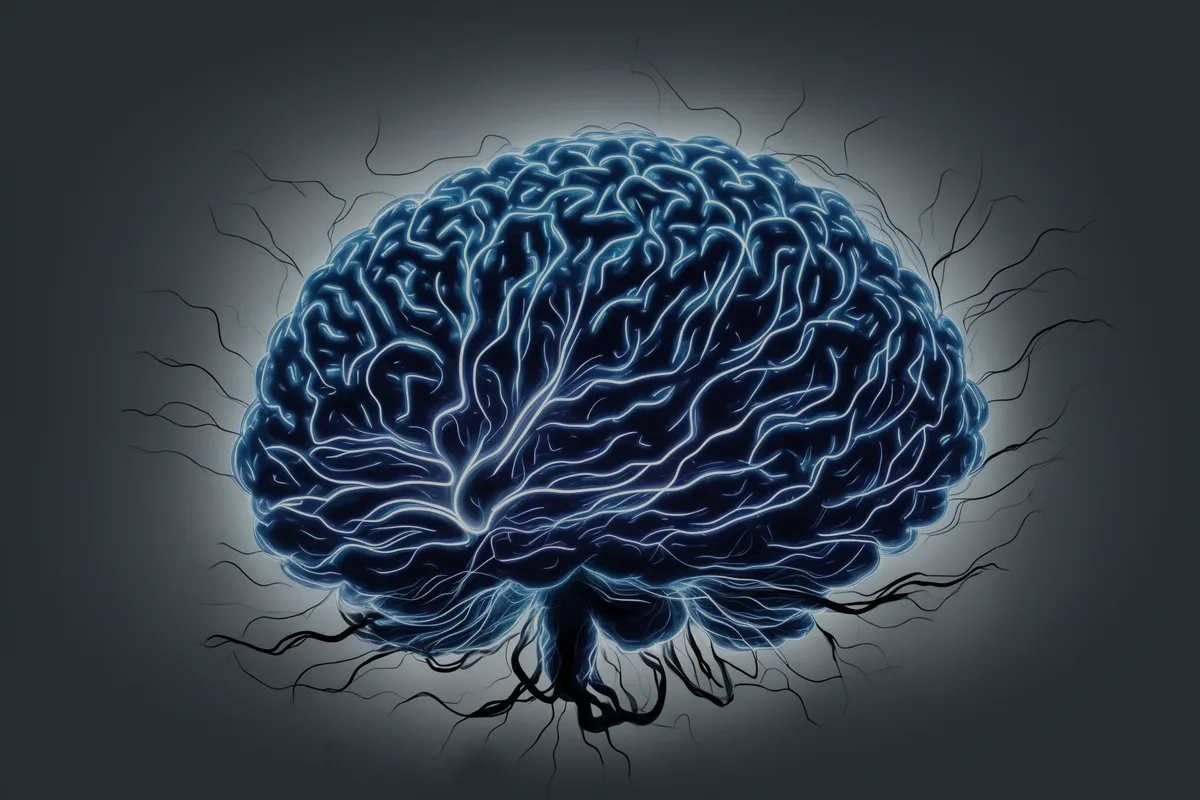
In this way, the subconscious is both a source of humility and of wonder. It reminds us that we are not the sole authors of our fate, that much of what we are is given to us—by biology, by culture, by chance. Yet it also offers the possibility of transformation, of growth, of new understanding. When we listen closely to the signals from below, when we attend to the dreams that trouble our sleep or the hunches that guide our steps, we become more fully ourselves. We learn to trust the wisdom that does not speak in words.
There are those who have sought to harness the power of the subconscious, to bend it to the will of the conscious mind. Techniques of meditation, hypnosis, and creative visualization promise to unlock hidden potentials, to rewire old patterns, to heal ancient wounds. And indeed, the evidence suggests that the boundaries between conscious and subconscious are more permeable than once believed. With care and attention, we can learn to influence the tides that shape our inner life, to foster resilience, creativity, and wellbeing.
Yet, for all our efforts, the subconscious remains a domain of mystery. Its depths are never fully plumbed, its boundaries never fixed. For every insight gained, a hundred new questions arise. Why do certain symbols persist across cultures and ages? What is the source of sudden intuition, or of dreams that seem to foretell the future? How do the patterns formed in childhood echo through the decades, shaping the choices of a lifetime?
These are not questions with simple answers. They are the riddles at the heart of what it means to be human, to be both known and unknown to oneself. The subconscious is the wellspring of creativity, the seat of emotion, the repository of memory and meaning. It is the part of us that listens to the world and responds in ways we cannot predict. It is the silent partner in every act of perception, the hidden author of our stories.
As the night deepens and the boundaries between waking and dreaming grow thin, we may find ourselves contemplating the strange gift of selfhood—a gift that is always partly hidden, always unfolding. The subconscious is not an obstacle to knowledge, but its necessary complement; not a weakness, but a source of strength. It is the mirror in which we catch glimpses of our true face, the echo chamber in which the music of our lives resounds.
To reflect on the subconscious is to accept the fundamental mystery of our being, to dwell in the space between knowing and unknowing. It is to recognize that the most intimate truths are not always those we can put into words, but those we feel in the marrow of our bones, in the hush of the mind at rest.
And so, as you settle into the gentle rhythm of breath and heartbeat, as the world grows quiet around you, you may sense the presence of that deeper self—the self that dreams and remembers, that loves and fears, that creates and connects. The subconscious is with you, always, a companion on the journey, a guide through the labyrinth of experience.
For in the end, to be human is to dwell in mystery, to be shaped by forces both seen and unseen, to carry within us the whole history of our kind. The subconscious is the mirror in which our humanity is reflected, the silent spring from which our best and deepest qualities arise. And as you drift toward sleep, you may feel the gentle pull of that inner tide, drawing you ever inward, ever onward, into the vastness of your own becoming.