The Tiny Titan: Immortal Tardigrade
This part will cover the introduction to the tardigrade, its pop culture references and its alien-like survival capabilities.
In the vast and shadowy tapestry of life, where giants thunder and forests breathe, there exists—mostly unseen—a creature so improbable, so quietly indomitable, that it has earned a thousand nicknames from those who have peered at it through the glass: water bear, moss piglet, and the tiny titan. Tonight, as the world hushes and eyelids grow heavy, let us drift down, down, through layers of soil and lichen, into the intimate realm of the tardigrade. There, in droplets of dew or the damp heart of a clump of moss, the tardigrade ambles—eight stumpy legs, claws like miniature grappling hooks, a mouth that works as an ancient, whirring drill.
It is not flashy, this creature. It has no fangs, no wings; it will never roar or soar. Yet the tardigrade is, by all accounts, one of the most indestructible beings ever catalogued. Its body, plump and segmented, is barely half a millimeter long—just large enough to be glimpsed under a simple microscope, just small enough to be overlooked by almost everything else. And yet, in the silent contest of survival, where the rules are etched in frost and fire, the tardigrade has quietly outlasted extinction events that have erased entire dynasties of creatures far grander and more elaborate.
Curious, isn’t it, the way the smallest things can so often hold the greatest mysteries? Perhaps this is why, when word of the tardigrade’s powers began to circulate beyond the halls of biology, it was embraced with a peculiar sense of affection and awe. In comic books and cartoons, in the fevered scripts of science fiction, the tardigrade has been cast as everything from a cosmic hitchhiker to a time-traveling companion. Its likeness, rounded and stubby, has graced the screens of classrooms and sci-fi blockbusters alike. Children’s books render it with a smile, a tiny caped hero; late-night talk shows marvel at its supposed ability to survive in the vacuum of space. The tardigrade, once the domain of mossy stones and the glass slides of patient naturalists, has become something of a pop culture darling—a symbol of resilience, a living contradiction to the idea that bigger is always better.
But what is it, truly, that makes this little animal so extraordinary? To understand, we must descend beyond the surface, into the microscopic world where the tardigrade reigns. Here, the boundaries of life and death become more porous, more negotiable. For in this realm, every resource is finite, every moment a negotiation with desiccation, cold, and radiation. The tardigrade, with its unhurried gait and ancient lineage, is a master negotiator.
Imagine, if you will, a single tardigrade, trundling through a film of water that coats a moss stem. Each step is measured, as if feeling for the pulse of the world. Its legs, like tiny telescoping pistons, grip and release, grip and release. The tardigrade’s mouth—a circular orifice lined with needle-like stylets—probes the surface, seeking the cell sap of a moss or the contents of an even smaller prey. Its body is translucent, the inner organs visible in the right light: a gut, a simple brain, a reproductive tract, and, remarkably, no hard skeleton to speak of.
There is nothing outwardly magical in its anatomy. No shimmering scales, no bioluminescence, no venomous stinger. And yet, when the environment turns hostile—when the puddle dries, when the temperature plummets, when the world is scoured by ultraviolet light or pummeled by cosmic rays—the tardigrade enacts a transformation so profound that it borders on the miraculous.
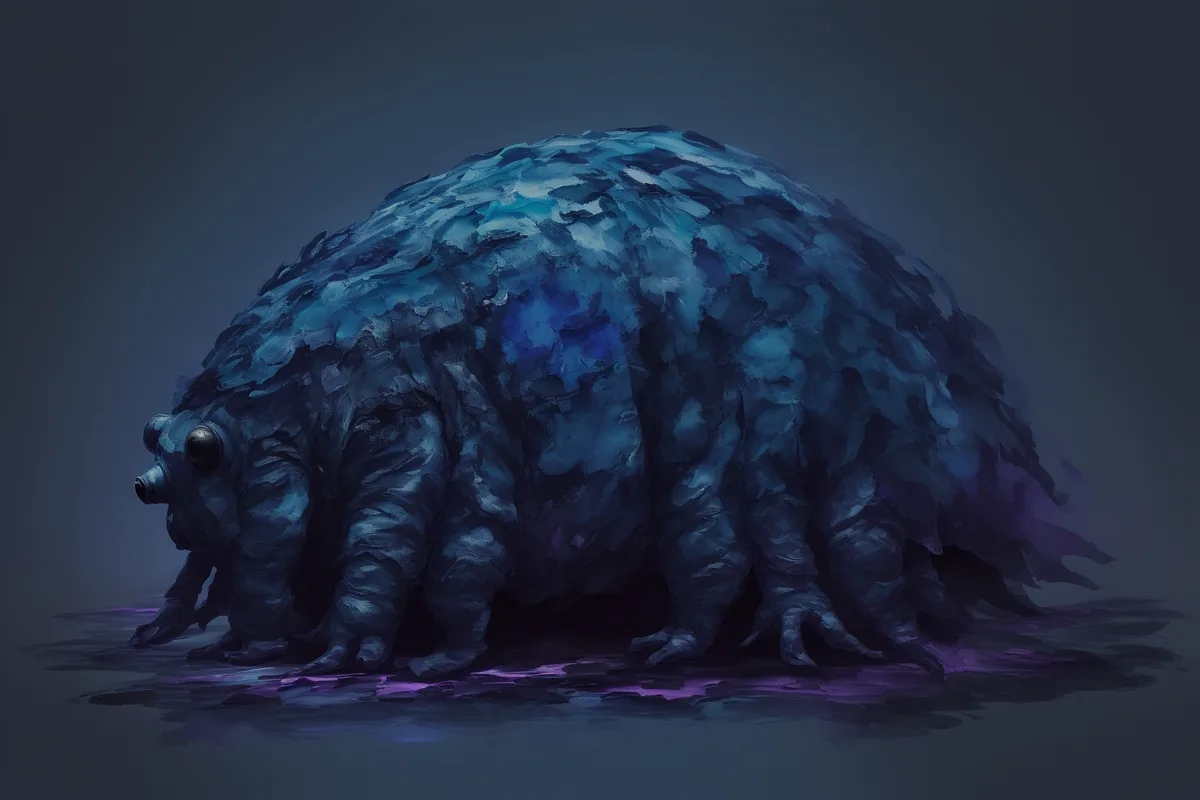
This is the famed cryptobiosis, the state of hidden life. As the water around it evaporates, the tardigrade senses the change. It begins a slow, deliberate process: withdrawing its limbs, curling into itself, its body contracting until it is an unremarkable pellet, a structure called a “tun.” In this state, the tardigrade silences its metabolism to a whisper. It neither eats nor excretes, neither grows nor reproduces; almost every sign of life is stilled. Within the tun, the tardigrade’s cells are fortified by a sugar called trehalose, which forms a glass-like matrix, protecting delicate structures from the ravages of dehydration. DNA repair enzymes stand ready, like diligent custodians, to mend any damage that might occur in this vulnerable stasis.
In the cryptobiotic tun, the tardigrade becomes a paradox: alive, but not living; present, but impervious. It can remain like this for years, even decades, waiting for the return of favorable conditions. Then, with the first touch of moisture, the spell is broken. The tun unfurls, legs reappear, the mouth begins to probe. The tardigrade resumes its journey, as if nothing had happened.
This ability to suspend life, to tiptoe on the edge of death and return unscathed, has fascinated scientists for over two centuries. The first tardigrade was described in 1773 by Johann August Ephraim Goeze, who called it a “little water bear” because of its shuffling gait and bear-like appearance under the lens. Since then, over 1,300 species have been described, inhabiting every continent and ecological niche: from the ice crusts of Antarctica to the hot springs of Japan, from ocean trenches to the arid crevices of high mountain rocks.
But it was not until the advent of modern molecular biology and space exploration that the tardigrade’s legend truly flourished. In 2007, a group of European researchers sent tardigrades into low Earth orbit aboard the FOTON-M3 mission. For ten days, the tiny animals were exposed to the rigors of space: vacuum, extreme cold, searing radiation. When the samples returned to Earth, the tardigrades were rehydrated—and remarkably, many of them survived. Some even managed to reproduce. In the sterile laboratory light, as the scientists watched these resuscitated creatures crawl and feed, the boundary between science and science fiction blurred.
Suddenly, the tardigrade was everywhere. It was invoked in speculative debates about panspermia—the idea that life could travel between planets, hitchhiking on rocks or spacecraft. It appeared in the scripts of television shows like “Star Trek: Discovery,” where a colossal tardigrade navigates the vastness of space. It became a meme, a symbol of cheerful indestructibility. Scientists marveled; the public cheered; the tardigrade, oblivious, kept on with its ancient business.
Yet even as its fame grew, the tardigrade remained enigmatic. Its powers of survival, while astonishing, are not limitless. It can be killed—by extremes beyond its tolerance, by predation, by the slow attrition of time. But within its window of resilience, the tardigrade can endure conditions that would instantly annihilate almost any other animal. It can survive temperatures close to absolute zero, where atoms barely vibrate; it can withstand heat up to 150 degrees Celsius, hotter than boiling water. It shrugs off pressures greater than those found in the deepest ocean trenches. It is resistant to radiation doses hundreds of times greater than what would kill a human. It can outlast the vacuum of space, the desiccation of deserts, and the toxic embrace of heavy metals.
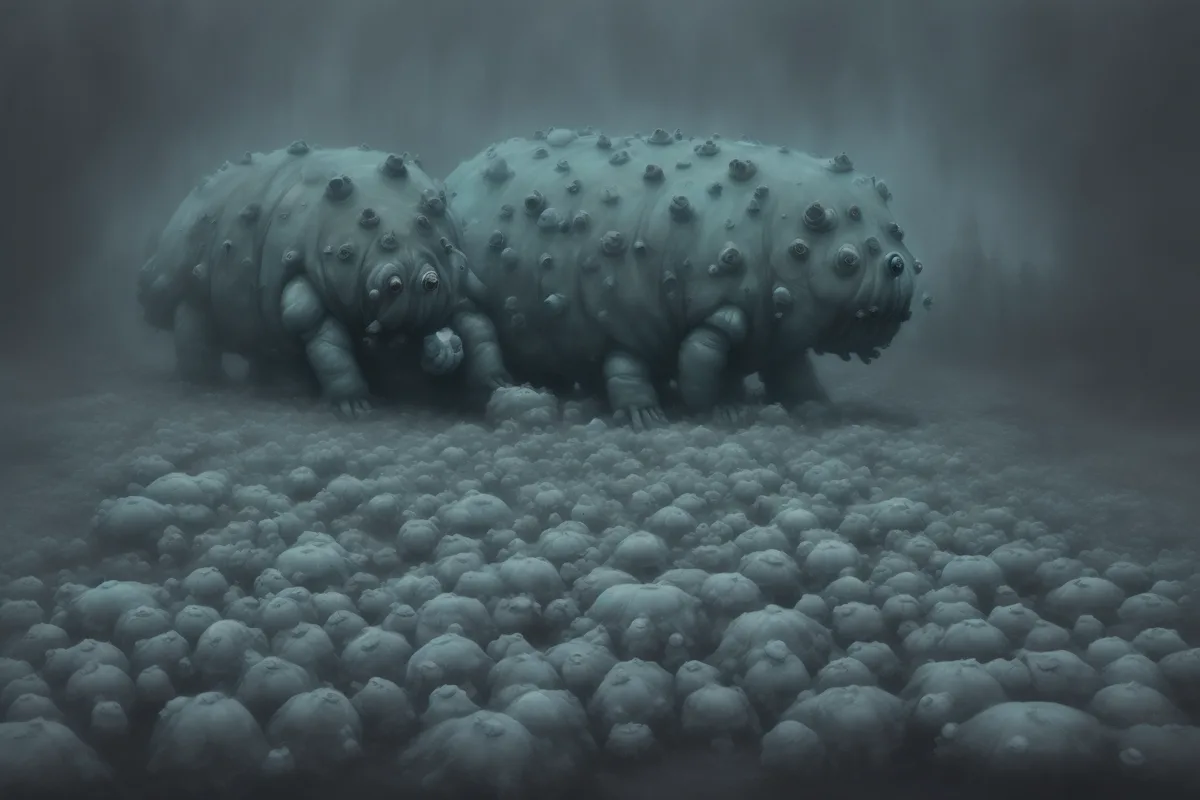
How does it manage these feats? That question has sent ripples through the scientific community, inspiring a host of studies and hypotheses. The answer, it seems, lies in a confluence of adaptations. When desiccated, the tardigrade’s DNA is shielded by proteins unlike any found in other animals—intrinsically disordered proteins that form protective matrices, shielding sensitive molecules from chaos. Its cells accumulate antioxidants to quench the damaging free radicals unleashed by radiation or dehydration. When exposed to high doses of ultraviolet light, the tardigrade can repair its DNA with an efficiency that would shame most other organisms.
Yet perhaps what is most remarkable is not the individual tricks, but the orchestration of them. The tardigrade is a symphony of resilience, each adaptation harmonizing with the next. It does not simply survive; it persists with a kind of gentle stubbornness, cycling between animation and suspension, always ready to spring back when the rains return or the sun emerges.
In the popular imagination, the tardigrade has become a kind of mascot for survival against all odds. It is a living reminder that life’s solutions can be as elegant as they are unassuming. It beckons us to reconsider our assumptions about fragility and strength, about the forms that endurance can take. For the tardigrade, survival is not about confrontation or domination, but about flexibility—a willingness to wait, to yield, to transform.
And so, as you settle into the quiet of the night, think of this tiny creature, curled in its tun, adrift between worlds. It is a time traveler of sorts, surviving storms that level mountains, waiting out droughts that parch the land, enduring cosmic events that would spell doom for most of life. Its story is written not in grand gestures, but in the patient choreography of molecules and membranes, the slow dance of adaptation.
Somewhere, in the moss on a garden wall or the dust of a forgotten attic, a tardigrade may be waiting, its body perfectly still, every cell poised for rebirth. It asks nothing of the world but a little moisture, a little time. When the moment comes, it will reawaken, groggy but undaunted, and resume its journey across the vast, miniature landscape of its world.
As our eyes begin to close and the mind drifts, let us leave the tardigrade where it belongs—half in shadow, half in starlight, a tiny titan whose greatest power lies not in what it does, but in what it endures. For in the next quiet chapter, we will follow the tardigrade further, into the labyrinth of its inner workings, where the secrets of survival are written in the language of cells and the whisper of water.
The Indestructible Enigma: Limits of Understanding
This part will delve deeper into the tardigrade's biology and the mysteries that still confound scientists.
There is a deep and abiding mystery in the way life expresses itself at the very edge of possibility. Some creatures are as if written in the margins of nature’s grand text, their existence a footnote to the ordinary procession of birth, growth, and death. The tardigrade, so small as to be nearly invisible, is such a creature—a living paradox, an indestructible enigma. Even as we peer at it under our most advanced microscopes, sequence its genome with the cleverest tools of the molecular age, and prod at its secrets with the collective curiosity of centuries, the tardigrade remains a riddle, a being that seems to mock the limitations of our understanding.
Let us draw ourselves closer to this organism, not merely in the physical sense of magnifying its form, but in the more delicate, more difficult act of following its biology into the realms where even science must confess its uncertainty. Under the glass, the tardigrade is a plump, eight-legged creature, with a face that is at once alien and familiar—somewhere between a bear cub and a caterpillar, yet utterly unlike either. Its body is divided into segments, each bearing a pair of stubby legs tipped with tiny claws, allowing it to grip the substrate of its microcosmic world. Its outer surface, the cuticle, is soft and flexible, yet it can become an impervious fortress when the need arises.
Within this minute body is a world of complexity. The tardigrade’s gut runs like a simple tube from mouth to anus, lined by cells that absorb nutrients from algae, bacteria, or plant tissues scavenged from moss and lichen. It lacks a true circulatory system; its organs bathe in hemolymph, exchanging gases and waste products through direct contact. Its nervous system is a ladderwork of ganglia and cords, enough to coordinate movement and sensation within the cramped space of its body, but still a system of remarkable efficiency. In every respect, the tardigrade is a masterclass in economy, a lesson in how much can be achieved with so little.
Yet, for all this apparent simplicity, the tardigrade possesses abilities that seem almost magical. The most celebrated of these is its talent for cryptobiosis—a state of suspended animation in which its metabolism grinds to a near halt, its body shrivels into a protective tun, and it becomes, in essence, neither alive nor dead but something in between. The process is beautiful in its precision. As desiccation threatens, the tardigrade retracts its limbs and expels nearly all water from its cells. Its innards contract, the cuticle puckers, and the animal becomes a tiny, desiccated barrel, waiting for the world to become hospitable once more.
Cryptobiosis is not merely a trick of endurance; it is a profound alteration of what it means to be alive. In this state, tardigrades can survive extremes of temperature—freezing in liquid nitrogen, boiling in hot springs, enduring the vacuum and radiation of space. They can outlast lethal doses of X-rays, survive pressures greater than those found in the deepest ocean trenches, and recover from doses of toxins that would obliterate any other animal. And, perhaps most astonishingly, some tardigrades have revived after decades—possibly even centuries—in a dried, dormant state, reanimating with a few drops of water as if nothing had happened.
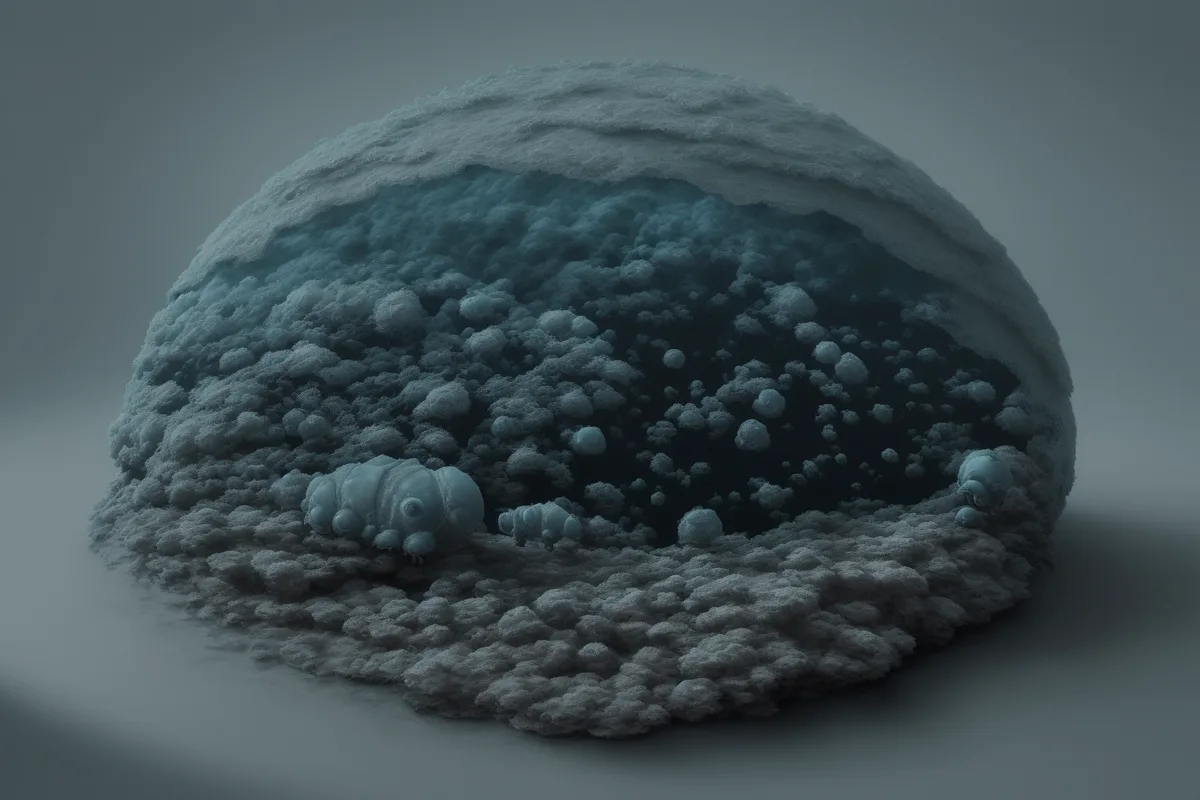
How does a creature so small accomplish such feats? The honest answer is that science, for all its progress, remains in the dark about many of the details. The tardigrade’s resilience is not the result of a single adaptation, but rather a symphony of molecular strategies, some of which are only now coming into focus. For example, when dehydrated, tardigrades synthesize unique proteins—intrinsically disordered proteins that, instead of folding into precise shapes, remain amorphous, forming a glassy matrix within the cell. This matrix stabilizes other proteins and structures, preventing the deadly aggregation and denaturation that would otherwise occur as water vanishes. The tardigrade’s DNA, too, is shielded by special proteins and perhaps even by sugars like trehalose, which substitute for water molecules and maintain the integrity of cellular machinery.
Yet, even these discoveries have only deepened the puzzle. Unlike other cryptobiotic organisms, many tardigrades do not accumulate large quantities of trehalose, suggesting that they have evolved entirely novel methods for surviving desiccation. Scientists have identified a suite of genes unique to tardigrades—genes with no known analog in any other animal—whose functions remain largely speculative. Are these the blueprints for the tardigrade’s molecular armor, or are they part of some even more sophisticated system, one that coordinates the shutdown and restart of life at the smallest scale? With each new answer, new questions arise, as if the tardigrade were a labyrinth constructed to confound the very logic of biology.
One of the more tantalizing discoveries is the presence of a protein called Dsup, short for “damage suppressor.” This molecule, found only in tardigrades, appears to protect DNA from the ravages of radiation and oxidative stress. When scientists inserted the Dsup gene into human cells in the laboratory, those cells became more resistant to X-rays, suggesting a potential for future applications in medicine and biotechnology. But the story is far from complete. Dsup is only part of the tardigrade’s defensive arsenal, and its exact mechanism remains obscure. Does it act as a physical shield, wrapping around strands of DNA like a molecular blanket? Or does it recruit other factors, orchestrating a broader response to cellular injury?
Among the many enigmas is the question of how tardigrades repair themselves after emerging from cryptobiosis. The act of drying out, freezing, or being blasted by radiation inevitably causes damage—broken DNA strands, ruptured membranes, misfolded proteins. Yet tardigrades not only survive these assaults, they emerge with an uncanny ability to mend what was broken. Some scientists suspect that their cells possess hyperactive DNA repair pathways, enzymes that can rapidly stitch together shattered genomes. Others believe there may be a kind of molecular triage, a way for the tardigrade to prioritize which injuries to address first, and which can be tolerated. The details are elusive, and every experiment seems to reveal another layer of complexity.
Even the origins of these adaptations are mysterious. How did the tardigrade come to possess abilities that verge on the supernatural? Some researchers have proposed that horizontal gene transfer—the acquisition of genetic material from bacteria, fungi, or viruses—may have played a role. The tardigrade’s genome is a patchwork quilt, with foreign genes stitched alongside native ones, hinting at ancient exchanges of information. But the extent and significance of these borrowed genes is still debated, and the question lingers: is the tardigrade’s resilience the product of its own evolutionary ingenuity, or the result of countless ancient bargains struck with the microscopic world around it?
There are, too, the riddles of perception and behavior. For all its seeming invincibility, the tardigrade is not a passive creature. When conditions are right, it moves with a deliberate, almost jaunty gait, exploring the invisible forests of moss and lichen, searching for food and mates. Its sensory organs, though simple, are exquisitely tuned to its environment. Tiny eyespots detect changes in light, while cilia-laden mouthparts taste the chemistry of its surroundings. How does the tardigrade know when to enter cryptobiosis? How does it sense the approach of desiccation or radiation, and which signals trigger the cascade of molecular changes that prepare it for the ordeal to come? In the silence of its world, the tardigrade listens with a sensitivity we cannot yet comprehend.
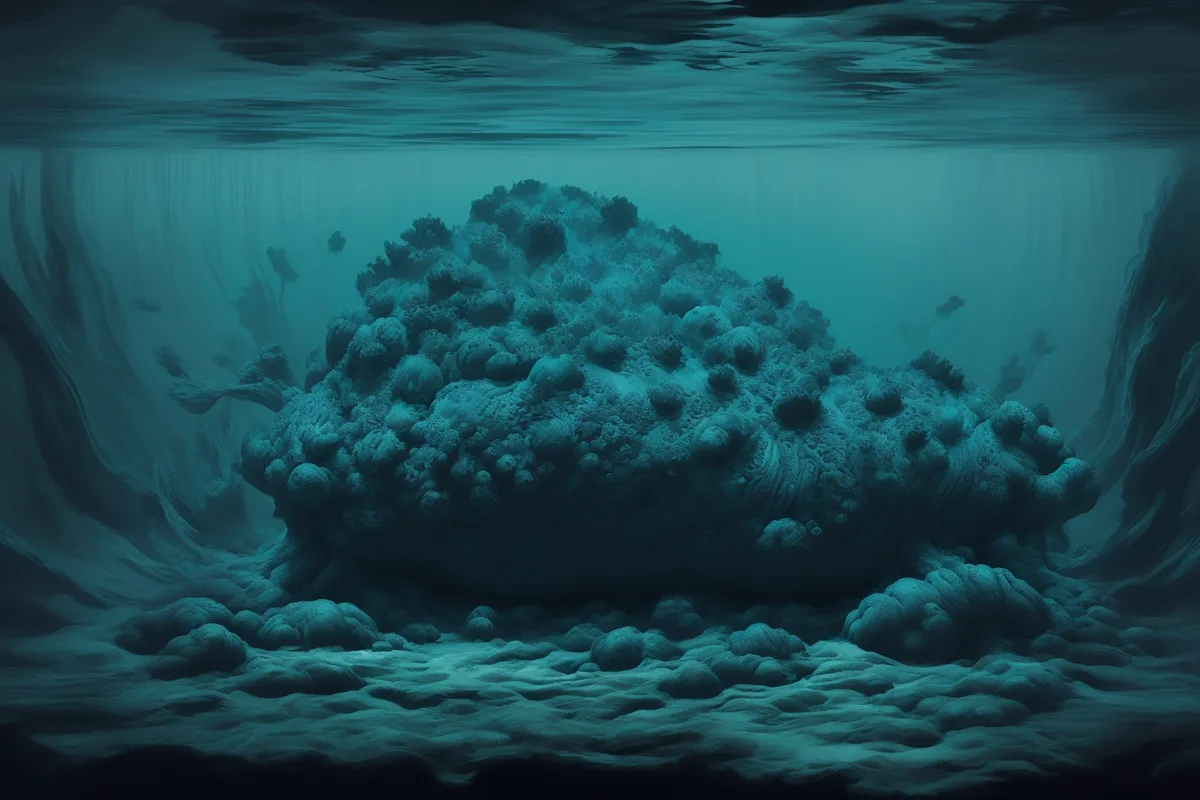
There are other mysteries, subtler but no less profound. While the tardigrade’s capacity for cryptobiosis is legendary, not all species possess it to the same degree. Some are specialists, adapted to the dry deserts or icy peaks where only the hardiest can survive. Others are more delicate, thriving only in the constant moisture of leaf litter or freshwater ponds. What genetic or physiological differences separate the champions from the merely hardy? What trade-offs are hidden in the slow arms race between survival and reproduction, between invulnerability and the ordinary rigors of life? Here, too, our knowledge is fragmentary, glimpses through a keyhole into a world that is both familiar and utterly strange.
The enigma of the tardigrade is not limited to its biochemistry or its physiology. It extends into the very philosophy of life. What does it mean for an animal to exist in a state between life and death, to pause the clock of metabolism and then resume it, as if nothing had intervened? In cryptobiosis, the tardigrade is not merely dormant—it is, in a sense, outside the flow of time. This challenges our definitions, our categories, the very boundaries we draw between the living and the nonliving. Is the tardigrade alive when it is a tun, or only when it rehydrates and resumes activity? What lessons does this teach us about the flexibility of life, about the possibilities that lie beyond the familiar rhythms of the cell cycle?
There is a certain humility that comes with studying such a creature. For every experiment that yields a new insight, there are a dozen that end in confusion or contradiction. The tardigrade’s genome is a labyrinth of repeated sequences and enigmatic genes. Its proteins defy easy classification, their functions hinted at but not fully understood. And its behavior, so modest on the surface, hints at a complexity that belies its size. Each tardigrade is a reminder that life, even at its simplest, is never truly simple.
And so, scientists continue their gentle interrogation, coaxing secrets from tardigrades with light and water, with radiation and gene editing, with the patient accumulation of data that is the hallmark of all great inquiry. They freeze them, dry them, bombard them, sequence them, and all the while the tardigrades endure, unimpressed by our curiosity, continuing their quiet existence as they have for hundreds of millions of years.
But perhaps it is in the persistence of mystery that the true gift of the tardigrade lies. They are a living testament to the limits of our understanding, a reminder that even in an age of astonishing knowledge, there remain corners of nature where wonder and ignorance walk hand in hand. As we close our eyes and let their story drift through our thoughts, we cannot help but feel a sense of awe—not merely at what we know, but at all that remains unknown.
Somewhere, in the cool damp of a mossy stone, a tardigrade curls into a tun, awaiting the return of water, of warmth, of the gentle stirrings of life. Its secrets are safe, for now, written in a language we are only beginning to learn. And as the night deepens, the unanswered questions gather, patient and persistent, promising that there is more still to be discovered—more layers to the enigma, more marvels hidden in the folds of a creature smaller than a grain of sand.
Unveiling the Microcosmic Voyager: Tools and Experiments
This part will highlight how we study tardigrades, the historical breakthroughs and ingenious experiments devised to understand them.
In the hush of the laboratory, where the gentle hum of equipment forms a kind of lullaby, one might almost miss the subtle drama unfolding beneath the lens of a microscope. Here, the tardigrade—the water bear—becomes not simply a curiosity of nature, but a subject of profound and painstaking inquiry. To observe a tardigrade is to peer into a realm where ingenuity must match the minute scale of the creature itself, where every discovery is hard-won by the marriage of patience and imagination.
The story of unveiling the microcosmic voyager is itself a chronicle of human ingenuity. In the late seventeenth century, when Antonie van Leeuwenhoek first pressed his eye to the lens of his home-crafted microscope, he could not have known the magnitude of the invisible world he would reveal. With glass ground by his own hand, he gazed into water droplets and marveled at the “animalcules” swimming there—among them, almost certainly, the ancestors of today’s tardigrades. Yet, it would not be until 1773, when the German pastor and zoologist Johann August Ephraim Goeze described the little “Kleiner Wasserbär,” that these creatures were given a name and a place in the annals of natural history.
Even in Goeze’s time, the microscope was a fragile, temperamental instrument. Its lenses, plagued by aberrations, rendered the tiny water bear in ghostly, trembling outlines. But as glassmaking and optics steadily improved, so too did the clarity with which we could examine the tardigrade’s intricate form—its stumpy, segmented body, the eight stubby legs tipped with miniature claws, the translucent cuticle through which internal organs could sometimes be glimpsed, pulsing with life.
Over the centuries, the microscope remained the primary key to this hidden kingdom. Early naturalists, armed with nothing more than patience and a steady hand, would comb moss, scrape lichen from tree trunks, and collect water from stone basins after a rain. The precious samples were placed on slides, moistened, and gently pressed under a coverslip. To watch a tardigrade lumbering across the field of view was to witness a tiny drama that felt both ancient and immediate.
But seeing was only the beginning. To understand the tardigrade—to plumb the depths of its resilience—demanded new tools and novel experiments. In the nineteenth century, as the study of biology blossomed, researchers began to probe the boundaries of life itself. They placed tardigrades in drying dishes, watched as they contracted into the desiccated form known as the “tun,” and then rehydrated them, marveling at the return of animation. Each experiment was a question posed to nature: How much can life endure?
With the invention of the compound microscope and the advent of staining techniques, the inner world of the tardigrade became accessible in unprecedented detail. Dyes such as methylene blue and eosin revealed the nuclei of its cells, the arrangement of its muscles, the structure of its gut. Some researchers, entranced by the creature’s persistence, devised elaborate schemes to test its limits. They subjected tardigrades to near-boiling water, to freezing cold, to the vacuum of evacuated glass chambers. Again and again, the water bear returned from apparent death, a master of suspended animation.
As the twentieth century unfolded, the tools of inquiry grew ever more precise. The electron microscope, with its capacity to resolve structures at the nanometer scale, transformed our understanding of the tardigrade’s anatomy. Now, the surface of the cuticle could be seen as a landscape of ridges and pits, the claws as intricate hooks, the mouthparts as a complex apparatus of stylets and pharyngeal bulbs, all exquisitely adapted to pierce and suck the contents of algae and plant cells. With each magnification, another layer of mystery was peeled back, only to reveal more questions.
The true revolution, however, came with the rise of molecular biology. No longer bound to the visible, researchers began to seek the secrets encoded in the tardigrade’s very genes. DNA extraction, once the province of large, easily handled organisms, was adapted for these microscopic voyagers. Techniques such as polymerase chain reaction (PCR) allowed for the amplification of genetic material from a single animal. Sequencing technologies revealed the astonishing complexity of the tardigrade genome—a patchwork of ancient genes and peculiar novelties, including many that appeared to have been borrowed from bacteria, fungi, and plants by the mysterious process of horizontal gene transfer.
One of the most ingenious experiments in recent memory sought to unravel the molecular basis of the tardigrade’s resilience. Scientists at the University of North Carolina isolated a suite of proteins—collectively termed “tardigrade-specific intrinsically disordered proteins,” or TDPs—that seemed to protect the animal’s cells from damage during desiccation. To test their hypothesis, the researchers inserted the genes for these proteins into cultures of human cells. As if touched by the magic of the water bear, the transformed cells gained a remarkable ability to survive drying and rehydration, hinting at the dawn of new biotechnological possibilities.
Yet, not all experiments rest upon the bleeding edge of the molecular frontier. Some rely on the simple, almost meditative, observation of behavior. In a quiet laboratory in Sweden, a mycologist named Gustav Thulin once spent weeks watching tardigrades feed, documenting the delicate dance of their mouthparts as they pressed against the cell walls of green algae. His sketches—rendered in soft graphite—remain among the most detailed ever produced, capturing not only the structure but the spirit of the animal.
There is, too, the great adventure of the tardigrade in space. In 2007, as part of the European Space Agency’s FOTON-M3 mission, thousands of tardigrades were placed aboard a satellite and launched beyond the nurturing envelope of the Earth’s atmosphere. In the vacuum and radiation of low Earth orbit, many survived, some even reproducing upon their return. This experiment, devised by the Swedish researcher K. Ingemar Jönsson and his team, stands as a testament to the audacity of both science and the animal it studies. The tardigrade, already a voyager of the microcosm, became the first known animal to survive unprotected in the void of space—a feat that stretched the very definition of life’s tenacity.
The methods of tardigrade study have become as diverse as the environments they inhabit. In the forests of Japan, researchers sift through leaf litter and soil, searching for new species among the damp shadows. In Antarctica, ice cores are melted and filtered to reveal tardigrades frozen in time, sometimes for decades or more. Each locale demands its own methods: fine-mesh sieves to isolate the animals from their substrate, micropipettes to transfer them without harm, incubators to mimic the cycles of drying and wetting that shape their lives.
Under the fluorescence microscope, another world is revealed. By staining tardigrades with fluorescent dyes, scientists can track the movement of molecules within their bodies. In one experiment, researchers tagged the animal’s DNA with a dye that glows under ultraviolet light, then exposed the tardigrades to intense radiation. The patterns of fluorescence revealed how the water bear repairs its damaged genome, patching and stitching its DNA in ways that elude most other forms of life. Each glowing thread was a testament to the evolutionary pressures that have shaped the animal, a history written not in stone but in the ephemeral dance of electrons and photons.
Some of the most telling experiments are those that test the limits of what a tardigrade can survive. In a quiet laboratory, a scientist might take a single water bear, draw it into a tiny droplet of water, and place it on a glass slide. As the water slowly evaporates, the tardigrade contracts, folding in upon itself, its metabolism slowing to a crawl. The scientist waits—hours, days, sometimes even years—before rehydrating the sample. With a trembling urgency, the animal stirs, legs waving, mouthparts flexing. It is an act of resurrection as much as science, a demonstration of nature’s capacity for persistence.
Other experiments probe the boundaries of perception. What does the world look like to a tardigrade? Lacking complex eyes, they rely on patches of light-sensitive cells—ocelli—that allow them to sense the presence or absence of illumination. By exposing tardigrades to patterns of light and shadow, researchers have learned that the animals are drawn to moist, dark crevices, shunning the glare of open spaces. In this way, behavior becomes a kind of experiment, each movement a data point in the study of survival.
The tools of the trade are, at times, almost poetic in their delicacy. Glass micropipettes, drawn to a fine point over a flame, are used to move tardigrades from one droplet to another. The process requires a steady hand and a keen eye, for a single misstep can crush the fragile animal. Some researchers speak of the experience as a kind of meditation—a meeting of scale and intent, where the boundaries between observer and observed grow thin.
In recent years, the arrival of microfluidic devices has transformed the study of tardigrades. These tiny channels, etched into silicon or glass, allow scientists to manipulate individual water bears with unprecedented precision. By controlling the flow of water and nutrients, researchers can simulate the cycles of drought and deluge that define the animal’s life. Sensors within the devices measure changes in metabolism, oxygen consumption, and gene expression, painting a portrait of the tardigrade not as a static entity, but as a dynamic participant in the unfolding drama of the living world.
There are also the silent collaborations between disciplines—between biologists, chemists, physicists, and engineers. In the quest to understand the tardigrade’s remarkable resistance to radiation, for example, physicists have modeled the penetration of high-energy particles through the animal’s tissues, while chemists have synthesized analogs of the unique sugars and proteins that protect its cells. The boundaries between fields dissolve, replaced by a shared sense of wonder.
Even the act of naming new species is an experiment of sorts, blending taxonomy with poetry. Each newly discovered tardigrade is given a Latin name, often reflecting the place it was found or the person who discovered it. Some names hint at the animal’s resilience—*Milnesium tardigradum*, the “slow stepper,” or *Ramazzottius varieornatus*, named for the Italian biologist Giuseppe Ramazzotti. In this way, the study of tardigrades becomes a tapestry of stories, each thread woven by a different hand.
To study the tardigrade is, ultimately, to engage in a dialogue with the unknown. Each tool, each experiment, is a question posed to nature: How is it that life endures where it ought to fail? Why does the tardigrade persist, when so many others perish? The answers, when they come, are rarely final. Instead, they open new avenues of inquiry, new horizons to explore.
In the dim light of the laboratory, beneath the watchful gaze of the microscope, the microcosmic voyager continues its journey. Its paws grasp at the invisible, its body swells and contracts with the tides of life and death. The scientist, too, is changed—drawn into the orbit of wonder that surrounds the animal. Each discovery is a step along a path that spirals outward, into the mysteries of resilience, adaptation, and the very nature of existence.
And so, as the night deepens and the world outside the laboratory grows still, the study of the tardigrade continues—a quiet exploration at the margins of the visible, a testament to the power of curiosity and the ingenuity of those who seek to understand. The tools grow ever finer, the experiments ever more elegant, yet the questions remain, shimmering just beyond the reach of certainty. What secrets lie yet undiscovered within the vault of the water bear’s genome? What lessons might we learn from its tenacity? The answers wait in silence, as the microcosmic voyager drifts onward, carrying with it the hopes and dreams of those who watch, and wonder.
Somewhere, in the soft darkness, a new experiment is being devised—a new question asked, a new tool fashioned. The journey continues, unbroken, as the microcosmic voyager travels through realms both seen and unseen, bearing witness to the undying spirit of inquiry.
The Tardigrade Paradox: Reflections on Resilience and Existence
This part will reflect on the philosophical implications of the tardigrade's survival capabilities and its connection to humanity.
There is a certain quiet that settles over the world in the hours before dawn, when the air seems to pause and the boundaries between the mundane and the marvelous feel thin as a soap bubble. It is at such times that the mind, untethered from the urgency of the day, can drift into the deeper channels of wonder, following the strange and winding paths that connect the smallest things in existence to the grandest. Here, in this hush, let us consider the tardigrade—a creature so small that millions could dance upon the tip of a sewing needle—yet so formidable that it weathers storms which would tear apart the sturdiest of beings.
The tardigrade, ancient and diminutive, has survived the indifferent churn of planetary history. Its resilience is not merely a quirk of biology, but a paradox that ripples outward, beckoning us to reflect on the nature of existence itself. What can it mean, that such a fragile-looking thing endures the deathly cold of space, the searing blast of radiation, the desiccating grip of drought, when so many grander forms have disappeared forever? In pondering the tardigrade, we are invited to gaze not just at a marvel of adaptation, but at the roots of persistence, vulnerability, and the quiet insistence of life.
Let us return for a moment to the dark, hidden spaces where tardigrades thrive: the film of moisture between moss leaves, the micro-lakes in the soil, the thin sheen of water on lichen clinging to an old stone. Here, in these microcosms, the tardigrade is not an anomaly, but a citizen of a world as bustling and intricate as any city. And yet, the world is not always gentle. Drought comes, and water vanishes. The tardigrade, sensing the change, slows its heartbeat—if one can call its pulsing, single-chambered organ a heart at all. Metabolism falters, then stills. The creature contracts, curling inward, exuding a sugar called trehalose that vitrifies its insides, turning the soft tissues into glass. It becomes a cryptobiotic tun: a speck of stardust, neither alive nor dead, poised perpetually on the threshold.
It is a state so alien to our own experience that it invites a kind of awe-tainted bewilderment. For us, life is a current—always moving, always demanding. We require air and food and warmth and water, and without them, our delicate machinery falters, never to be restored. Death, for us, is an endpoint, an irreversible cessation. But for the tardigrade, death is not so neatly drawn. The line between being and nonbeing is blurred, made permeable by the mechanisms of cryptobiosis. It is as if, for them, time itself is negotiable—a contract that can be suspended and resumed at will.
Here is the first thread of the paradox: in their vulnerability lies their strength. The very qualities that should render the tardigrade helpless—its smallness, its permeable skin, its utter dependence on water—are the wellspring of its resilience. Instead of trying to resist the world’s harshness with armor or size, the tardigrade yields, becoming almost nothing, so that it can weather anything. It is not the invulnerable titan, but the humble survivor who endures.
This inversion echoes through nature, a quiet lesson written in the genomes of countless beings. The oak stands tall and is felled by the storm; the reed bends and survives. The tardigrade embodies this principle to an extreme, its existence a meditation on the power of yielding, the wisdom of knowing when to let go. In a universe that rewards adaptability, the tardigrade’s answer is not stubbornness, but surrender—an active, purposeful letting-go that is itself a form of mastery.
What, then, does this resilience signify? Is it merely a curiosity, a footnote in the annals of biology? Or does it gesture toward something deeper, some insight into the nature of life and its place in the cosmos? One cannot help but be drawn to the philosophical implications.
Consider the problem of existence itself: the universe is, by and large, an inhospitable place. The vacuum of space, the relentless radiation, the shifting tectonics, the unpredictable climate—these are not conditions designed for comfort or continuity. Most forms of life, from the smallest bacterium to the tallest tree, exist on a knife’s edge, their survival contingent upon a thousand interlocking balances. And yet, here is the tardigrade, not merely surviving but persisting with a kind of stoic grace through epochs of upheaval.

There is a certain humility in this endurance. The tardigrade does not seek to master its environment, but to harmonize with it, to disappear when necessary and reemerge when the world softens once more. In this, it is both a testament to the ingenuity of evolution and a counterpoint to the more familiar narratives of conquest and dominion that have shaped human thought.
We, as a species, have tended to see ourselves as the apogee of resilience, the pinnacle of adaptability. We build cities to hold back the wild, invent medicines to cure disease, fashion technologies to extend our reach into realms once thought forbidden. Our kind has walked on the Moon, peered into the heart of atoms, sent machines to the edges of the solar system. Yet, for all our achievements, we remain bound by the same laws that govern the tardigrade. Our bodies falter without water, our minds decline without rest, our lifespans flicker briefly against the backdrop of geological time.
The tardigrade’s strategy is a rebuke to our hubris. It reminds us that resilience is not always a matter of strength, nor progress the only form of triumph. Sometimes, the path to endurance lies in stillness, in patience, in the willingness to become less so that one might persist until conditions allow flourishing once more.
There is a subtle kinship here, a hidden thread connecting our fates. The tardigrade’s story is, in miniature, a mirror of our own. Both species have weathered extinction events, both have adapted to changing worlds, both have found ways to persist against odds that seem insurmountable. Yet where we build and strive and push outward, the tardigrade contracts and waits.
Imagine, for a moment, that you could experience what the tardigrade does—a suspension of time and need, a stepping outside the ceaseless demands of metabolism and sensation. What would it be like to enter a tun-state, to become a seed of yourself, immune to the passage of days and years? Would it be a kind of death, or a new form of being? And what would you find upon awakening—would the world have changed beyond recognition, or would it greet you with the same familiar patterns, the same slow cycles of loss and renewal?
These are questions that reach beyond biology, into the realm of philosophy and even poetry. The tardigrade’s existence forces us to confront the boundaries of life and death, the meaning of persistence, the possibility of transformation. It invites us to consider the value of yielding, of knowing when to pause and when to push forward.
In the late 20th and early 21st centuries, as humanity’s gaze turned outward to the stars, the tardigrade became an unlikely ambassador for life’s tenacity. Scientists sent them into orbit, exposed them to the vacuum beyond the International Space Station, watched as they endured the unendurable and returned, with a gentle splash, to the waters of Earth. The symbolism was not lost on those who watched: here was a creature that could leap across the void, a testament to the possibility that life, in some form, might persist even beyond our own blue planet.
Yet there is more to the lesson than mere survival. The tardigrade’s journey is a reminder that fragility and resilience are not opposites, but companions. The soft, permeable body that soaks up water like a sponge is also the body that can be vitrified and preserved against all odds. The creature that seems most vulnerable is, in a sense, the most enduring.
For humans, this paradox resonates at a deep level. We, too, are fragile—our bodies susceptible to disease, our societies to upheaval, our dreams to disappointment. Yet in our vulnerability lies our capacity for empathy, for imagination, for change. Like the tardigrade, we are shaped by the pressures of our environment, forced to adapt, to yield, to reinvent ourselves. Our greatest strengths often emerge from our most profound weaknesses.
There is an ancient wisdom in this, a kind of quiet guidance for how to navigate a world that is both beautiful and brutal. The tardigrade does not resist change; it embodies it, weaving transformation into the fabric of its being. It teaches us that resilience is not a fixed state, but a process, a dance between persistence and adaptation. To endure is not simply to survive, but to remain open to the possibility of renewal.
Perhaps, then, the tardigrade offers us a metaphor for our own journey—one not of conquering, but of harmonizing; not of domination, but of coexistence. To live well in an unpredictable world is not merely to endure its hardships, but to find meaning within them, to discover the possibilities that emerge when we yield to change rather than fighting it at every turn.
This is not to romanticize suffering or to suggest that all adaptation is benign. The world can be indifferent, and the forces that shape life are often cruel. But the tardigrade’s example suggests that there is power in humility, in recognizing the limits of our control, in learning to wait and to hope through the long droughts and silent winters.
As we contemplate the future—of our species, our planet, our place in the cosmos—the tardigrade’s paradox becomes ever more poignant. The challenges we face are immense: climate change, habitat loss, the specter of extinction. Our technologies are wondrous, but our vulnerabilities are real. In seeking to build a sustainable world, perhaps we have as much to learn from the tardigrade’s patience as from our own ingenuity.
There is a quiet beauty in this reflection, a sense that the secrets of survival are not always writ large in the bones of giants or the roars of predators, but in the silent persistence of the overlooked and the overlooked. The moss that softens the stone, the trickle of water through old earth, the tardigrade curled in its glassy tun—all are reminders that life, in its myriad forms, finds a way.
And so, as the first light of morning threads its way through the fabric of the night, casting long, gentle shadows across the world, we are left with questions rather than answers. The tardigrade’s paradox lingers, unresolved and shimmering: in becoming almost nothing, it becomes nearly indestructible. In yielding, it endures. In pausing, it persists. What, then, might we become, if we too learn to balance strength and surrender, ambition and adaptation, presence and patience?
In the soft hush that follows, as the world stirs and the day begins anew, the story of the tardigrade continues—unfolding quietly, resiliently, beneath the moss, within the dew, and, perhaps, in the restless hearts of those who listen for the lessons carried by the smallest and most enduring of Earth’s travelers.