The Portal of Shadows
This part will introduce the concept of black holes, their portrayal in popular culture and science fiction, as well as the myths surrounding them.
In the quiet hush of the cosmos, where the fabric of reality is stretched thin between stars, there are places where even light hesitates, places shrouded in such profound mystery that the very word for them—black hole—whispers of secrets folded beneath the skin of the universe. For as long as humans have gazed up into the velvet darkness above, we have told stories about what lies beyond the visible, what lurks in shadowed realms where the familiar rules of nature seem to unravel. Tonight, we linger at the threshold of such a portal, letting our thoughts drift toward the enigmatic depths that have haunted both our science and our dreams.
Black holes. The phrase itself is an incantation, conjuring images of bottomless pits and cosmic maelstroms. In the popular imagination, they are monstrous, insatiable voids, devouring everything that dares stray too close: stars, planets, even the light that tries to escape their grasp. The idea is at once terrifying and thrilling, a testament to our fascination with the unknown. But before black holes became scientific entities, they first took root as shadows in our collective mythologies, creatures of the night sky whose true nature eluded even our most careful reasoning.
It is tempting, in our age of telescopes and satellites and mathematical equations, to forget how much of our relationship with black holes is shaped by story. The earliest whispers of something like a black hole can be traced back to the 18th century, when the English natural philosopher John Michell considered the possibility of a “dark star”—a body so massive and compact that not even light could escape its gravitational clutches. To him, it was a curious mathematical outcome, a thought experiment at the edge of known physics, not the herald of anything that could be found among the constellations. His idea drifted through the scientific world, half-remembered, little more than a ghost until the 20th century, when the equations of general relativity gave it substance.
Yet long before John Michell, long before Newton or Einstein or Hawking, our ancestors peered into the darkness and filled it with stories. Ancient peoples looked to the black spaces between the stars and saw the abodes of gods and monsters. In the Maori tradition, the void—Te Kore—was the birthplace of all things, a kind of cosmic womb. In Hindu cosmology, the universe is cyclically destroyed and reborn, with Brahma’s night an endless stretch of darkness when all is reabsorbed into a primordial singularity. These tales are not about black holes in the scientific sense, but they echo a deep intuition: there are places in the universe where order collapses into mystery, where the familiar gives way to the unfathomable.
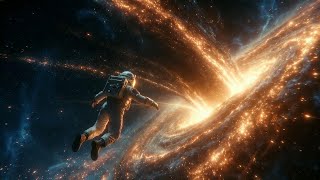
Modern accounts of black holes are woven from a different cloth, yet the mythic undertone persists. In popular culture, black holes are portals and prisons, engines of destruction and gateways to other dimensions. They loom in the background of science fiction, swallowing starships in their endless hunger, or serving as the ultimate test of scientific ingenuity. In the dark heart of a galaxy, a supermassive black hole might hold the key to interstellar travel, or to the end of all things. The event horizon—the point of no return—becomes a liminal threshold, a place where reality itself is called into question.
Consider, for a moment, the black hole as imagined in cinema. In films like “Interstellar,” the black hole is a swirling vortex, a visual marvel, its gravity warping space and time into impossible shapes. Its presence is at once beautiful and ominous, a reminder of forces that are beyond our control. In other stories, the black hole is an antagonist, a cosmic predator. It stalks the heavens, patient and implacable, waiting for the unwary to cross its invisible boundary. Sometimes, it is a time machine, a shortcut to distant worlds or forgotten eras. Sometimes, it is a mirror, reflecting our deepest fears: oblivion, annihilation, the dissolution of everything we know.
There is a kind of poetry in these portrayals, even when they stray from scientific accuracy. The black hole in fiction is a symbol as much as a phenomenon—a literary device that allows us to explore the limits of knowledge and the fragility of existence. It is the ultimate unknown, the shadow at the end of the universe. And yet, as science advances, the boundary between myth and reality begins to blur. The portals of shadow that once belonged to the realm of dream and nightmare now have names, addresses in the sky, and a place in the lexicon of physics.
But what, truly, is a black hole? The definition, stripped of its poetic trappings, is simple yet astonishing: a region of spacetime where gravity is so intense that nothing—not even light—can escape. The boundary that marks this region is called the event horizon. To cross it is to vanish from the observable universe, to fall into a place where the known laws of physics falter. At the center, or so the equations suggest, lies a singularity—a point of infinite density, where the very fabric of space and time is crushed to a vanishing point.
This is the scientific vision, precise and austere, and yet it is no less wondrous for its clarity. Black holes are not cosmic vacuums, sucking up everything in their path. They are, rather, the remnants of massive stars, collapsed under their own weight at the end of their lives. When a star many times more massive than our Sun exhausts its nuclear fuel, it can no longer resist the inward pull of gravity. The core implodes, and if the mass is great enough, nothing can halt the collapse. The star shrinks and shrinks until, in a final act of cosmic alchemy, it becomes a black hole.
It is a process that happens far from human eyes, in the silent reaches of the galaxy. And yet, the consequences can be felt across the cosmos. Black holes can be tiny, no larger than a city, or vast, with masses millions or even billions of times that of the Sun. Some are born from the death throes of stars, while others—supermassive black holes—seem to have existed since the dawn of time, lurking in the hearts of galaxies, including our own Milky Way.
Despite their fame, black holes are elusive creatures. They do not emit light, and so cannot be seen directly. Their presence is inferred from their effects on the world around them: a star winking out of existence as it is torn apart by tidal forces, jets of high-energy particles streaming from the accretion disk that forms as matter spirals into the maw. Sometimes, two black holes will meet, spiraling toward each other in a fatal dance, their collision sending ripples through the fabric of spacetime—gravitational waves—that we can now detect here on Earth.
Such is the reality of black holes, stark and strange, yet grounded in the mathematics of Einstein’s general relativity. The myth persists, however, evolving alongside our understanding. For every scientific breakthrough, there is a corresponding surge of imagination. In the public mind, black holes remain places of absolute destruction, where all matter and information is lost forever, erased from history. Yet even this, as we shall see, is a simplification, a shadow play cast against the wall of deeper mysteries.
There is a peculiar comfort in the myths we build around black holes. Perhaps it is their remoteness that makes them so alluring, their existence a reminder that the universe is vaster and stranger than any story we can tell. Or perhaps it is their finality, the sense that in a cosmos full of uncertainty, there are boundaries that cannot be crossed, endings that are truly absolute. And yet, as physicists probe the event horizon and beyond, they discover that the truth is subtler, more ambiguous than the legends suggest.
For instance, the idea that black holes are cosmic vacuum cleaners, devouring everything in their vicinity, is a misconception born of dramatic license. In reality, a black hole exerts no more gravitational pull than a star of equal mass. If our Sun were to be replaced, magically and instantaneously, by a black hole of the same mass, the planets would continue their orbits undisturbed—though, of course, the absence of sunlight would have more immediate consequences for life on Earth. The black hole is not an active predator, but a silent sentinel, waiting for matter to cross its threshold.
Another persistent myth is that black holes are portals to other universes, or shortcuts through spacetime. The mathematics of general relativity does allow for solutions—so-called wormholes—that can, in theory, connect distant regions of the cosmos. Yet whether such structures exist in nature, or could ever be traversed by living beings, remains deeply uncertain. The black hole, in this sense, becomes a symbol of unfulfilled possibility, a place where the rules may be rewritten, but only at the cost of everything that enters.
And so, we linger at the edge of the portal, peering into the darkness, trying to untangle the threads of myth and reality. The black hole is both less and more than we imagine: not a monster lurking in the cosmic night, but a consequence of spacetime’s own logic, a place where gravity reigns supreme. Its true strangeness lies not in its violence, but in its subtlety—the way it challenges our understanding of information, entropy, and the ultimate fate of all things.
As our instruments grow more sensitive, as our theories become more refined, the shadow of the black hole sharpens into focus. In 2019, humanity caught its first direct glimpse of a black hole’s silhouette, the event horizon of M87*, etched against the glowing ring of infalling matter. It was an image that resonated around the world, a testament to our ability to wrest secrets from the abyss. Yet even as we celebrate such achievements, we must acknowledge how much remains unknown, how many questions linger at the threshold.
The black hole is a portal not just in space, but in thought—a doorway through which we glimpse the unfinished business of physics, the unresolved paradoxes that hint at deeper truths. To stand before it, even in imagination, is to feel the pull of the infinite, the tug of curiosity that draws us ever closer to the edge. We are children of the light, yet we cannot help but be drawn to the shadows, to the places where certainty dissolves into wonder.
And so, as the night deepens and the stars wheel overhead, let us linger a little longer at the mouth of this portal, our minds attuned to the silent music of the spheres. In the chapters yet to come, we will step beyond the threshold, tracing the outlines of the event horizon, plumbing the secrets of singularity and information, and asking what it means to fall into the heart of darkness. But for now, let us rest in the shadow, dreaming of the mysteries that await on the other side.
The Unseen Dance of Gravity
This part will delve into the complexities of black holes, exploring the limits of our understanding.
Across the silent reaches of the cosmos, where the night is darker than ink and the very notion of boundary dissolves into the unknown, there exists a phenomenon so strange, so enigmatic, that it has become a symbol for the outermost edge of human understanding. Black holes—those wells in the fabric of spacetime, where gravity reigns with absolute authority, and even light must bow—beckon us to peer into the heart of the unseen. Tonight, we turn our thoughts to the unseen dance of gravity, and the intricate, often paradoxical nature of these cosmic enigmas.
To begin, let us consider the ordinary world, where gravity is both constant companion and gentle jailer. It is the force that holds you softly to your mattress, that urges the apple to fall, that orchestrates the ballet of planets around the Sun. On Earth, gravity is familiar, predictable—a comfort, perhaps, in its unwavering presence. Yet, as with so many things, familiarity breeds a kind of blindness. We forget that gravity, for all its subtlety, is the mightiest sculptor in the universe.
Now, imagine a star, mighty and resplendent, its nuclear core burning with the furious energy of a million Earths. For millions or even billions of years, it fuses hydrogen into helium, resisting gravity’s inexorable pull with the outward push of radiation. But the fuel is finite, and when it is spent, the delicate balance is broken. Gravity, patient and relentless, claims its due.
The star collapses. Its outer layers may blossom outward in a supernova, briefly outshining entire galaxies, but at the core, a drama of unimaginable intensity is unfolding. The core is crushed under its own weight, the atoms themselves squeezed so tightly that protons and electrons merge into neutrons. Sometimes, this collapse halts, leaving behind a neutron star—a remnant so dense that a teaspoonful outweighs a mountain. But if the core is massive enough, even this last stand is not sufficient. Gravity prevails, the collapse continues, and the laws of physics as we know them begin to fray.
Here, at the threshold, the black hole is born. Not so much an object as a region, a domain where the rules that govern the rest of the universe are laid aside. The boundary of this region—the event horizon—is a one-way membrane. Once crossed, nothing, not even light, can return. The black hole is utterly black, invisible against the darkness of space, revealed only by the havoc it wreaks on its surroundings.
But how can we, creatures of sight and touch, even begin to grasp such an entity? The black hole is defined not by what it contains, but by the absence it creates. It is a place where gravity has become so strong that spacetime itself is warped to a degree that defies ordinary comprehension. The path of any object, any ray of light, curves inexorably inward. The mathematics that describe this are beautiful and terrifying in equal measure.
Einstein’s general theory of relativity, completed in the early years of the twentieth century, provides the key. In Einstein’s view, gravity is not a force in the traditional sense, but a consequence of the curvature of spacetime. Massive objects, like stars and planets, bend the fabric of space around them, and this curvature guides the motion of other objects. Where Newton saw gravity as an invisible hand pulling objects together, Einstein showed us a world where mass and energy shape the very stage upon which the cosmic drama unfolds.
The equations of general relativity predict the existence of black holes. In fact, the solution first appeared as a mathematical curiosity in the work of Karl Schwarzschild, a German physicist serving on the Eastern Front during World War I. In 1916, he found that a sufficiently compact mass would create a region from which nothing could escape—a black hole in all but name. For decades, this was regarded as an oddity, a quirk of the mathematics, not a real possibility. But the universe, as it so often does, proved more imaginative than its students.
The event horizon, as described by Schwarzschild’s solution, marks the point of no return. But what lies within? Here, the strangeness deepens. All the mass of the original star, all the information about its history, is said to collapse into a singularity—a point of infinite density and zero volume. The very laws of physics break down. Time and space themselves lose their familiar meaning. It is a region forever hidden from view, its secrets locked away, perhaps forever.
Yet, black holes are not mere mathematical abstractions. Across the universe, their presence is betrayed by their effect on nearby matter. When a black hole orbits a companion star, its gravity strips material from its neighbor, forming a hot, swirling accretion disk. As this gas spirals inward, it heats up, emitting X-rays that can be detected from across the cosmos. In the centers of galaxies, supermassive black holes—millions or even billions of times the mass of the Sun—anchor vast swarms of stars, shaping the evolution of entire galaxies.
In recent years, our understanding of black holes has deepened, though each answer seems to pose new, even stranger questions. In 2015, the Laser Interferometer Gravitational-Wave Observatory (LIGO) announced the detection of gravitational waves—ripples in spacetime itself—generated by the collision of two distant black holes. These waves, traveling for over a billion years, carried with them the signature of their origin, allowing us to listen, in a sense, to the final moments of a cosmic cataclysm. It was as if the universe had found a new voice, and we, with trembling instruments, had finally learned to listen.
But for all our advances, the true nature of black holes remains elusive. There are puzzles here that challenge the very foundations of physics. One of the greatest of these is the information paradox. According to quantum theory, information cannot be destroyed. Yet, when matter falls into a black hole, its details—its quantum state, its arrangement—seem to vanish without a trace. Stephen Hawking, in the 1970s, showed that black holes are not entirely black; they emit radiation, now known as Hawking radiation, due to quantum effects near the event horizon. Over immense spans of time, this radiation causes the black hole to shrink and eventually evaporate. But the radiation appears to be random, carrying no information about what fell in. If the black hole disappears, what becomes of the information it devoured? This conflict, between the unyielding certainty of quantum mechanics and the geometric determinism of general relativity, lies at the heart of modern physics.
The dance of gravity, then, is not a simple waltz, but a complex, shifting choreography, full of hidden steps and uncertain partners. Black holes are both destroyers and creators, engines of cosmic renewal. In their depths, matter is consumed, yet their gravity sculpts the universe on the grandest scales.
But there is another layer to the story, one that blurs the distinction between the abstract and the material. The event horizon itself is a peculiar place. From the outside, it appears as a featureless sphere, defined solely by its mass, charge, and spin. This is the content of the so-called “no-hair theorem”—the black hole erases all distinguishing features of the matter that formed it, save these three quantities. Yet, to an observer falling in, the story is different. For them, the passage through the event horizon is unremarkable—no sudden jolt or warning, just a steady continuation inward, though the outside universe seems to recede ever more quickly. Time and space twist together, and the singularity looms in the future, inescapable.
From the outside, however, something stranger still occurs. Due to the immense gravitational field, time itself slows near the event horizon. To a distant observer, an object falling toward the black hole appears to slow, to freeze, never quite crossing the threshold. Light emitted from near the horizon is stretched to longer and longer wavelengths, fading into the infrared, then the radio, until it vanishes altogether. In this sense, the event horizon is an optical illusion, a boundary that is both absolute and strangely permeable, depending on the perspective of the observer.
This relativity of perspective is not merely a curiosity; it is a deep feature of the universe. The physics near a black hole challenges our intuitions about space, time, and causality. It raises questions about the nature of reality itself—about what it means for something to exist, to be observed, to leave a trace.
In the last few years, the shadowy outlines of black holes have been glimpsed directly. In 2019, the Event Horizon Telescope—a planet-spanning array of radio telescopes—produced the first image of a black hole’s event horizon, or rather, its “shadow”: the absence carved in a glowing disk of gas orbiting the supermassive black hole at the center of the galaxy M87. The image, blurry and ringed with light, was hailed as a triumph of technology and collaboration, a first look at an object that had long existed only in equations and inference. Yet, the image is also a reminder of how much remains hidden. The shadow reveals the boundary, but not the interior; the dance of gravity, but not its ultimate step.
Black holes are, in some sense, the ultimate test of our theories. They are where the smooth geometry of Einstein’s spacetime collides with the jittery, probabilistic world of quantum mechanics. Efforts to reconcile these two pillars have given rise to new ideas: quantum gravity, string theory, holography. Each offers a different vision of what might lie within the black hole, of how information might be preserved, or transformed, or reborn. But as yet, no definitive answer has emerged. The singularity remains cloaked, not just in darkness, but in ignorance.
Yet, the mystery does not diminish the beauty. To contemplate black holes is to stand at the edge of what is known, and to gaze into the abyss with both fear and wonder. They are reminders that the universe is not only stranger than we imagine, but perhaps stranger than we can imagine. Each discovery, each new observation, opens another layer of complexity, another fold in the cosmic tapestry.
And so, as you drift toward sleep, let your mind linger at the event horizon, that shimmering threshold where gravity’s grip becomes absolute, and time itself is stretched and bent. The unseen dance continues—matter swirling inward, light skirting the boundary, information locked away or perhaps transformed in ways we are only beginning to guess. Somewhere, deep within, the singularity waits, inscrutable and silent, a challenge to all who would seek to know the universe’s deepest secrets.
But the story does not end here. For even in the darkness, new possibilities arise. The black hole, so often seen as an end, may also be a beginning—a crucible in which the laws of physics are tested, and perhaps, remade. What might emerge from such extremes? What echoes ripple outward from the heart of the abyss? The dance of gravity is not yet done, and the next step beckons, veiled in shadows and wonder, just beyond the horizon.
Peering into the Abyss
This part will examine the tools and techniques used to study black holes, as well as the history of their discovery.
It is late in the evening, and the hush that falls over the world seems to echo the silence of the cosmic abyss itself. You are lying in a gentle half-light, the edge of sleep not far, and your thoughts drift to the mysteries that lie at the heart of the universe—those yawning voids that swallow light and time. Black holes, so named for their utter darkness, are paradoxically among the brightest beacons in astronomy, not because they shine, but because the universe itself bends and contorts in their presence, revealing their secrets to those who know how to look.
Yet for centuries, these entities were but mathematical phantoms, existing in the equations of gravity and the whispers of theory, rather than the cold gaze of a telescope. The story of how humankind came to peer into this abyss is a tale of intellect and ingenuity, of patient waiting and sudden revelation. Let us wander through that unfolding, and then—quietly, reverently—consider the tools and techniques that have let us draw close to something fundamentally unreachable.
The history of black holes begins not with their discovery, but with the birth of the very idea. It was in 1783 that an English natural philosopher, John Michell, first proposed the notion of a "dark star"—a body so massive that not even light could escape its grasp. He imagined a star whose escape velocity exceeded the speed of light, and thus, for any observer, would be rendered invisible. This was a thought experiment, a curiosity born from Newton's corpuscular theory of light and the new mathematics of gravitation. Yet, for all its prescience, Michell's idea would fade from the scientific consciousness, left as a footnote in the long history of celestial mechanics.
A few decades later, the French mathematician Pierre-Simon Laplace would independently arrive at a similar conclusion, suggesting in his writings that such invisible stars could populate the heavens. But here, too, the idea languished, dismissed as fanciful in an era that did not yet know the true nature of light or the structure of space and time.
It was not until the twentieth century, with the birth of Einstein's general theory of relativity, that the notion of a gravitational abyss returned in earnest. In 1915, Einstein unveiled his magnum opus: a new theory of gravity, in which mass and energy warp the very fabric of spacetime. The following year, the German physicist Karl Schwarzschild found, within Einstein’s equations, a remarkable solution. He described the geometry of space surrounding a point mass—a “Schwarzschild singularity,” as it was called, where the mathematics broke down at a certain radius, later named the event horizon.
To Schwarzschild, and to Einstein himself, this solution seemed a curiosity, perhaps even an artifact of mathematics rather than a real physical object. The notion that nature could create such an extreme—where all paths point inward, where escape becomes impossible—was unsettling, and for decades, physicists debated whether such objects could ever truly exist.
It was only in the aftermath of the Second World War, as stellar astrophysics matured, that the path to black holes became clearer. Theorists realized that when massive stars exhausted their nuclear fuel, gravity would compress their cores without end, forming what J. Robert Oppenheimer and Hartland Snyder called in 1939 “continued gravitational contraction.” But the term “black hole” itself would not be coined until 1967, when John Archibald Wheeler, with his flair for evocative language, gave these objects their modern name.
Even so, for much of the twentieth century, black holes remained theoretical. They belonged to the realm of equations and speculation, not observation. The universe is vast, and black holes, by their very nature, give nothing back to the eye. How, then, did we begin to see them?
The answer lies in a blend of patience, ingenuity, and the relentless march of technology. To find a black hole, one must not look for the object itself, but for its effects—the way it bends starlight, stirs gas, or disrupts the orbits of its neighbors. Black holes reveal themselves not by their presence, but by their influence, like a ship unseen save by the wake it leaves on the water.
The first hints arrived in the 1960s, as astronomy entered a new age. Radio telescopes, sensitive to wavelengths invisible to human eyes, had begun to map the sky. In the constellation Cygnus, a strange beacon was found, emitting powerful X-rays. This was Cygnus X-1, an object so compact, so massive, and so dark that astronomers soon realized it could be nothing other than a black hole accreting matter from a nearby star.
X-rays, you see, are the heralds of destruction. When matter spirals toward the event horizon, it forms an accretion disk, heating to millions of degrees as it whirls through the intense gravitational field. Infalling gas shrieks in the X-ray spectrum, and so telescopes designed to catch these high-energy photons became our first true black hole hunters. Satellites such as Uhuru and later Chandra and XMM-Newton swept the skies, cataloging these invisible monsters by their voracious appetites.
But the tools of detection did not end with X-rays. Astronomers turned to optical telescopes, tracing the dance of stars in binary pairs. A visible star, spinning around an unseen companion, offers a subtle clue: if the companion’s mass exceeds the limit for a neutron star, and no light is seen, it must be a black hole. By measuring the radial velocity—the back-and-forth tug in the starlight’s spectrum—one can weigh the hidden partner, and thus infer the existence of something that cannot be seen.
In time, the focus shifted from stellar-mass black holes to the giants lurking at the hearts of galaxies. These supermassive black holes, millions to billions of times the Sun’s mass, reveal themselves in the tumult of their surroundings. In galaxies like M87 and our own Milky Way, astronomers began to notice that the stars near the center moved at breakneck speeds, swirling around an invisible point. The only explanation: a gravitational well so deep and so concentrated that only a supermassive black hole could account for it.
The techniques here grew ever more refined. Using the precision of radio interferometry, astronomers could link telescopes across continents, creating a virtual telescope as wide as the Earth itself. This is very-long-baseline interferometry, or VLBI—a method that allows us to resolve features mere microarcseconds across, peering into the heart of distant galaxies. In 2019, this global network, the Event Horizon Telescope, delivered the first direct image of a black hole’s shadow. The blurred, fiery ring surrounding a dark central region was not the black hole itself, but the glowing accretion disk, distorted by gravity into a luminous halo. The event horizon, that ultimate boundary, cast a shadow against the radiance—a cosmic silhouette, proof at last that the abyss was real.
Yet the story of detection does not end with sight. In the past decade, astronomers have turned their ears to the cosmos, listening not for light but for ripples in the fabric of spacetime. Gravitational waves, predicted by Einstein, are born when black holes collide, sending out tremors that stretch and squeeze the universe itself. The Laser Interferometer Gravitational-Wave Observatory—LIGO—was built to catch these faint murmurs. In 2015, it heard the telltale chirp of two black holes merging, their masses warping the cosmos in a fleeting, final embrace. This was a new kind of astronomy, a way of observing the universe without light, and it confirmed that black holes do not merely exist in theory, but in the wild, tumultuous reality of the universe.
Let us dwell, for a moment, on the artistry and precision of these tools. The telescopes that gaze in X-ray and radio wavelengths must be placed above the atmosphere, for Earth’s protective shroud blocks these energies. Satellites glide in orbit, their mirrors and detectors cooled to cryogenic stillness, capturing photons that began their journey millions, even billions of years ago. The mirrors must be polished to perfection, the sensors shielded from cosmic rays and electronic noise. Every photon counts, every signal must be teased from the background of cosmic static.
On the ground, gravitational wave detectors like LIGO and Virgo extend their arms for kilometers, laser beams bouncing between mirrors suspended in near-perfect isolation. They must detect distortions smaller than a proton, caused by cataclysms halfway across the universe. The challenge is immense: to separate the signal from the noise, to distinguish the faint groan of a merging black hole from the rumble of a passing truck or the distant thunder of an earthquake.
In the optical realm, the most delicate measurements are made by tracking the wobbles of stars around invisible companions. Instruments such as the Keck telescopes in Hawaii or the European Southern Observatory’s Very Large Telescope in Chile use adaptive optics to correct for the shimmering blur of the atmosphere. Laser guide stars carve artificial beacons in the sky, allowing computers to adjust the mirrors in real time, bringing the cosmos into exquisite focus. The orbits of stars near the center of the Milky Way have been mapped with breathtaking precision, revealing the presence of a four-million-solar-mass black hole, Sagittarius A*, lying silent at the galactic core.
Beyond these, theorists employ the most powerful supercomputers to simulate the physics of black holes. Numerical relativity, a field born of necessity, allows scientists to model the warping of spacetime, the dance of accretion disks, and the shattering violence of collisions. These simulations guide observations, predicting the shapes of shadows, the frequencies of gravitational waves, the flickering of matter as it spirals toward oblivion.
Yet for all the sophistication of our instruments, for all the cleverness of our techniques, there is something humbling about the process. Each observation is an act of inference, of reading the universe’s clues and reconstructing the hidden truths. We cannot see the black hole itself, for it is defined by its invisibility. We see only what happens around it: the jets of plasma launched from its poles, the flicker of X-rays from its disk, the trembling of spacetime as it merges with its kin. We are, in a sense, detectives in a cosmic mystery, piecing together the evidence left behind by an entity that refuses to be seen.
And so, the abyss that once seemed utterly unknowable has become, through our ingenuity, a source of revelation. With each new tool, each technique honed to perfection, we draw closer to the event horizon, to the very edge of knowledge. Yet the mystery deepens, for every glimpse brings new questions. What lies beyond the horizon? What happens to information that falls within? Are all black holes alike, or do they hide deeper secrets in their spin, their charge, their very nature?
The tools we wield are elegant and precise, the fruits of centuries of thought and decades of collaboration. But the abyss remains, patient and silent, inviting us to listen closer, to look deeper, to imagine what waits beyond the veil. Science, in its quiet persistence, has given us the means to peer into darkness—to trace the outlines of the unknown—but the journey is far from over.
Somewhere, at this very moment, photons are beginning a journey from the edge of a distant accretion disk. Gravitational waves ripple outward from a collision that happened eons ago, just now reaching our waiting detectors. The universe is alive with the echoes of black holes, and we, with our fragile instruments, are just beginning to hear their song. As the night deepens and dreams grow near, the abyss continues to beckon, its secrets waiting for those bold enough to listen.
The Cosmic Connection
This part will reflect on the philosophical implications of black holes and their connection to humanity.
In the slow hush of night, as the world retreats into its own gentle darkness, let us turn our minds to the most profound echoes that black holes cast across the corridors of human thought. For all their physical might—these gravitational maelstroms that bend the very geometry of space and time—the true power of black holes may lie not in what they consume, but in what they reveal to us about our own place in the universe. Their silent presence in the cosmic tapestry calls not just to our instruments and mathematics, but to our sense of wonder, our curiosity, our unending quest for meaning in a universe so vast it seems almost designed to humble us.
Consider, for a moment, the paradox at the heart of human existence: we are fragile beings, built from the ephemeral dust of ancient stars, living on a planet that orbits an ordinary sun, in a galaxy that is one among billions. And yet, armed with little more than reason, imagination, and the ceaseless urge to ask questions, we have found ourselves capable of contemplating objects as strange and mighty as black holes. These entities are not mere features of our universe; they are, in a sense, mirrors within which we glimpse the boundaries of our knowledge, and perhaps the boundaries of our very selves.
The philosophical resonance of black holes begins, perhaps, with their fundamental mystery. When we speak of the event horizon—the surface beyond which nothing, not even light, can escape—we are speaking of an ultimate limit, a boundary drawn by the laws of nature themselves. It is a place where our equations falter and our intuitions fail. In the shadow of the event horizon, space and time become malleable, twisted by gravity into forms that defy common sense. We are used to thinking of the universe as a place where causes lead to effects, where the past is distinct from the future, where information is preserved and meaning is possible. But at the threshold of the black hole, all of these certainties dissolve into ambiguity.
There is, in the event horizon, an echo of the human experience of limits. Each of us, in our lives, encounters boundaries—moments where knowledge grows dim, where outcomes become uncertain, where the future is hidden from view. In this way, the black hole is not just an astronomical phenomenon, but a metaphor for the unknown, the unknowable, and the deeply mysterious. It stands as a challenge to our intellect and a testament to the humility that true inquiry demands. To study black holes is to acknowledge that there are places, both in the universe and within ourselves, where we must tread lightly, aware that the answers we seek may lie forever out of reach.
And yet, the story does not end at the event horizon. For all their reputation as cosmic destroyers, black holes are also sources of creation and connection. The matter they draw in is not lost in the ordinary sense, but transformed. Through processes such as accretion, black holes become furnaces of energy, powering the brilliant quasars that shine across billions of light-years. The jets they emit, the ripples they send through spacetime—these are not mere byproducts, but vital threads in the cosmic web. The formation of black holes is itself a creative act: the death throes of massive stars, the collisions of neutron stars, the mergers of galaxies—all these events, in their violence, give rise to new forms, new structures, new possibilities.
In this way, black holes invite us to reconsider the dichotomy between destruction and creation. What appears, on one scale, as an ending—a star collapsing, a region of space sealed off forever—may, on another scale, be a beginning. The matter that falls into a black hole is not erased from the universe; it is reconfigured, its energy and momentum redistributed in ways that shape the evolution of galaxies, the birth of new stars, the emergence of planets and, ultimately, the conditions for life itself. Our own Sun, our own world, owes its existence to cycles of cosmic violence and renewal, of which black holes are both agents and witnesses.
This interplay of destruction and creation, of loss and transformation, is not just a feature of astrophysics. It is a pattern we find echoed throughout the natural world, and indeed, within the human experience. To live is to change, to lose and to gain, to let go of certainties and embrace the unknown. The universe, in all its grandeur, is a place of relentless change, and black holes are among its most eloquent reminders that endings and beginnings are often inseparable.
But the philosophical implications of black holes reach further still, into the very fabric of knowledge itself. When Stephen Hawking first proposed that black holes might not be entirely black—that they could radiate energy and eventually evaporate—he set in motion a revolution in our understanding of physics. The so-called "information paradox" asks whether the information about the matter that falls into a black hole is truly lost, or whether it is somehow preserved, encoded in subtle ways in the radiation that escapes. This question goes to the heart of our theories about the universe: is reality fundamentally deterministic and knowable, or is there a veil beyond which meaning is irretrievably lost?
Physicists have debated this question for decades, and the answer remains elusive. Some argue that information is preserved, hidden in the quantum fluctuations at the event horizon, while others suggest that the act of observation itself is limited by the laws of quantum mechanics and general relativity. This tension between certainty and uncertainty, between what can be known and what must be accepted as a mystery, is not just a technical issue for scientists. It is, in a deeper sense, a reflection of the human condition. We are creatures who seek understanding, who build models and stories to make sense of the world, but we are also bound by limitations—of perception, of cognition, of time.
Black holes, then, are reminders of the humility that science requires. They teach us that the universe is not obliged to yield up all its secrets, that there are horizons we may never cross—not just in space, but in the mind. And they invite us to live with uncertainty, to cherish the questions as much as the answers, to find meaning not only in what is known, but in the infinite spaces of the unknown.
Yet, there is another layer to this cosmic connection, one that reaches beyond science and into the realm of myth and narrative. Across cultures and centuries, humans have told stories about gateways to other worlds, about journeys into darkness and return to the light, about death and rebirth, loss and return. The black hole, with its implacable gravity and hidden depths, is a modern incarnation of these ancient motifs—a symbol of the journey into the underworld, the crossing of thresholds, the confrontation with the ultimate mystery.
In literature and art, in music and poetry, the imagery of black holes has become a touchstone for the ineffable, the sublime, the terrifying beauty of the cosmos. It is as though, in grappling with these objects, we are also grappling with the deepest questions of existence: What does it mean to be finite in an infinite universe? What is the fate of memory, of identity, of self, when confronted with forces that dwarf our understanding? Are we, like the photons that skirt the event horizon, destined forever to circle the edge of comprehension, or can we, through imagination and courage, glimpse what lies beyond?
These are not questions that science alone can answer. But in the dialogue between the measurable and the mysterious, between the event horizon and the human mind, a new kind of understanding emerges—one that is as much about meaning as it is about mechanism. The study of black holes is a testament to the power of human curiosity, to our willingness to confront the unknown, to ask questions that may never find complete answers. It is a celebration of the spirit of inquiry that has driven our species from the first spark of consciousness to the exploration of the cosmos.
In looking out at the distant shadows of black holes, we are, in a sense, looking inward as well. The questions we pose to the universe are also questions about ourselves—about the nature of perception, the limits of knowledge, the possibility of transcendence. The boundaries that black holes represent are not just physical, but existential; they are places where meaning is tested, where certainty gives way to awe.
Yet for all their gravity, there is a strange kind of hope in black holes as well. Against the cold backdrop of infinite space, they are sites of energy, of transformation, of new beginnings. The very fact that we can detect their presence, infer their properties, and even imagine what it might be like to fall into one, is a triumph of the human mind—a testament to our ability to reach across the void with thought and imagination. In the dialogue between the stars and our own awareness, a connection is forged—a thin, shimmering thread that links the fate of galaxies to the questions whispered in the dark by restless human minds.
There are those who speculate that black holes may be more than mere endpoints. Some theories suggest that the singularity at the heart of a black hole might be a bridge to another universe, a passage through which matter and information could escape the confines of our own reality. These ideas remain speculative, on the frontier of science and imagination, but they speak to a deeper truth: that the universe, in all its strangeness, may be richer and more interconnected than we have yet dreamed.
Perhaps, in the end, the true significance of black holes lies not in their power to destroy, but in their power to connect—to link the small to the great, the known to the unknown, the human to the cosmic. In their shadows, we find the outlines of our own hopes and fears, our longing for meaning, our drive to explore. The darkness of the black hole is not an emptiness, but a canvas—a place where the questions of science, philosophy, and art converge in a single, silent point.
So, as the night deepens and the stars wheel overhead, let us linger in the company of black holes a little longer. Their mysteries are not solved, their stories not finished. They remain, out there in the dark, silent sentinels of the unknown, inviting us to wonder, to question, to dream. And in that act of wondering, in the gentle humility of not knowing, we find our own cosmic connection—a link, fragile and beautiful, between the fleeting spark of consciousness and the infinite night.