
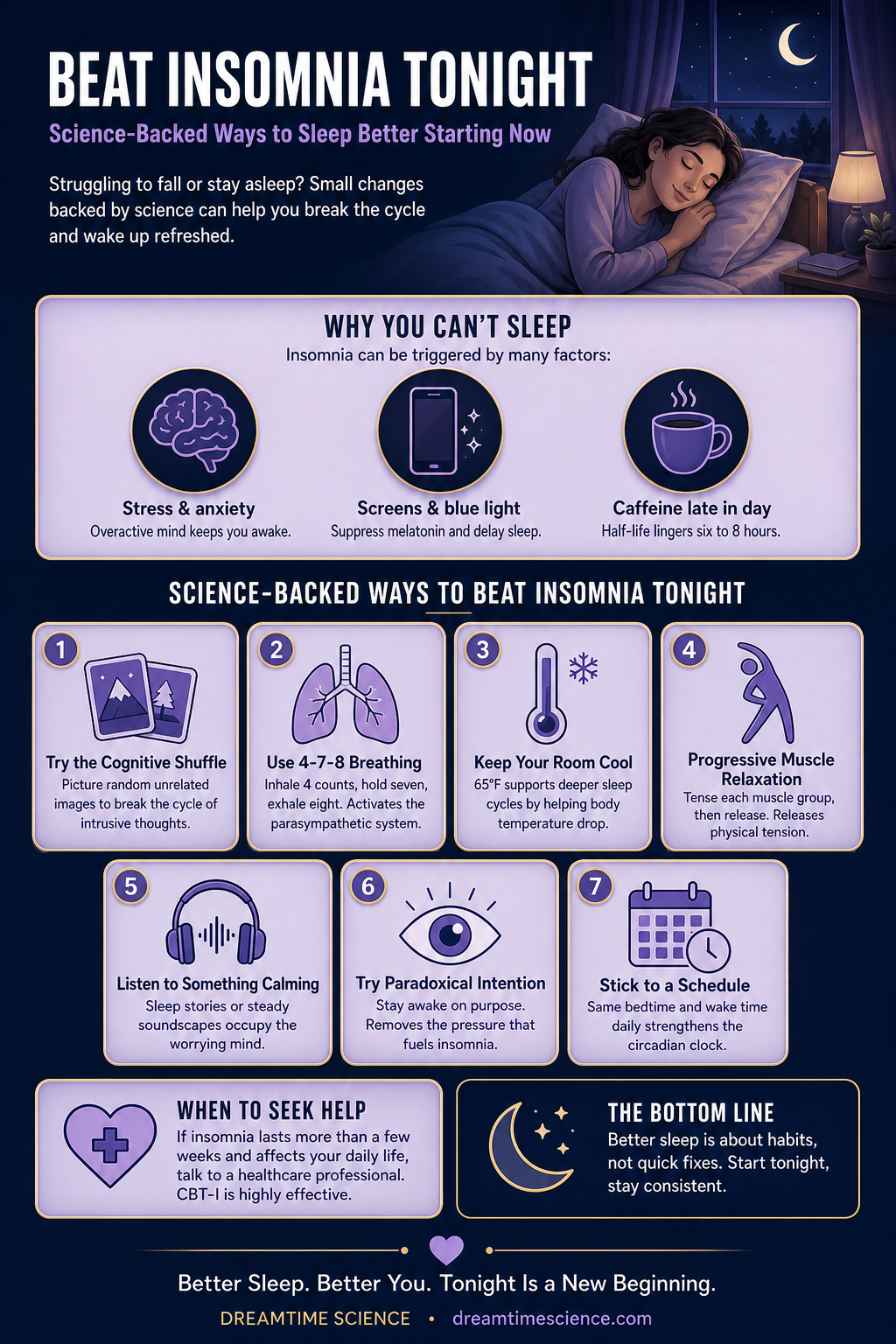
The short answer: Insomnia can be beaten tonight using seven evidence-based techniques: the 4-7-8 breathing method, progressive muscle relaxation, stimulus control, cognitive shuffling, temperature regulation, strategic light exposure, and paradoxical intention. Research shows these methods reduce sleep onset latency by 15-30 minutes without medication.
The immediate alleviation of insomnia is achievable through the deliberate application of several established behavioral and physiological techniques. These include stimulus control, relaxation practices, cognitive techniques, and environmental adjustments. While individual responses vary, these methods aim to reduce sleep onset latency—the time it takes to fall asleep—without relying on pharmaceutical interventions.
Key takeaways
- Stimulus control involves using your bed only for sleep and intimacy.
- Relaxation techniques like progressive muscle relaxation ease physical tension.
- Cognitive shuffling can disrupt anxious pre-sleep thoughts by focusing on random images.
- Strategic light exposure during the day strengthens the body’s natural sleep-wake cycle.
- Paradoxical intention reduces sleep anxiety by intentionally trying to stay awake.
Stimulus Control: Reclaiming Your Bed
Stimulus control therapy is a cornerstone of insomnia treatment, based on the principle of strengthening the association between the bed and sleep, and weakening the association between the bed and wakefulness. This involves using the bed solely for sleep and sexual activity. If unable to fall asleep within approximately 20 minutes, individuals should rise from bed and move to another room. Engaging in a quiet, non-stimulating activity—reading a non-engaging book, gentle stretching—until drowsiness returns is recommended. Returning to bed only when feeling genuinely sleepy reinforces the bed’s association with sleep. Repeated application of this rule can significantly reduce the conditioned arousal linked to the sleep environment.
Relaxation Techniques: Activating the Parasympathetic Nervous System
The inability to sleep is often associated with heightened physiological arousal—an elevated heart rate, muscle tension, and a racing mind. Several relaxation techniques aim to counteract this state by activating the parasympathetic nervous system, responsible for the body’s “rest-and-digest” response. Progressive muscle relaxation, for example, involves systematically tensing and releasing muscle groups throughout the body. Starting with the toes and working upward, each muscle group is deliberately contracted for a period of five to ten seconds, followed by a period of relaxation. This process promotes a sense of physical calm, reducing overall tension levels.
Cognitive Techniques: Managing Pre-Sleep Thoughts
A common contributor to insomnia is repetitive, intrusive thought patterns—worrying about the day's events, planning for the future, or ruminating on sleep itself. Cognitive shuffling is a method used to disrupt these thought patterns. This involves consciously focusing on a series of unrelated, neutral images or topics in quick succession. For example, visualizing a red bicycle, then a penguin, then a cloud, without dwelling on any single image. The goal is not to eliminate thoughts entirely, but to prevent them from coalescing into coherent, anxiety-provoking narratives. This technique mimics the random imagery often experienced during the early stages of sleep (hypnagogia), potentially easing the transition to sleep.
Strategic Light Exposure: Regulating Your Circadian Rhythm
Light is a powerful regulator of the circadian rhythm—the internal biological clock that governs sleep-wake cycles. Exposure to bright light during the day helps to strengthen the circadian signal, promoting alertness during waking hours and facilitating sleep initiation at night. Conversely, minimizing light exposure in the evening is crucial for promoting melatonin production, a hormone essential for sleep. Reducing exposure to blue light emitted by electronic devices—smartphones, tablets, computers—in the hours leading up to bedtime is particularly important as blue light suppresses melatonin secretion.
Optimizing Sleep Environment: Temperature and Darkness
The immediate physical environment plays a significant role in sleep quality. The body’s core temperature naturally declines as bedtime approaches, signaling the onset of sleep. Maintaining a cool bedroom—research suggests an optimal range of 15 to 19 degrees Celsius (60-67 Fahrenheit)—facilitates this temperature reduction. Darkness is equally important, as light exposure inhibits melatonin production. Ensuring a dark, quiet, and comfortable sleep environment is a fundamental step toward improving sleep.
Paradoxical Intention: Reducing Performance Anxiety
The very act of trying to fall asleep can sometimes exacerbate insomnia, creating a cycle of anxiety and wakefulness. Paradoxical intention—deliberately attempting to stay awake—is a counterintuitive technique designed to break this cycle. By relinquishing the pressure to sleep, individuals can reduce the performance anxiety associated with falling asleep. Gently resisting sleep, keeping eyes open in the dark, and allowing thoughts to flow freely can paradoxically lead to drowsiness. This approach shifts the focus from achieving sleep to simply being awake, diminishing the psychological tension surrounding the process.
Controlled Breathing Exercises: Slowing the Physiological Response
Specific breathing patterns can influence the autonomic nervous system, promoting relaxation and slowing physiological processes. The 4-7-8 breathing technique—inhaling through the nose for four seconds, holding the breath for seven seconds, and exhaling slowly through the mouth for eight seconds—is a commonly used example. This controlled breathing pattern slows the heart rate, activates the vagus nerve (a key component of the parasympathetic nervous system), and induces a state of calm. Regular practice of this technique can create a conditioned relaxation response, facilitating sleep onset.
Frequently Asked Questions
What is the best way to beat insomnia tonight?
Employing a combination of stimulus control, relaxation techniques like progressive muscle relaxation, and cognitive strategies such as cognitive shuffling can provide immediate relief. Optimizing your sleep environment and reducing exposure to stimulating factors like light and screens are also beneficial.
Is it okay to get out of bed if I can't fall asleep?
Yes. Remaining in bed while awake for an extended period can strengthen the association between the bed and wakefulness. Stimulus control therapy recommends rising from bed after approximately 20 minutes of wakefulness and engaging in a quiet activity until drowsiness returns.
What is the optimal bedroom temperature for sleep?
Research indicates that a bedroom temperature between 15 and 19 degrees Celsius (60-67 Fahrenheit) is optimal for sleep. Maintaining a cool environment facilitates the natural decline in core body temperature necessary for sleep initiation.
Why can’t I turn off my thoughts at night?
A racing mind is a common symptom of insomnia, often driven by stress, anxiety, or worry. Cognitive techniques like cognitive shuffling are designed to disrupt repetitive thought patterns and prevent them from escalating into anxiety-provoking narratives.
How does the 4-7-8 breathing method work?
The 4-7-8 breathing technique slows the heart rate and activates the vagus nerve, which signals the brain to enter a relaxed state. This controlled breathing pattern promotes physiological calmness and prepares the body for sleep.
What is stimulus control therapy?
Stimulus control therapy is a behavioral technique that aims to re-establish the association between the bed and sleep. It involves using the bed only for sleep and sexual activity and rising from bed when unable to fall asleep to prevent the bed from becoming associated with wakefulness.
Fall Asleep to a Science Lecture
Put tonight's reading into practice — pick a gentle, softly-narrated episode and let the Professor talk you to sleep.
 Tonight's episodeHow Gravity Can Bend Time: The Cosmic Clock Puzzle
Related articles

Cognitive Behavioral Therapy for Insomnia (CBT-I): Evidence-Based Sleep Fixes
CBT-I is the gold-standard treatment for chronic insomnia, recommended as first-line therapy over sleeping pills by every major medical body. It combines sleep…
Progressive Muscle Relaxation: A Neuroscience-Backed Technique for Better Sleep
Progressive muscle relaxation (PMR) reduces sleep onset time by systematically tensing and releasing muscle groups from toes to head. This activates the…

The Science of Why You Can't Sleep: Understanding the Insomnia Cycle
Insomnia becomes self-perpetuating because worrying about sleep triggers a stress response that makes sleep impossible. This creates a conditioned arousal where the…