
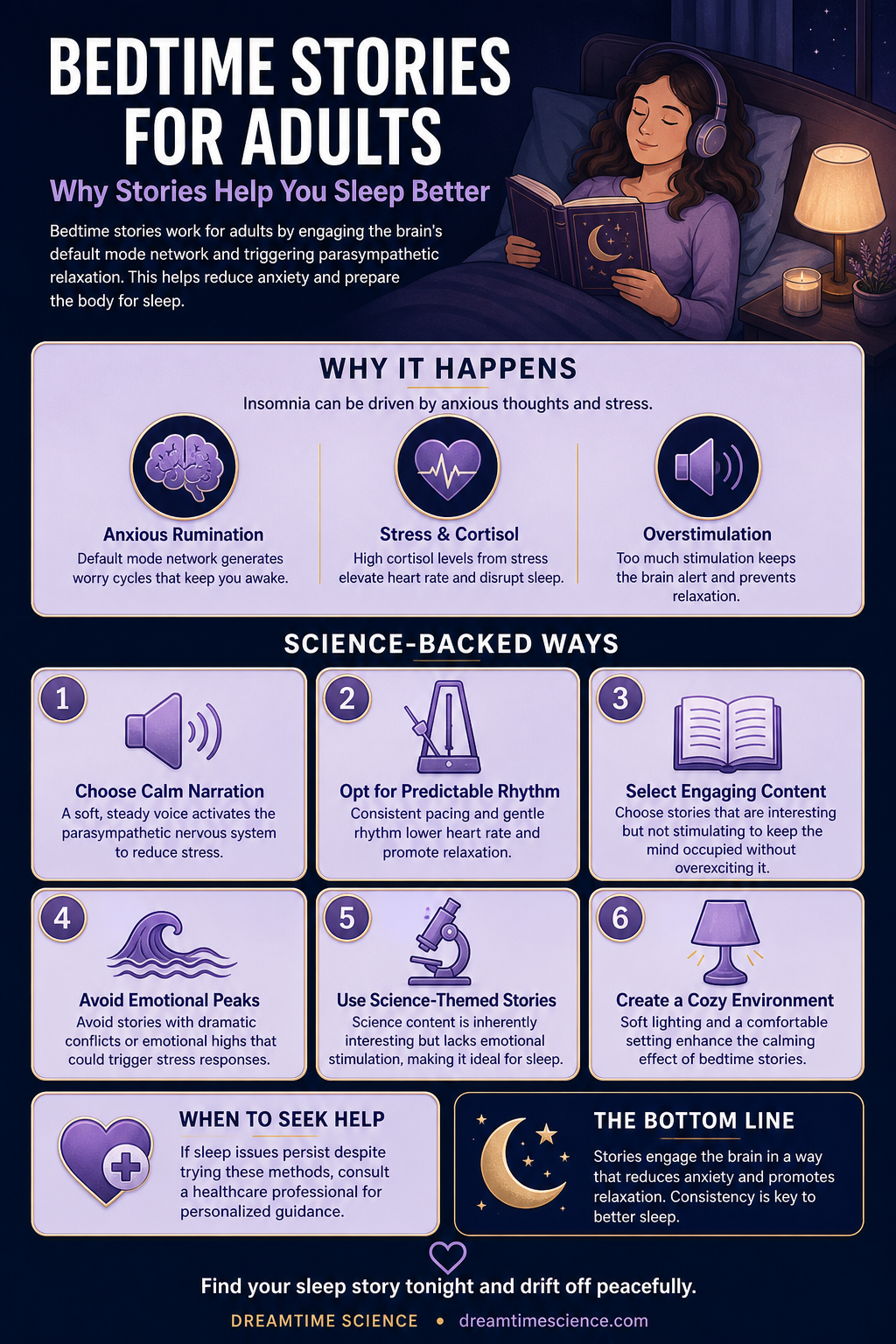
The short answer: Bedtime stories can improve adult sleep by diverting attention from anxious thoughts and activating the parasympathetic nervous system, which regulates the "rest and digest" response. Engaging with a moderately complex, science-based narrative inhibits the default mode network and reduces physiological arousal, lowering cortisol levels and heart rate. These effects facilitate a calm, predictable routine that prepares the mind and body for sleep.
Bedtime stories can improve sleep onset and quality in adults by providing a gentle distraction from pre-sleep cognitive arousal and activating the parasympathetic nervous system [1]. These effects prepare the body physiologically and mentally for sleep by diverting focus from daytime stressors and promoting relaxation.
Key takeaways
- Bedtime stories shift focus away from anxious thoughts by engaging the listener’s attention.
- Calm vocal delivery activates the parasympathetic nervous system, promoting physiological relaxation.
- Predictable story structures and pacing help regulate the body’s natural rhythms and cortisol levels.
- Stories with moderate complexity provide mental distraction without overstimulation, aiding sleep onset.
- Positive emotional connection to a story’s characters enhances relaxation and promotes a sense of calm.
How Bedtime Stories Disrupt Pre-Sleep Rumination
The mechanism underlying bedtime story efficacy is rooted in narrative engagement and its impact on brain activity. During wakefulness, the default mode network (DMN) is frequently responsible for self-referential thought, encompassing worry, planning, and rumination. Listening to a story can induce narrative transport – a state of focused attention that temporarily overrides these internal thought processes [1]. This diversion of mental resources inhibits the DMN, decreasing the likelihood of repetitive anxious thoughts and facilitating the transition to sleep.
Physiological Mechanisms of Relaxation
A calm, measured vocal delivery, common in bedtime stories, has a demonstrable impact on the autonomic nervous system. This type of auditory input prompts activation of the parasympathetic nervous system, responsible for regulating the “rest and digest” response [4]. Observable physiological indicators of relaxation—such as decreased heart rate and increased skin conductance—are often correlated with exposure to soothing audio stimuli [1]. While distinct from the autonomous sensory meridian response (ASMR), both phenomena highlight the capacity of focused sound to induce a calming physiological state.
Influence of Routine and Predictability
The incorporation of predictable structures and consistent pacing within bedtime stories contribute to their sleep-promoting effects. Repetition of familiar story elements and a smooth, steady cadence can facilitate a reduction in cortisol levels and a decrease in heart rate, creating a physiological environment more conducive to sleep [7]. This rhythmic consistency serves as an auditory anchor, assisting in the regulation of the body’s circadian rhythm and signaling a transition to a state of rest.
Optimal Cognitive Engagement Levels
The effectiveness of a bedtime story is directly tied to its level of cognitive engagement. The ideal narrative is sufficiently captivating to sustain attention and prevent mind-wandering, but not so intensely stimulating that it increases physiological arousal [5]. Content with moderate complexity—such as informative stories—achieves this balance effectively. This level of engagement provides sufficient mental occupation to avoid dwelling on stressors, without eliciting the dramatic emotional peaks common in more stimulating entertainment.
Advantages of Science-Based Story Content
Science-focused stories are particularly well-suited for bedtime listening. The inherent interest in scientific concepts provides a degree of cognitive engagement, while the typically neutral and factual presentation of information minimizes the risk of activating the stress response [3]. This enables focused attention without the physiological disruption associated with plot twists, conflict, or heightened emotional investment.
The Role of Emotional Connection to Narratives
The emotional connection a listener develops with characters in a story can also influence sleep quality. Research shows that liking the protagonist within a narrative is associated with increased narrative persuasion, indicating a heightened likelihood of positive engagement with the story’s themes [3]. This positive emotional connection fosters a sense of calm and well-being, augmenting the sleep-promoting effects of the story.
Frequently Asked Questions
Why do bedtime stories help adults fall asleep?
Bedtime stories assist sleep onset by diverting attention from pre-sleep rumination and initiating parasympathetic nervous system activity, promoting a relaxed physiological state [1]. This combination of mental and physical effects prepares the body for sleep.
What is narrative transport and how does it affect sleep?
Narrative transport is a psychological state characterized by deep engagement with a story, temporarily overriding intrusive or anxious internal thoughts [1]. This process reduces activity in the default mode network, which is often linked to mind-wandering and negative rumination.
Are bedtime stories effective even if I don't generally enjoy listening to stories?
While enjoying the narrative enhances the experience, the fundamental principle of cognitive distraction remains effective even in the absence of deep emotional investment [5]. This distraction of mental resources is beneficial in mitigating pre-sleep rumination.
Do bedtime routines contribute to sleep quality alongside the story itself?
Consistent bedtime routines—including the act of listening to a story—have demonstrable benefits for sleep health and overall well-being, particularly in children [7]. The routine serves as a cue to the brain, associating specific activities with the preparation for sleep.
Could a podcast serve as a replacement for a dedicated sleep story?
Science-focused podcasts can be efficacious if they are delivered in a calm narration style and avoid overly stimulating content [3]. The key factor is a balance between cognitive engagement and a lack of intensity, to foster relaxation rather than heightened arousal.
Are there benefits to listening to rhyming stories before bed beyond relaxation?
Reading and listening to rhyming text can positively influence long-term memory [2], although primarily the goal of bedtime stories for adults is inducing relaxation and sleep.
Fall Asleep to a Science Lecture
Put tonight's reading into practice — pick a gentle, softly-narrated episode and let the Professor talk you to sleep.
 Tonight's episodeHow Gravity Can Bend Time: The Cosmic Clock Puzzle
Related articles

The Perfect Bedtime Routine According to Sleep Scientists
The ideal bedtime routine lasts 30-60 minutes and follows a neuroscience-backed sequence: dim lights to signal melatonin production, lower room temperature to 16-19…

Sleep Hygiene 101: Building a Better Bedtime Routine From Scratch
Insufficient sleep is linked to serious health conditions like heart disease, diabetes, and depression, highlighting the importance of good sleep hygiene. Creating a…

Revenge Bedtime Procrastination: Why You Delay Sleep on Purpose
Ever find yourself scrolling endlessly on your phone, knowing full well you should be asleep?