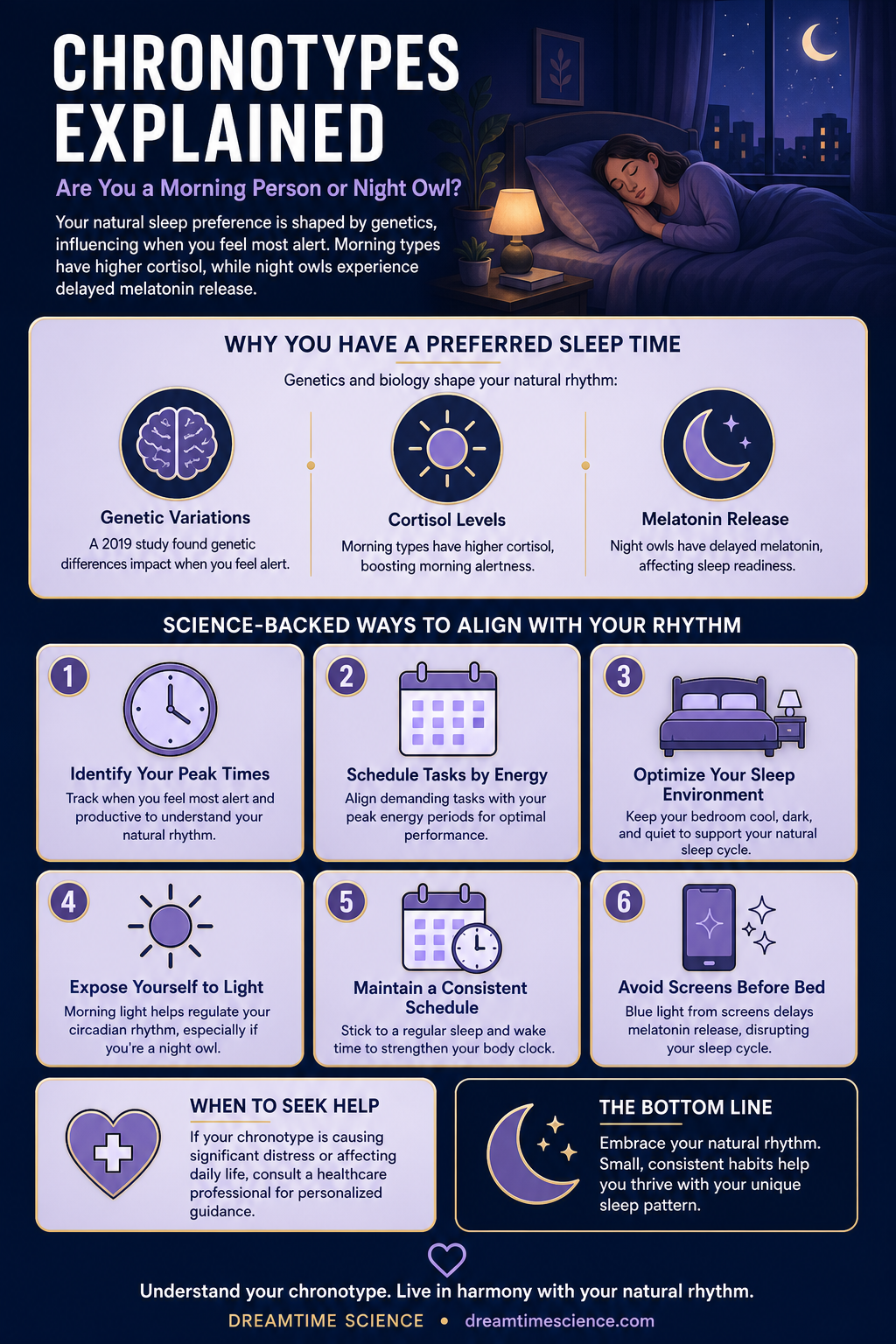
The short answer: Your chronotype, or natural sleep preference, is influenced by genetics and impacts when you feel most alert. A 2019 study in Nature Communications found genetic variations contribute to these differences, affecting alertness. Morning types often have higher cortisol levels, while night owls experience a delayed melatonin release, as shown in a 2013 Chronobiology International journal study.
Ever wondered why some folks leap out of bed with the sunrise while others find their stride under the moonlight? It's not just lifestyle or habit. It's in your biological wiring. This inner clock, known as your chronotype, whispers its secrets through your sleep patterns.
The early bird gets the worm, they say. But what if you're a night owl? Does that mean you're doomed to a life of chasing the sun?
Your chronotype is not a choice. It's a natural rhythm, as unique as a fingerprint. So, what is your body trying to tell you?
Understanding Chronotypes
Our bodies are ruled by an internal timekeeper called the circadian rhythm. Like an orchestra, it conducts everything from sleep to mood, ensuring harmony within. But not everyone marches to the same beat. Enter: chronotypes.
Chronotypes categorize us into morning larks, night owls, or somewhere in between. It’s not just a quirky personality trait. It's a biological imperative. According to a 2019 study published in Nature Communications, genetic variations contribute to these chronotypical differences, impacting when you feel most alert or sleepy.
Imagine your body as a finely tuned instrument, set to its own tempo. This is your sleep chronotype at work.
Morning Larks vs. Night Owls
Morning larks are the early risers, energized by dawn's first light. They relish the quiet hours when the world is still waking. Their brains and bodies are primed for action from the get-go. Research from the Journal of Clinical Endocrinology & Metabolism in 2015 found that morning types tend to have higher levels of cortisol, the hormone that helps boost alertness in the morning.
Night owls, on the other hand, come alive as the sun dips below the horizon. The quiet of night fuels their creativity and focus. But mornings? They can feel like pulling teeth. A 2013 study in the Chronobiology International journal revealed that night owls often have a delayed release of melatonin, the hormone that signals sleep readiness.
And then there's the rest of us, fluttering somewhere in between. The flexible chronotypes who adapt to the demands of the day but still have their preferences.
What This Means for You
- Identify Your Peak Times: Track when you feel most alert and productive. That's your body's way of showing you its preferred rhythm.
- Align Tasks with Energy Levels: Schedule demanding tasks during your peak energy periods. If you're a night owl, tackle creative projects in the evening. Morning larks might choose early meetings or workouts.
The Science Behind the Sleep
The suprachiasmatic nucleus (SCN), nestled in the brain, acts as the maestro of our circadian rhythm. It regulates melatonin, the sleep hormone, responding to light cues from the environment.
Morning light suppresses melatonin, signaling it's time to be alert. But for night owls, this process is delayed. Their brains hold onto melatonin longer, making mornings a groggy affair. According to a 2014 study in The Journal of Sleep Research, exposure to morning light can advance the sleep-wake cycle, helping night owls adjust to earlier schedules.
It's not just about when you sleep, but how your body reacts to the dance of light and dark.
Why Does It Matter?
Your chronotype influences more than just your sleep. It affects your mood, your peak performance times, even your long-term health. A 2018 study in Chronobiology International found that evening chronotypes are at a higher risk for metabolic disorders, highlighting the health implications of mismatched schedules and natural rhythms.
Morning people often feel the benefits of aligning their activities with daylight. But night owls can thrive too, with the right adjustments.
What This Means for You
- Optimize Your Environment: Use bright light in the morning to cue your body into wakefulness. Dim lights in the evening to encourage melatonin production.
- Adjust Gradually: Shift your schedule in small increments to better align with societal norms or personal goals.
Historical Context of Chronotypes
The concept of chronotypes isn't new. Historical records suggest that even ancient civilizations recognized the diversity in human sleep patterns. The Romans, for instance, valued early rising, associating it with discipline and productivity, a notion that persists today. However, many indigenous cultures embraced the natural ebb and flow of individual sleep patterns, allowing for a more flexible approach to daily activities. This historical perspective underscores the importance of understanding and respecting our innate biological rhythms rather than forcing conformity.
Recent Research and Developments
Recent advancements in chronobiology have shed light on the molecular mechanisms underlying chronotypes. A 2021 study in Nature Neuroscience identified specific gene variants that influence the timing of the circadian clock, offering potential pathways for personalized medicine. These findings could lead to tailored interventions for sleep disorders, aligning treatment plans with an individual's genetic predisposition. Moreover, wearable technology is now enabling real-time monitoring of sleep patterns, providing deeper insights into personal chronotypes and their impact on daily life.
Embrace Your Chronotype
Society often glorifies the early bird. But night has its own magic. A quiet, creative energy that fuels innovation and introspection.
Whether you rise with the sun or the moon, your chronotype can be your greatest ally. It's your guide to a more harmonious life.
Listen to its rhythm. Dance to your own beat.
Conclusion
Your chronotype is your body's internal guide, whispering when to rest and when to rise. Aligning with it doesn't just improve sleep; it enhances your entire well-being. Understanding and embracing your natural rhythm can lead to a more fulfilling, harmonious life.
Want to experience these sleep science concepts with our soothing narration and ambient soundscapes? Check out our latest video on YouTube @dreamtimescience.
Frequently Asked Questions
How can I determine my chronotype?
To find your chronotype, observe your natural sleep preferences over several weeks without external pressures like work or social obligations. Tools like the Munich Chronotype Questionnaire can also provide insights. Additionally, tracking your sleep using apps or wearables can help identify patterns in your sleep-wake cycle, offering a clearer picture of your chronotype.
Can I change my chronotype?
While you can't change your genetic predisposition, you can adjust your schedule through exposure to light and gradual shifts in sleep timing, as supported by a 2017 study in Sleep Medicine Reviews. Implementing consistent sleep hygiene practices, such as maintaining a regular sleep schedule and reducing blue light exposure before bed, can also aid in aligning your sleep patterns with desired wake times. For more on managing sleep disruptions, see our article on Cognitive Behavioral Therapy for Insomnia (CBT-I).
Are night owls less healthy than morning larks?
Not inherently. Health risks for night owls often stem from societal misalignment rather than the chronotype itself. With mindful scheduling, night owls can maintain good health. It's crucial to create an environment that supports your natural rhythm, such as optimizing your sleep environment, which you can learn more about in our article on Temperature, Darkness, and Sound: The Ideal Sleep Environment.
How do chronotypes affect mental health?
Chronotypes influence mood regulation. A 2016 study in Behavioral Sleep Medicine found that mismatched schedules can increase stress and anxiety in night owls, emphasizing the need for alignment with natural rhythms. Understanding your chronotype can help mitigate these effects by allowing you to structure your day in a way that supports mental well-being. For further exploration, see our article on Sleep and Mental Health: How Rest Affects Depression and Anxiety.
Can chronotypes affect my career choice?
Yes, certain jobs align better with specific chronotypes. Night owls may excel in creative, flexible roles, while morning larks might thrive in structured environments. Understanding your chronotype can guide career decisions. For more on how sleep influences professional life, explore our article on Shift Work and Sleep: Strategies for Night Shift Workers.
Fall Asleep to a Science Lecture
Put tonight's reading into practice — pick a gentle, softly-narrated episode and let the Professor talk you to sleep.
 Tonight's episodeUnraveling Carbon's Role in Life's Cycle