
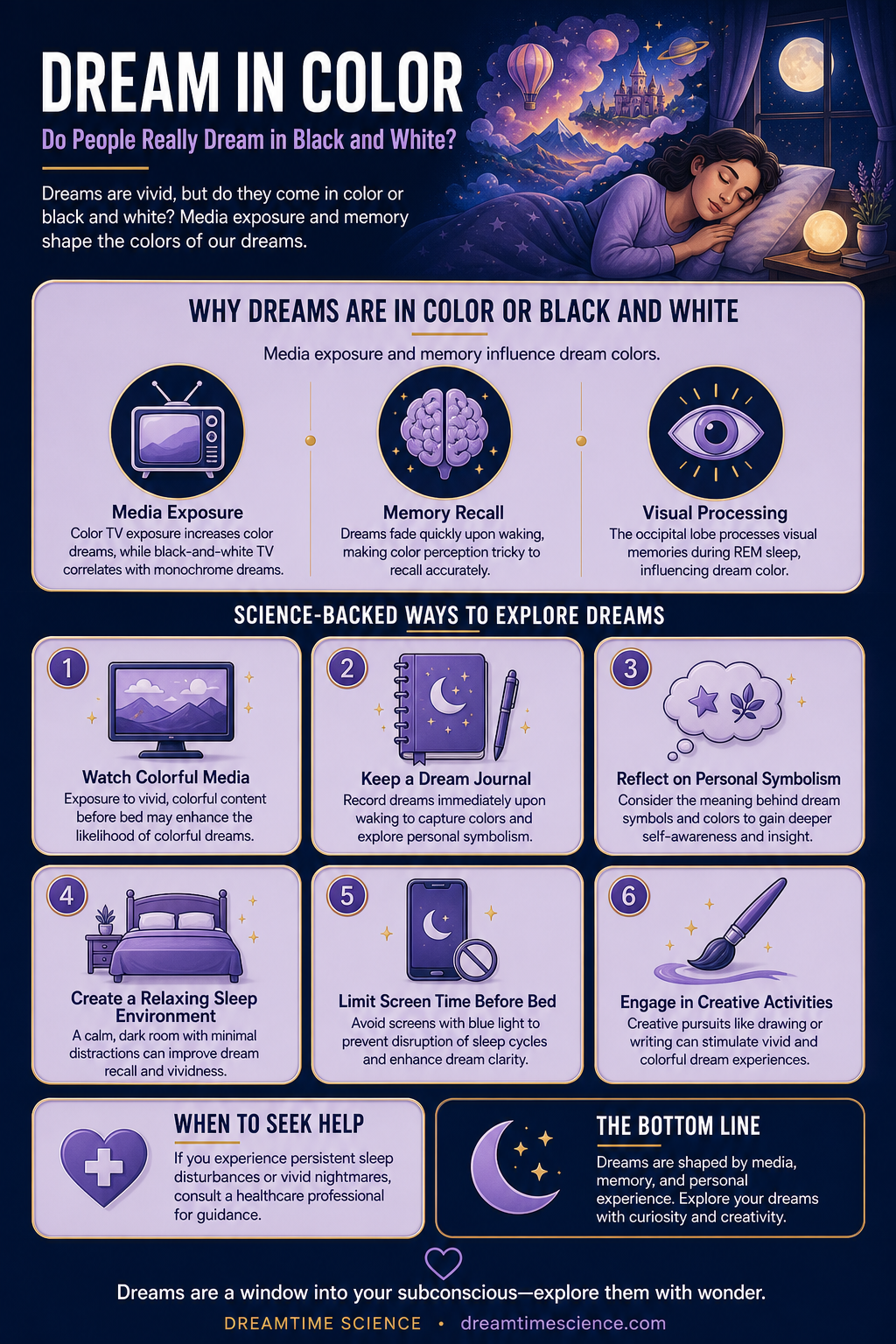
The short answer: Historically, around three-quarters of people reported dreaming in black and white, coinciding with the prevalence of black-and-white television in the 1940s. As color television became widespread, so did reports of color dreams, suggesting a connection between media exposure and dream imagery. A 2008 study showed younger people exposed to color TV reported more color in their dreams than older generations who grew up with monochrome media.
Picture this: It's the middle of the night, and your mind is painting vivid scenes behind your closed eyelids. But are those scenes splashed with technicolor brilliance or muted in monochrome? The debate over whether dreams are in color or black and white has intrigued dreamers for generations.
The Technicolor Dreamcoat
You might be wondering, "Do I dream in color?" Many assume that the vibrant hues of our waking world must naturally seep into our dreams. Yet, studies reveal that not everyone shares this kaleidoscopic vision.
Surprisingly, some people report dreams washed in grayscale, akin to old black-and-white movies. But why the difference? The answer lies partly in history.
Media Influence and Dream Imagery
Turn back the clock to the days when black-and-white television was the norm. Back then, a significant number of people reported dreaming without color. It seemed the media we consumed by day influenced the palette of our nocturnal narratives. A study from the 1940s found that about three-quarters of people reported colorless dreams, aligning with the monochrome media of the time.
As color TV became widespread, reports of color dreams surged. Coincidence? Perhaps not. Our visual culture shapes our subconscious, painting our dreams with the brushstrokes of our daily life. A 2008 study published in Consciousness and Cognition showed that younger participants exposed to color TV had more color in their dreams compared to older participants who grew up with black-and-white TV, highlighting the powerful influence of media on our dreamscapes.
The Science of Color Dreams
Is there a scientific explanation for dreaming in color? Neuroscience points to the complexity of our visual processing. The brain's occipital lobe, responsible for vision, doesn't just rest when you sleep. Instead, it's busy replaying and reprocessing visual cues.
The Role of the Occipital Lobe
The occipital lobe acts like an artist's studio, where visual memories are stored and replayed. During REM sleep, when most dreaming occurs, this part of the brain is highly active. According to a 2015 study in Nature Communications, the occipital lobe engages in visual memory consolidation, which may bring color into dreams as it processes and integrates daily visual experiences. Dreams in color may indicate active visual processing, a sign that your brain is busily filing away memories.
What This Means for You
So, what can you do to influence your dream palette? Consider the media you consume. If you immerse yourself in vibrant, colorful imagery before bed, you might enhance the likelihood of colorful dreams. Watching vivid nature documentaries or flipping through brightly colored art books can prime your mind for a more colorful dream experience.
Memory's Mysterious Curtain
Recall plays a sneaky role in our perception of dream colors. Upon waking, dreams can slip away like wisps of smoke, leaving only fragments behind. This fleeting nature means that the colors—or lack thereof—can be tricky to pin down.
Some researchers suggest that initial impressions of dream colors might be distorted by the fog of waking. In the light of dawn, the vibrant hues of our dreams may fade, leaving only shadows in our memory. A 2002 study in the Journal of Sleep Research found that dreams recalled immediately upon waking were more likely to be remembered in color, compared to those recalled later.
What This Means for You
To improve dream recall, try keeping a dream journal by your bed. Upon waking, jot down your dreams before they vanish into the ether. This practice can help you capture those fleeting colors and explore the personal symbolism they might hold.
The Meaning Behind the Hues
Interpreting the colors in dreams has been a fascination for centuries. Some believe that hues carry specific meanings: blue for calm, red for passion, green for growth. While intriguing, these interpretations often lean more towards personal symbolism than universal truth.
Your midnight mindscape is a canvas unique to you. The imagery and colors are personal, reflecting your emotions, experiences, and subconscious processes. So next time you recall a particularly colorful dream, consider what those shades might mean to you. Dreams and Emotions: Why Your Feelings Intensify in Dreams explores how emotions can paint your dreamscape with intensity.
The Verdict: Color or Monochrome?
So, do people really dream in black and white? The answer is both yes and no. It depends on the dreamer, their experiences, and perhaps even the era they grew up in.
Dreams, whether in color or monochrome, remain a deeply personal journey through the subconscious. They connect us with hidden parts of ourselves and allow us to explore our inner worlds. As we explored in The Sleep-Dream Connection: How Different Sleep Stages Produce Different Dreams, the stage of sleep can also impact dream complexity and color.
Practical Tips for Dream Exploration
- Engage with Colorful Media: Watching vivid content before bed may enhance color in dreams.
- Keep a Dream Journal: Recording dreams immediately upon waking can help capture their colors.
- Reflect on Personal Symbolism: Consider what colors mean to you personally.
As night falls and you drift into sleep, know that you're entering a realm where color is subjective, but the experience is uniquely yours. Whether your dreams are painted in vivid hues or classic grayscale, they are a testament to the boundless creativity of your mind.
Conclusion
Dreams, whether in vibrant color or muted monochrome, are deeply personal narratives crafted by our subconscious. They reflect the intricate dance of memory and emotion, influenced by our daily experiences and media consumption. Each night offers a unique glimpse into the boundless creativity of the dreamer's mind.
Want to experience these sleep science concepts with our soothing narration and ambient soundscapes? Check out our latest video on YouTube @dreamtimescience.
Frequently Asked Questions
Do all people dream in color?
Not everyone dreams in color. Studies, such as one published in Consciousness and Cognition, have shown that older adults, who grew up with black-and-white media, report more grayscale dreams compared to younger generations exposed to color media.
Can media consumption really influence dream color?
Yes, media consumption can influence dream color. As shown in a 2008 study in Consciousness and Cognition, exposure to color television increased reports of color dreams, highlighting the media's impact on our subconscious imagery.
Why do I forget my dreams so quickly?
Dreams are often forgotten due to the brain's natural waking processes. A 2002 study in the Journal of Sleep Research found that dreams recalled immediately upon waking are better remembered, suggesting that prompt recording can aid memory.
Do dream colors have universal meanings?
Dream colors often hold personal rather than universal meanings. While some interpretations suggest specific emotions tied to colors, these are largely subjective and can vary between individuals.
How can I improve my dream recall?
Improving dream recall can be achieved by keeping a dream journal. Recording dreams immediately upon waking helps solidify them in memory, allowing for deeper exploration of their content and potential meanings.
Fall Asleep to a Science Lecture
Put tonight's reading into practice — pick a gentle, softly-narrated episode and let the Professor talk you to sleep.
 Tonight's episodeUnraveling Carbon's Role in Life's Cycle