
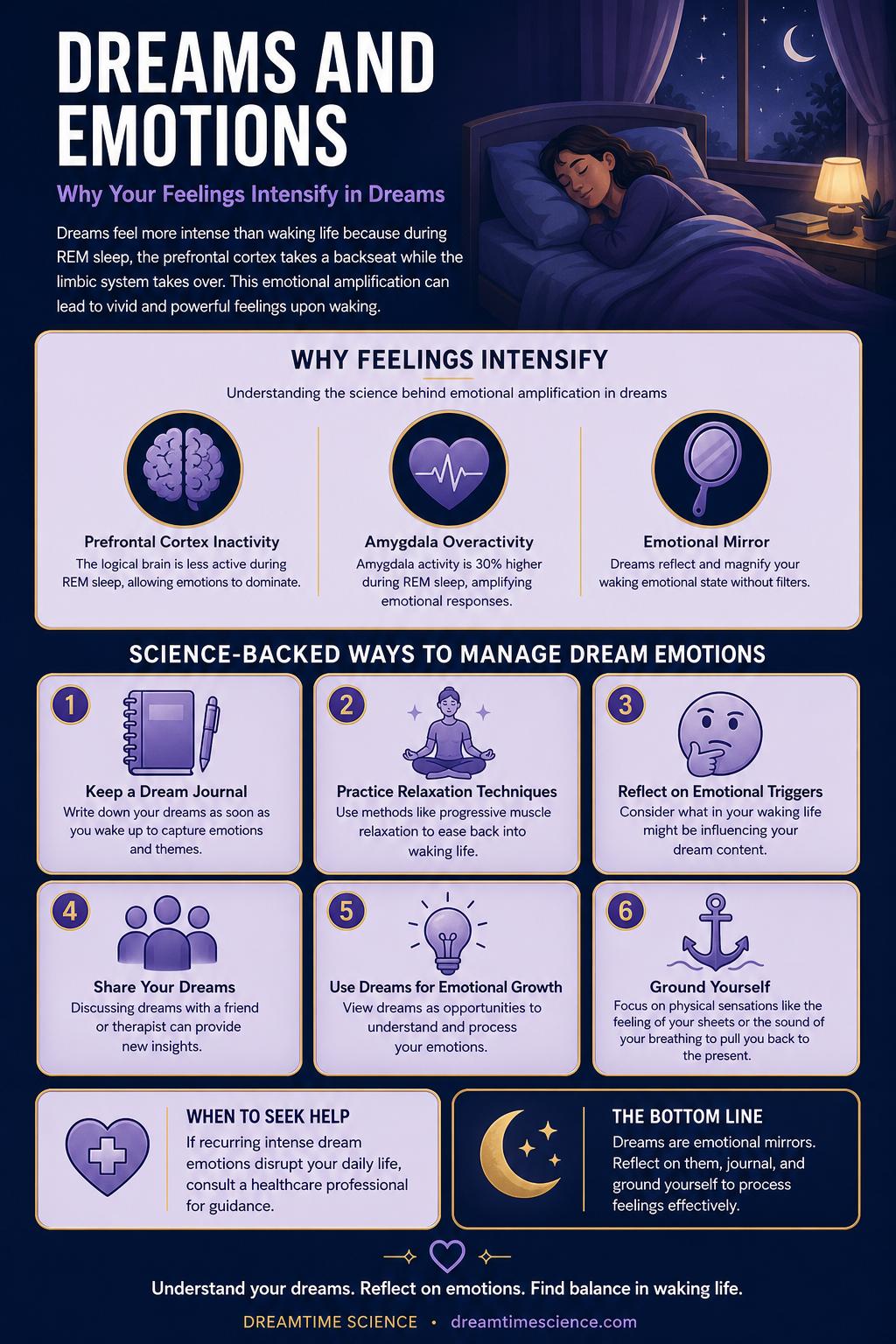
Dreams feel more intense than waking life because the regulation typically provided by the prefrontal cortex is diminished during REM sleep, allowing the limbic system—the emotional center of the brain—greater influence over dream content and experience. This neurobiological shift accounts for the frequently reported vividness and pronounced emotional power of dreams, influencing how individuals feel upon waking.
Key takeaways
- Dreams often feel more emotionally intense than waking life experiences.
- REM sleep reduces activity in the prefrontal cortex, impacting emotional regulation.
- The amygdala, which handles primal emotions, is highly active during REM sleep.
- Dreams may help process emotional memories, potentially reducing reactivity.
- Waking life stressors and relationships frequently appear symbolically in dreams.
Dreams and Emotions Why Your Feelings Intensify in Dreams
Dreams are often characterized by a heightened emotional experience, a quality observed across cultures and consistently reported by individuals upon waking. This amplification of feeling isn’t random; it's a direct consequence of the complex neurological changes occurring during rapid eye movement (REM) sleep, the stage most associated with vivid dreaming. Understanding these changes provides insight into why emotions feel so potent in the dream world, and their potential role in emotional processing.
REM Sleep and Emotional Processing
REM sleep is a unique physiological state marked by brain activity similar to wakefulness, but accompanied by muscle atonia—a temporary paralysis preventing physical enactment of dreams. While cognitive functions like logical reasoning and sequential thought are reduced, the emotional centers of the brain become significantly more active. The prefrontal cortex, critical for executive functions such as planning, decision-making, and emotional regulation, exhibits decreased metabolic activity during REM. This relative deactivation allows subcortical regions, including the amygdala and hippocampus, to exert a dominant influence on the narrative and affective content of dreams.
The Role of the Amygdala in Dream Emotions
The amygdala, a brain structure heavily involved in processing fear, anxiety, and other primal emotions, demonstrates significantly elevated activity during REM sleep. While empirical research on human brain activity during dreaming is limited, observations suggest an outsized role for the amygdala in shaping dream experience. This prioritized processing of emotional stimuli explains many characteristics of the dream state. Events are perceived as more emotionally charged, memories are recalled with associated feelings, and novel scenarios quickly acquire emotional significance—often disproportionate to their logical assessment.
Dreams as a Form of Emotional Regulation
While the emotional intensity of dreams can be unsettling, emerging theory suggests they serve a critical function in emotional regulation. REM sleep is thought to facilitate the consolidation of emotional memories, allowing the brain to process past experiences and integrate them into existing cognitive frameworks. This process may involve reactivating emotional memories in a safe context—the dream world—where the emotional impact can be gradually reduced, leading to decreased reactivity upon waking. The hippocampus, crucial for memory formation, works in conjunction with the amygdala to contextualize these emotional experiences, potentially contributing to improved emotional resilience.
The Connection Between Waking Life and Dream Content
The emotional content of dreams is rarely divorced from waking experiences. Factors such as daily stressors, interpersonal relationships, and unresolved conflicts frequently manifest in dream scenarios. Dreams often provide a symbolic representation of these experiences, rather than a literal replay. For example, feelings of anxiety about an upcoming presentation may appear as being unprepared for an exam, or frustration with a colleague might be expressed as being chased by an unfamiliar figure. Recognizing these patterns can provide valuable insight into underlying emotional concerns.
Nightmares and Intense Emotional Dreams
Nightmares, by definition, are intensely disturbing dreams that evoke feelings of fear, anxiety, or panic. They are often associated with traumatic experiences, high levels of stress, or underlying mental health conditions. The heightened amygdala activity during REM sleep can contribute to the vividness and emotional power of nightmares, possibly representing the brain’s attempt to process unresolved emotional trauma. Recurring nightmares may also indicate a need for professional support. While occasional nightmares are relatively common, frequent or debilitating nightmares may warrant consultation with a healthcare provider.
Factors Influencing Dream Intensity
Several factors can influence the intensity of dreams, including sleep deprivation, medication use, and underlying medical conditions. Disrupted sleep patterns can alter the normal architecture of sleep, potentially leading to more frequent or vivid REM cycles. Certain medications, such as antidepressants and beta-blockers, can also affect dream content and intensity. Furthermore, individuals with mood disorders, such as depression and anxiety, often report more frequent and emotionally charged dreams.
References
- Walker, M. P. (2017). *Why We Sleep: Unlocking the Power of Sleep and Dreams*. Scribner.
Frequently Asked Questions
Why do dreams feel more emotional than waking life?
During REM sleep, there is a reduced level of activity in the prefrontal cortex, the area of the brain responsible for logic and reasoning. This allows the limbic system, which governs emotions, to become more dominant, resulting in emotions that feel stronger and more unfiltered than when awake.
Can dreams affect my mood during the day?
Yes, dreams can significantly influence daytime mood. Experiencing positive or emotionally resolving dreams can contribute to feelings of well-being, while negative or disturbing dreams may result in increased anxiety or stress levels. The emotional impact can linger for hours or even days.
Why do my dreams sometimes feel so real?
The feeling of reality in dreams stems from the enhanced sensory and emotional processing occurring during REM sleep. The brain attempts to construct a coherent narrative, even if it’s illogical or improbable, further contributing to the immersive quality of the dream experience.
What can I do to reduce the intensity of nightmares?
Improving sleep hygiene—establishing a regular sleep schedule, creating a relaxing bedtime routine, and avoiding caffeine and alcohol before bed—can help. Addressing underlying stressors or seeking professional support, such as therapy, may also reduce the frequency and intensity of nightmares.
Are recurring dreams trying to tell me something?
Recurring dreams frequently represent unresolved emotional issues or stressors in waking life. They may be the brain's way of highlighting concerns that need to be addressed. Keeping a dream journal can help identify patterns and potential underlying themes.
Is it normal to feel exhausted after an emotionally intense dream?
Yes. Emotionally charged dreams can be mentally draining, similar to experiencing a stressful event in waking life. This fatigue reflects the brain's active processing of emotional information during REM sleep.
Fall Asleep to a Science Lecture
Put tonight's reading into practice — pick a gentle, softly-narrated episode and let the Professor talk you to sleep.
 Tonight's episodeDNA's Silent Blueprint: Uncovering Life’s Deepest Secrets
Related articles

Recurring Dreams: Why You Have the Same Dreams Over and Over
Recurring dreams are repetitive dream scenarios that arise because our brains crave patterns and are reinforcing neural pathways. They often stem from unresolved…

Dreams and Relationships: How Sleep Affects Intimacy and Connection
Dreams, particularly those occurring during REM sleep, play a significant role in relationship health. A 2017 study in the Journal of Neuroscience found that REM…

Sleep and Creativity: How Dreams Unlock Creative Problem-Solving
Dreams facilitate creative problem-solving by allowing the brain to forge connections and process emotions while we sleep. A 2012 study found individuals experiencing…