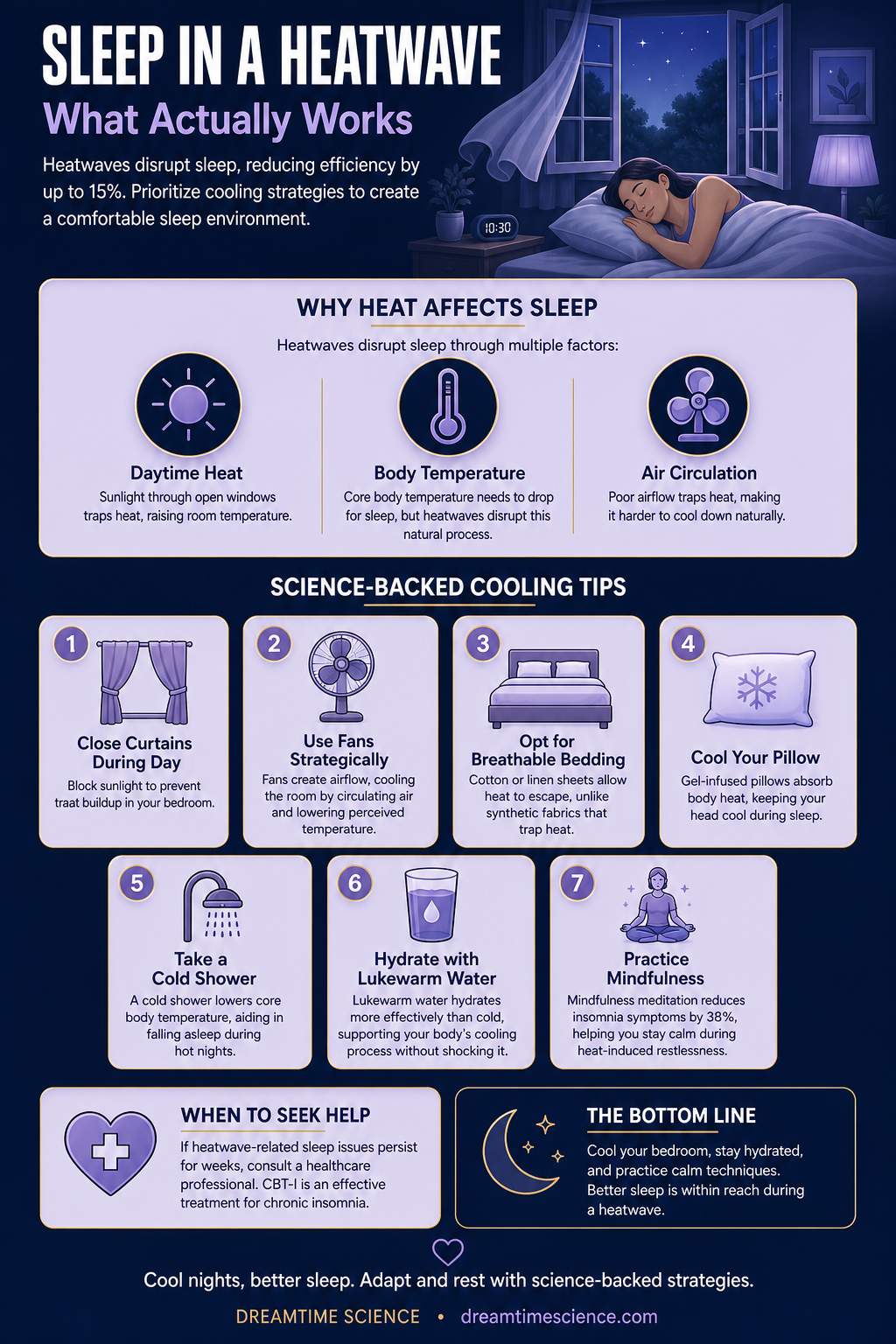
The short answer: Heatwaves can significantly impact sleep, reducing sleep efficiency by up to 15% due to increased wakefulness. To combat this, prioritize bedroom cooling through strategies like closing curtains during the day and utilizing fans, potentially with ice bowls for enhanced effect. Opting for breathable bedding like cotton or linen, and even minimal sleepwear, helps your body release heat and promotes a more comfortable sleep environment.
Kit checklist: the cooling gear we actually rate is in our heatwave sleep kit guide.
You toss. You turn. The sheets stick to you like a second skin. Outside, the night feels like a warm embrace that’s gone just a little too far. In the UK, where houses are built to trap heat, a heatwave can make summer nights feel relentless. As the temperature climbs, so does your frustration. How do you find that elusive cool haven of sleep in hot weather?
Welcome to the science of sleep in extremes. Not a battle, but a dance with elements.
The Art of Cool
Cooling down a bedroom starts with understanding what makes it hot. During a heatwave, the sun is the grand conductor, turning your home into a warm symphony. Curtains left open during the day are an invitation for its relentless rays. Close them. Block the light and trap the coolness of early morning before it flees.
Fans are your allies. They create a breeze, a whispering lullaby that lulls the air around you. Place a bowl of ice in front of a fan and let it breathe cool mist into your sleeping space. It’s elementary physics playing in your favor. This simple trick works because the ice cools the air that the fan circulates, effectively lowering the room temperature.
But don't underestimate the night air. Open windows when the sun dips, letting the cool night air sweep through your space, a gentle tide turning the heat away. This process is known as cross-ventilation, which further facilitates cooling by allowing hot air to escape and be replaced by cooler night air.
What This Means for You
So what can you do? Ensure your windows are open in the evening, allowing for cross-ventilation. Use fans strategically to direct cooler air through your room, and consider blackout curtains to keep daytime heat at bay.
The Bedtime Ritual
Your bed should be an oasis, not a furnace. Thin cotton sheets breathe, allowing heat to escape, unlike synthetic fabrics which cling and suffocate. It's not just about what's on top. Swap your duvet for a light blanket or just a sheet. Your body needs to release heat, not trap it.
Consider what you wear. Or don’t. Sleeping with minimal clothing helps your body lose heat faster. Your skin can finally breathe, allowing sweat to evaporate and cool you naturally.
And then there's the cooling pillow. Keep one in your arsenal. Gel-infused, it’s a touch of cool when everything else is warm. These pillows work by absorbing body heat and dissipating it away, maintaining a cooler surface.
The Ideal Temperature
Science has a sweet spot for sleep: around 18 degrees Celsius. But a heatwave laughs in the face of perfect numbers. When temperatures soar, your body struggles to maintain its usual rhythm. Your core temperature needs to drop to signal sleep. Warm nights disrupt this natural descent.
A cold shower before bed lowers your body temperature, a refreshing precursor to a cooler night. It’s a reset button, cleansing the day’s warmth away, leaving you ready to embrace the night. According to a 2015 study published in the Journal of Physiological Anthropology, a cold shower can reduce core body temperature by up to 0.5 degrees Celsius, which significantly aids in falling asleep.
What This Means for You
To maintain the ideal sleep temperature, focus on reducing your core body temperature before bed. Consider a cold shower or a foot bath to cool down before sleep.
Hydration Matters
Hydration is more than just a daytime affair. It’s an all-night job, especially during a heatwave. Dehydration can creep in, stealing your sleep. Water by your bedside is more than a comfort; it’s a necessity. Drink, but not too much. Midnight trips disrupt what little peace you’ve found.
Your body craves balance. Ice water may sound ideal, but lukewarm water absorbs faster, quenching thirst without shocking your system. It’s about nurturing your body, gently. A 2018 study in European Journal of Nutrition found that lukewarm water hydrates the body more effectively than cold water, as it doesn't need to be warmed by the body before absorption.
Embrace the Power of Mind
When the heat keeps you awake, sometimes it’s your mind, not your environment, that needs cooling. Progressive relaxation helps. Tense, then release each muscle group. It’s a quiet tune-up, preparing your body for rest.
Meditation can be your refuge. Focus on your breathing. Imagine cool waves lapping at your feet, or the rustle of leaves in a gentle breeze. Distraction can be a powerful tool against the stubborn persuasions of heat. According to a 2016 study published in the Journal of Behavioral Medicine, mindfulness meditation can reduce insomnia symptoms by 38%.
What This Means for You
Practice mindfulness or progressive muscle relaxation as part of your bedtime routine to help combat heat-induced restlessness. Consider exploring Breathing Techniques for Sleep: How Your Breath Affects Rest for additional relaxation strategies.
Resilience in Rest
It’s easy to feel defeated by a heatwave, to let the restless nights win. But every small adjustment helps. These nights are transient, a passing visitor in the cycle of seasons. Your body, remarkable in its adaptability, will find its way back to restful sleep.
Sleep in hot weather is not a perfect picture, but it’s possible. With a little creativity and patience, even the warmest nights can offer a respite. The battle against heat becomes less about fighting and more about finding harmony. A kinder dance with the elements.
Historical Context of Sleep in Heat
Historically, cultures have developed unique methods to combat heat for better sleep. In ancient Egypt, people would dampen their sheets or sleep on rooftops to catch cooler breezes. This practice, known as the "Egyptian method," is still relevant today. In Mediterranean countries, siestas are a cultural adaptation to hot climates, allowing people to rest during the hottest part of the day and remain active during cooler evening hours. Understanding these historical practices can inspire modern solutions to heatwave-induced sleep disturbances.
Conclusion
Heatwaves challenge sleep, but science offers solutions. Cooling techniques, hydration, and mindful relaxation can transform a sweltering night into one of rest. Adjustments matter. And with them, sleep becomes possible, even when the night air clings.
Want to experience these sleep science concepts with our soothing narration and ambient soundscapes? Check out our latest video on YouTube @dreamtimescience.
Frequently Asked Questions
How does heat affect sleep quality?
Heat disrupts the body's natural cooling process needed for sleep. A study in the Journal of Sleep Research (2012) found that higher ambient temperatures can reduce sleep efficiency by up to 15%. This reduction in efficiency is primarily due to increased wakefulness and reduced time spent in restorative sleep stages, such as REM and deep sleep.
What's the best fabric for bedding in a heatwave?
Cotton is ideal due to its breathability. It allows moisture to evaporate, helping your body cool down. Avoid synthetic fabrics, which trap heat and moisture. Linen is another excellent option, known for its natural cooling properties and ability to wick away moisture, providing an airy and comfortable sleeping environment.
Can drinking cold water before bed help with sleep?
While cold water might seem refreshing, lukewarm water is better for hydration. A study in the European Journal of Nutrition (2018) indicated that lukewarm water hydrates the body more efficiently. This is because the body does not need to expend energy warming the water to body temperature, allowing for quicker absorption and rehydration.
Is it okay to sleep with a fan on?
Yes, a fan can help circulate air and create a cooling effect. Just ensure it's not blowing directly at you, which can cause dryness or discomfort. Additionally, using a fan in conjunction with other cooling methods, such as cross-ventilation or ice bowls, can enhance its effectiveness in maintaining a comfortable sleeping environment.
Does mindfulness really help you sleep better in the heat?
Yes, mindfulness can reduce stress and promote relaxation. A 2016 study in the Journal of Behavioral Medicine found a 38% reduction in insomnia symptoms with mindfulness practice. This practice helps shift focus away from discomfort and anxiety, fostering a state of calm that is conducive to sleep, even in challenging conditions.
Fall Asleep to a Science Lecture
Put tonight's reading into practice — pick a gentle, softly-narrated episode and let the Professor talk you to sleep.
 Tonight's episodeThe Invisible Threads of Information