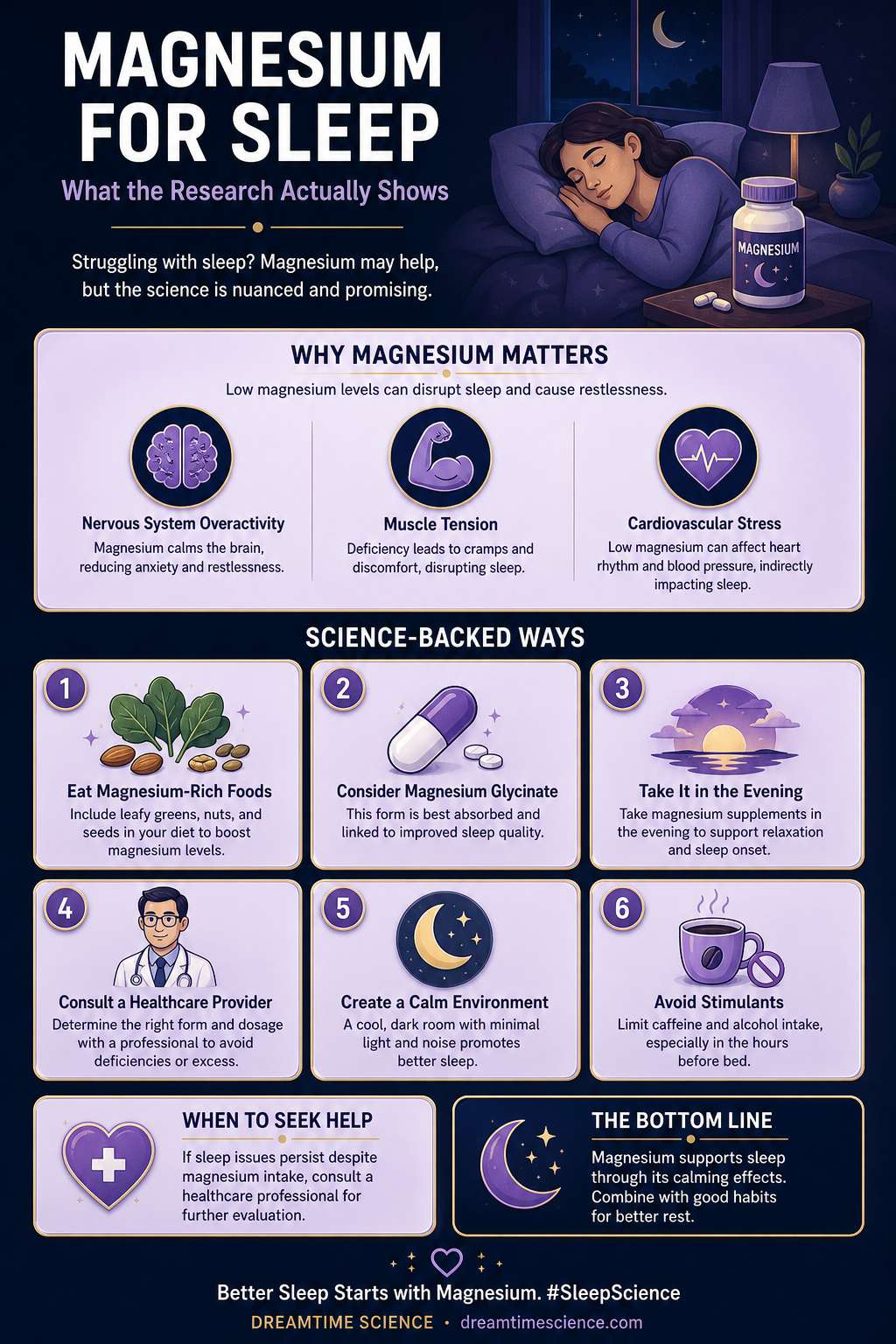
Magnesium is an essential mineral involved in hundreds of bodily processes, and emerging research indicates a significant role in regulating sleep. Supplementation may improve sleep quality, particularly in individuals with deficiencies, but it is not a universal solution and should be considered within a broader context of sleep hygiene and lifestyle factors [1].
The Role of Magnesium in the Body
Magnesium participates in over 300 enzymatic reactions, influencing muscle and nerve function, blood sugar control, and blood pressure regulation. It's critically involved in the production of adenosine triphosphate (ATP), the primary energy source for cells. Beyond these core functions, magnesium acts as a neuromodulator, impacting the activity of neurotransmitters and, consequently, supporting the function of the nervous system. It is this activity that is central to its observed effects on sleep.
Magnesium and Sleep: The Connection
Magnesium influences sleep through multiple pathways. It plays a role in the regulation of melatonin, a hormone crucial for the sleep-wake cycle [1]. Furthermore, magnesium modulates gamma-aminobutyric acid (GABA), a neurotransmitter that promotes relaxation and reduces neuronal excitability. GABAergic neurotransmission is directly linked to sleep initiation and maintenance. Disruptions in magnesium levels can contribute to insomnia, characterized by difficulty falling asleep or staying asleep, and restless leg syndrome (RLS), a neurological condition that often interferes with sleep.
Magnesium Deficiency and Insomnia
Magnesium deficiency is often correlated with poorer sleep quality and increased prevalence of insomnia. Lower magnesium levels can exacerbate neuronal excitability, contributing to anxiety and stress, both known impediments to restful sleep. Individuals with chronic stress or certain medical conditions may be particularly prone to magnesium deficiency, increasing their susceptibility to sleep disturbances. Restoring adequate magnesium levels may alleviate these symptoms, although the relationship is complex and often multifactorial.
What Forms of Magnesium are Best for Sleep?
Several forms of magnesium are available as supplements, each with varying levels of bioavailability and potential side effects. Magnesium glycinate is frequently recommended for its high absorption rate and gentle impact on the gastrointestinal system. Glycine, an amino acid bound to magnesium in this form, independently possesses calming properties and can further enhance relaxation [1]. Magnesium citrate is another well-absorbed form, though it may have a laxative effect at higher doses. Magnesium oxide is less readily absorbed and more likely to cause digestive upset, making it a less optimal choice for sleep support.
Recent Research Insights
Studies have increasingly focused on the precise mechanisms by which magnesium impacts sleep. Research indicates that magnesium interacts with the hypothalamic-pituitary-adrenal (HPA) axis, the body’s primary stress response system. By modulating HPA axis activity, magnesium can help reduce cortisol levels, a hormone released in response to stress that can interfere with sleep [1]. A 2019 study in Nutrients further investigated magnesium’s impact on GABAergic neurotransmission, confirming its role in inducing sleep and promoting relaxation.
Practical Steps and Dosage Considerations
The recommended daily allowance (RDA) of magnesium varies based on age and sex, typically ranging from 310-420 mg per day. Dietary sources include leafy green vegetables (spinach, kale), nuts and seeds (almonds, pumpkin seeds), legumes, and whole grains. Supplementation can be considered to address deficiencies, but it’s crucial to consult a healthcare provider to determine an appropriate dosage. Excessive magnesium intake can lead to diarrhea, nausea, and, in rare cases, more severe complications like irregular heartbeat or low blood pressure.
The Bottom Line
Magnesium is a crucial mineral that demonstrably participates in sleep regulation. While it is not a standalone cure for insomnia, adequate magnesium levels are vital for overall sleep health, especially for those experiencing deficiency-related sleep disturbances. Supplementation, particularly with magnesium glycinate, may improve sleep quality, but should be undertaken with the guidance of a healthcare professional and integrated into a comprehensive approach to sleep hygiene.
References
- Kodentsova VM, Zhilinskaya NV, Salagay OO et al. (2022). [Specialized vitamin-mineral supplements for persons in extreme conditions].. Voprosy pitaniia https://doi.org/10.33029/0042-8833-2022-91-6-6-16
Frequently Asked Questions
Does magnesium help with insomnia?
Yes, studies suggest magnesium supplementation can improve sleep quality in individuals with low magnesium levels. It is believed to work by regulating melatonin production and promoting relaxation through GABAergic neurotransmission [1]. However, it is unlikely to be effective in cases where insomnia is not related to magnesium deficiency.
What foods are high in magnesium?
Leafy green vegetables (spinach, kale, collard greens), nuts (almonds, cashews), seeds (pumpkin seeds, chia seeds), whole grains (brown rice, quinoa), legumes (black beans, lentils), and dark chocolate are excellent sources of magnesium. Incorporating these foods into your diet is a natural way to boost your magnesium intake.
Can magnesium supplements cause side effects?
While generally safe, magnesium supplements can cause digestive side effects like diarrhea, nausea, and abdominal cramping, especially at higher doses. These effects are more common with forms like magnesium oxide. Magnesium glycinate is often better tolerated. Individuals with kidney problems should consult a doctor before taking magnesium supplements.
How does magnesium interact with other sleep aids?
Magnesium can have a synergistic effect with other sleep aids like melatonin or L-theanine. It is important to consult a physician to ensure safe and effective integration with other products. Combining magnesium with relaxation techniques like deep breathing or meditation can amplify its calming effects.
Is magnesium glycinate the best form for sleep?
Magnesium glycinate is often considered the best form for sleep due to its high bioavailability, gentle gastrointestinal tolerance, and additional benefits from glycine. Glycine is an amino acid that independently possesses calming effects, potentially further enhancing relaxation and sleep quality [1].
Fall Asleep to a Science Lecture
Put tonight's reading into practice — pick a gentle, softly-narrated episode and let the Professor talk you to sleep.
 Tonight's episodeUnveiling the Mind's Labyrinth