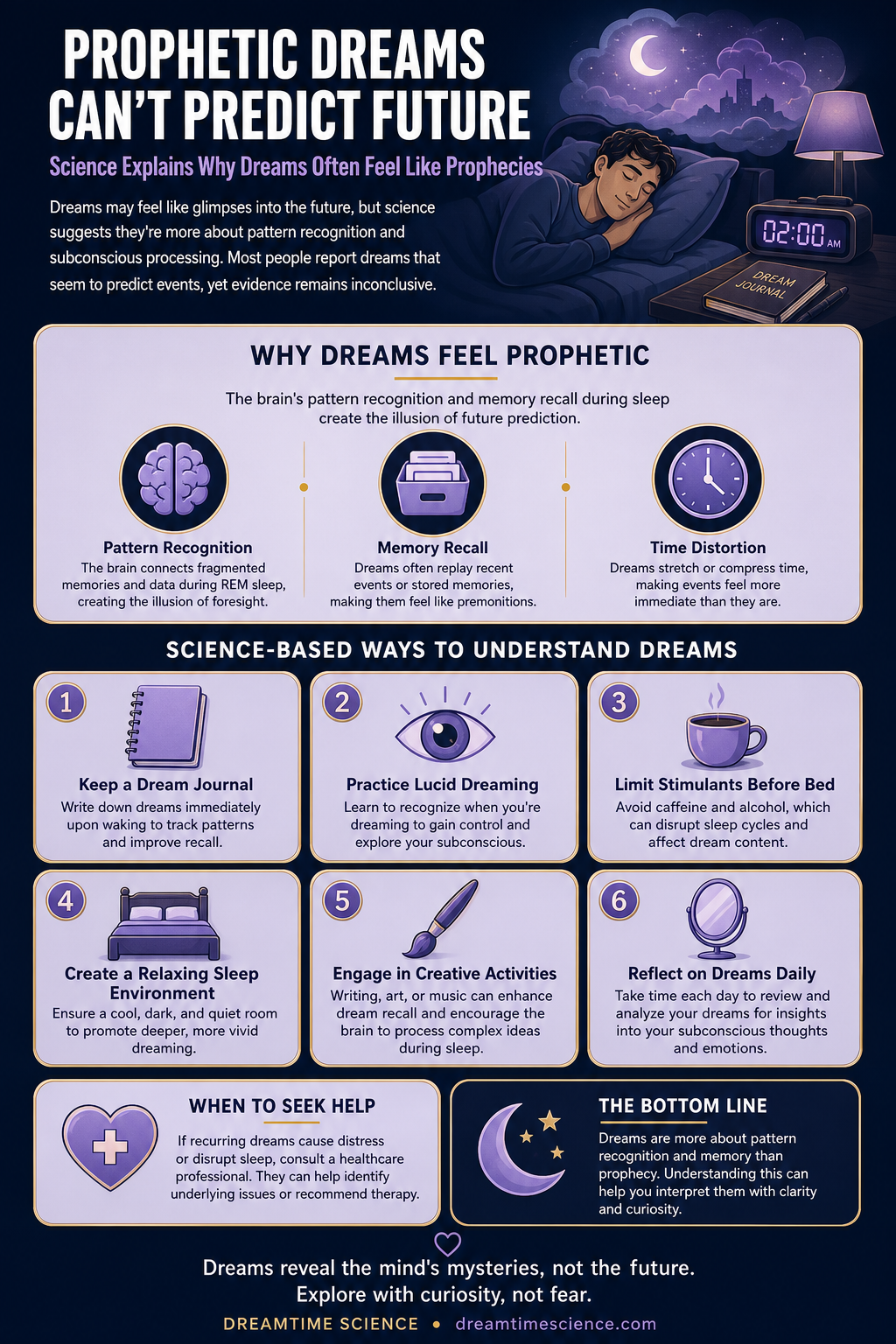
The short answer: While dreams can feel incredibly meaningful, scientific evidence doesn't confirm they predict the future. Instead, the brain may be subconsciously recognizing patterns and connecting disparate pieces of information, a process enhanced during REM sleep. Approximately 67% of people report experiencing dreams they believe predicted future events, suggesting a widespread belief in their potential, though it’s likely influenced by confirmation bias and memory selectivity.
Ever woken up with a vivid recollection of a dream and thought, "Was that a glimpse into the future?" The concept that our nightly brainwaves might offer us a sneak peek into what's to come is captivating. Prophetic dreams, they call them. Dreams that predict the future, offering premonitions wrapped in the hazy logic of sleep. But is there any truth to it, or is it just the mind on a nighttime wander?
The Mystery of Premonition Dreams
Dreams are the mind's canvas, painting pictures with fragments of our days, our thoughts, our fears. Sometimes, these nocturnal narratives seem eerily prescient. You dream of an old friend, only to bump into them the next day. Or maybe you envision a setting, a conversation, that feels all too familiar when it unfolds in reality. Coincidence? Maybe. But perhaps there's more.
Our subconscious mind is a powerful, enigmatic thing. It's constantly gathering, sorting, and storing information. Some scientists argue that what we perceive as prophetic dreams might just be our brain connecting the dots subconsciously before our waking mind catches up. It's not prophecy, they say, but pattern recognition.
But then, what about those dreams that defy logic, predicting events we couldn't possibly foresee? That's where the mystery deepens. According to a 2014 study published in the International Journal of Dream Research, up to 67% of people have reported experiencing dreams that they believed predicted future events. This suggests a widespread belief in the potential of prophetic dreams, even if the scientific evidence remains inconclusive.
A Dance of Time and Mind
Time in dreams is a slippery concept. In the dreamscape, past, present, and future blend into a tangled web. Neuroscientists suggest that our brain can sometimes process information in a non-linear fashion during sleep. It's as if dreams allow the mind to rehearse scenarios, consider possibilities, and explore outcomes without the constraints of time.
This temporal flexibility might explain why some dreams feel prophetic. They're like simulations, testing different futures. But whether these snippets are genuine prophecies or just the mind's experiments is still up for debate. A 2009 study in Nature Reviews Neuroscience posits that our brain's ability to create complex, non-linear narratives during REM sleep may contribute to the sensation of experiencing prophetic dreams.
What This Means for You
If you want to harness the power of your dreams, start by keeping a dream journal. Write down your dreams as soon as you wake up. This practice not only helps you remember your dreams more vividly but may also reveal patterns that your subconscious is trying to communicate. As we explored in Dreams and Problem-Solving: Can Your Brain Solve Problems While You Sleep?, understanding these patterns can be a powerful tool for personal insight and growth.
The Science of Dream Prophecy
While science hasn't definitively proven that dreams can predict the future, it hasn't ruled it out either. The brain is a complex organ, and dreams are one of its least understood functions. Researchers have explored the role of the brain's frontal cortex and its involvement in dreaming. This area, responsible for decision-making and problem-solving, might be at work even as we sleep, piecing together predictive scenarios.
Moreover, dreams occur during REM sleep, a phase when our brain activity closely resembles that of wakefulness. It's a hotbed of activity, a cauldron of creativity, and perhaps, foresight. But can it truly breach the barriers of time? The jury is still out.
- REM Sleep's Role: REM sleep, where most dreaming occurs, is associated with increased brain activity similar to when we're awake. This stage is crucial for memory consolidation, as noted in a 2013 study in Nature Neuroscience which found that REM sleep enhances the brain's ability to integrate and reorganize information.
- Pattern Recognition: The brain's ability to recognize patterns and predict outcomes is a well-documented phenomenon. A 2018 study in the Journal of Neuroscience showed that the brain's predictive capabilities are enhanced during sleep, suggesting that dreams might be a byproduct of this process.
What This Means for You
Understanding the science behind dreaming can help demystify the experience. If you're curious about the potential of dreams to predict the future, consider exploring the intersection of sleep and creativity. By embracing techniques like lucid dreaming, as discussed in Lucid Dreaming: Can You Really Control Your Dreams? (With Science), you can consciously engage with your dreams and potentially unlock new insights.
Patterns or Predictions?
Human beings are natural pattern seekers. We look for meaning, for connections, even in chaos. It's why we see shapes in clouds and why prophetic dreams captivate us. When a dream seems to predict the future, it feels like a validation of our intuition, our ability to see beyond the now.
But sometimes, it's just our mind making connections after the fact. It's what psychologists call confirmation bias. When one dream comes true, we remember it vividly, while countless others fade into oblivion. Our memory is selective, conveniently aligning our dreams with reality.
Yet, there are dream tales that defy explanation—premonitions so striking that they linger. Whether they are true glimpses into the future or just extraordinary coincidences, they remind us of the brain's untapped potential.
The Comfort in Dreams
More than anything, dreams are stories we tell ourselves. Whether prophetic or not, they offer comfort, a space where our fears and hopes play out safely. We wake up, reassured by the distance between dream and reality, yet intrigued by the possibility that dreams might hold more than mere imagination.
So, next time a dream leaves you pondering its prophetic potential, embrace the mystery. Enjoy the dance of dreams and reality. Hold onto the wonder, the possibility, without needing to pin it down.
For as much as science seeks to understand, some things are best left to the realm of dreams.
Conclusion
Dreams remain one of the most enigmatic aspects of sleep, offering a blend of mystery and potential insight. Whether prophetic or not, they reflect the brain's intricate workings and its ability to weave together past experiences and future possibilities. Embrace the mystery, and let your dreams guide you through the night.
Want to experience these sleep science concepts with our soothing narration and ambient soundscapes? Check out our latest video on YouTube @dreamtimescience.
Frequently Asked Questions
Can dreams really predict the future?
While there's no scientific consensus that dreams can predict the future, many people report experiencing prophetic dreams. These dreams might be attributed to the brain's ability to recognize patterns and make predictions, even subconsciously.
Why do some dreams feel so real?
Dreams occur during REM sleep, a stage where brain activity closely resembles that of wakefulness. This heightened brain activity can make dreams feel vivid and lifelike, blurring the line between reality and imagination.
How can I improve my dream recall?
Keeping a dream journal is a proven way to enhance dream recall. Write down your dreams as soon as you wake up, and over time, you'll notice an improvement in how much detail you can remember.
What is confirmation bias, and how does it relate to dreams?
Confirmation bias is the tendency to remember events that confirm our beliefs while ignoring those that don't. In the context of dreams, we tend to remember dreams that seem prophetic while forgetting those that don't align with reality.
Are there any benefits to prophetic dreams?
Even if dreams aren't truly prophetic, they can still offer valuable insights into our subconscious. By analyzing dreams, we can gain a deeper understanding of our thoughts, fears, and desires, potentially leading to personal growth.
Fall Asleep to a Science Lecture
Put tonight's reading into practice — pick a gentle, softly-narrated episode and let the Professor talk you to sleep.
 Tonight's episodeUnveiling the Mind's Labyrinth