
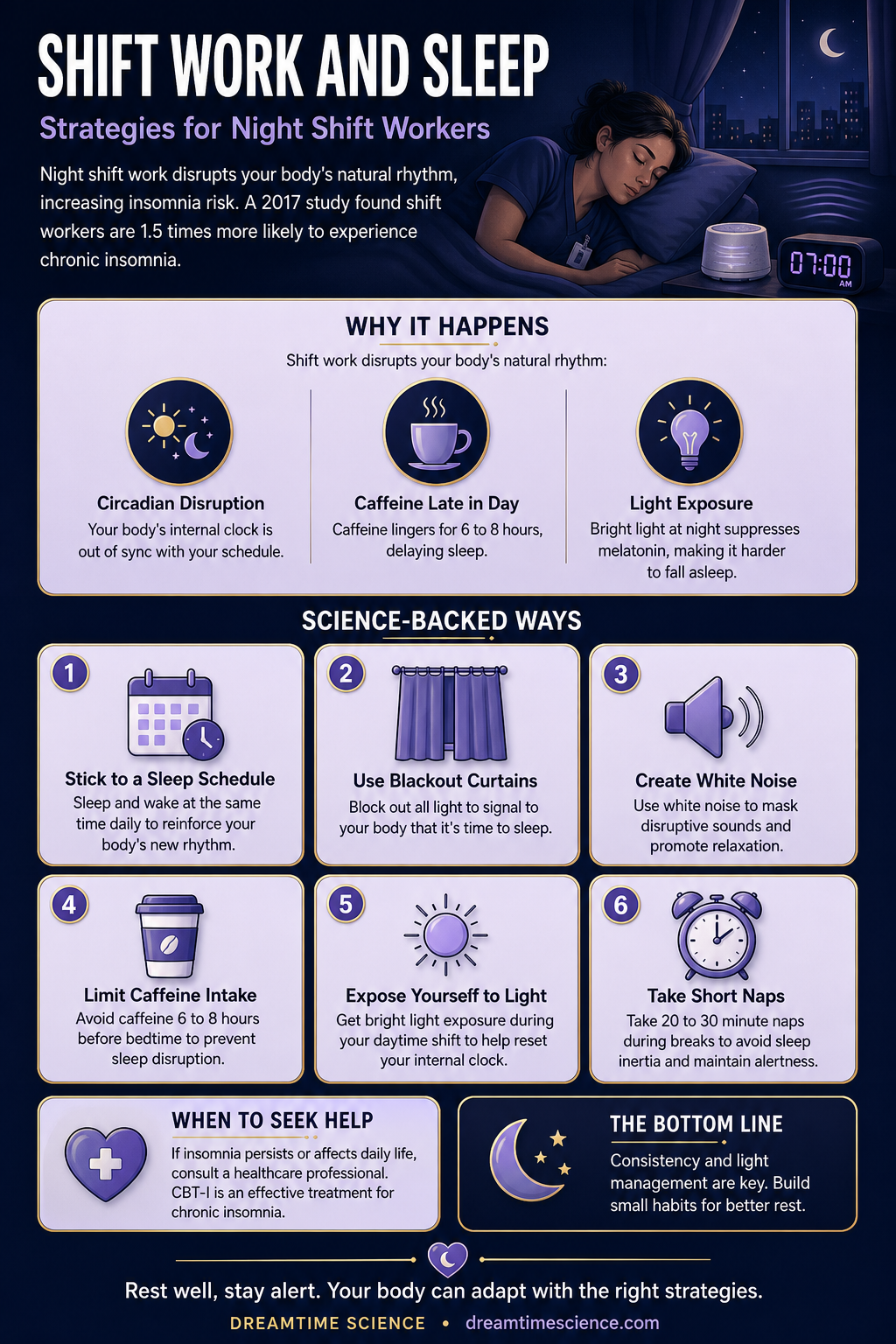
The short answer: Night shift work significantly disrupts the body's natural circadian rhythm, leading to challenges with sleep and alertness. A 2017 study found shift workers are 1.5 times more likely to experience chronic insomnia compared to those with daytime schedules. Creating a consistent sleep routine, utilizing blackout curtains and white noise, and strategically using light exposure can help realign the body's internal clock and improve sleep quality.
You're wide awake as the world dreams on. The clock ticks into the small hours, and you're at your post, nursing a coffee, perhaps wondering how you ended up sharing your waking hours with the moon instead of the sun. Night shift work can feel like an alternate universe, one where the rules of sleep are rewritten.
But it doesn't have to be a sleepless one.
Key takeaways
- **Consistent sleep schedules**: Maintain a regular sleep-wake time, even on days off, to stabilize your internal clock.
- **Strategic light exposure**: Use bright light during shifts and darkness at home to reinforce your body’s perception of time.
- **Nutritious meal planning**: Prioritize balanced meals throughout your shift to sustain energy and minimize sleep disruption.
- **Creating a dark sleep environment**: Blackout curtains and white noise machines can create a sleep-conducive sanctuary.
The Silent Dance of the Circadian Rhythm
Inside you, a clock ticks to the rhythm of the sun. This circadian rhythm, your body's own internal timekeeper, regulates everything from sleep patterns to metabolism. It wants you to rise with the dawn and rest as the dusk settles. But shift work demands a renegotiation of this natural contract.
Your nights become days, your days a hazy twilight. The challenge: to convince your body that darkness is the new light. This is where the real battle begins, one that pits the demands of modern life against millennia of evolution. As we explored in Circadian Rhythms 101: How Your Body's Internal Clock Controls Sleep, this internal conductor orchestrates your sleep and wakefulness, making any disruption feel like instant jet lag.
Yet, victory is possible.
What This Means for You
To realign your internal clock, consider the timing of your sleep and wakefulness. Aim to sleep and wake at the same time daily, even on days off, to reinforce your body's new rhythm. This consistency can help reduce the "jet lag" feeling associated with irregular sleep patterns.
Night Shift Insomnia: The Uninvited Guest
When the world sleeps, insomnia stays wide awake. It's a familiar foe for many who navigate the night shift. The irony? Your body's natural sleep-wake cycle, designed to lull you into rest, now conspires against you.
Insomnia doesn't care about your schedule.
It lurks in the shadows, waiting to pounce as you lie there, willing sleep to come. The struggle isn't just with sleep; it's with the very fabric of your nights and days, a battle for rest in a world turned upside down. A 2017 study in the Journal of Clinical Sleep Medicine found that shift workers are 1.5 times more likely to suffer from chronic insomnia compared to their daytime counterparts. This struggle highlights the importance of proactive strategies to manage sleep.
Crafting Your Night Shift Routine
So what can you do when your body and the clock are speaking different languages? Create a script they both understand. A robust and consistent sleep routine is your best ally in this nocturnal dance.
Routine is your anchor in the storm.
Think of rituals that signal bedtime, even if the sun is shining. Consider blackout curtains to shut out the day, a cool, dark sanctuary for sleep. White noise to drown out the world beyond your walls. And a sleep schedule you stick to, come rain or shine.
Find your rhythm in the chaos.
- Blackout curtains: Block sunlight completely to help cue your body that it's time to sleep.
- White noise machine: Drown out daytime distractions and create a consistent sonic environment.
- Cooler room temperature: Aim for 60-67°F (15-19°C) to facilitate better sleep.
What This Means for You
Implementing these tools can help shift your body's perception of time. By creating a sleep-conducive environment, you communicate to your body that it's time to rest, regardless of the actual time of day.
The Power of Light and Darkness
Light is your cue; darkness, your cloak. Embrace the power they wield over your sleep. As you end your shift, sunglasses can shield you from morning's glare, telling your body it's time to wind down. At home, dim the lights, coaxing melatonin to take the stage.
Melatonin, your body's sleep hormone, thrives in the dark.
And when night falls and work begins anew, expose yourself to bright light. It mimics daylight, nudging your body into alertness, convincing it that it's time to rise and shine, even if it's midnight. According to a 2016 study in the Chronobiology International, exposure to bright light during night shifts can improve alertness and cognitive performance by 30%.
Light is your ally, but only when used wisely.
Nourishing the Night Owl Within
Fuel is essential for any journey, and your body's no different. Nourishing it with the right foods can make the night shift a little less daunting. Focus on meals that sustain, rather than spike, your energy levels.
Avoid the siren call of sugar and caffeine.
Opt for whole grains, lean proteins, foods that burn slow and steady, keeping you energized without the crash. Stay hydrated, but not so much that you're waking every hour. Balance is key, even in nutrition. As discussed in How Caffeine Affects Your Sleep (And When to Stop Drinking It), timing your caffeine intake can significantly impact your sleep quality.
What This Means for You
Plan your meals to align with your energy needs throughout your shift. Eating balanced meals can help maintain energy levels and prevent sleep disruption later. This not only supports your physical health but also aligns with your body's natural rhythms.
Conclusion
Shift work doesn't have to be a struggle against your own biology. With the right strategies, you can find harmony between the demands of your job and your body's natural rhythms. It's about making peace with the night, crafting a life that respects both the clock and the calendar of your own making.
Rest assured, the night is yours to tame.
Want to experience these sleep science concepts with our soothing narration and ambient soundscapes? Check out our latest video on YouTube @dreamtimescience.
Frequently Asked Questions
How can I manage sleepiness during night shifts?
Strategically timed naps and exposure to bright light during the night can boost alertness. A 2009 study in the Journal of Sleep Research found that a short nap of 15-20 minutes can significantly improve cognitive performance and alertness during night shifts.
What are the health risks of long-term night shift work?
Long-term night shift work is associated with increased risks of cardiovascular disease, obesity, and metabolic disorders. A 2015 study in the American Journal of Preventive Medicine reported that shift workers have a 23% higher risk of heart disease compared to non-shift workers.
Can shift work affect mental health?
Yes, shift work can impact mental health. It has been linked to higher rates of depression and anxiety. According to a 2018 study in Occupational and Environmental Medicine, shift workers are 33% more likely to report symptoms of depression.
How does shift work influence social life?
Shift work can strain social relationships due to misaligned schedules with family and friends. Engaging in regular social activities during your free time can help mitigate this impact.
Are there any long-term strategies for adapting to shift work?
Developing a consistent sleep routine and maintaining a healthy lifestyle are crucial. Cognitive Behavioral Therapy for Insomnia (CBT-I) techniques, as explored in Cognitive Behavioral Therapy for Insomnia (CBT-I): Evidence-Based Sleep Fixes, can also be effective in managing sleep issues associated with shift work.
Fall Asleep to a Science Lecture
Put tonight's reading into practice — pick a gentle, softly-narrated episode and let the Professor talk you to sleep.
 Tonight's episodeDNA's Silent Blueprint: Uncovering Life’s Deepest Secrets
Related articles

Why Naps Backfire and When They Actually Help
Naps backfire when they last too long or happen too late. Naps exceeding 30 minutes enter deep sleep, causing grogginess upon waking. Napping after 3pm reduces…

Does Melatonin Actually Work? What Science Says About This Popular Supplement
Melatonin is a timing signal, not a sedative. It works best for circadian misalignment such as jet lag and delayed sleep phase, where it can shift sleep onset by…

Chronotypes Explained: Are You a Morning Person or Night Owl?
Your chronotype, or natural sleep preference, is influenced by genetics and impacts when you feel most alert. A 2019 study in Nature Communications found genetic…