
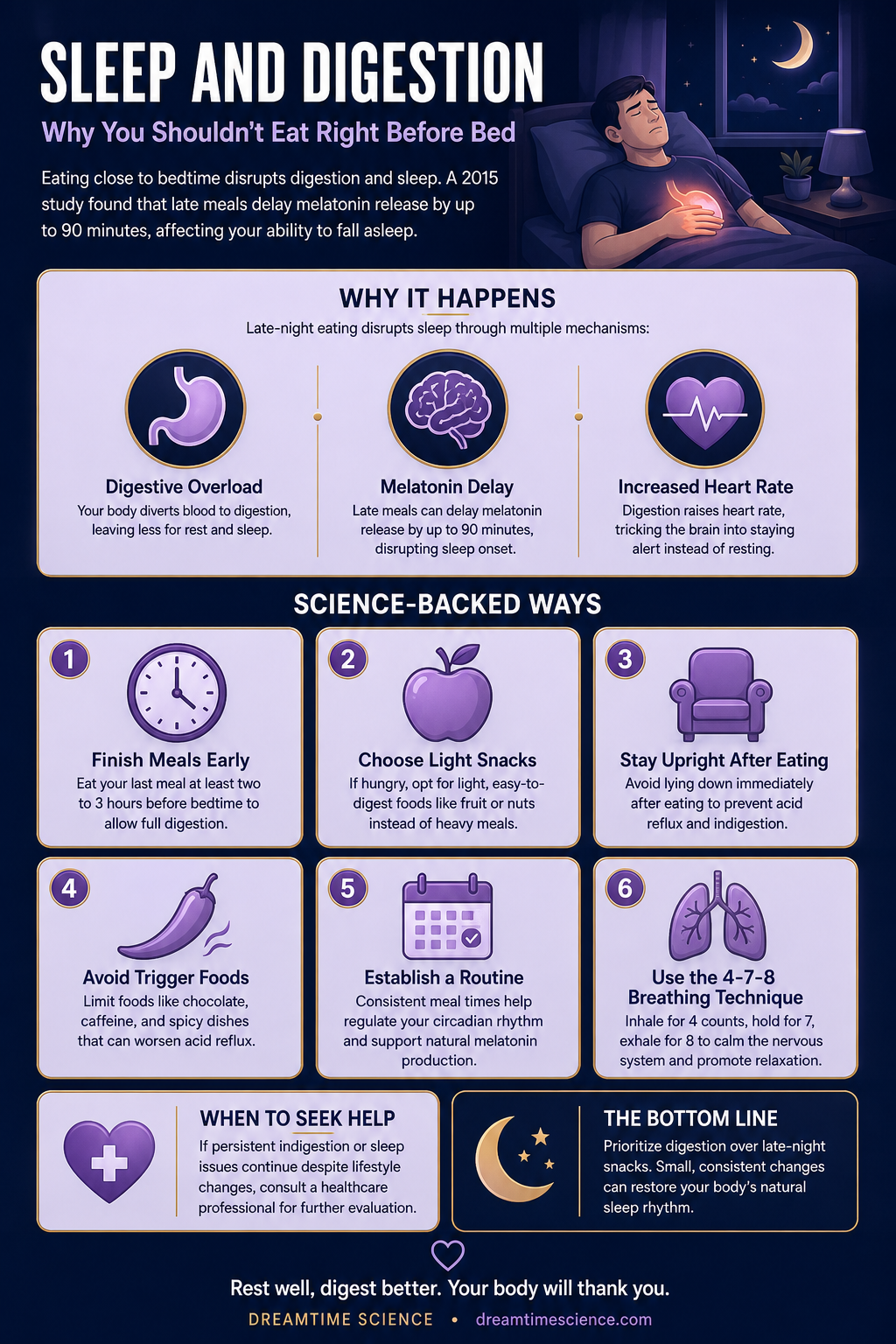
The short answer: Eating a meal too close to bedtime forces your body to digest while it should be resting, potentially leading to restlessness and delayed sleep. A 2015 study found that eating just before sleep can delay melatonin release by up to 90 minutes. To improve sleep, aim to finish your last meal at least two to three hours before bedtime, allowing your body to properly digest and your circadian rhythm to regulate sleep.
Picture this: It's late. You're winding down. The day has been long, but your stomach grumbles, a subtle rebellion against the clock. You reach for a late-night snack, something to silence the hunger and soothe your senses. But as comforting as that bite might be, there's a hidden cost lurking in the shadows of sleep.
Yes, eating before bed can disrupt your sleep.
It's a connection often overlooked, but as the night settles in, your body faces a choice: digest or rest. How do these late-night munchies really tinker with your slumber?
Key takeaways
- Late-night eating can disrupt your body’s natural sleep-wake cycle.
- Eating too close to bedtime can delay the release of melatonin, a key sleep hormone.
- Indigestion from late-night meals can lead to discomfort and fractured sleep cycles.
- A consistent eating schedule can help reinforce your body’s internal clock.
- Blood flow shifts during digestion, potentially depriving the brain of needed signals for sleep.
The Midnight Snack Dilemma
Your body loves a routine. It craves predictability. When you eat before bed, it’s like sending a mixed signal at the worst possible time. You ask your body to power up digestion just as it's gearing down for sleep. This tug-of-war between food processing and rest can leave you staring at the ceiling, wondering when sleep will finally come.
Here's why: digestion requires energy.
It’s not just your stomach at work. Your entire digestive system kicks into gear, turning food into fuel. Late-night eating can confuse your body, keeping it alert and active when it should be winding down. What happens next? You might find yourself trapped in a cycle of restlessness.
What This Means for You
Start by observing your eating habits. Aim to have your last meal at least two to three hours before bedtime. This gives your body adequate time to digest, allowing your natural circadian rhythm to take the lead without competition from your digestive system. If hunger strikes late at night, opt for something light and easy to digest, like a small piece of fruit or a handful of nuts.
Unraveling the Science
The science of sleep is like a carefully choreographed dance. It’s all about timing. Your circadian rhythm, the internal clock nestled quietly within your brain, orchestrates this dance. It signals your body when to slip into rest mode and when to rise. Eating late acts like a spotlight in a dim theater, shifting focus and throwing off this delicate balance.
But there’s more.
The body’s natural production of melatonin, the hormone steering you toward sleep, can be disrupted by late meals. A 2015 study published in the Journal of Pineal Research found that eating just before sleep can delay melatonin release by up to 90 minutes, which is like creating instant jet lag. If your digestive system is working overtime, your body might delay melatonin release. The result? Sleep evades you, like a shadow flickering just out of reach.
What This Means for Your Sleep
To maintain a healthy rhythm, consider establishing a consistent eating schedule. This helps reinforce your body's internal clock, allowing melatonin to flow naturally and signal the approach of sleep. As we explored in Circadian Rhythms 101, aligning your eating patterns with your sleep schedule can improve overall sleep quality.
The Indigestion Insomnia Loop
Imagine lying in bed, each heartbeat echoing in your ears, your stomach a churning sea. Late-night meals can lead to indigestion, and indigestion is a notorious sleep thief. It’s not just about the food; it’s about what the food does once it crosses the threshold of your lips.
Acid reflux, a common companion of late-night eating, can ignite the chest with discomfort. It’s like trying to sleep on a bed of nails. As you turn restlessly, your sleep cycle gets fractured, and insomnia edges closer, whispering in the dark.
A 2015 study in the American Journal of Gastroenterology reported that individuals who ate within three hours of bedtime were significantly more likely to experience acid reflux, with symptoms peaking around midnight. The brain stays alert, attempting to manage this onslaught, while sleep remains a distant oasis.
Practical Steps to Reduce Indigestion
- Avoid heavy meals: Opt for lighter fare in the evening to reduce the risk of reflux.
- Stay upright after eating: Try not to lie down immediately after meals to help prevent acid from flowing back into the esophagus.
- Consider your triggers: Foods like chocolate, caffeine, and spicy dishes can exacerbate reflux for some people.
What’s Really Happening Inside?
Your body is a constant hum of processes—digestion is just one part. But it’s a demanding guest, especially when uninvited at night. When your stomach is full, blood flow is redirected to aid digestion. This can leave your brain feeling a bit neglected, missing the signals it needs to coax you into dreamland.
And the heart?
It may have to beat harder to support digestion. This elevation can trick your brain into thinking it’s time to be awake, not asleep. These physiological shifts create a symphony of alertness at all the wrong times.
The Sweet Illusion of Comfort
There’s a warmth in late-night eating, a comfort that’s hard to resist. It’s a ritual, a moment of solace before surrendering to the night. But this comfort can be a mirage. The pleasure of a late-night snack is fleeting, while the impact on sleep lingers longer.
It’s a paradox—the very act meant to soothe can become a source of disruption.
As the night deepens, the body seeks rest, not tasks. A quiet, uninterrupted sleep is a reward far richer than any midnight indulgence.
Choosing Rest Over Routines
Sleep hygiene, the practice of creating conditions conducive to good sleep, is about making choices. Choosing rest over routines that hinder it. As tempting as it is to indulge in late-night eating, consider the trade-off. Your body, like a loyal companion, needs time to unwind, to prepare for the journey through dreams.
So when the sun sets and your body signals its need for rest, listen.
Embrace the quiet, the stillness before sleep. Let your digestive system have its respite, allowing your sleep to unfold naturally. In this dance between digestion and rest, let sleep be the one that takes the lead.
Conclusion
Eating right before bed isn't just a late-night habit—it's a sleep disruptor. Your digestive system and your circadian rhythm need harmony to function optimally. By choosing rest and timing your meals wisely, you prioritize sleep's restorative power over fleeting comforts.
Want to experience these sleep science concepts with our soothing narration and ambient soundscapes? Check out our latest video on YouTube @dreamtimescience.
Frequently Asked Questions
Why does eating before bed disrupt sleep?
Eating before bed activates your digestive system, which requires energy and can delay the release of sleep-inducing hormones like melatonin. This keeps the body alert at a time when it should be winding down.
How long before bed should I stop eating?
Aim to finish eating at least two to three hours before bedtime. This gives your body time to digest before you go to sleep, reducing the risk of indigestion and allowing melatonin to be released naturally.
Can certain foods improve sleep quality?
Yes, certain foods like almonds, turkey, and kiwi contain nutrients that promote sleep. For example, a 2011 study in the Asia Pacific Journal of Clinical Nutrition found that kiwifruit consumption improved sleep onset, duration, and efficiency in adults with sleep disturbances.
Does indigestion affect sleep cycles?
Indigestion can lead to fragmented sleep cycles. A 2014 report in Sleep Medicine Reviews highlighted that gastrointestinal discomfort can cause frequent awakenings and reduce overall sleep quality, perpetuating insomnia symptoms.
What are some alternatives to late-night snacking?
If you find yourself hungry before bed, consider a light, sleep-friendly snack like a banana or a small bowl of oatmeal. These options are gentle on the digestive system and less likely to cause discomfort.
Fall Asleep to a Science Lecture
Put tonight's reading into practice — pick a gentle, softly-narrated episode and let the Professor talk you to sleep.
 Tonight's episodeDNA's Silent Blueprint: Uncovering Life’s Deepest Secrets
Related articles

Why You Wake Up Right Before Your Alarm
Picture this: the sky still wearing its nightcap, your room dim with early morning shadows.

A Hot Bath Before Bed: The Strange Science of Warming Up to Cool Down
A hot bath before bed can improve sleep quality by leveraging the body’s natural thermoregulatory processes.

Reading Before Bed: What Books Do to Your Sleepy Brain
You've heard the whispers from the digital realm: "Books are the answer.