
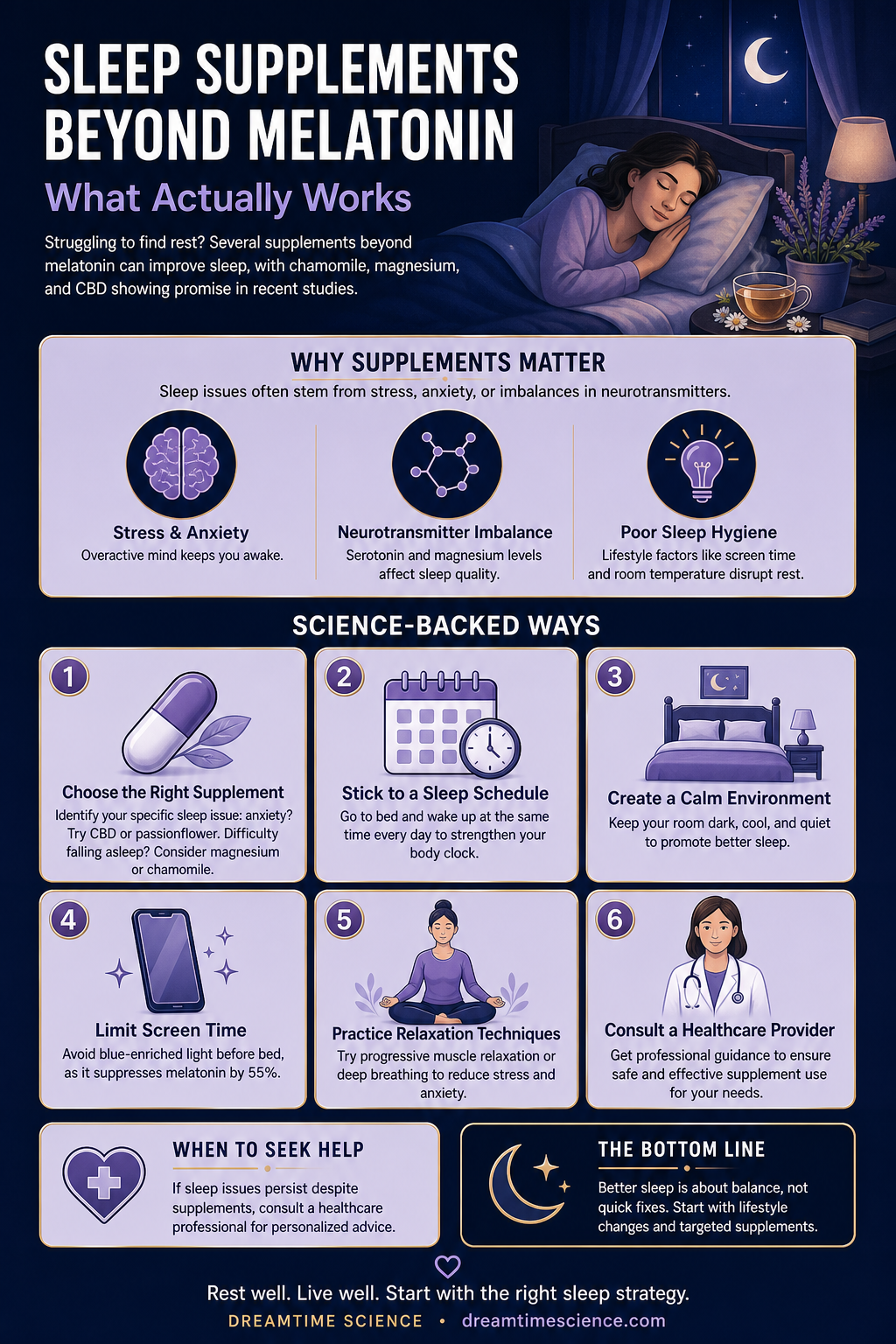
The short answer: Several supplements beyond melatonin can potentially improve sleep. Herbal remedies like valerian root and chamomile have shown promise, with chamomile demonstrated to improve sleep quality after two weeks in a 2016 study. Magnesium supplementation improved sleep in a 2012 study of elderly participants, while CBD was associated with improved sleep scores in 66.7% of participants in a 2019 study.
Sleep is a dance. Some nights it flows like a gentle waltz, each breath in time with the night’s rhythm. Other nights, it’s a clumsy shuffle, one step forward, two steps back. If you’ve ever found yourself lying awake, staring at the ceiling’s dark expanse, you’re not alone. In those moments, the allure of sleep supplements can feel like a siren’s call promising sweet, uninterrupted rest.
But is melatonin the only soloist in this nocturnal symphony? Or are there other sleep supplements capable of conducting a more harmonious sleep cycle?
Key takeaways
- Melatonin primarily signals bedtime to the body, rather than directly inducing sleep. It acts like a dimmer switch, adjusting your circadian rhythm.
- Herbal remedies like valerian root, chamomile, and passionflower can ease tension and anxiety, promoting relaxation.
- Magnesium supports sleep by calming the nervous system and reducing cortisol, a stress hormone.
- CBD may improve sleep by reducing anxiety and pain that can interfere with sleep, rather than directly causing drowsiness.
- Optimizing sleep hygiene—environment and habits—is often more important than supplements in improving sleep quality.
The Melatonin Misconception
Melatonin is more famous than a rock star in the world of sleep aids. It’s known as the “darkness hormone,” turning whispers of rest into full-blown sonatas of slumber. But here’s the kicker: melatonin isn’t a sleeping pill. It’s more of a dimmer switch, gently nudging your circadian rhythm to synchronize with the setting sun.
According to a 2014 study published in the Journal of Clinical Endocrinology & Metabolism, exposure to blue-enriched light can suppress melatonin by 55%. Yet, like any overplayed tune, melatonin’s fame overshadows other promising players. Many reach for melatonin as a quick fix, unaware that its real role is more about timing than sedation. It assists in signaling bedtime to your body—not in knocking you out cold.
For those interested in exploring more about melatonin, Does Melatonin Actually Work? What Science Says About This Popular Supplement offers a deep dive into its mechanisms.
The Herbal Harmonies
Beyond melatonin’s shadow, herbal sleep aids offer their own lullabies. Valerian root, an ancient remedy, whispers promises of relaxation to a restless mind. It doesn’t hit you like a cymbal crash but rather eases tension with the soft strum of a lute.
Chamomile, with its delicate floral notes, quiets frazzled nerves like a warm, familiar hug. Chamomile has been shown to improve sleep quality in a 2016 study published in the Journal of Advanced Nursing, where participants reported better sleep after drinking chamomile tea for two weeks.
And then there’s passionflower, a lesser-known tune in the herbal chorus. It sings a soothing melody to those fraught with anxiety, lulling the brain into a serene state conducive to restful sleep. These natural sleep remedies don’t sedate—they coax.
The Science of Serotonin
Let’s talk serotonin—a neurotransmitter that’s sometimes the maestro behind the scenes. Serotonin levels rise and fall with our mood and can dictate the tempo of our sleep patterns. Enter 5-HTP and L-tryptophan, supplements that serve as precursors to serotonin, crafting a symphony that might just cue the sleep stage you need.
But here’s where the plot thickens: more serotonin isn’t always the answer. The dance of neurotransmitters is a delicate one, and too much can disrupt the harmony. It’s about balance, not bombast. As we explored in Circadian Rhythms 101: How Your Body's Internal Clock Controls Sleep, your body’s internal clock depends on the proper balance of neurotransmitters to maintain healthy sleep cycles.
Magnesium: The Unsung Hero
Magnesium doesn’t seek the spotlight, yet it plays a crucial role in the sleep orchestra. Acting like a backstage tech, it calms the nervous system, helping muscles relax and reducing cortisol—the stress hormone that keeps you tossing and turning.
A 2012 study in the Journal of Research in Medical Sciences found that magnesium supplementation improved sleep quality in elderly participants, highlighting its potential as a natural sleep aid. This mineral often goes unnoticed, quietly ensuring everything else runs smoothly. Think of it as the stage manager, ensuring the show goes on without a hitch. Without adequate magnesium, the body’s orchestra might just play out of tune.
The CBD Sonata
Once a controversial soloist, CBD has started to earn its rightful place in the sleep world. It’s not a lullaby in itself but more of an orchestrator, reducing anxiety and pain that might otherwise keep you awake. This cannabinoid works behind the scenes, fine-tuning the ensemble to create a peaceful environment for sleep to flourish.
A 2019 study published in The Permanente Journal reported that 66.7% of participants experienced improved sleep scores after one month of CBD treatment. CBD doesn’t come with the typical side effects of sleep pills. Instead of putting you to sleep, it removes the barriers preventing it. It’s a gentle push towards tranquility, not a shove.
When Supplements Fall Flat
Here’s the sobering truth: sleep supplements aren’t a panacea. They aren’t the magical solution to all sleep woes. Sometimes, the real issue is the cacophony of stress and lifestyle choices that no amount of chamomile or magnesium can silence.
Sleep hygiene—your sleep environment and habits—is often the conductor of this concert. A dark, cool room, regular sleep schedule, and a screen-free wind-down routine can amplify the effects of supplements, turning a restless night into a symphony of sleep. For those curious about optimizing their nighttime environment, check out Temperature, Darkness, and Sound: The Ideal Sleep Environment (By the Numbers).
What This Means for You
- Assess your lifestyle: Consider stressors and habits that might impede sleep. Supplements alone can't fix poor sleep hygiene.
- Choose the right supplement: Identify your specific sleep issue. Is it anxiety? Consider CBD or passionflower. Difficulty falling asleep? Perhaps magnesium or chamomile can help.
- Consult a healthcare provider: Before starting any new supplement, discuss with a professional to avoid interactions and ensure it's suitable for your needs.
Conclusion
The quest for restful sleep is an ongoing performance. It’s a blend of rhythm, routine, and the right supports. Melatonin, herbal melodies, serotonin balancers, magnesium’s calming touch, and CBD’s gentle guidance—they each play their part. But ultimately, you’re the one holding the baton, orchestrating your night’s rest.
Want to experience these sleep science concepts with our soothing narration and ambient soundscapes? Check out our latest video on YouTube @dreamtimescience.
Frequently Asked Questions
What is the best natural sleep aid?
There is no one-size-fits-all answer. Valerian root, chamomile, and CBD are popular choices, but the best aid depends on your individual needs and preferences. Consult a healthcare provider to determine what's right for you.
Can combining supplements improve sleep?
Combining supplements like magnesium and chamomile may enhance their effects, but it's essential to consult with a healthcare provider to avoid interactions and monitor dosages. The synergy between these supplements can be beneficial, but individual responses may vary, and professional guidance is crucial.
Are sleep supplements safe for long-term use?
Most natural supplements are considered safe for short-term use, but long-term effects are less studied. Regularly reevaluate your needs with a healthcare provider. Some studies suggest that prolonged use might lead to dependency or diminished effects, emphasizing the importance of periodic reassessment.
Do sleep supplements work immediately?
Some supplements, like melatonin, may work quickly, while others, like valerian root, may take a few weeks to show effects. According to a 2013 study in Phytomedicine, valerian root showed more effectiveness after two weeks of usage. Patience and consistency are key when evaluating the effectiveness of herbal remedies.
How do I know if a supplement is working?
Track your sleep quality and duration using a sleep diary or apps. Notice improvements in how rested you feel upon waking, and consult a healthcare provider for guidance. Objective measures, such as sleep tracking devices, can also provide insights into sleep patterns and supplement efficacy.
Fall Asleep to a Science Lecture
Put tonight's reading into practice — pick a gentle, softly-narrated episode and let the Professor talk you to sleep.
 Tonight's episodeHow Gravity Can Bend Time: The Cosmic Clock Puzzle
Related articles

Does Melatonin Actually Work? What Science Says About This Popular Supplement
Melatonin is a timing signal, not a sedative. It works best for circadian misalignment such as jet lag and delayed sleep phase, where it can shift sleep onset by…

The Role of the Pineal Gland: Understanding Melatonin Production
The pineal gland, often called the "third eye," produces melatonin, the hormone that signals the body to wind down and prepare for sleep. Exposure to blue light, like…

Temperature, Darkness, and Sound: The Ideal Sleep Environment (By the Numbers)
The ideal sleep environment maintains a temperature of 16-19 degrees Celsius, complete darkness below 5 lux, and ambient noise under 30 decibels. Your core body…