← Back to Articles
Sleep Supplements

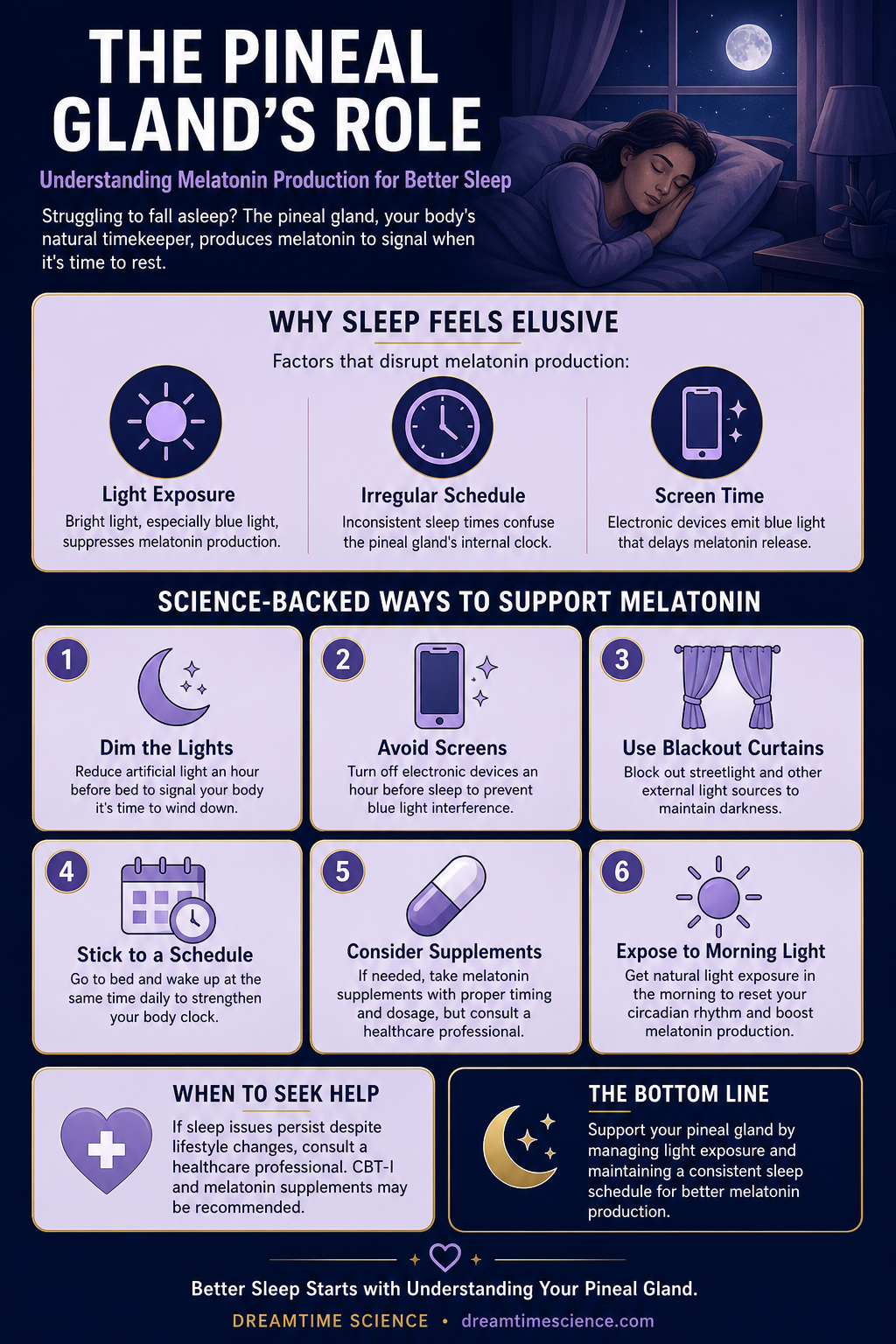
The short answer: The pineal gland, often called the "third eye," produces melatonin, the hormone that signals the body to wind down and prepare for sleep. Exposure to blue light, like from screens, can suppress melatonin production by as much as 55%. Understanding this connection allows for better sleep hygiene practices, such as dimming lights before bed, to support a healthy circadian rhythm.
The pineal gland, a small endocrine gland in the brain, synthesizes melatonin, a hormone critically involved in regulating the sleep-wake cycle and circadian rhythms [3]. Melatonin production is directly influenced by light exposure, with darkness stimulating release and light suppressing it.
Key takeaways
- Melatonin production starts with the amino acid tryptophan, transforming into serotonin, then melatonin.
- Light exposure inhibits melatonin production, which is why darkness boosts its release.
- Melatonin receptors, like MT1 and MT2, affect sleep onset and help shift your body clock.
- Maintaining a consistent sleep schedule and daylight exposure supports a healthy circadian rhythm.
- Melatonin acts as an antioxidant and exhibits anti-inflammatory properties, beyond just sleep.
The Pineal Gland: Structure and Function
The pineal gland is located in the epithalamus, near the center of the brain. While historically considered esoteric, its primary function is neuroendocrine: it receives signals from the suprachiasmatic nucleus (SCN) – the body’s master clock – regarding environmental light levels and translates these into hormonal signals [8]. This gland is composed of pinealocytes, the primary melatonin-producing cells, and glial cells providing support and structure. The precise mechanisms by which the SCN influences pineal activity involve a complex interplay of neurotransmitters and signaling pathways.
Melatonin Synthesis and Regulation
Melatonin synthesis begins with the amino acid tryptophan, which is converted into serotonin. Serotonin is then converted into N-acetylserotonin, and finally, melatonin [1]. This process is highly sensitive to light, as specialized photoreceptor cells in the retina detect light and transmit signals via the retinohypothalamic tract to the SCN, which in turn inhibits melatonin production [8]. The peak of melatonin production typically occurs during darkness, promoting feelings of drowsiness and preparing the body for sleep. Factors such as age, stress, and certain medications can influence melatonin synthesis levels [1].
The Role of Melatonin Receptors
Melatonin exerts its effects by binding to specific receptors, primarily MT1 and MT2, found throughout the body [1]. MT1 receptors are heavily involved in regulating sleep onset and maintenance, while MT2 receptors contribute to circadian phase shifting. These receptors are present in the brain (including the SCN), retina, cardiovascular system, and immune cells, explaining the widespread physiological effects of melatonin. Activation of these receptors triggers downstream signaling cascades influencing various cellular processes.
Melatonin and the Circadian Rhythm
The pineal gland and resulting melatonin secretion are central to maintaining a stable circadian rhythm, the approximately 24-hour internal clock that governs many biological processes [6]. Daily exposure to daylight helps to entrain – synchronize – this clock. When the natural light-dark cycle is disrupted, such as in jet lag or shift work, melatonin production becomes misaligned, leading to sleep disturbances and other health issues. Consistent sleep schedules and appropriate light exposure are essential for supporting robust circadian function and healthy melatonin secretion.
Melatonin Beyond Sleep: Expanding Roles
While commonly known for its role in sleep, melatonin has a broader range of biological impacts. Research suggests melatonin possesses antioxidant properties, protecting cells from damage caused by free radicals [4]. It also exhibits anti-inflammatory effects, which may contribute to its therapeutic potential in various conditions. Studies are investigating melatonin’s role in mitigating organ fibrosis, diabetic cardiomyopathy [5], respiratory diseases [7], and even certain types of cancer. Melatonin's influence on the immune system is also being actively researched, highlighting a growing understanding of its pleiotropic effects.
Factors Affecting Pineal Gland Function
Several factors can disrupt the optimal functioning of the pineal gland and melatonin production. Exposure to artificial light, particularly blue light emitted from electronic devices, is a significant disruptor, suppressing melatonin release and delaying sleep onset. Age-related decline in melatonin production is also common, contributing to sleep problems in older adults. Additionally, certain medical conditions, such as neurodegenerative diseases, can impair pineal gland activity, highlighting the intricate relationship between brain health and proper melatonin secretion [9]. Recent work also points to the role of microRNAs in the pineal gland following brain injury [10].
References
- Liu J, Clough SJ, Hutchinson AJ et al. (2016). MT1 and MT2 Melatonin Receptors: A Therapeutic Perspective. Annual review of pharmacology and toxicology. doi:10.1146/annurev-pharmtox-010814-124742
- Cardenas-Padilla AJ, Jimenez-Trejo F, Cerbon M et al. (2024). The Role of Melatonin on Caprine (Capra hircus) Sperm Freezability: A Review. Antioxidants (Basel, Switzerland). doi:10.3390/antiox13121466
- Peres MF, Valença MM, Amaral FG et al. (2019). Current understanding of pineal gland structure and function in headache. Cephalalgia : an international journal of headache. doi:10.1177/0333102419868187
- Huang W, Zheng J, Wang M et al. (2024). The potential therapeutic role of melatonin in organ fibrosis: a comprehensive review. Frontiers in medicine. doi:10.3389/fmed.2024.1502368
- Huang K, Luo X, Zhong Y et al. (2022). New insights into the role of melatonin in diabetic cardiomyopathy. Pharmacology research & perspectives. doi:10.1002/prp2.904
- Agathokleous E, Kitao M, Calabrese EJ (2019). New insights into the role of melatonin in plants and animals. Chemico-biological interactions. doi:10.1016/j.cbi.2018.12.008
- Li L, Gang X, Wang J et al. (2022). Role of melatonin in respiratory diseases (Review). Experimental and therapeutic medicine. doi:10.3892/etm.2022.11197
- Jan JE, Reiter RJ, Wasdell MB et al. (2009). The role of the thalamus in sleep, pineal melatonin production, and circadian rhythm sleep disorders. Journal of pineal research. doi:10.1111/j.1600-079x.2008.00628.x
- Hazlerigg DG (2001). What is the role of melatonin within the anterior pituitary?. The Journal of endocrinology. doi:10.1677/joe.0.1700493
- Sha N, Wang HW, Sun B et al. (2021). The role of pineal microRNA-325 in regulating circadian rhythms after neonatal hypoxic-ischemic brain damage. Neural regeneration research. doi:10.4103/1673-5374.308101
Frequently Asked Questions
What does the pineal gland do?
The pineal gland produces melatonin, which is a hormone that helps regulate the body’s sleep-wake cycle. This regulation occurs through the synthesis and release of melatonin in response to changes in light and darkness, influencing circadian rhythms and promoting sleepiness [3].
How does light affect the pineal gland?
Light detected by the retina inhibits melatonin production by signaling the suprachiasmatic nucleus to suppress the pineal gland’s activity [8]. Consequently, exposure to blue light, especially in the evening, can significantly delay melatonin release and disrupt sleep patterns.
Can melatonin supplements help with sleep?
Melatonin supplements can be helpful for individuals experiencing sleep disturbances related to jet lag or shift work, however, efficacy varies [1]. They do not act as sedatives but rather help to shift the circadian rhythm and align sleep timing.
Why is melatonin called the “hormone of the night”?
Melatonin is predominantly released during darkness and is therefore dubbed the “hormone of the night” [6]. Its release prepares the body for sleep by lowering core body temperature and promoting relaxation.
What other health benefits does melatonin offer?
Beyond sleep regulation, melatonin exhibits antioxidant and anti-inflammatory properties [4], and is being investigated for its potential therapeutic roles in conditions ranging from fibrosis to diabetic cardiomyopathy and immune dysfunction [7].
Tonight's Listening
 Tonight's episodeDNA's Silent Blueprint: Uncovering Life’s Deepest Secrets
Fall Asleep to a Science Lecture
Put tonight's reading into practice — pick a gentle, softly-narrated episode and let the Professor talk you to sleep.
Tonight's episodeDNA's Silent Blueprint: Uncovering Life’s Deepest Secrets
Related articles

Bedroom & Bedtime Habits
The Role of Darkness: Why Light Exposure Matters for Sleep
Darkness plays a crucial role in sleep by signaling the brain to release melatonin, the hormone that promotes relaxation and initiates sleep. Exposure to light,…

Bedroom & Bedtime Habits
Blue Light Before Bed: What Research Actually Shows
Blue light exposure before bed does suppress melatonin production, potentially delaying melatonin onset by around 30 minutes with two or more hours of bright screen…

Remedies & Relaxation
Sleep Supplements: Beyond Melatonin - What Actually Works
Several supplements beyond melatonin can potentially improve sleep. Herbal remedies like valerian root and chamomile have shown promise, with chamomile demonstrated…