The Earth's Secret Symphony
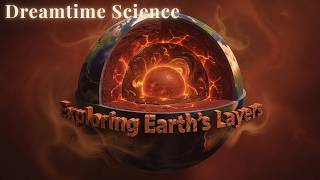
The opening act will unravel the cultural and science fiction associations of Earth's layers, stimulating curiosity about our planet's interior. We'll explore the rich tapestry of myths, legends and folklore surrounding the underworld, journey to the center of the Earth, and the fantastical realms beneath our feet.
Beneath the hush of midnight, as the world above quiets and the constellations begin their patient waltz across the sky, a question, ancient as humanity itself, hums gently in the darkness: what lies below? The ground beneath our feet, so stable, so solid, invites a strange and persistent curiosity. It is a curiosity that has haunted poets and philosophers, scientists and dreamers, since the first person pressed a palm to the earth and wondered about the secret symphony hidden within.
For most, the world’s surface is a boundary. The soil is both cradle and shroud, the beginning and the end. Yet, beneath that comforting layer of loam and root, there is an unfathomable depth—a world unseen, unknown, and, for much of human history, profoundly mysterious. The Earth’s interior is not merely a domain of minerals and molten stone; it is a theater upon which the human imagination has played out its deepest fears and wildest dreams.
Imagine, for a moment, a time before seismic charts and geologic surveys. Picture the earliest humans, huddled by the flickering light of a fire, weaving stories to explain the tremors that shook the ground or the heat that rose from cracks in the earth. The underworld, in nearly every culture, was a place of both terror and wonder. It was the realm of the dead, a repository of lost souls and ancient gods, a labyrinth of shadows and secrets. To journey beneath the surface was to trespass into realms where mortal feet were not meant to wander.
Consider the Greeks, who envisioned Hades—a shadowy dominion ruled by a god of the same name, where the souls of the departed drifted in a twilight landscape. The River Styx flowed there, cold and forbidding, a boundary between the living and the dead. The poet Virgil described Aeneas’s descent into the underworld, guided by the Sibyl, his path marked by whispering shades and the deep rumble of distant torments. The journey was perilous, a test of resolve and faith, and only the bravest or most desperate would dare it. Yet, even in the chill of Hades, there was order; the earth’s interior was not chaos, but another realm, with its own laws and logic, shaped by imagination as much as by fear.
The Norse too had their vision of the world beneath: Niflheim, the misty realm of ice and darkness, and Hel, where those who died without glory found their rest. The earth’s roots, in their cosmology, reached down from the trunk of Yggdrasil, the world tree, threading through layers of ice and fire, of hope and doom. The roots of legend were quite literal—binding the surface to the deep, the living to the dead.
Travel eastward in the mind’s eye, and the stories change, but the fascination endures. In Chinese myth, the Yellow Springs, or Diyu, is an intricate underworld, a place of judgment and transformation, where souls navigate a labyrinth of courts and trials. The earth, in these tales, is not merely a physical boundary, but a spiritual one—a domain of growth and renewal as much as punishment.
Even the ancient Egyptians, gazing out over the shifting sands, wove their own intricate cartography of the beneath. The Duat, their underworld, was a land of perilous rivers and monstrous guardians, yet also a place where the sun god Ra journeyed each night, reborn with the dawn. The cycle of descent and ascent, of burial and resurrection, echoed in their rituals and monuments, inscribed in stone and myth alike.
Every culture, it seems, has looked to the ground beneath their feet and found stories waiting in the dark. The earth’s interior was not a realm to be mapped with compasses, but with the compass of the human heart—a territory of archetype and metaphor, of longing and fear.
And yet, as centuries passed and the age of myth gave way to the age of reason, the desire to know, to truly know, what lay beneath did not abate. It only grew sharper, swifter, more relentless, given new tools and new ways of seeing. The earth, once an unknowable abyss, became a puzzle to be solved, a secret to be revealed. The journey to the center of the Earth transformed from a mythic descent into a scientific quest.
Writers, too, have not been able to resist the pull of the deep. The 19th century, that era of grand exploration and burgeoning science, saw the birth of stories that threaded the line between fact and fantasy. Nowhere is this more evident than in Jules Verne’s classic, “Journey to the Center of the Earth.” Verne, with his characteristic blend of scientific curiosity and fevered imagination, conjured a world beneath our own—a subterranean realm of prehistoric monsters, luminous fungi, and churning seas, all hidden below the crust. His explorers descend through a dormant volcano, following cryptic clues, and find themselves in a landscape at once alien and oddly familiar. The journey is fraught with peril, yet also with wonder; every layer peeled back reveals new marvels, new terrors, and, above all, new questions.
Verne’s vision, though fantastical, was rooted in the science of his day. In the 19th century, the nature of Earth’s interior was still largely speculative. Some believed the planet was hollow, its center a vast empty space—a notion that persists in the wilder corners of pseudoscience even today. Others posited immense caverns, home to lost civilizations or prehistoric beasts. These were not idle musings, but the product of a world in flux, where the boundaries between science and myth were porous, and the earth itself seemed a living, breathing being, full of secrets.
In the decades that followed, the idea of hidden worlds beneath our feet became a fixture of popular culture. Edgar Rice Burroughs imagined Pellucidar, a land at the earth’s core, complete with its own sun and ancient peoples. In more recent times, the theme has been revisited in films, comics, and video games—a testament to the enduring allure of the unknown below.
Science fiction, in all its forms, has reveled in the possibilities of the deep earth. It is a place where the rules can be rewritten, where time moves differently, where the familiar laws of surface life are suspended. The subterranean world is both a mirror and a foil to our own—a place that reflects our fears and hopes, our dreams of escape and our longing for discovery.
Yet, in all these tales, there is an undercurrent of something deeper—a recognition, perhaps, that the earth itself is not indifferent to our curiosity. The ground shudders and quakes, mountains rise and fall, volcanoes spill forth molten rock from unseen chambers. Even the most rational mind must admit a kind of awe before such power. The earth is not a passive stage, but an active participant in its own story.
As the centuries have passed and our tools have grown more sophisticated, we have learned to listen more closely to the earth’s secret music. Seismographs now record the tremors of distant earthquakes, translating the planet’s restless motion into trembling graphs. Geologists peer into the past, reading the layers of rock and fossil as one might read the rings of a tree. The underworld, once the domain of spirits and gods, is now revealed as a landscape of stone and fire, of pressure and heat—no less wondrous, perhaps, for being real.
Still, even with all our knowledge, there is a sense that we stand at the threshold of a mystery. The deepest mines and boreholes have barely scratched the crust; our understanding is, in a cosmic sense, still skin-deep. The core of the earth is as distant as the stars, its secrets locked away by time and pressure and unfathomable heat.
Yet the question persists: what is it that draws us to the depths? Is it the promise of treasure—gold or gems, or the more abstract riches of knowledge? Is it the thrill of danger, the allure of the forbidden? Or is it something older, something woven into the fabric of our being—a need to seek, to burrow, to unearth?
Consider the patterns of human life: the act of burial, of placing our dead in the earth; the planting of seeds, the digging of wells and shelters. The earth is always present, always receptive, always holding what we give it. In return, it offers up its own gifts—minerals and metals, water and warmth, the slow, inexorable pulse of geothermal energy. It is both womb and tomb, cradle and grave.
Children, too, feel the pull of the beneath. Who has not, at some time, dug in the sand or soil, imagining what wonders might be found just a little deeper? Fossils, strange stones, the possibility of something ancient and forgotten. The urge to dig is a kind of instinct, a gesture of hope as much as curiosity.
And so, as night deepens and the world above grows quiet, the mind returns to the question: what is the earth’s secret symphony? It is a music made not of notes, but of tremors and pressure, of stories and strata. It is the slow dance of continents, the grinding of plates, the whisper of minerals forming in the dark. It is the collective dream of humanity, echoed in myth and science, in poetry and prose.
We stand, always, at the edge of the unknown. The ground beneath us is both barrier and invitation, a reminder of how much remains to be discovered. The earth’s interior is not merely a physical space, but a canvas upon which we project our hopes and fears, our questions and our stories. In every tremor, in every myth, there is the promise of something more—an answer just out of reach, a melody half-heard.
As you drift, let your thoughts wander downward, following the ancient path of curiosity and wonder. The stories of the underworld, the visions of hidden realms and secret chambers, are not relics of a forgotten past. They are the first notes of a symphony that continues, beneath our feet, even now. And as the world sleeps, the earth’s secret music plays on, waiting for those who listen, those who dream, those who dare to ask: what lies below? The journey is only just beginning.
Unveiling the Earth's Veiled Depths
The second act will delve into the complexities of Earth's layers, challenging the limits of our understanding. We'll traverse the crust, mantle, outer core, and inner core, revealing their unique characteristics, compositions, and the enigmatic processes at work. We'll also debunk common misconceptions about Earth's interior and its geothermal activity.
Beneath the familiar tapestry of forests, oceans, and mountains, beneath the soft yielding soil and the hard bones of ancient stone, there lies a world divided, layered, and yet indivisible from the surface it supports. To stand upon the Earth and gaze at the sky is one thing; to imagine what lies beneath your feet is to embark on a far more daring journey—a journey that, for most of human history, has been shrouded in myth and mystery. We press now into this veiled realm, chasing whispers and seismic echoes through the darkness, letting curiosity guide us downward, through the layers of our living planet.
The very outermost skin of the Earth is called the crust, and it is here that all our lives unfold. Yet, in the grand scale of the planet, this crust is astonishingly thin—like the fragile shell of an egg compared to the yolk and white within. Its thickness varies, from as little as five kilometers beneath the deepest oceans to around seventy kilometers beneath the tallest mountains. This is the realm of continents and seafloors, of granite and basalt, fractured and bent by the slow grind of geological time. It is also the only part of the Earth that we have ever touched directly. The deepest mines, such as the Kola Superdeep Borehole in Russia, have reached just over twelve kilometers into the crust—barely scratching the surface, not even breaching the crust’s lower boundaries.
The crust is not a uniform sheet, but a patchwork quilt, stitched together by the restless motion of tectonic plates. These slabs of rock glide atop the mantle, colliding, sliding, and grinding past one another with a slowness that belies the enormous forces at play. Where plates diverge, like at the mid-ocean ridges, new crust forms, cooled from upwelling magma. Where they converge, one plate may sink beneath another in a process called subduction, dragging surface material down into the heat and pressure below, to be transformed or melted and recycled. Earthquakes and volcanoes are the surface expressions of this deep, churning dance.
Beneath the crust, we encounter the mantle, a sprawling domain that extends to a depth of nearly 2,900 kilometers. The mantle is composed primarily of silicate minerals rich in iron and magnesium, rocks like olivine and pyroxene, compressed and heated beyond anything found on the surface. Despite its unyielding strength, the mantle is not entirely solid. Over vast stretches of time, it flows—slowly, inexorably, at rates measured in centimeters per year. This slow, creeping movement is what drives the tectonic plates above, the conveyor belt of continents and oceans.
The mantle itself is not homogeneous, but a layered entity. The uppermost mantle, just beneath the crust, is relatively rigid and, together with the crust, forms the lithosphere. Below this lies the asthenosphere, a region where the rock is partially molten, weak, and ductile, able to flow under pressure. It is in this realm that plumes of hot mantle material can rise up—mantle plumes—creating volcanic hotspots far from tectonic boundaries, as in Hawaii or Iceland. Deeper still, the mantle becomes denser and more rigid, yet still capable of flow, with its mineral composition gradually changing under the immense pressures.
Descending further, we eventually reach the boundary known as the core-mantle boundary, or the Gutenberg discontinuity. Here, at nearly 2,900 kilometers below the surface, the composition and properties of Earth change dramatically. The mantle gives way to the core, a realm of iron and nickel. The outer core, the first layer we encounter, is a vast ocean of molten metal—liquid iron alloyed with lighter elements, swirling and churning with a violence hidden from human eyes.
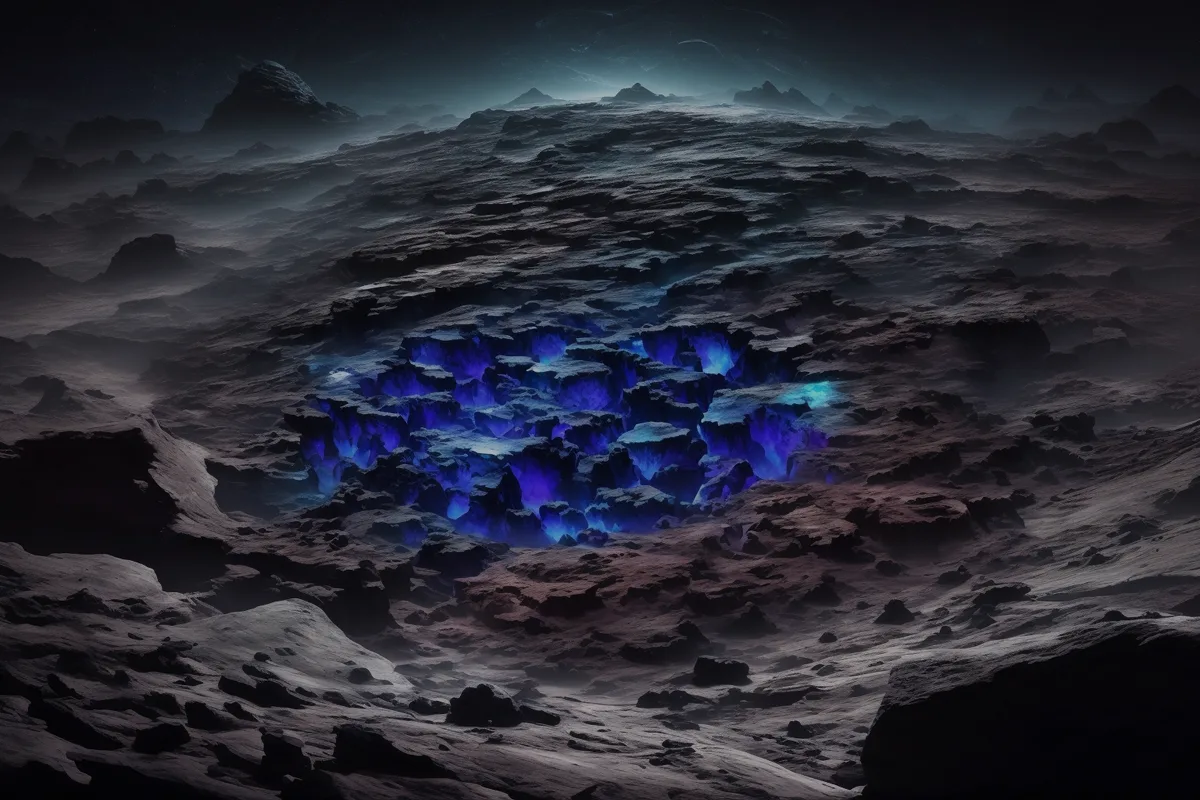
It is here, in the outer core, that one of Earth’s most profound mysteries unfolds. The motion of liquid iron, driven by heat escaping from the inner core and the planet’s slow rotation, generates Earth’s magnetic field through a process known as the geodynamo. This invisible shield extends far into space, protecting our atmosphere and all living things from the charged particles of the solar wind. The field waxes and wanes, it reverses its polarity over epochs, its lines of force flickering and shifting, but always it endures, a testament to the restless heart of our planet.
Deeper still, at a depth of about 5,150 kilometers, we cross another threshold: the transition from the liquid outer core to the solid inner core. Here, pressures reach over three million times those at the surface, and temperatures soar to around 5,700 degrees Celsius—hotter than the surface of the Sun. Yet despite the heat, the inner core remains solid, a sphere of iron crystallized by the crushing weight of the planet above. This paradox, of a solid core within a liquid shell, is a consequence of the fundamental interplay between pressure and temperature—a dance of physics at the heart of the Earth.
The inner core is not a static, featureless ball. Recent studies suggest it may be slowly spinning at a different rate than the rest of the planet, and that its structure is complex, with regions of different crystalline alignments. Some evidence hints at an even deeper, innermost core, distinct in its properties. But here, at the very heart of the Earth, our knowledge grows hazy. No probe, no drill, no human instrument has ever reached these depths. All we know comes from indirect evidence: seismic waves from earthquakes, which bend and reflect as they pass through different layers; the behavior of Earth’s magnetic field; the painstaking study of high-pressure minerals in laboratory experiments.
It is worth reflecting on how, in the absence of direct observation, we have learned so much about the planet’s interior. When earthquakes shake the ground, they send out waves that travel through the Earth, some moving straight, others refracting or reflecting at boundaries between layers. By carefully measuring the arrival times and paths of these waves at distant seismic stations, scientists can reconstruct a picture of the hidden world below—a kind of planetary echolocation. The abrupt changes in seismic velocity at certain depths mark the major boundaries: the Mohorovičić discontinuity, or “Moho,” between the crust and mantle; the Gutenberg discontinuity between mantle and core; and the Lehmann discontinuity dividing the outer and inner core.
Yet, for all we have discovered, misconceptions about Earth’s interior persist, woven into popular imagination and even into our language. It is tempting to think of the mantle as a vast, subterranean sea of molten rock, like the fabled rivers of fire in myth and legend. But the reality is more nuanced. Most of the mantle is solid, though it behaves plastically over long timescales. Only in localized regions, such as beneath mid-ocean ridges or volcanic hotspots, does it melt to form magma. Similarly, the notion of a “center of the Earth” as a vast, empty cavern, or as a place of unquenchable fire, owes more to fiction than to geology. The truth is at once more prosaic and more astonishing: a core of dense metal, invisible but essential, shaping the very conditions for life at the surface.
Another common misunderstanding concerns geothermal activity—volcanoes, hot springs, and geysers. While these phenomena draw their energy from the heat within the Earth, it is not a boiling cauldron that powers them, but rather the slow decay of radioactive elements and the lingering heat from the planet’s formation. Deep within the mantle, uranium, thorium, and potassium isotopes undergo radioactive decay, releasing heat that seeps outward, driving the convective currents that move the plates above. This geothermal gradient—how temperature increases with depth—is steepest near the surface, but it flattens out in the deep mantle and core, where heat moves more by convection than conduction.
The journey downward is not merely one of increasing heat and pressure, but of changing states and compositions, each layer distinct yet deeply intertwined with the others. The crust, so thin and brittle, rides upon the mantle’s slow tides. The mantle itself, solid yet flowing, carries the heat and material that shapes continents and ocean basins. The outer core, a roiling sea of metal, forges the magnetic field that shields and guides us. And the inner core, a crystalline heart, pulses with the memory of Earth’s birth.
These layers are not fixed or eternal. Over millions of years, continents drift and collide, mountains rise and erode, oceans open and close. The mantle’s slow churn brings material from deep within back to the surface, while subduction drags surface rocks into the depths, to be melted or transformed. Even the core is slowly cooling, its heat escaping upward, its magnetic field ever-changing.
To truly appreciate the complexity of Earth’s interior, consider the journey of a single atom—from the surface, where it might be part of a raindrop or a plant or a stone, to the depths of the mantle, subducted at a tectonic boundary, transformed by heat and pressure, perhaps to rise again in a plume of magma, to erupt from a volcano and return to the sky as ash. Or imagine the atoms of iron and nickel that once floated in the nebular haze of the early solar system, drawn together by gravity, sinking to form the core of the infant Earth, where they remain, cycling in currents of liquid metal, forever out of reach yet forever shaping our world.
In the cool quiet of night, as the surface world sleeps, these vast processes continue, hidden and relentless. The ground beneath us is not still, but alive with movement and change, a planet in perpetual motion. We are creatures of the crust, but our lives are shaped by the deep.
There is, perhaps, a deeper mystery still: why is Earth layered in this way? Why do we find a solid crust, a flowing mantle, a liquid outer core, and a solid inner core, in that particular order? The answer lies in the earliest days of the solar system, when the young Earth was a molten sphere, bombarded by asteroids and comets, its interior heated by collisions and radioactive decay. As the planet cooled, heavier elements like iron and nickel sank toward the center, while lighter silicates floated above, forming the mantle and crust. The process, known as planetary differentiation, is common among rocky worlds, but on Earth it has given rise to a unique interplay of geology, chemistry, and physics—a planet not only layered, but dynamic and alive.
We have journeyed from the familiar ground of the crust to the remote core, guided by the subtle signals of earthquakes and the faint clues of laboratory experiments. Yet, much remains hidden, veiled by distance and the limits of our instruments. Each new discovery opens further questions: What is the precise structure of the core? How does the mantle’s flow shape the surface above? What secrets lie in the shifting boundaries between layers?
As we pause at the threshold of these mysteries, the mind drifts, wondering what new revelations might yet emerge from the dark interior. The story leads onward, deeper, to the forces that bind the planet together and drive its restless evolution. In the silence beneath the crust, in the slow dance of rock and metal, the Earth continues to unveil its secrets, one tremor, one field line, one molten plume at a time.
Peering into the Planet's Heart
In the third act, we'll explore how scientists probe Earth's layers using ingenious tools and techniques. We'll recount the history of seismic wave studies, deep drilling projects, and the astonishing discoveries they've made. Expect a journey filled with technological marvels, scientific breakthroughs, and the excitement of unearthing hidden truths.
Beneath the continents and oceans, below the landscapes of forest and city and desert, lies a realm of perpetual darkness. There, pressure mounts to a crushing intensity. Temperatures soar higher than the hottest furnace. The rocks are changed, twisted, melted, and forged anew in cycles far older than any civilization. For all of human history, this immense, unseen world—the very heart of our planet—has remained almost entirely inaccessible. We scuttle only across the thinnest of crusts, mere mites on the surface of a colossal sphere. Yet the urge to know what lies below has forever haunted our species. How deep does the stone run? What secrets lurk in the abyssal black? How can we, fragile surface-dwellers, possibly hope to glimpse the workings of Earth’s concealed machinery?
Direct descent, of course, is impossible. The deepest mines, like South Africa’s Mponeng, descend barely four kilometers—no more than a scratch upon the skin of the planet, whose radius is over six thousand kilometers. The pressure and heat encountered even at these shallow depths are already nearly unbearable. But curiosity is a powerful engine, and humans have always possessed a knack for listening to the world, for inventing tools that turn silence into story, and shadow into revelation.
So, in the absence of direct access, scientists have become listeners and interpreters of subtle clues. They have learned to eavesdrop on the planet’s own language—its tremors, its vibrations, its restless, rumbling conversations. Through the ingenious study of seismic waves, they have mapped the invisible. And in a handful of audacious experiments, they have drilled downward, seeking to pull up samples of what lies hidden. In this act, we will journey alongside these explorers of the unseen, tracing the ingenious methods by which they have peered into the heart of the Earth.
When the ground quakes, it speaks with a voice that can be heard around the world. Earthquakes occur when the grinding, shifting plates that make up the crust release pent-up stress, sending ripples racing outward in all directions. But these ripples—called seismic waves—do not all move in the same way, nor do they all traverse the planet with equal ease. This simple fact has been the key to an entire science of planetary exploration: seismology.
There are two main families of seismic waves, each with distinctive traits. The primary, or P-waves, are compressional—they push and pull the material they travel through, like sound waves moving through air. P-waves are the fastest, and the first to arrive at distant seismic stations after an earthquake. The secondary, or S-waves, are slower and move side-to-side, shaking the ground, but they cannot travel through liquids. There are also surface waves, which roll and ripple along the planet’s crust, often causing the worst shaking during a quake, but it is the P- and S-waves, plunging deep through the planet’s interior, that have become our most faithful messengers from the underground.
The story of using these waves to probe the Earth is a tale of both inspiration and patience. In the late nineteenth century, scientists first began to systematically measure and catalog the trembling of the ground. The invention of the seismograph—a sensitive device capable of recording even the faintest movements—transformed what was once an unpredictable terror into a source of data. By planting networks of these instruments across continents, researchers could triangulate where an earthquake had occurred, and analyze how the waves had traveled from one side of the planet to the other.
In 1906, British geologist Richard Dixon Oldham made a pivotal observation. He noticed that after some distant earthquakes, certain seismic stations failed to detect S-waves, while P-waves still arrived, albeit somewhat delayed. This curious absence suggested that part of the planet’s interior was impassable to S-waves—in other words, it must be liquid. Through careful study, Oldham inferred the existence of a molten outer core, surrounding a denser, solid region within.
A few years later, in 1914, the German seismologist Beno Gutenberg refined these findings. By measuring the precise angular distances at which seismic waves vanished or reappeared, he was able to estimate the size of the core itself—a feat accomplished not by digging, but by listening and calculation. In 1936, the Danish seismologist Inge Lehmann made the next leap. While studying records of earthquakes from around the globe, she noticed faint, unexpected arrivals of P-waves that could only be explained if the core itself had a solid inner portion. Her insight revealed that the very heart of the Earth was not molten, but a dense, iron-rich sphere, roughly the size of the Moon, floating within a sea of liquid metal.
This elegant detective work—deciphering the structure of the entire planet from the echoes of distant earthquakes—remains one of the great triumphs of scientific imagination. With every major tremor, the Earth vibrates like a struck bell, and seismologists, scattered across the globe, catch these notes and reconstruct the instrument itself.
But seismology offers more than a static picture. By analyzing subtle changes in the speed and direction of seismic waves, scientists can map not only the boundaries between crust, mantle, and core, but also hidden features within them—subtle plumes of hot rock rising from the deep, vast slabs of ancient ocean crust sinking downward, even the slow churning of mantle convection that drives the movement of continents above.
In the late twentieth century, as global networks of seismic stations became ever more sensitive and interconnected, a new era of “seismic tomography” dawned. By combining thousands of records from earthquakes large and small, researchers could build three-dimensional images of the planet’s interior, like a medical CT scan for the Earth. These ghostly pictures revealed a world in constant motion: rivers and fountains of hot, buoyant rock welling up from the depths, cool slabs plunging toward the core, the mantle itself swirling and mixing over millions of years. It was as if the Earth, long imagined as a static arrangement of layers, had revealed itself as a living, breathing creature.
Yet the language of seismic waves, for all its power, is indirect. It can tell us a great deal about the shape and behavior of Earth’s layers, but it cannot bring us tangible samples from below. For that, scientists have turned to the far more daunting task of drilling downward—of physically boring into the crust, extracting cores of rock, and, in rare cases, venturing as far as technology allows.
The challenge, from the outset, has been formidable. The crust beneath the oceans is typically just a few kilometers thick, but beneath continents it can reach tens of kilometers. Even the shallowest layers are fiercely resistant. Temperatures rise rapidly with depth, and pressures increase at an alarming rate. Equipment must withstand not only the crushing weight of rock, but the relentless heat and the corrosive chemistry of minerals altered by eons underground.
Yet the ambition to drill to the “center of the Earth” is ancient. In the mid-twentieth century, as the world was gripped by the spirit of exploration, a handful of bold projects set out to push the limits of what was possible.
Perhaps the most famous of these was Project Mohole, an audacious American effort begun in the 1950s. The goal was to drill through the oceanic crust—thinner and more accessible than the continental variety—and reach the mysterious boundary between the crust and the mantle below, known as the Mohorovičić discontinuity, or simply the “Moho.” Though the project ultimately faltered, beset by funding woes and technical hurdles, it marked the dawn of deep-sea drilling. The techniques developed would later be adopted by the Deep Sea Drilling Project and its successors, which have since recovered thousands of cores from beneath the world’s oceans, revealing the history of Earth’s crust in layer upon layer of ancient sediment and basalt.
On land, the Soviets embarked on their own quest for the deep. In 1970, on the remote Kola Peninsula, they began drilling what would become the deepest artificial hole ever made: the Kola Superdeep Borehole. Over the course of two decades, engineers and geologists doggedly pushed downward, using state-of-the-art drill bits and muds to cool and lubricate the equipment. By 1989, they had reached an astonishing depth of 12,262 meters—over twelve kilometers, deeper than any other hole before or since. Yet even here, they had barely breached a third of the way through the continental crust. Temperatures at the bottom soared to over 180 degrees Celsius, far hotter than expected, and the rocks were far less dense than models had predicted. The Kola borehole yielded a treasure trove of discoveries: ancient metamorphic rocks, microscopic fossils more than two billion years old, and strange flows of hydrogen gas bubbling from the depths. But most of all, it revealed how complex, unpredictable, and surprising Earth’s crust could be, even at relatively shallow depths.
Elsewhere in the world, similar efforts have sought to plumb the mysteries of seismic hot spots, rift zones, and subduction trenches. In Japan, Germany, the United States, and China, deep drilling has become a powerful tool for understanding earthquakes, volcanoes, and the cycling of elements between surface and deep interior. Each site, each core sample, adds another brushstroke to the ever-evolving portrait of our planet’s inner life.
Yet even these deepest boreholes are still no more than pinpricks, minute wounds upon an immense and ancient body. The vast bulk of the planet remains forever out of reach, its secrets obscured by distance, heat, and pressure. But there are other, subtler ways to sample the underground. Sometimes, the Earth itself sends up gifts: volcanic eruptions that hurl fragments of mantle rock to the surface, or meteorites from distant worlds that reveal how planetary interiors might be sculpted elsewhere in the cosmos.
One of the most remarkable sources of information comes from “xenoliths”—fragments of deep mantle rock, torn from their birthplace and carried upward in the explosive eruptions of certain volcanoes. These dark, dense stones, known as peridotites, can be studied in laboratories, their minerals and isotopes yielding clues to the temperature, pressure, and chemistry of their underground origins. From them, we learn not only about Earth’s own mantle, but about the processes that build continents, generate magnetic fields, and cycle water and carbon between surface and depths.
And always, there is the subtle, constant background hum of the planet itself. Even in the absence of earthquakes, the Earth vibrates—shaken by ocean waves, atmospheric winds, and the restless churning of its own interior. Sensitive instruments, buried in quiet places far from human noise, can detect these faint tremors and use them to map the planet’s structure, much as a doctor uses a stethoscope to listen for the heartbeat beneath a patient’s chest.
Each of these techniques—seismic listening, deep drilling, the study of mantle fragments—offers a different window into the hidden world below. None provides a complete picture. Yet together, they weave a tapestry of understanding, bringing the dark, secretive depths into the realm of human knowledge.
As technology advances, new tools join the seismologist’s arsenal. Supercomputers now model the flow of entire mantles, simulating the rise and fall of hot rock, the birth and death of continents. Satellites in orbit measure the subtle shifting of the ground, the faint bulge of the planet’s surface as it responds to the tides of molten rock beneath. Tiny sensors, no bigger than a coin, lie buried in the earth, recording every tremor, every sigh, every whisper from below.
And yet, for all this progress, the heart of the Earth remains a place of mystery. No probe has pierced the core; no camera has beheld the iron world at the center. The deepest truths are still inferred, glimpsed through echoes, reconstructed from the shadows cast by passing waves.
There is, perhaps, a kind of poetry in this distance—a reminder that some mysteries endure, even as our tools grow ever more wondrous. The planet’s heart beats on, hidden but not silent, sending forth its messages to those who know how to listen.
And so, in the quiet of the night, as the world above sleeps, the great engine below continues its work. Tremors ripple through solid stone; molten rock wells up and cools; ancient minerals transform and migrate, unseen. In the next act, we will follow these restless motions onward, tracing how the secret life of the planet shapes the world we know, and how the stories written deep below rise, at last, to the surface.
Reflections on our Nested Home
The final act will reflect on the philosophical implications of our understanding of Earth’s layers. We'll ponder on the mystery of our planet's inner workings, how it shaped the course of life, and its profound connection to humanity. We'll conclude with a poetic meditation on the importance of respecting and protecting our shared home, the Earth.
Now, as the hush of evening deepens and the world seems to slow its breath, let us drift inward—past the crust and mantle, through the molten seas and iron heart, to a quieter realm where science and wonder entwine. For all our instruments and equations, for all the seismic echoes and mineral secrets pried from the deep, the Earth’s layered structure remains, at its core, a profound enigma. It is a nested home: a series of envelopes, each sheltering the next, each with its own mysteries and its own story to tell.
As we ponder the architecture of our planet, a slow realization dawns: the Earth is not simply a stage upon which life performs, but an intricate system that has shaped, and been shaped by, the living and the inanimate alike. The layers beneath our feet are not mere geological curiosities, but silent architects of the world above—a tapestry woven over billions of years, where matter, energy, and time conspire to create the only world we know.
Consider, for a moment, how the restless mantle breathes heat and minerals upward, fueling the slow churning of plates, the birth of mountains, and the steady renewal of the crust. This is not simply a mechanical process, but the living pulse of the planet—a convective ballet that has, over eons, sculpted the continents, opened and closed oceans, and set the stage for every evolutionary drama. The continents themselves, drifting on this silicate tide, have collided and sundered, their meeting points birthing volcanic chains and cradling the earliest seas. Each movement, each shudder of the deep, has sent ripples through the biosphere, offering both cradle and crucible to countless forms of life.
Yet it is not only cataclysm and upheaval that the deep Earth bestows. The cycling of elements through mantle and crust—a slow, ceaseless exchange—has been the silent midwife of habitability. Gases exhaled from volcanic vents, carbonates drawn down into the mantle at subduction zones and released anew, the interplay of sulfur, water, and carbon: all these flows have shaped the composition of the atmosphere and the chemistry of the oceans. It is a self-regulating system, at once fragile and resilient, where life and planet dance together, each altering the other in subtle myriad ways.
Think of the iron core, spinning in darkness, generating the magnetic field that shields us from solar tempests and cosmic rays. Without this invisible guardian, the atmosphere would be stripped away, the surface sterilized by radiation, the oceans boiled off into space. The field wanders, waxes and wanes, but it persists—a planetary heartbeat, echoing through compass needles and shimmering auroras. Its origin is deep time, but its consequence is immediate and vital. We owe the very possibility of life not just to the sun above, but to the hidden dynamo below.
The record of this deep time is inscribed in stones, in the isotopic fingerprints of ancient zircons and the shifting alignments of iron minerals. These are the archives of a world in flux, a chronicle written not in words but in atoms and structures. Each sample drawn from a drill core or a volcanic glass is a page from a book we are only beginning to read. Yet even as we decipher these messages, we are humbled by the scale and strangeness of the story: continents assembled and shattered, oceans born and drowned, climates swung from icehouse to hothouse and back again. The planet’s interior is not a static vault, but a restless, creative force, forever renewing the face of the world.
There is, too, a curious symmetry to our home. The crust, that brittle rind on which we live, is both boundary and bridge. It insulates us from the seething mantle below, yet allows the fruits of that deep energy to rise—hot springs, minerals, new land. It is thin, fragile, and ever-changing, yet it is also the archive of life: a palimpsest of ancient reefs, fossil forests, and the imprints of vanished creatures. The crust is where the deep time of geology meets the fleeting moment of biology, where the slow patience of minerals intersects with the restless inventiveness of genes.
And so, as we reflect on the nested structure of the Earth, we see not just a physical hierarchy, but a web of interdependence. The surface is shaped by the depths, but the depths are, in turn, influenced by the surface. The burial of organic carbon in sediments, the drawdown of atmospheric gases by weathering, the eruption of life-priming minerals from volcanic arcs—all form a grand feedback loop, a planetary metabolism that has persisted through catastrophe and calm alike.
Humanity, in our brief span, has become both witness and actor in this drama. Our ancestors made their first tools from stones cracked by ancient fire; they painted their stories in ochres and charcoals drawn from the earth. We build our cities from the bones of mountains, fuel our engines with the compressed sunlight of vanished forests, and shape the land with a speed that rivals the greatest forces of nature. In our hands, the delicate balance of the planet has become more precarious, even as our understanding deepens.
Yet knowledge brings with it a burden of care. To glimpse the workings of the planet is to see our own place within a larger whole—a single layer in a nested system, dependent on what lies beneath and what surrounds us. The crust, for all its seeming solidity, is vulnerable to erosion, depletion, and disruption. The atmosphere, so thin it would be invisible from the moon, is a delicate mixture forever in flux. The oceans, vast and ancient, are susceptible to change in temperature, chemistry, and currents. We are both part of this system and capable of unbalancing it.
There is a humility that comes with this realization, a recognition that our dominion is temporary, our understanding partial. The planet has endured mass extinctions, asteroid impacts, and supervolcanoes. Life has been pushed to the brink and reborn in forms strange and unexpected. Yet the current moment is different, for never before has a single species wielded such power to alter the chemistry of air and ocean, to mine and move mountains, to send signals deep into the crust and out beyond the atmosphere.
If we are to remain at home in this nested world, we must become, in a sense, stewards of the layers. We must learn to read the silent messages of rocks and magnetism, to hear the slow music of tectonics and the whisper of ancient waters. We must see the Earth not as a storehouse to be emptied, but as a complex, living system—one that sustains us, and that we in turn must sustain. The lessons of geology are lessons in patience, in scale, and in interconnectedness. The minerals we prize, the fertile soils we cultivate, the waters we drink: all are gifts of processes millions of years in the making, easily squandered, not easily restored.
There is, in the end, a kind of kinship that links us to the very heart of the Earth. The calcium in our bones, the iron in our blood, the oxygen we breathe—all were forged in the deep interiors of stars and planets, cycled through mantle and crust, and made available by the slow alchemy of geological time. We are, quite literally, children of the planet: shaped by its history, dependent on its health, bound to its fate.
As you rest, consider the mystery that remains at the heart of our home. For all our knowledge, there are still questions unanswered, depths unexplored. What lies in the center of the core? How do the flows of iron and nickel truly give rise to the magnetic field’s wandering dance? What secrets linger in the deep mantle’s hidden reservoirs, what stories in the rocks yet untouched by drill or eruption? Each answer leads to further wonder, a fractal unfolding of the unknown.
And yet, perhaps there is wisdom in that uncertainty. The Earth, in its layered complexity, is not a puzzle to be solved, but a companion to be cherished. Its rhythms will outlast us, its transformations will continue long after our civilizations have faded. But for this moment, we are here—breathing its air, drinking its water, standing on its ancient stones. We are the beneficiaries of four billion years of planetary evolution, inheritors of a system both exquisitely balanced and endlessly dynamic.
Let your thoughts drift, now, to the silence between quakes, to the heat beneath continents, to the magnetic field that curves invisibly above us. Feel the pulse of the mantle, slow and inexorable, shaping the world grain by grain, ridge by ridge. Imagine the core, spinning in darkness, a sphere of metal whose restless currents shield and nurture the fragile world above. Sense, in the cool air and warm earth, the unbroken chain that links surface to depths, past to present, mineral to mind.
In this awareness, a gentle awe arises: the recognition that to live on Earth is to be both cradled and challenged by forces greater than ourselves. The planet is not merely a backdrop, but a participant in our story—sometimes a silent partner, sometimes a dramatic protagonist. It has given us mountains to climb, rivers to follow, caves to shelter in, and minerals to shape into tools and art. It has, in its layered heart, fashioned the conditions for life, for thought, for dreams.
With this knowledge comes a quiet responsibility. The choices we make—how we use the land, what we take from the ground, how we tend the air and water—resonate through the layers, shaping the future as surely as tectonics shape the continents. Our actions are recorded in sediments and ice, in the composition of the atmosphere and the chemistry of the seas. We are, in a sense, writing our own layer into the geological record, a thin but consequential stratum that will one day be read by those who come after.
So, as night deepens and the world grows still, let your mind wander down through the strata—past the familiar rocks and soils, past the shifting plates, to the churning mantle and the iron core. Feel the weight of deep time pressing upward, the vastness of planetary processes unfolding far beyond human lifetimes. Let this perspective bring both comfort and resolve: comfort, in knowing that we are part of something ancient and enduring; resolve, in choosing to honor and protect the intricate, fragile system that is our home.
The Earth’s story is not yet finished, nor is our place within it fixed. The layers beneath us continue their silent work, shaping the world we will leave behind. The choices we make now—how we understand, how we act, how we care—will echo through the crust, the mantle, the core, and out into the star-lit future. In this awareness, let us find gratitude, humility, and the quiet courage to be good stewards of this nested home, suspended in the cosmic dark, turning slowly toward the dawn.