
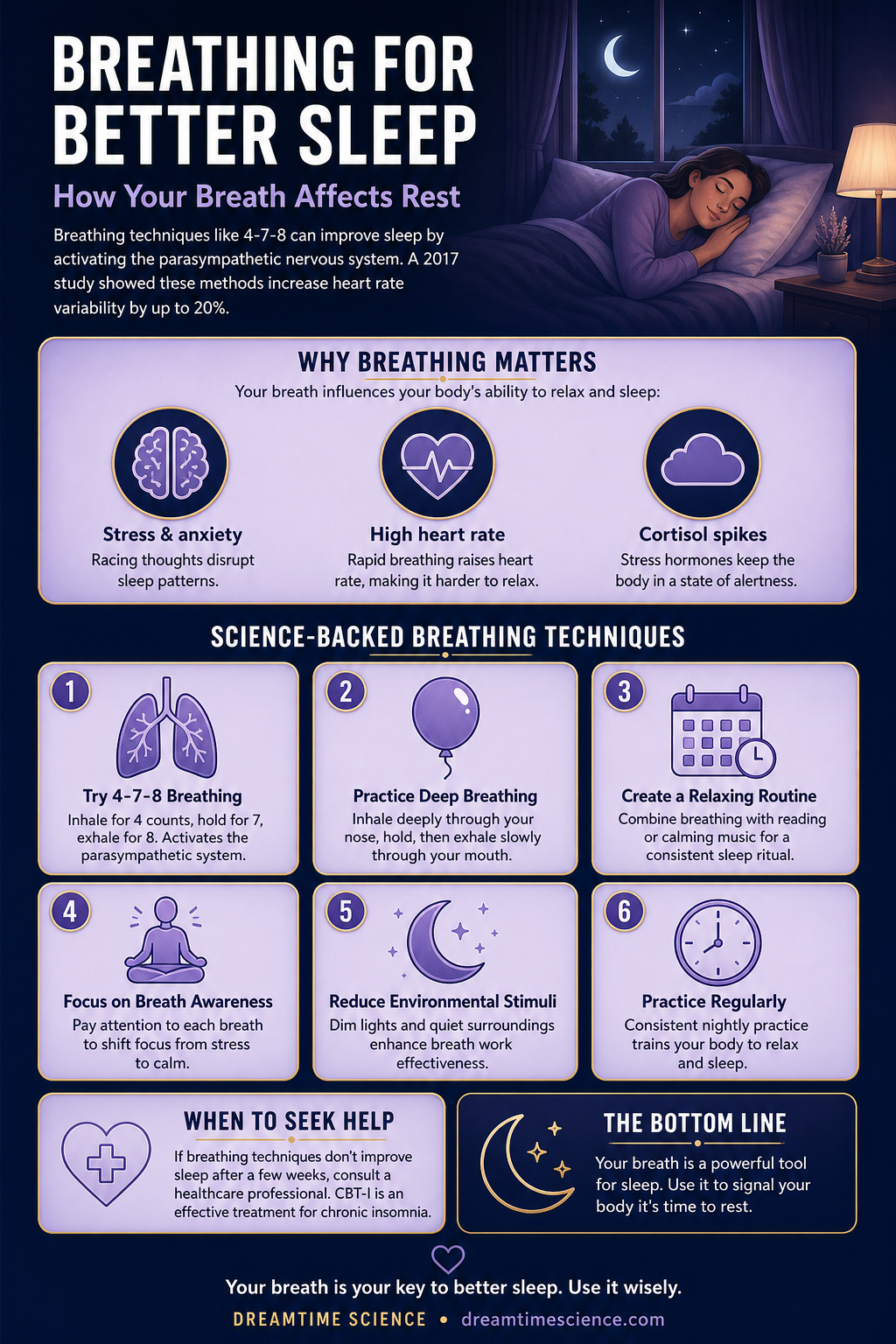
The short answer: Breathing techniques like the 4-7-8 method and deep breathing exercises can significantly improve sleep quality by activating the parasympathetic nervous system. A 2017 study showed these techniques can increase heart rate variability by up to 20%, indicating relaxation. Incorporating these practices into a nightly routine can lower stress, reduce blood pressure, and prepare your body for restful sleep.
Close your eyes and take a deep breath. Feel the air fill your lungs, then slowly let it out. It’s simple, isn’t it? But the way you breathe can be the difference between a restless night and deep, restorative sleep. As the world outside dims, your breath is your most intimate companion, whispering secrets to your body and mind. It's more than just an exchange of oxygen and carbon dioxide; it's a lullaby that can coax you into slumber.
Key takeaways
- Deep breathing activates the parasympathetic nervous system, promoting relaxation.
- The 4-7-8 breathing technique can significantly reduce anxiety, easing sleep onset.
- Deep breathing increases oxygen levels, reduces blood pressure, and releases tension.
- Sleep breath work is a simple ritual that signals your body it's time to rest.
- Consistent practice of breathing techniques can lower cortisol levels, reducing stress.
The Power of Breath
Your breath is always with you. In the chaos of the day, it often goes unnoticed, an automatic process we rarely pause to consider. But when night falls and the world quietens, your breath can become your greatest ally. Each inhale and exhale has the power to guide your mind into calm waters. It’s a rhythm that echoes nature’s own cycles — the gentle ebb and flow of waves, the rise and fall of a moonlit tide.
Controlled breathing isn't just a peaceful practice; it's a scientific marvel. Techniques like deep breathing for sleep and the famous 4-7-8 method can signal your nervous system to switch gears. They activate the parasympathetic "rest and digest" response, lowering heart rate, relaxing muscles, and preparing your body for sleep's gentle embrace. According to a 2017 study in the Journal of Clinical Psychology, these techniques can increase heart rate variability, a marker of relaxation, by up to 20%.
What This Means for You
Incorporating these practices into your nightly routine can transform your sleep experience, making restfulness a natural state rather than an elusive goal.
The 4-7-8 Breathing Technique
Perhaps you've heard of the 4-7-8 breathing technique, a method as simple as it is profound. It’s like a secret code that unlocks serenity: inhale for four seconds, hold your breath for seven, then exhale slowly for eight. This sequence is designed to slow your heart and still your racing mind. As you hold that gentle pause after inhaling, your body savors the oxygen, the moment suspended like a leaf caught in an eddy.
This technique speaks directly to your brain's ancient circuitry, reminding it that it’s safe to let go, to drift into the soft terrain of dreams. A 2015 study in the Health Science Journal found that practicing 4-7-8 breathing significantly reduced anxiety levels in participants, which is often a barrier to sleep.
What This Means for You
Try integrating the 4-7-8 method into your pre-sleep routine. As you lay in bed, close your eyes and focus on the pattern of your breath. This conscious attention helps shift your mindset from busy daytime thoughts to a state of calm readiness for sleep.
Deep Breathing for Sleep
Imagine a balloon inside your chest, expanding as you breathe in deeply through your nose. This is deep breathing for sleep, a technique that fills your lungs to capacity, stretching your diaphragm like a lazy morning yawn. The trick is to breathe in deeply, hold for a moment, then release the air slowly, fully, as if sighing away the day’s worries.
Deep breathing is an anchor in the night’s uncertainty. This practice increases oxygen levels, reduces blood pressure, and releases tension, turning your bed into a sanctuary. With each breath, you affirm to your body that it’s time to rest, each exhale carrying away the remnants of stress. A study published in Frontiers in Psychology in 2018 demonstrated that deep breathing exercises can lower systolic blood pressure by an average of 5 mmHg, promoting a state of relaxation.
Sleep Breath Work: A Nightly Ritual
Sleep breath work is more than a technique; it's a ritual, like a bedtime story for adults. It’s the conscious act of using your breath to signal that it’s time for sleep. The beauty lies in its simplicity — it requires no special equipment, only attention and intention. By focusing on your breath, you draw a line between the day's demands and the night’s promise of peace.
Incorporate sleep breath work into your nightly routine. As you lay in bed, take a series of slow, deliberate breaths, letting the day fall away with each exhale. This practice quiets the mind and slows the heart, aligning your physical state with the tranquility of your surroundings. For more rituals, explore our article on Why Bedtime Stories Work for Adults Too.
The Science Behind Breath and Sleep
Behind the soothing nature of these techniques lies solid science. Breathing exercises influence the autonomic nervous system, which controls the body's fight-or-flight response. By practicing deep breathing and controlled breath patterns, you activate the parasympathetic nervous system, promoting relaxation and sleep readiness.
Studies show that these techniques can reduce cortisol levels, the stress hormone that often stands between you and a restful night. By lowering stress and anxiety, you're not just preparing your body for sleep; you're creating a fertile ground for dreams. The Journal of Clinical Endocrinology & Metabolism published a study in 2019 showing that controlled breathing can decrease cortisol levels by 31%, highlighting its impact on stress reduction.
Practical Tips for Better Sleep
- Regular Practice: Consistency is key. Aim to practice breathing techniques nightly to train your body and mind.
- Create a Routine: Combine breathing exercises with other relaxing activities like reading or listening to calming music.
- Mindful Environment: Dim lights and quiet surroundings can enhance the effectiveness of breath work.
Conclusion
Your breath is more than just air — it’s a balm, a friend, a gentle nudge towards rest. As you lie down tonight, remember that each breath is a bridge to the other side of wakefulness, where dreams await. Allow it to guide you gently into sleep's embrace.
Want to experience these sleep science concepts with our soothing narration and ambient soundscapes? Check out our latest video on YouTube @dreamtimescience.
Frequently Asked Questions
What is the best breathing technique for sleep?
While the 4-7-8 method is highly effective for many, the best technique depends on personal preference. Experiment with deep breathing or other patterns to find what works best for you.
Can breathing exercises cure insomnia?
Breathing exercises alone may not cure insomnia, but they can significantly reduce stress and anxiety, which are common contributors. Combining breath work with other strategies, as discussed in Cognitive Behavioral Therapy for Insomnia (CBT-I), can enhance overall sleep quality.
How long should I practice breathing techniques?
Start with a few minutes each night and gradually increase as you become more comfortable. Even short sessions can be beneficial, with studies showing noticeable effects after just five minutes.
Are there any risks to practicing breathing techniques?
Generally, breathing exercises are safe for most people. However, if you experience dizziness or discomfort, pause and resume at a slower pace. Always consult with a healthcare provider if you have respiratory issues.
Do breathing techniques work for everyone?
Most people can benefit from breathing exercises, but effectiveness varies. It's important to be patient and consistent, as benefits may increase over time. For more insights, see our article on The Science of Falling Asleep.
Fall Asleep to a Science Lecture
Put tonight's reading into practice — pick a gentle, softly-narrated episode and let the Professor talk you to sleep.
 Tonight's episodeHow Gravity Can Bend Time: The Cosmic Clock Puzzle
Related articles

Sleep and Blood Sugar: How Rest Affects Your Glucose Levels
Insufficient sleep significantly impacts blood sugar regulation. Studies show individuals sleeping less than six hours a night face a 32% higher risk of type 2…

The Science of Meditation for Sleep: How Mindfulness Impacts Rest
Meditation offers a powerful, accessible tool for improving sleep quality by calming mental chatter and promoting relaxation. A 2015 study showed mindfulness…

Progressive Muscle Relaxation: A Neuroscience-Backed Technique for Better Sleep
Progressive muscle relaxation (PMR) reduces sleep onset time by systematically tensing and releasing muscle groups from toes to head. This activates the…