← Back to Articles
Sleep Hygiene

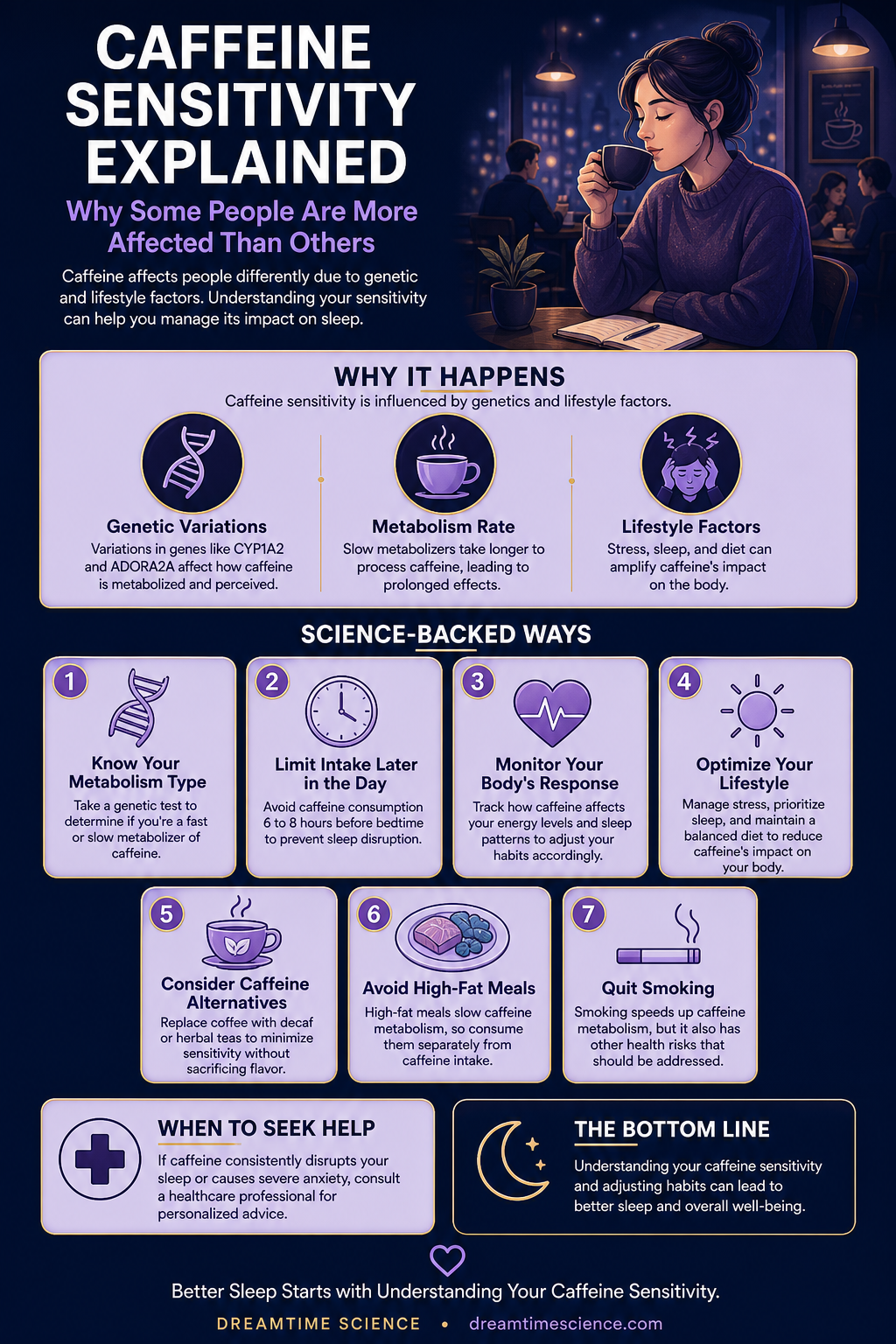
The short answer: Caffeine affects people differently due to variations in genes like CYP1A2 and ADORA2A. Individuals with a slow CYP1A2 variant metabolize caffeine 1.5 times slower than those with a fast variant, causing it to linger longer in their system. Genetic differences combined with lifestyle factors like stress, sleep, and diet significantly influence how sensitive someone is to caffeine’s effects.
Imagine this: Two friends walk into a café. One orders a double espresso with the ease of someone slipping into a favorite sweater. The other sips decaf, eyeing their friend’s cup like it’s a ticking time bomb. Why does caffeine make some hearts race like they’ve just sprinted a mile, while others barely feel a flutter?
The answer lies in how our bodies dance with the chemical invitation of caffeine. It’s a dance choreographed not only by habit but also by hardwired genetics.
The Genetic Key
Deep in your DNA, a silent director calls the shots on how your body handles caffeine. This genetic blueprint determines if caffeine is your friend or foe.
CYP1A2. It's not a secret code, but it might as well be. This gene is the maestro of caffeine metabolism. For some, it conducts a brisk symphony, ushering caffeine through the system with the grace of a breeze. For others, it slows the tempo, letting caffeine linger like an unwelcome guest. According to a 2011 study published in Clinical Pharmacology & Therapeutics, individuals with a slow variant of the CYP1A2 gene metabolize caffeine at a rate that is 1.5 times slower than those with the fast variant.
But that’s not the only genetic player. ADORA2A, a gene linked to caffeine sensitivity, dictates how caffeine binds to the receptors in your brain. Some experience a gentle nudge toward wakefulness, others a full-blown shove into jittery hyperdrive. A study in the American Journal of Clinical Nutrition in 2012 found that variations in this gene can lead to increased anxiety and sleep disturbances in some people after caffeine consumption.
It's more than just a cup of coffee. It’s a genetic narrative written long before your first sip.
The Slow and the Fast
The world divides into fast metabolizers and slow metabolizers of caffeine. It's not a choice; it's biology.
Fast metabolizers clear caffeine from their systems swiftly. They can sip an afternoon espresso and still drift into dreamland by nightfall. Their bodies process caffeine like a well-oiled machine, tuned to perfection. This efficiency is thanks to the fast variant of the CYP1A2 gene.
Slow metabolizers, in contrast, carry caffeine in their bloodstream for hours. A morning coffee could still be whispering its wakeful presence when the sun sets. For these individuals, caffeine metabolism is a slow dance, each step deliberate. This isn't just trivia for coffee trivia night—it’s the reason why that post-lunch cappuccino might steal your sleep, as we explored in How Caffeine Affects Your Sleep (And When to Stop Drinking It).
What This Means for You
So what can you do? If you find yourself wide awake after a single cup, consider these strategies: - Genetic Testing: Consider a genetic test to determine your caffeine metabolism type. - Moderation: Limit your intake, especially later in the day, to avoid sleep disruption. - Observation: Pay attention to how your body reacts to caffeine and adjust accordingly.
Understanding your genetic predisposition can guide you toward more restful nights.
Caffeine Intolerance vs. Sensitivity
Yet, not everyone who suffers after a latte is genetically wired that way. Caffeine intolerance and caffeine sensitivity paint a broader picture.
- Intolerance is the body’s inability to process coffee’s chemistry without discomfort. It’s the physical symptoms—a racing heart, an uneasy stomach.
- Sensitivity, though, is a whisper from the nervous system, a heightened awareness of caffeine's presence.
They seem similar but aren't twins. Intolerance can be managed by moderation; sensitivity often demands avoidance. Understanding the difference is key. It's not just about genetics but also how your body reacts in real-time.
The Role of Lifestyle
Genetics sets the stage, but lifestyle writes the script. Stress, sleep, and diet—all influence caffeine’s impact.
Under stress, your body’s usual caffeine response can shift, amplifying its effects. Sleep deprivation can also heighten sensitivity, turning a friend into a foe.
Then there’s diet. High-fat meals can slow caffeine metabolism, while smoking can speed it up. It’s a complex interplay where lifestyle choices tip the scales. According to a 2015 study in Psychopharmacology, smokers metabolize caffeine almost twice as fast as non-smokers.
Finding Your Balance
To navigate the caffeine conundrum, listen to your body’s cues. Start by observing how caffeine affects you. Does a cup of coffee make you feel alive or leave you jittery? Is your sleep disrupted on caffeinated days? These clues are breadcrumbs leading to what your genetic makeup might be telling you.
Moderation is key. If caffeine disrupts your life more than it enhances it, it’s time to rethink that third cup.
When Caffeine Becomes a Culprit
For some, the thrill of caffeine isn't worth the consequence. Sleep disturbances, anxiety spirals, and heart palpitations—these can be the result of caffeine intolerance or heightened sensitivity.
In these cases, caffeine becomes an unwelcome guest, crashing the party and leaving chaos in its wake. It’s more than a simple jolt of energy; it’s a potential saboteur of sleep hygiene. Recognizing your limits can mean the difference between a sleepless night and restful slumber.
Historical Context of Caffeine Consumption
Caffeine has been consumed for thousands of years, with its origins tracing back to ancient civilizations. The earliest known consumption of caffeine was through tea in China, dating back to around 2737 BC. Coffee, on the other hand, was discovered in Ethiopia in the 9th century. These beverages were initially used for their stimulating effects, often in religious or cultural rituals. Over time, the global spread of coffee and tea led to the establishment of coffeehouses in the Middle East and Europe, becoming centers for social interaction and intellectual discourse. Understanding the historical context of caffeine consumption highlights its longstanding influence on human culture and society.
Conclusion
In the end, caffeine is a powerful player in the symphony of sleep and wakefulness. It can lift the veil of morning fog, but for some, it also steals the peace of night. Understanding your personal relationship with caffeine isn’t about giving up your favorite brew. It’s about finding harmony, tuning into the rhythm that suits your body’s unique composition.
Want to experience these sleep science concepts with our soothing narration and ambient soundscapes? Check out our latest video on YouTube @dreamtimescience.
Frequently Asked Questions
What is caffeine sensitivity?
Caffeine sensitivity refers to the heightened response some individuals have to caffeine, often due to genetic factors. This can lead to symptoms like jitteriness and sleep disturbances even with small amounts of caffeine. According to research, individuals with variations in the ADORA2A gene may experience increased anxiety and sleep disturbances, making them more sensitive to caffeine's effects.
How do genetics influence caffeine metabolism?
Genetics, particularly the CYP1A2 and ADORA2A genes, play a significant role in how quickly caffeine is metabolized and how it affects the brain. Variations in these genes can determine whether you are a fast or slow metabolizer. A 2011 study in Clinical Pharmacology & Therapeutics demonstrated that slow metabolizers process caffeine 1.5 times slower than their fast-metabolizing counterparts.
Can lifestyle changes impact caffeine sensitivity?
Yes, lifestyle factors like stress, sleep patterns, and diet can influence how your body reacts to caffeine. For instance, smokers metabolize caffeine faster, while high-fat meals can slow its clearance. A 2015 study in Psychopharmacology found that smoking can nearly double the rate of caffeine metabolism.
Is there a difference between caffeine sensitivity and intolerance?
Yes, caffeine sensitivity involves a nervous system response leading to heightened awareness of caffeine's effects. Intolerance is the body's inability to process caffeine without physical discomfort, such as a racing heart or upset stomach. Understanding these differences can help tailor your caffeine consumption to your body's needs.
How can I determine my caffeine sensitivity?
Pay attention to your body's reactions to caffeine and consider genetic testing if you're frequently affected. This can help you understand whether you should moderate your intake for better sleep. Observing your body's response to caffeine can provide insights into your genetic predisposition and help you adjust your consumption accordingly. Now, curious readers, drift off into the night with this newfound understanding of caffeine's role in your life.
Tonight's Listening
 Tonight's episodeUnveiling the Mind's Labyrinth
Fall Asleep to a Science Lecture
Put tonight's reading into practice — pick a gentle, softly-narrated episode and let the Professor talk you to sleep.
Tonight's episodeUnveiling the Mind's Labyrinth