A nap calculator is a tool designed to help individuals optimize the rejuvenating benefits of short sleep periods by aligning them with the natural rhythms of the sleep cycle. Strategic napping, timed correctly, can enhance alertness, cognitive function, and overall performance without causing disorientation or grogginess.
What Is a Nap Calculator?
A nap calculator is not a physical device, but a method based on understanding sleep architecture. The purpose is to avoid the negative consequences of waking from deeper sleep stages, specifically sleep inertia. It functions by predicting ideal nap durations and wake times based on the cyclical nature of sleep.
The Science of Sleep Cycles
Sleep progresses through sequential stages, each with distinct physiological characteristics. These stages include light sleep, deep sleep (also known as slow-wave sleep), and rapid eye movement (REM) sleep. Light sleep is associated with memory consolidation and emotional processing, while deep sleep plays a critical role in physical restoration and hormonal regulation. REM sleep is important for cognitive functions like learning, memory and creativity. The complete cycle—transitioning through all stages and returning to light sleep—typically lasts around 90 minutes.
How to Use a Nap Calculator Effectively
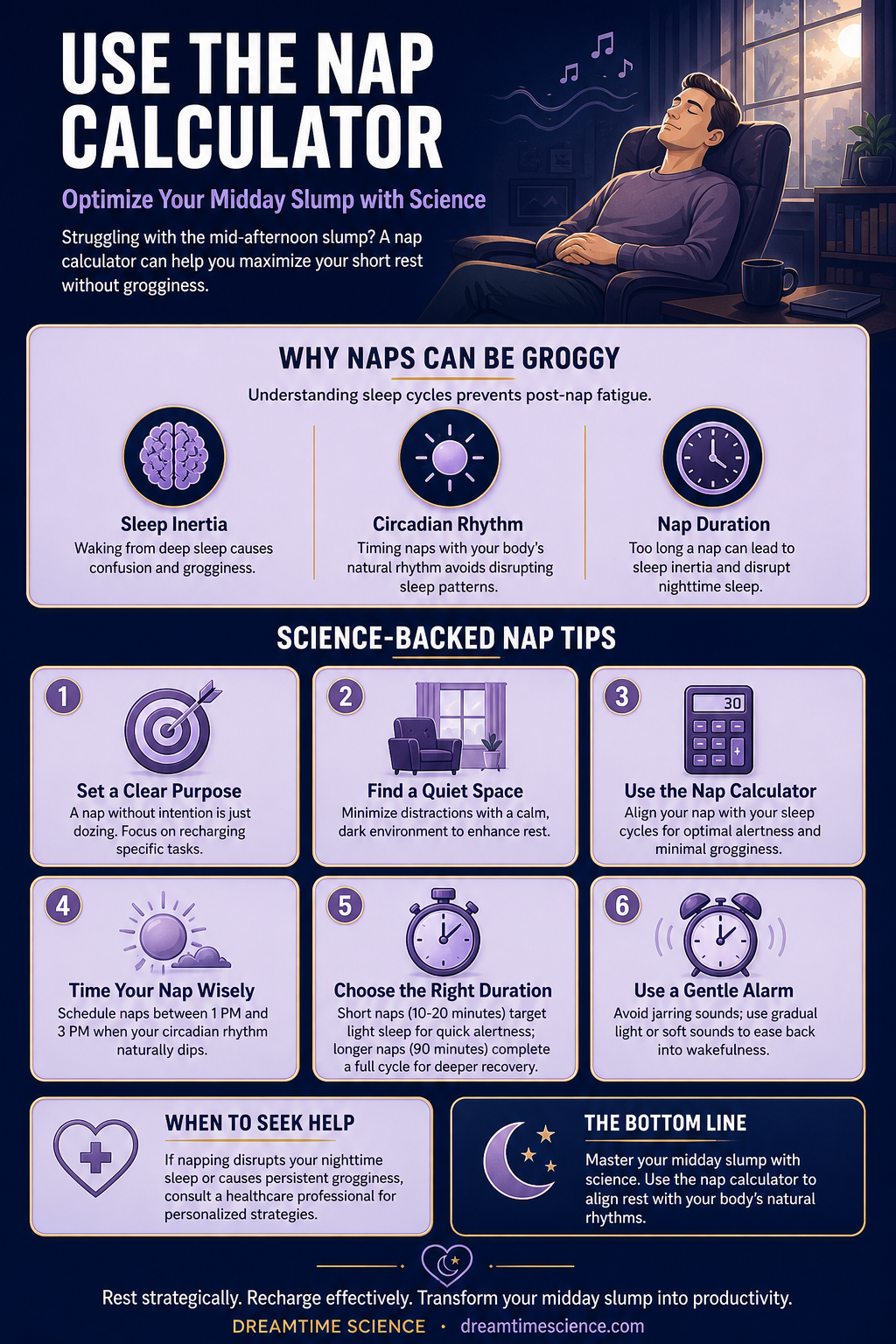
The foundation of effective nap utilization lies in selecting an appropriate duration. The most commonly recommended nap times are 20 minutes or 90 minutes. A 20-minute nap, often referred to as a "power nap," allows for a period of light sleep that can enhance alertness and cognitive performance. A 90-minute nap ideally includes a full sleep cycle, maximizing cognitive benefit but requiring more dedicated time.
To utilize a nap calculator, the user inputs their desired wake time. The calculator then determines the optimal time to begin the nap, calculating backwards to ensure awakening occurs during a light sleep phase.
Creating the Ideal Napping Environment
Several factors beyond the timing itself contribute to a successful nap. A quiet, dark, and cool environment is essential for promoting sleep onset. Reducing external stimuli minimizes distractions and supports the natural transition to sleep. While not strictly required, the use of earplugs or white noise can further enhance the serenity of the sleep space.
Timing Considerations: Aligning with Your Circadian Rhythm
The body operates on an internal biological clock, known as the circadian rhythm, which regulates sleep-wake cycles, hormone release, and other physiological processes. This rhythm dictates periods of alertness and fatigue throughout the day, and aligning naps accordingly can significantly impact their effectiveness. Afternoon hours, particularly between 1 PM and 3 PM, frequently correspond to a natural dip in alertness. However, individual circadian rhythms vary, influenced by factors like genetics and daily routines.
Nap Duration and Its Effects on Sleep Inertia
Sleep inertia is the transient period of grogginess and impaired cognitive performance immediately following awakening. It primarily occurs when interrupting sleep during deep sleep stages. Shorter naps (20 minutes) are less likely to induce significant sleep inertia because they primarily occur within lighter sleep phases. Longer naps (90 minutes) can potentially lead to more pronounced sleep inertia, even if completing a full sleep cycle, due to the increased likelihood of including deeper sleep stages.
Optimizing the Wake-Up Process
Minimizing sleep inertia requires a deliberate approach to the wake-up process. Abruptly terminating sleep with a jarring alarm can be particularly disruptive. Gradual awakening methods, such as slow-rising alarms or light-based systems that simulate sunrise, can facilitate a smoother transition to wakefulness. Incorporating movement or exposure to bright light shortly after awakening can further enhance alertness and mitigate lingering grogginess.
Troubleshooting Common Nap Challenges
Some individuals experience difficulty falling asleep during a short nap. This can be attributed to factors like caffeine consumption, stress, or an inconsistent sleep schedule. Avoiding stimulants for several hours prior to napping and practicing relaxation techniques, such as deep breathing or meditation, can promote sleep onset. If consistent difficulty arises, considering the potential impact of underlying sleep disorders is advisable.
References
- Currently, research is ongoing in the field of sleep science, and while established studies exist within component areas like sleep cycles, the direct "nap calculator" methodology lacks specific, large-scale empirical validation readily available at this time. This guide synthesizes widely accepted understanding of sleep physiology and timing strategies to promote optimal nap experiences.
Frequently Asked Questions
What is the ideal nap length for most adults?
For many, a 10-20 minute power nap provides sufficient refreshment without causing significant grogginess. This duration often allows individuals to reach lighter stages of sleep, promoting increased alertness. However, individual responses can vary.
Can a nap compensate for insufficient nighttime sleep?
While naps can temporarily reduce feelings of sleepiness, they are not a substitute for adequate nighttime sleep. Chronic sleep deprivation accumulates a sleep debt that cannot be fully resolved through napping. Prioritizing a consistent 7-9 hours of quality sleep each night is crucial for optimal health and functioning.
Are there any downsides to incorporating naps into my routine?
For some individuals, frequent or prolonged napping can interfere with nighttime sleep, particularly if taken too close to bedtime. Careful timing and moderation are essential to avoid disrupting the established sleep-wake cycle.
Is it possible to nap too much?
Excessive napping may indicate an underlying health issue, such as sleep apnea or chronic fatigue syndrome. If you find yourself needing to nap frequently or for extended periods, consulting with a healthcare professional is recommended.
How does a nap calculator help me avoid feeling worse after a nap?
A nap calculator aims to predict an optimal wake-up time during a lighter phase of sleep, minimizing the likelihood of waking up during deep sleep and experiencing sleep inertia.
Fall Asleep to a Science Lecture
Put tonight's reading into practice — pick a gentle, softly-narrated episode and let the Professor talk you to sleep.
 Tonight's episodeUnveiling the Mind's Labyrinth