
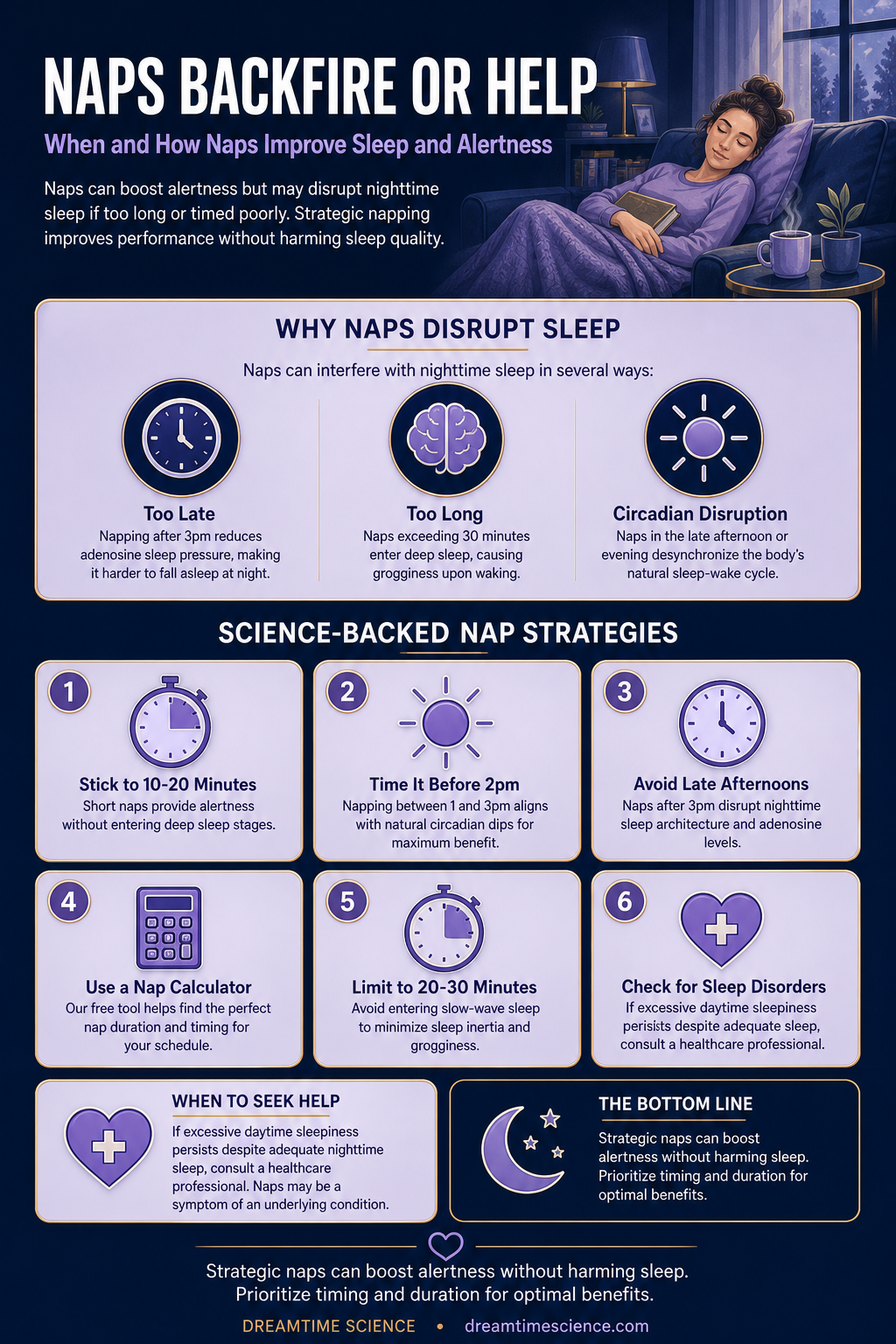
The short answer: Naps backfire when they last too long or happen too late. Naps exceeding 30 minutes enter deep sleep, causing grogginess upon waking. Napping after 3pm reduces adenosine sleep pressure, making it harder to fall asleep at night. The ideal nap is 10-20 minutes before 2pm, which boosts alertness and performance without disrupting nighttime sleep architecture.
Naps backfire when they last too long or occur too late in the day. Naps exceeding approximately 30 minutes increase the likelihood of entering slow-wave sleep, often resulting in grogginess and impaired cognitive function upon waking. Napping after 3pm can reduce sleep drive, potentially lessening the ability to fall asleep easily at night. However, short, strategically timed naps can demonstrably improve alertness, cognitive performance, and mood.
Key takeaways
- Short naps, lasting 10 to 20 minutes, can boost alertness and reduce fatigue.
- Longer naps, exceeding 30 minutes, often cause sleep inertia and grogginess.
- Shift workers and those with acute sleep loss may benefit from strategically timed naps.
- People with insomnia or chronic sleep problems should generally avoid daytime naps.
- Naps taken late in the day can interfere with nighttime sleep and circadian rhythms.
Why Naps Can Disrupt Nighttime Sleep
The benefits of sleep stem from the complex interaction of sleep pressure and the circadian rhythm, the body’s internal timekeeper. Wakefulness generates adenosine, a neurotransmitter that builds up throughout the day, creating a growing drive for sleep. Napping provides a temporary reduction in this adenosine concentration. A nap of sufficient length can lower adenosine levels to a point where initiating sleep at the normal bedtime becomes more challenging. Furthermore, napping late in the day—particularly in the afternoon or evening—can disrupt the regular timing of the circadian rhythm, delaying the natural sleep onset and decreasing sleep quality. This disruption stems from the rhythm’s role in regulating not just when we feel sleepy, but also the physiological processes preparing the body for sleep.
The Impact of Nap Duration on Alertness and Cognitive Performance
Nap duration is directly correlated with the depth of sleep achieved and the resulting effects on alertness and cognition. Short naps, typically lasting 10–20 minutes, generally do not progress into slow-wave sleep and are often associated with improvements in alertness, vigilance, and reduced fatigue. Conversely, longer naps, exceeding 30 minutes, substantially increase the probability of entering slow-wave sleep. Awakening from this deep stage typically triggers sleep inertia—a characteristic feeling of grogginess, disorientation, and impaired cognitive performance. The intensity and duration of sleep inertia are directly linked to the amount of slow-wave sleep experienced during the nap.
Who Benefits Most From Napping?
While not universally advantageous, specific groups can derive substantial benefits from strategic napping. Shift workers, who routinely contend with disrupted sleep schedules, can use naps effectively to mitigate the effects of sleep deficits and sustain cognitive functions during work hours. Individuals experiencing acute sleep deprivation, such as those recovering from jet lag or intense work periods, may also experience improvements in alertness and cognitive performance with carefully timed short naps. Even individuals with adequate overall sleep can benefit from brief naps to boost performance and enhance mood.
Can Naps Be Harmful?
For individuals diagnosed with insomnia or other chronic sleep disorders, naps can potentially exacerbate symptoms and impede treatment successes. In patients undergoing Cognitive Behavioral Therapy for Insomnia (CBT-I), naps are generally discouraged as they can reinforce unhelpful sleep-related behaviors and perpetuate poor nighttime sleep. Recurring reliance on naps may also indicate an underlying medical condition that warrants medical attention. Persistent excessive daytime sleepiness, even with adequate nighttime sleep, warrants consultation with a healthcare professional to rule out other contributing factors.
The Bottom Line
The efficacy of naps is contingent on both duration and timing. Short naps—between 10 and 20 minutes—are generally safe and beneficial for most individuals, offering improvements without significantly impacting nighttime sleep. However, longer naps, or those taken late in the day, may disrupt sleep architecture and adenosine levels, making it harder to fall asleep at night. Strategic use of brief naps can serve as a valuable tool for optimizing alertness and cognitive performance.
Frequently Asked Questions
Why do I feel worse after a nap?
Feeling groggy and worse after a nap is most often a result of sleep inertia, experienced when waking from slow-wave sleep. This typically happens following longer naps. Restricting a nap’s duration to 20-30 minutes can minimize the likelihood of entering these deeper sleep stages and reduce the severity of sleep inertia.
Is a short power nap better than no nap at all?
For the majority of people, a short power nap—lasting 10-20 minutes—is preferable to no nap at all, providing modest improvements in mood, alertness, and some cognitive functions without significantly disrupting nighttime sleep. Benefits will vary depending on an individual’s unique sleep patterns and needs.
What’s the best time of day to take a nap?
The optimal time for a nap is generally in the early afternoon, between 1 and 3 PM. This period frequently corresponds with a natural dip in circadian alertness, allowing for restorative benefits with minimal disruption to nighttime sleep patterns.
Can naps affect my nighttime sleep schedule?
Yes, naps can affect your nighttime sleep schedule, particularly if they are too long or taken too late in the day. They can reduce accumulated sleep pressure, delaying sleep onset and potentially reducing sleep quality. Maintaining a consistent sleep-wake schedule is crucial for managing these effects.
Are naps a sign of sleep deprivation?
An occasional nap is not necessarily indicative of sleep deprivation. However, a consistent requirement for naps to maintain daytime function suggests possible inadequate nighttime sleep. Identifying and addressing the underlying cause of daytime sleepiness is essential for optimal long-term sleep health.
Fall Asleep to a Science Lecture
Put tonight's reading into practice — pick a gentle, softly-narrated episode and let the Professor talk you to sleep.
 Tonight's episodeHow Gravity Can Bend Time: The Cosmic Clock Puzzle
Related articles

Shift Work and Sleep: Strategies for Night Shift Workers
Night shift work significantly disrupts the body's natural circadian rhythm, leading to challenges with sleep and alertness. A 2017 study found shift workers are 1.5…

The Science of Power Napping: Timing, Duration, and Benefits
Power naps, ideally lasting 10 to 20 minutes, can provide significant benefits like boosted alertness and improved mood. Timing is key; the early afternoon, between 1…

Dreams About Falling: What They Mean and Why They Happen
Dreams about falling are a common and often startling experience, frequently attributed to a physiological phenomenon called hypnic jerks—involuntary muscle ...