
The short answer: Nightmares and night terrors are fundamentally different events. Nightmares occur during REM sleep, involve vivid story-like dreams, and are remembered upon waking. Night terrors occur during deep non-REM sleep, involve screaming or thrashing with no dream recall, and the person remains physiologically asleep. Night terrors are most common in children aged 3-8 and are usually outgrown.
A child screams in the night.
An adult wakes with a pounding heart after a vivid dream.
Both are frightening.
But they are not the same.
Nightmares and night terrors are often confused — yet neurologically, they are very different events. Understanding the difference can reduce fear, stigma, and unnecessary worry, and help guide effective responses.
Key takeaways
- Nightmares occur during REM sleep, a phase characterized by vivid dreaming and heightened brain activity.
- Night terrors happen during deep, non-REM sleep and involve a sudden, frightening episode with little memory upon waking.
- People experiencing nightmares typically wake fully and can recall the disturbing dream in detail after the event.
- Night terrors are often linked to factors like immature nervous systems, sleep deprivation, and genetic predisposition.
- Seeking professional help is recommended if night terrors or nightmares are frequent, violent, or significantly impact daytime function.
What Are Nightmares?
Nightmares are disturbing dreams that occur during REM sleep. REM, or Rapid Eye Movement sleep, is a phase of the sleep cycle characterized by vivid dreaming, increased brain activity, and rapid eye movements. It's akin to a nocturnal theater where your brain stages emotionally charged, often surreal narratives.
Characteristics of Nightmares
- Timing: Nightmares typically happen in the second half of the night when REM sleep is more prominent.
- Imagery and Emotion: They involve vivid imagery and strong emotions such as fear, anxiety, or sadness.
- Memory: Upon waking, the dream can often be recalled in detail.
Because REM sleep increases toward morning, nightmares often occur closer to waking hours. After a nightmare, a person usually wakes fully, is alert, and can describe the dream vividly, although they may feel shaken but oriented.
Nightmares are common in both children and adults. According to a 2016 study published in the journal Sleep, approximately 2-8% of adults report frequent nightmares. Occasional nightmares are considered normal, but frequent, distressing ones might relate to stress, trauma, or anxiety disorders.
What This Means for You
If nightmares are disrupting your sleep, consider exploring stress-reduction techniques. Practices such as mindfulness meditation or cognitive behavioral therapy for insomnia (CBT-I) can be beneficial. For more on these approaches, see our article on Cognitive Behavioral Therapy for Insomnia (CBT-I): Evidence-Based Sleep Fixes.
What Are Night Terrors?
Night terrors (also called sleep terrors) are distinct from nightmares in several ways. They occur during non-REM deep sleep, typically in the first third of the night. This stage, known as slow-wave sleep, is characterized by the brain's transition into a deep rest, although some regions remain active.
Characteristics of Night Terrors
- Behavior: During a night terror, a person may sit upright suddenly, scream or shout, appear terrified, sweat heavily, and have a racing heart.
- Consciousness: The key difference is that they are not fully conscious. The person might be difficult or impossible to awaken.
- Memory: According to a 2010 study in the Journal of Clinical Sleep Medicine, people experiencing night terrors often have little to no memory of the event the next morning.
The brain is in a peculiar state, partially awake, but not in a dreaming mode. Night terrors are classified as a parasomnia — a disorder of arousal from deep sleep. They are most common in children, and most outgrow them as their nervous systems mature.
Why Night Terrors Happen
Night terrors are linked to several factors:
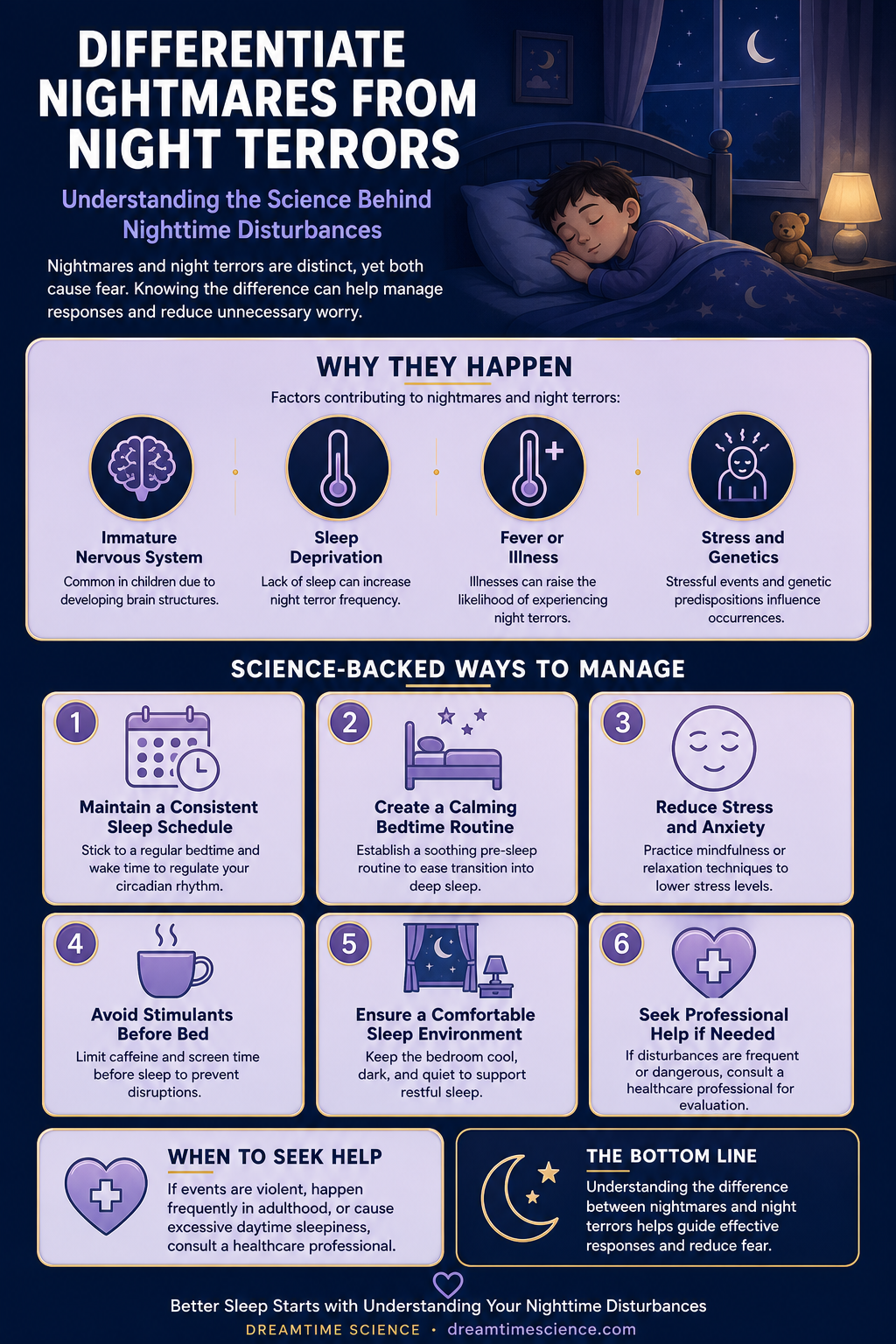
- Immature Nervous Systems: Common in children due to developing brain structures.
- Sleep Deprivation: Lack of sleep can exacerbate the frequency of night terrors.
- Fever: Illnesses can increase the likelihood of experiencing night terrors.
- Stress and Genetics: Stressful events and genetic predispositions also play a role. Research suggests a familial component, indicating genetics can influence occurrences.
In adults, frequent night terrors are rare and may require medical evaluation to rule out other conditions, such as sleep apnea or mood disorders.
What This Means for You
If night terrors are a concern, ensuring a consistent sleep schedule and reducing stress may help. Creating a calming bedtime routine can support a smoother transition into deep sleep. For more on crafting an effective bedtime routine, check out The Perfect Bedtime Routine According to Sleep Scientists.
Brain State Differences
Understanding the neurological underpinnings of nightmares and night terrors can offer further clarity:
Nightmares
- Occur in REM Sleep: During this stage, the brain is highly active, especially in emotional processing centers like the amygdala.
- Low Muscle Tone: The body is essentially paralyzed to prevent acting out dreams.
- Full Awakening: After a nightmare, individuals often awaken fully, able to recall the dream.
Night Terrors
- Occur in Deep Slow-Wave Sleep: This is the deepest stage of non-REM sleep, where the body is in a state of restoration.
- Partial Arousal: The brain partially wakes, leading to active motor responses.
- Confusion if Awakened: Individuals may be disoriented if woken up during a night terror.
Research from the American Academy of Sleep Medicine highlights that night terrors are more about incomplete arousal rather than dream content. This distinction is crucial in understanding why people experiencing night terrors often have no recollection of the event.
When to Seek Help
Professional evaluation might be necessary if:
- Events are violent or dangerous
- They happen frequently in adulthood
- There’s excessive daytime sleepiness
- Injury risk is present
Sleep specialists often conduct overnight studies, known as polysomnography, to rule out seizures or other disorders. If you're experiencing persistent sleep disturbances, consider reading our article on The Science of Why You Can't Sleep: Understanding the Insomnia Cycle.
Conclusion: Fear in Different Forms
Nightmares are vivid stories your emotional brain creates during REM sleep. Night terrors, on the other hand, are incomplete awakenings from deep sleep, often resulting in dramatic and mysterious episodes.
They may look similar from the outside. But inside the brain, they are worlds apart. Understanding that difference turns fear into knowledge. And knowledge reduces anxiety — even at 2 AM.
Want to experience these sleep science concepts with our soothing narration and ambient soundscapes? Check out our latest video on YouTube @dreamtimescience.
Frequently Asked Questions
Which is more common?
Nightmares are more common overall. A study by the American Academy of Sleep Medicine found that approximately 5-10% of children experience night terrors, making them more common in young children compared to adults.
Can adults have night terrors?
Yes, adults can experience night terrors, but it’s uncommon. When they do occur, they may indicate a more significant underlying issue, such as a mood disorder or sleep deprivation.
Do night terrors indicate trauma?
Not usually. Night terrors are primarily neurological in origin rather than psychological. They are more related to the arousal mechanisms of the brain rather than past traumatic experiences.
Should you wake someone during a night terror?
No, it's usually better to ensure safety and allow the episode to pass naturally. Waking someone during a night terror can increase confusion and prolong recovery from the event.
Can improving sleep reduce both?
Yes. Consistent sleep schedules and reducing sleep deprivation can help mitigate both nightmares and night terrors. For sleep improvement tips, see our article on 7 Science-Backed Ways to Beat Insomnia Tonight.
Fall Asleep to a Science Lecture
Put tonight's reading into practice — pick a gentle, softly-narrated episode and let the Professor talk you to sleep.
 Tonight's episodeHow Gravity Can Bend Time: The Cosmic Clock Puzzle
Related articles

Dreams About Being Chased: Why These Nightmares Are So Common
Dreams about being chased are a remarkably prevalent experience, occurring in an estimated 70% of adults at some point in their lives.
Lucid Dream Benefits: What You Can Actually Accomplish in Lucid Dreams
Lucid dreaming offers a unique opportunity to boost creativity, confront fears, and even improve skill performance. Regularly practicing lucid dreaming can reduce…

Why You Forget Dreams Immediately Upon Waking
You forget dreams because the hippocampus, responsible for transferring short-term memories to long-term storage, operates at reduced capacity during REM sleep.…