You've felt it, haven't you?
That groggy haze after a marathon sleep session. The kind that leaves you questioning whether those extra hours were a gift or a curse.
The allure of more sleep is undeniable, but is it possible to have too much of a good thing?
Welcome to the paradox of oversleeping.
The Sweet Seduction of Sleep
Sleep is our nightly reset, a sanctuary wrapped in blankets and dreams. But when does indulgence become excess?
Oversleeping, or hypersomnia, isn’t just hitting the snooze button a few too many times. It’s regularly dozing beyond the recommended 7 to 9 hours. According to a 2014 study published in the American Journal of Epidemiology, adults who consistently sleep more than nine hours a night have a 30% higher risk of mortality compared to those who sleep seven to eight hours.
The reasons vary. Sometimes, it's stress. Other times, it’s the body trying to make up for lost sleep. But what about those who find themselves sleeping the day away, despite a full night’s rest?
Here’s the twist: sleeping too much can lead to a different kind of fatigue.
What This Means for You
If you find yourself feeling more tired after sleeping longer, consider evaluating your sleep quality. Poor sleep hygiene could be the culprit. Explore practices like maintaining a consistent sleep schedule or creating a relaxing bedtime routine as detailed in our Sleep Hygiene 101: Building a Better Bedtime Routine From Scratch.
Why More Isn’t Always Better
Too much sleep may sound like a luxury. In reality, it can be a silent thief, robbing you of energy and clarity.
The science suggests a peculiar truth: those extra hours can throw off your circadian rhythm, the internal clock that regulates your sleep-wake cycle. Imagine it as a metronome, meant to keep time with your daily life. Oversleeping, however, can throw this rhythm offbeat, leaving you feeling out of sync.
A 2015 study in the Journal of Clinical Sleep Medicine revealed that irregular sleep patterns can lead to increased symptoms of depression and anxiety, further impacting your mental health.
And there’s more.
Oversleeping has been linked to a variety of health concerns, including increased risks for heart disease, diabetes, and even depression. It’s a reminder that balance, not abundance, is the key to wellness.
The Hidden Costs of Hypersomnia
The allure of the pillow can sometimes mask underlying issues. Could oversleeping be a symptom, rather than the problem itself?
Hypersomnia often walks hand in hand with conditions like sleep apnea, depression, and even certain neurological disorders. It’s the body signaling that something deeper might be amiss. Sleep Apnea Explained: Signs You Stop Breathing at Night can provide more insights into how sleep apnea might be affecting your rest.
You see, sleep is not just rest. It’s a dance of cycles, each with its role. Too much sleep, and you risk interrupting this delicate choreography.
And those risks aren’t just physical.
The emotional toll can weigh heavily, too, with feelings of lethargy and isolation trailing long sleep sessions.
When Rest Becomes Rust
The irony of oversleeping is stark: the more you indulge, the more you might feel trapped in a fog.
We often overlook the nuances of too much rest. It's not just about time spent in bed; it’s about the quality of the sleep itself.
Think of it like leaving a car engine running idle for too long. Eventually, it sputters, struggling to find its spark. Your body, too, needs balance more than surplus.
Breaking the Cycle
So, what does it take to escape the cycle of excessive sleep?
It starts with small, intentional shifts:
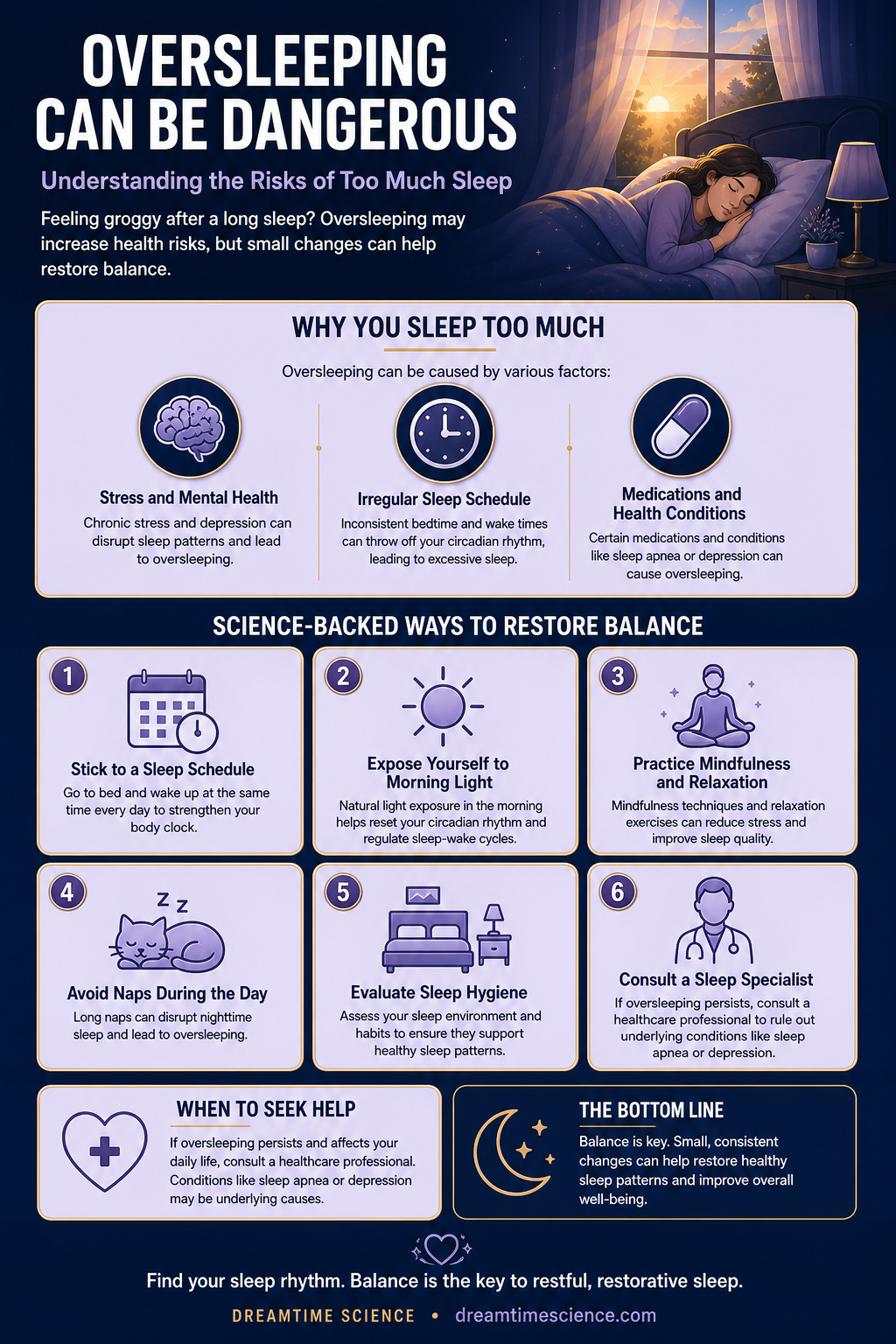
1. Gradually adjust your bedtime: Aim to go to bed 15 minutes earlier or later each night until you find a comfortable schedule. 2. Set consistent wake times: Even on weekends, wake up at the same time to strengthen your circadian rhythm. 3. Embrace morning light: Exposure to natural light helps reset your internal clock.
But it’s deeper than regimen alone. Addressing stress, examining mental health, and consulting a sleep specialist can uncover hidden roots of hypersomnia. Our article on The Connection Between Stress and Insomnia and How to Break It offers strategies to manage stress-related sleep issues.
What This Means for You
Finding a sleep pattern that works for your body can improve both mood and energy. If you're struggling with oversleeping, consider integrating mindfulness practices into your routine, such as those discussed in The Science of Meditation for Sleep: How Mindfulness Impacts Rest.
Embrace the Power of Balance
Sleep is a powerful ally, but like any relationship, it requires understanding and respect.
Oversleeping doesn’t have to be a life sentence. It’s an invitation to listen, to adjust, and to find a balance that fuels rather than drains.
There’s a sweet spot where rest rejuvenates rather than weighs you down. Where dreams inspire rather than drag you back under.
Conclusion
Oversleeping reveals a quiet truth: too much of a good thing can become a burden. While sleep is a sanctuary, balance is key to ensuring it revives rather than drains. Finding your rhythm involves more than counting hours; it's about harmonizing with your body's natural cues and needs.
Want to experience these sleep science concepts with our soothing narration and ambient soundscapes? Check out our latest video on YouTube @dreamtimescience.
Frequently Asked Questions
Can oversleeping be indicative of a sleep disorder?
Yes, oversleeping can sometimes indicate a sleep disorder such as sleep apnea or narcolepsy. A study published in The Lancet in 2017 found that patients with sleep apnea often report excessive daytime sleepiness and prolonged night sleep. If you suspect a sleep disorder, consulting with a sleep specialist is recommended. Additionally, narcolepsy, characterized by excessive daytime sleepiness and sudden sleep attacks, can also lead to prolonged sleep durations. Understanding these conditions can be crucial for effective management and treatment.
What is the optimal amount of sleep for adults?
The National Sleep Foundation recommends 7-9 hours of sleep per night for most adults. However, individual needs may vary, and factors such as lifestyle and health play a role. Consistency in sleep patterns is often more important than the exact number of hours. Research suggests that maintaining a regular sleep schedule can enhance sleep quality and overall well-being, as highlighted in studies on circadian rhythm regulation.
Why does oversleeping make me feel more tired?
Oversleeping can disrupt your circadian rhythm and lead to a phenomenon known as sleep inertia, where you feel groggy upon waking. According to a 2013 study in the Journal of Clinical Neurophysiology, sleep inertia can last anywhere from a few minutes to several hours, affecting cognitive and physical performance. This grogginess is linked to the brain's slow transition from sleep to wakefulness, impacting alertness and decision-making abilities.
Can lifestyle changes help reduce oversleeping?
Yes, lifestyle changes such as maintaining a consistent sleep schedule, reducing stress, and improving sleep hygiene can help manage oversleeping. Incorporating regular physical activity and a balanced diet also supports better sleep patterns. Engaging in activities that promote relaxation, such as yoga or meditation, can further enhance sleep quality and reduce the tendency to oversleep.
Is it okay to sleep more on weekends to catch up on sleep?
While it might be tempting, sleeping in on weekends can further disrupt your circadian rhythm. It's better to maintain a consistent sleep schedule throughout the week. For more information on this topic, see our article on Why You Sleep More on Weekends (And If It's Healthy). Consistency in sleep timing helps stabilize your internal clock, reducing the negative impacts of social jetlag.
Fall Asleep to a Science Lecture
Put tonight's reading into practice — pick a gentle, softly-narrated episode and let the Professor talk you to sleep.
 Tonight's episodeHow Credit Cards Transmit Data