
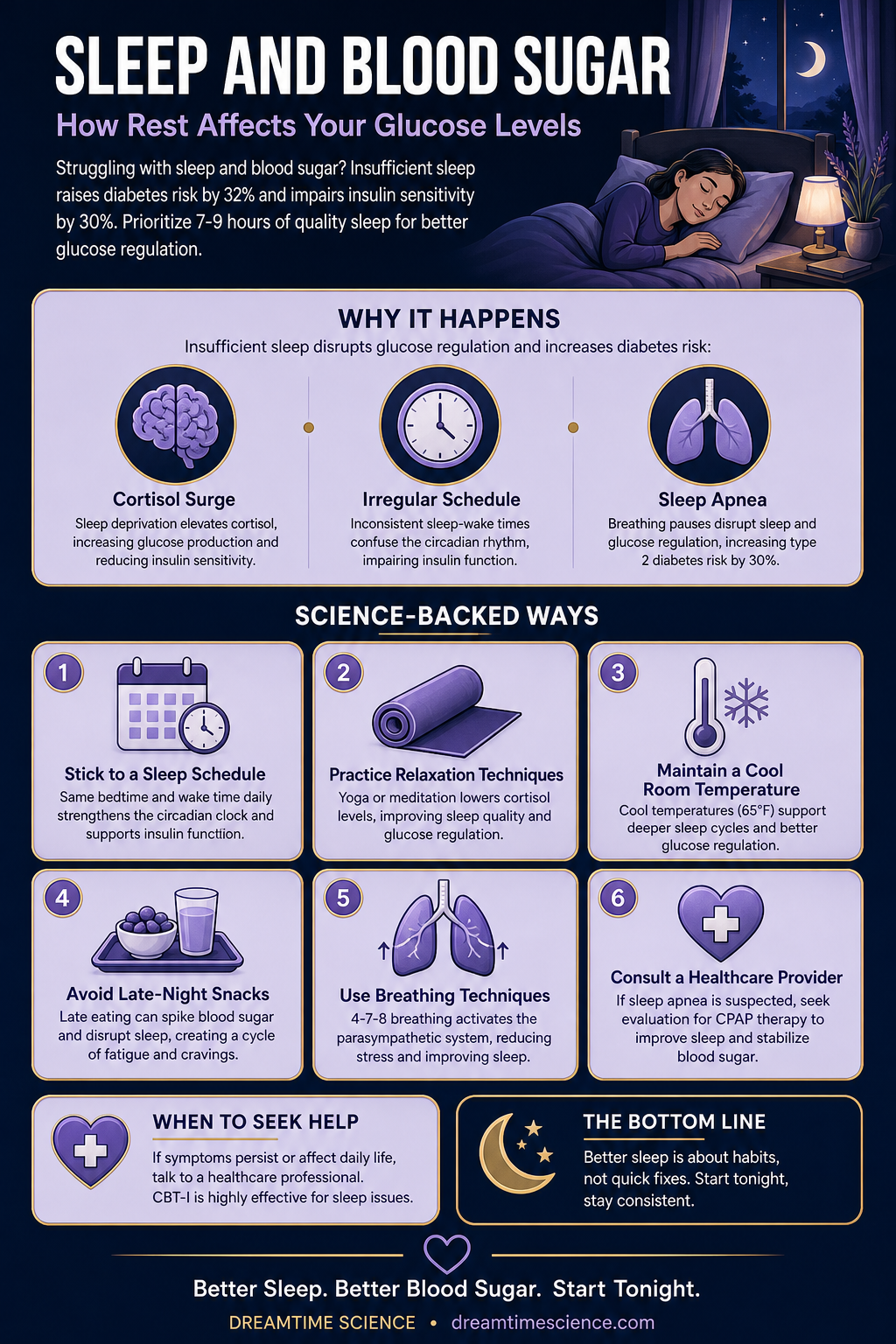
The short answer: Insufficient sleep significantly impacts blood sugar regulation. Studies show individuals sleeping less than six hours a night face a 32% higher risk of type 2 diabetes, while sleep deprivation can impair insulin sensitivity by 30%. Prioritizing 7-9 hours of quality sleep nightly can help stabilize glucose levels and improve overall metabolic health.
Ever felt like a walking contradiction when the clock strikes midnight? Exhausted but wired, craving sleep yet reaching for a snack? Your late-night hunger might be more than just a bad habit. It could be a sign that your sleep and blood sugar are in a secret tango, a dance that affects your entire day.
Key takeaways
- Prioritizing 7-9 hours of quality sleep each night supports healthy blood sugar regulation.
- Sleep deprivation can elevate cortisol levels, which increases glucose production and reduces insulin sensitivity.
- Maintaining a consistent sleep-wake schedule helps regulate insulin function and supports a healthy circadian rhythm.
- Untreated sleep apnea can disrupt glucose regulation and increase the risk of developing type 2 diabetes.
- For those managing diabetes, improving sleep quality can help interrupt cycles of insulin resistance and blood sugar spikes.
The Sleep-Metabolism Dance
Sleep isn't just a nightly retreat from the world. It's a critical player in your metabolism. Those hours of slumber are when your body decides how to process energy, setting the stage for your blood sugar levels come morning. It's like your body's silent negotiation, a nightly board meeting where glucose is the topic du jour.
When you skimp on sleep, your metabolism takes note. It's not just tired eyes and groggy mornings; it's your cells whispering, "We're not getting the shut-eye we need to function at full power." A 2015 study in the Journal of Clinical Sleep Medicine found that individuals who slept less than six hours a night had a 32% higher risk of developing type 2 diabetes compared to those who slept more than seven hours. That's a staggering statistic, highlighting the profound impact sleep has on glucose regulation.
What This Means for You
If you're struggling with sleep and suspect it's affecting your blood sugar, start by prioritizing a consistent sleep schedule. Aim for 7-9 hours of quality rest each night. Consider exploring relaxation techniques, such as those mentioned in Breathing Techniques for Sleep: How Your Breath Affects Rest, to help ease into slumber more effectively.
The Cortisol Conundrum
Meet cortisol, your body's stress hormone. It's not inherently bad. In fact, it's a warrior in your body's defense arsenal. But when sleep deprivation cranks up cortisol levels, things get messy. Cortisol fuels the fire of glucose production, leading to higher blood sugar levels. It's like your body's way of saying, "If you're not going to rest, we'll make sure you have the energy to keep going."
But here's the twist: too much cortisol isn't just about high glucose. It turns sleep into a restless, broken affair, a loop of fatigue feeding stress feeding fatigue. According to a 2017 study in Psychoneuroendocrinology, elevated cortisol levels due to sleep loss can increase glucose levels by up to 15%, making it harder for insulin to do its job.
What This Means for You
Understanding cortisol's role in your body's stress response can empower you to make changes. Consider incorporating stress-reduction practices into your routine, such as yoga or meditation, which can lower cortisol levels and improve sleep quality. Our article on The Science of Meditation for Sleep: How Mindfulness Improves Rest offers guidance on integrating these practices into your life.
Insulin's Night Shift
Insulin, that trusty hormone tasked with regulating blood sugar, works on a schedule. It relies on your circadian rhythm to know when to clock in and out. Picture insulin as the diligent night shift manager, ensuring glucose stays balanced. But without proper sleep, that circadian clock gets confused, and insulin's effectiveness dwindles.
Imagine trying to do your job while half-asleep. That's insulin, attempting to keep glucose in check when you're burning the midnight oil. A 2013 study in Diabetes Care revealed that sleep deprivation impairs insulin sensitivity by 30%, akin to creating instant jet lag for your metabolism.
What This Means for You
To support insulin's role, maintain a regular sleep-wake schedule that aligns with your natural circadian rhythm. Explore strategies discussed in Circadian Rhythms 101: How Your Body's Internal Clock Controls Sleep to help reset your internal clock and enhance insulin function.
Sleep Apnea: A Stealthy Saboteur
Sleep disorders like sleep apnea sneak in, exacerbating the sleep-glucose relationship. When breathing pauses disrupt sleep, they also disrupt glucose regulation. It’s a sneaky culprit, silently slipping in, affecting your health from behind the curtains of slumber.
Sleep apnea isn't just about snoring; it's about those mini wake-ups that scramble the metabolic signals. It's the hidden hand that nudges your body toward insulin resistance. Research published in the American Journal of Respiratory and Critical Care Medicine in 2010 found that untreated sleep apnea can increase the risk of developing type 2 diabetes by 30%.
What This Means for You
If you suspect sleep apnea affects your glucose control, consult a healthcare provider for evaluation and potential treatment options, such as continuous positive airway pressure (CPAP) therapy. This intervention can significantly improve sleep quality and stabilize blood sugar levels.
The Diabetes Connection
If you’re managing diabetes, sleep becomes even more crucial. The interplay between sleep and blood sugar is like a delicate high-wire act. Lack of sleep can lead to insulin resistance, a familiar foe in the diabetes arena. And when blood sugar levels spike, sleep quality nosedives, creating a cycle that’s tough to break.
But here’s the silver lining: understanding this connection gives you the power to interrupt the cycle. Small changes in sleep habits can lead to significant improvements in glucose regulation.
A Call for Sleep Hygiene
So, how do you dial in the perfect sleep for optimal glucose levels? The answer might be simpler than you think. Start with a regular sleep schedule. Your body craves consistency. A dark, quiet room free of screens an hour before bed gives your brain the cues it needs to release melatonin, your sleep hormone. For more tips on optimizing your sleep environment, visit Sleep Hygiene 101: Building a Better Bedtime Routine From Scratch.
Cutting caffeine in the afternoon, as discussed in How Caffeine Affects Your Sleep (And When to Stop Drinking It), embracing a wind-down routine, and perhaps indulging in a warm bath can all coax your body into a restful state. It's not just about getting more sleep; it's about getting good sleep.
Conclusion
Sleep is not just a passive state; it's an active participant in regulating your body's energy and glucose levels. Each night, as you close your eyes, your body embarks on a complex journey of balance and restoration. Tomorrow's blood sugar levels start with tonight's sleep. Prioritize restful sleep to support your health and maintain metabolic harmony.
Want to experience these sleep science concepts with our soothing narration and ambient soundscapes? Check out our latest video on YouTube @dreamtimescience.
Frequently Asked Questions
How does lack of sleep affect blood sugar levels?
Lack of sleep can elevate cortisol levels, impair insulin sensitivity, and disrupt the body's natural circadian rhythm. A study in Diabetes Care (2013) found that sleep deprivation reduces insulin sensitivity by 30%, leading to higher blood sugar levels.
Can improving sleep quality help manage diabetes?
Yes, enhancing sleep quality can improve glucose regulation and insulin sensitivity. A 2015 study in the Journal of Clinical Sleep Medicine reported that better sleep habits can reduce the risk of developing type 2 diabetes by 32%.
What is the connection between sleep disorders and blood sugar?
Sleep disorders like sleep apnea increase the risk of insulin resistance and type 2 diabetes. Research in the American Journal of Respiratory and Critical Care Medicine (2010) found untreated sleep apnea can raise diabetes risk by 30%.
Are there specific sleep hygiene practices for better glucose control?
Yes, maintaining a regular sleep schedule, reducing screen time before bed, and managing stress through mindfulness can all improve sleep quality and glucose control. Our article on Sleep Hygiene 101 provides more insights.
Does cortisol impact sleep and blood sugar regulation?
Elevated cortisol levels due to stress or lack of sleep can increase glucose production and impair sleep quality. A study in Psychoneuroendocrinology (2017) showed that high cortisol levels could raise glucose by up to 15%.
Fall Asleep to a Science Lecture
Put tonight's reading into practice — pick a gentle, softly-narrated episode and let the Professor talk you to sleep.
 Tonight's episodeHow Gravity Can Bend Time: The Cosmic Clock Puzzle
Related articles

Breathing Techniques for Sleep: How Your Breath Affects Rest
Breathing techniques like the 4-7-8 method and deep breathing exercises can significantly improve sleep quality by activating the parasympathetic nervous system. A…

Sleep and Mental Health: How Rest Affects Depression and Anxiety
Sleep significantly impacts mental health, with a lack of sleep amplifying negative feelings. A 2007 study found sleep deprivation can increase the brain's reaction…

Sleep and Skin Health: Why Your Complexion Improves With Rest
Lack of sleep significantly impacts skin health, with sleep-deprived individuals showing twice as many signs of skin aging compared to those who are well-rested.…