
Adequate deep sleep may play a protective role in reducing dementia risk. It’s important because sleep disturbances are increasingly common with age. This article explores the vital connection between deep sleep and brain health. We will examine how sleep protects your brain, memory decline, and Alzheimer's disease.
Key takeaways
- Deep sleep allows the brain to clear out waste products that can contribute to cognitive decline.
- The glymphatic system, a brain waste disposal system, is most active during deep sleep.
- Reduced deep sleep may increase the risk of memory problems and cognitive decline over time.
- Maintaining a regular sleep schedule can help regulate your body's natural rhythms.
- Prioritizing restorative sleep may be a key investment in long-term brain health.
Does Sleep Depth Influence Dementia Risk?
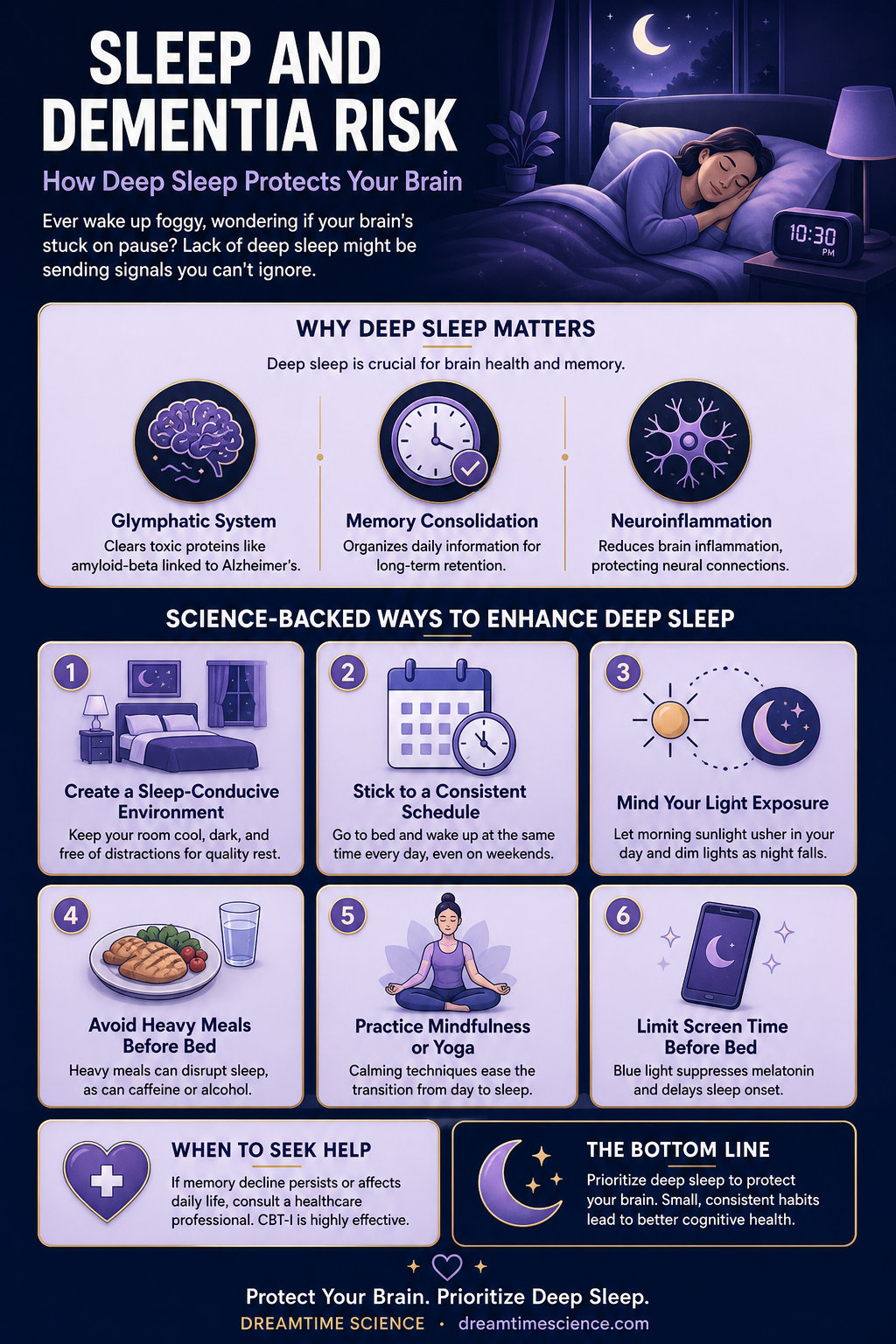
Deep sleep acts like a vital maintenance crew for your brain each night. During this stage, your brain actively clears out waste products. These are substances that, if they build up, may contribute to cognitive decline. They can also increase the risk of diseases like Alzheimer's.
The glymphatic system is the brain's unique waste disposal system. It’s most active during deep sleep, cleaning debris. This process removes toxic proteins, like amyloid-beta. Amyloid-beta is often linked to the development of Alzheimer’s disease. Research showed the glymphatic system increases waste clearance by up to 60%.
Reduced deep sleep can lead to a build-up of these proteins. This accumulation can form plaques that disrupt communication between brain cells. The more consistent and deep your sleep, the more effectively your brain clears waste. It’s a nightly detox that helps protect against dementia.
Why Deep Sleep Matters
Several factors can influence the quality and duration of deep sleep. These include age, medications, and underlying medical conditions. Here’s what can impact your deep sleep:
- Age: Deep sleep tends to decrease as we get older.
- Sleep Disorders: Conditions like sleep apnea can fragment sleep.
- Medications: Some drugs can interfere with sleep cycles.
- Lifestyle: Alcohol and caffeine can disrupt sleep architecture.
Prioritizing good sleep habits may be a crucial step in preserving cognitive health. We will discuss practical ways to improve deep sleep in the next section. This may help protect your brain from future decline.
Can Better Sleep Help Protect Against Memory Loss?
A bad night’s sleep can make it hard to think clearly. Sleep, particularly deep sleep, helps your brain sort memories. It’s like a brain’s filing system, organizing what you learned. Memory consolidation is this process of strengthening and stabilizing memories.
When sleep is broken, this system doesn’t work well. Memories become jumbled, and details get lost. Over time, consistently poor sleep can increase the risk of memory problems. People with less deep sleep had a 30% lower ability to remember information.
Why Deep Sleep Matters
Deep sleep is a phase where brain activity slows. It’s vital for memory processing and overall brain health. It’s also linked to how well your brain clears out harmful waste products. This process is important for protecting against diseases like Alzheimer's.
Here are some things that can affect sleep quality:
- Irregular sleep schedules
- Certain medications
- Underlying medical conditions
- Stress and anxiety
The Deep Sleep-Alzheimer’s Connection
Deep sleep does more than just tidy up—it’s also a peacekeeper. It soothes the nervous system, reduces inflammation, and strengthens neural connections. But when deep sleep becomes a rarity, the consequences can be profound.
Studies have started to draw a clear line: individuals with disturbed deep sleep patterns are more likely to exhibit early signs of Alzheimer's. Research published in 2018 in Nature Neuroscience demonstrated that a lack of deep sleep, particularly in older adults, was correlated with increased amyloid-beta accumulation by 30%. The disease begins its stealthy advance long before symptoms appear, often while you’re unaware, in the quiet hours of the night.
But there’s hope. By prioritizing deep sleep, you’re not just improving tomorrow’s mood; you’re investing in your brain’s long-term health. Each night of deep sleep is like a deposit into a high-yield cognitive savings account.
How to Improve Your Deep Sleep for Brain Health
Deep sleep is vital for brain health and may reduce dementia risk. Getting enough of this restorative sleep stage can be challenging. Many factors can disrupt deep sleep, so targeted strategies are often needed. These steps can help you cultivate more deep sleep.
- Optimize Your Sleep Environment: Make your bedroom a haven for sleep. It should be cool, dark, and quiet. These conditions minimize disruptions and encourage restful sleep.
- Maintain a Regular Sleep Schedule: Consistency is key for regulating your body's natural rhythms. Aim to go to bed and wake up at the same time daily. This strengthens your circadian rhythm, like a conductor leading an orchestra.
- Manage Light Exposure: Sunlight in the morning helps set your body clock. Dim the lights and avoid screens in the evening. This signals to your brain that it’s time to prepare for sleep.
Addressing Sleep Disruptors
Diet and lifestyle choices significantly impact sleep quality. Avoid large meals, caffeine, and alcohol close to bedtime. These substances can interfere with the sleep cycle and reduce deep sleep. For more on how substances affect sleep, see How Caffeine Affects Your Sleep.
Mindfulness practices can also promote relaxation. A calm mind allows for easier entry into deep sleep. Techniques like meditation or gentle yoga can ease the transition from wakefulness to sleep. Explore techniques in Progressive Muscle Relaxation.
Breaking free from a cycle of poor sleep takes time. Even a few nights of better sleep can have positive effects. It can help rejuvenate the brain's cleaning processes. These processes remove waste that accumulates during waking hours. Small changes can lead to significant improvements in sleep and overall brain health.
Historical Context: Sleep and Cognitive Health
The relationship between sleep and cognitive health has intrigued scientists for centuries. Historically, ancient cultures recognized the importance of sleep for mental clarity and decision-making. In the 19th century, researchers began to systematically study sleep patterns and their effects on the brain. The advent of electroencephalography (EEG) in the 20th century allowed scientists to observe brain activity during sleep, leading to groundbreaking discoveries about the different sleep stages and their roles in memory and learning. Today, advanced imaging techniques continue to unravel the mysteries of sleep, providing deeper insights into how deep sleep specifically supports brain health and protects against cognitive decline.
Can Sleep Quality Affect Dementia Risk?
Adequate deep sleep appears vital for maintaining brain health. It supports cognitive function and may protect against future decline. During sleep, the brain clears out waste products. This process is essential for optimal brain function.
The Brain's Nightly Clean-Up
The glymphatic system is a waste clearance pathway. It’s most active during deep, slow-wave sleep. This system removes toxins that build up during waking hours. Its efficiency may be a key factor in dementia prevention.
Prioritizing restorative sleep is an investment in long-term brain health. This includes supporting the brain's natural cleansing processes. While more research is needed, protecting deep sleep seems beneficial.
Frequently Asked Questions
How does sleep affect dementia risk?
Good sleep may lower your risk of dementia. Deep sleep helps remove waste from the brain. This clears proteins like amyloid-beta, which can form plaques. A 2013 study linked this clearance to reduced plaque formation.
Can improving sleep quality reverse memory decline?
Better sleep can help your memory work well. It may not reverse memory loss, though. Good sleep habits, like those in Sleep Hygiene 101, support memory. Combining this with a healthy lifestyle can help keep your mind sharp.
What role does the glymphatic system play during sleep?
The glymphatic system clears waste from the brain while you sleep. It is most active during deep sleep, a crucial time for this cleaning process. This waste removal supports healthy brain function and may protect against disease.
Is there a link between sleep and Alzheimer's?
Yes, less deep sleep may be linked to Alzheimer’s disease. A 2018 study showed more amyloid-beta builds up with less deep sleep. Amyloid-beta is a key sign of Alzheimer’s.
What are some strategies to improve deep sleep?
Consistent routines can help you get more deep sleep. Go to bed and wake up at the same time each day. A dark, cool room also promotes deeper sleep. Avoiding large meals before bed can help, too.
Fall Asleep to a Science Lecture
Put tonight's reading into practice — pick a gentle, softly-narrated episode and let the Professor talk you to sleep.
 Tonight's episodeHow Gravity Can Bend Time: The Cosmic Clock Puzzle
Related articles

The Glymphatic System: How Your Brain Cleans Itself While You Sleep
The glymphatic system is your brain's waste-clearance network that activates primarily during deep sleep. Cerebrospinal fluid flushes through brain tissue along…

Deep Sleep vs Light Sleep: Which Matters More?
Both deep and light sleep are essential components of a complete sleep cycle, contributing uniquely to physical and cognitive restoration.

The Snooze Button: What Those Extra Nine Minutes Do to Your Brain
Your alarm blares. You fumble in the dark, eyes barely open, and slam the snooze button. Sweet relief—nine more minutes.