
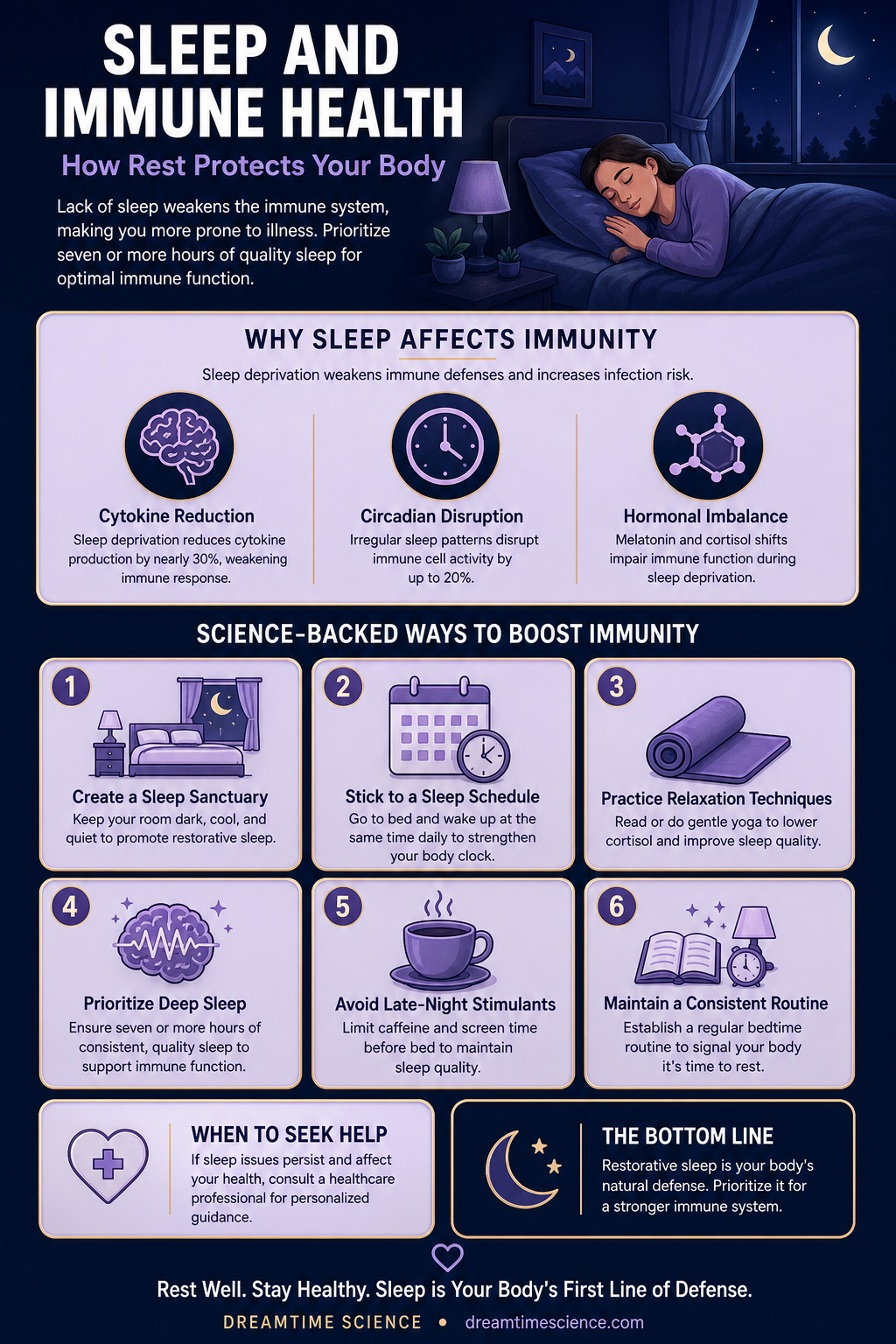
The short answer: Lack of sleep significantly weakens the immune system, making you more susceptible to illness. Individuals getting less than six hours of sleep per night are four times more likely to catch a cold, and sleep deprivation can reduce cytokine production by nearly 30%, hindering your body’s ability to fight infection. Prioritizing seven or more hours of consistent, quality sleep, especially deep slow-wave sleep, is crucial for maintaining a strong immune defense.
Adequate sleep is essential for a strong and responsive immune system. When you don’t get enough rest, your body’s defenses weaken. This article explores the crucial link between sleep and immunity, explaining how rest protects your health. We will examine the hormonal influences, circadian rhythms, and even the potential role of dreams in bolstering your body’s resilience.
Key takeaways
- Consistent sleep schedules help regulate your body’s natural rhythms and improve immune function.
- Sleep deprivation can decrease cytokine production, making it harder for your body to fight off germs.
- A consistent bedtime routine can help optimize hormonal changes that support a healthy immune system.
- Dreams, particularly those occurring during REM sleep, may indirectly support immune defenses by processing emotions.
- Creating a dark, cool, and quiet sleep environment can promote restful sleep and bolster your body’s defenses.
The Immune-Sleep Connection
Your body is an orchestra, and sleep is the conductor that keeps all sections in harmony. When you hit the hay, you're not simply recharging your mental batteries—there's a symphony of immune activity at play. During those precious sleep cycles, your immune cells regroup and refine their strategies to fight off invaders like viruses and bacteria. Sleep deprivation is like sending soldiers to battle without armor, leaving you vulnerable to illness.
A pivotal 2015 study published in Sleep found that individuals with less than six hours of sleep per night were four times more likely to develop a cold compared to those who slept seven hours or more. This is not just about hours; it's about the quality of sleep. The deep cycles of slow-wave sleep act as a fortified wall, protecting you against the microscopic threats you can't see.
What This Means for You
How can you ensure you're getting enough of this protective sleep? Prioritize establishing a consistent sleep schedule. As explored in Circadian Rhythms 101, aligning your sleep with your body's natural rhythms enhances both sleep quality and immune function. Setting regular bed and wake times can be your first line of defense against illness.
Does Sleep Protect Us From Getting Sick?
Your immune system acts like a security force, defending against illness. When you don’t get enough sleep, this defense weakens. People who regularly miss out on sleep are more likely to get sick. This isn't just chance; it's how your body works.
Sleep loss affects cytokines, which are special proteins. They help fight off infections and reduce swelling. Cytokines act like alarms, summoning help when needed. A study found that not getting enough sleep lowered cytokine production by almost 30%. This makes it harder for your body to fight off germs.
How Sleep Loss Hurts Your Defenses
When you sleep, your body repairs itself and strengthens defenses. Lack of sleep disrupts this process. It reduces the ability of your immune system to respond effectively. This can make it harder to recover from illness.
Here's what happens when you don't get enough sleep:
- Cytokine production decreases.
- Your body’s ability to fight infection weakens.
- You become more vulnerable to illness.
- Recovery from sickness takes longer.
How Sleep Affects Your Body’s Defenses
Hormones orchestrate a crucial process during sleep. Melatonin, often called the sleep hormone, rises as darkness falls. However, other hormones are also important. Cortisol, a stress hormone, decreases at night. This shift allows your immune system to work more effectively.
Sleep supports the production of T-cells, vital for fighting illness. A study showed that sleep can increase T-cell production by as much as 50%. These cells are part of your body’s defense system. They act as frontline warriors, ready to respond to threats. This nightly process prepares your immune defenses.
Optimizing Your Hormonal Support
A consistent bedtime routine can help you get the most from these hormonal changes. Lowering stress before bed is key. Relaxation techniques can reduce cortisol levels. Here are some helpful practices:
- Reading a book
- Practicing gentle yoga
- Taking a warm bath
- Listening to calming music
These activities encourage restful sleep and support a healthy immune system.
The Power of Circadian Rhythms
Your body has its own internal clock—a circadian rhythm—that ticks away in time with the day and night. This rhythm orchestrates not just sleep cycles but also immune function. When your circadian rhythm is in sync, your sleep quality improves, and so does your immune response. Disrupt this rhythm with irregular sleep patterns, and you throw your body's defensive timing out of whack. It's like showing up for a battle a day late.
Consistent sleep patterns are like the well-oiled gears of a clock, keeping everything running smoothly. A 2017 study from the Proceedings of the National Academy of Sciences showed that disrupting circadian rhythms can decrease immune cell activity by 20%, underscoring the importance of regular sleep schedules.
Do Dreams Support a Healthy Immune System?
Dreams are more than just strange stories playing out in your head. They are part of a vital process for emotional well-being. Vivid dreams typically happen during REM sleep. REM sleep is a phase when your brain sorts through feelings and stressful experiences. This mental "cleanup" may indirectly support your immune defenses.
During REM sleep, your brain works to process emotions. It’s like a nightly emotional reset, helping you cope with daily stressors. When your mind feels calmer, your body is better able to focus on protecting itself from illness. This is a complex interplay between your mental and physical states.
The REM Sleep-Immune Connection
REM sleep involves a collaboration between your mind (psyche) and body (soma). This nighttime process helps maintain overall health. It's a renewal period for both. Think of it as a nightly maintenance check for your mind and body.
How Can Sleep Strengthen Your Body’s Defenses?
Sleep plays a vital role in supporting your immune system. It’s a time when your body actively works to repair and protect itself. Think of sleep as an essential maintenance period for your health. It’s not just about feeling rested; it’s about building resilience.
Simple Steps to Prioritize Sleep
Several strategies can help you create an environment conducive to restful sleep. A dark, cool, and quiet room is ideal. Consistent sleep and wake times reinforce your body’s natural rhythms. Limiting screen time before bed is also helpful. Blue light from devices can interfere with sleep hormones. Relaxation techniques, such as deep breathing, can ease you into sleep.
- Create a Sleep Sanctuary: Ensure your bedroom is dark, cool, and quiet.
- Set Consistent Sleep Times: Maintain a regular sleep-wake schedule.
- Limit Screen Time Before Bed: Reduce exposure to blue light.
- Practice Relaxation Techniques: Engage in calming activities before sleep.
During sleep, your body performs essential functions. It repairs tissues and prepares your immune system for challenges. Sleep isn't simply downtime; it’s a proactive defense against illness.
How Does Sleep Help Keep Us Healthy?
Sleep plays a vital role in a strong immune system. It’s not just about feeling rested; it’s about defending your body. During sleep, your immune system releases protective substances. These substances help fight off germs and heal injuries.
Sleep and Your Body’s Defenses
Your immune system relies on a complex network of cells and proteins. These components work together to identify and fight off threats. Sleep supports this process by regulating cytokines, which are signaling molecules. Cytokines help coordinate the immune response and reduce inflammation, a process that can damage tissues.
Without enough sleep, your body has trouble fighting off infection. This is because sleep helps build up stores of infection fighters. These include antibodies, which are proteins that target and neutralize germs. Sleep deprivation can weaken these defenses, making you more likely to get sick.
Protecting your sleep is a simple way to support your health. Prioritizing sleep helps your body stay strong and resilient.
Frequently Asked Questions
How does sleep deprivation affect the immune system?
Not getting enough sleep can hurt your body’s defenses. It lowers the amount of proteins that fight illness. A study from 2007 showed a nearly 30% drop in these proteins when sleep is short.
Can improving sleep actually reduce the risk of illness?
Yes, better sleep can help protect you from getting sick. Research shows that good sleep strengthens your body's defenses. For example, a 2015 study linked adequate sleep to a fourfold reduction in cold risk.
What role does melatonin play in immune function?
Melatonin regulates sleep cycles and influences immune function. It acts as an antioxidant and enhances the body’s response to pathogens. The Journal of Immunology in 2014 noted melatonin's role in boosting T-cell production.
How do circadian rhythms influence immunity?
Your body’s internal clock affects how your immune system works. Circadian rhythms control the activity of immune cells. When these rhythms are disrupted, immune cell function can drop by about 20%. This was observed in research published in 2017.
Are dreams beneficial for the immune system?
Dreams can help keep your immune system working well. REM sleep, when most dreams occur, helps us deal with emotions. Managing stress in this way allows your body to better handle immune functions.
Fall Asleep to a Science Lecture
Put tonight's reading into practice — pick a gentle, softly-narrated episode and let the Professor talk you to sleep.
 Tonight's episodeHow Gravity Can Bend Time: The Cosmic Clock Puzzle
Related articles

Sleep and Heart Health: How Rest Protects Your Cardiovascular System
Insufficient sleep significantly impacts cardiovascular health. Individuals with chronic insomnia face a 45% increased risk of cardiovascular diseases, while…
Sleep Deprivation's Impact on Memory, Learning, and Your Immune System
After 24 hours without sleep, cognitive impairment equals a blood alcohol level of 0.10%, beyond the legal driving limit. Reaction times slow by 300%, emotional…

Sleep and Skin Health: Why Your Complexion Improves With Rest
Lack of sleep significantly impacts skin health, with sleep-deprived individuals showing twice as many signs of skin aging compared to those who are well-rested.…