← Back to Articles
Sleep Science
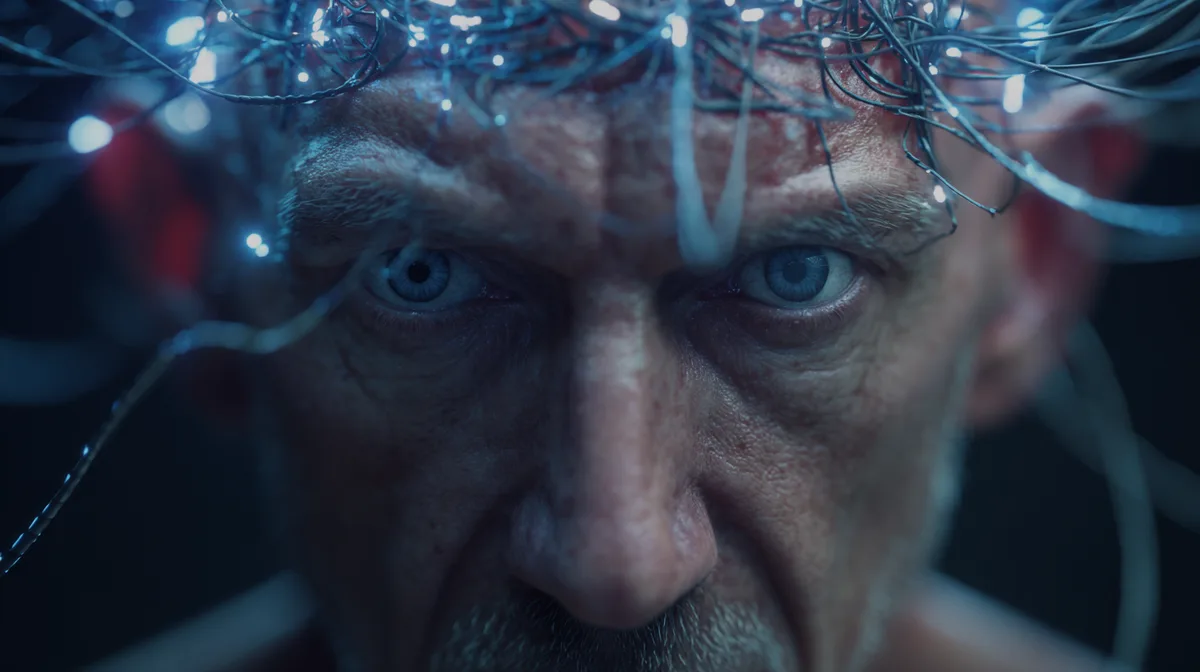
The short answer: After 24 hours without sleep, cognitive impairment equals a blood alcohol level of 0.10%, beyond the legal driving limit. Reaction times slow by 300%, emotional regulation collapses as the amygdala becomes 60% more reactive, and the prefrontal cortex loses its ability to make rational decisions. Even partial sleep deprivation of 6 hours per night accumulates into measurable cognitive decline within days.
You can feel it after just one bad night.
Your thoughts move slower, words don't come as easily, and you find yourself rereading the same sentence twice. Small problems feel bigger, and your world seems slightly out of focus.
Sleep deprivation doesn’t just make you tired.
It reshapes how your brain encodes memory, how you learn new information, and even how your immune system defends you. If you’ve ever wondered whether missing sleep really matters — scientifically — the answer is yes. But not in a dramatic, fear-based way.
It matters because sleep is when your brain and body perform essential maintenance, like a janitor tidying up and ensuring everything runs smoothly for another day.
Let’s explore what actually happens when sleep is shortened, fragmented, or chronically restricted.
Key takeaways
- Sleep strengthens declarative memory, which is remembering facts and events.
- Emotional memories and creative integration benefit from the restorative processes during REM sleep.
- Sleep deprivation reduces attention and impairs the brain’s ability to effectively store new information.
- Reduced sleep can amplify emotional responses and weaken the brain’s ability to regulate them.
- Chronic sleep restriction weakens immune responsiveness and increases inflammation markers over time.
Sleep and Memory: The Overnight Filing System
Throughout the day, your brain is like a sponge, soaking up experiences.
Conversations. Facts. Emotions. Sensory fragments.
But encoding information is only step one.
Memory Consolidation During Sleep
A 2016 study published in Nature Communications illustrates that sleep plays a critical role in memory consolidation — the process of stabilizing and integrating new information. Different stages of sleep support different types of memory:
- Deep sleep (slow-wave sleep): Strengthens declarative memory (facts, events).
- REM sleep: Supports emotional memory and creative integration.
When sleep is deprived, this consolidation process weakens. It’s not just that you feel foggy; the brain has fewer opportunities to transfer information from short-term storage (hippocampus) into long-term networks. Imagine trying to save a document, but the system shuts down before it finishes writing the file.
Learning While Sleep-Deprived: A Double Hit
Sleep deprivation affects learning in two profound ways:
- Reduced attention during encoding: The brain struggles to focus on new information.
- Reduced consolidation afterward: Even if information is encoded, it may not be stored effectively.
A 2007 study published in Nature Reviews Neuroscience found that even partial sleep restriction significantly impairs hippocampal function — the brain region critical for learning. If you study while sleep-deprived, you encode less effectively and consolidate less efficiently. That’s why an all-nighter often feels productive but results in weaker retention. Sleep isn’t lost time; it’s learning time.
For more on how stages support memory processing, see REM Sleep Explained: Why This Stage Matters Most.
Emotional Memory and Reactivity
Sleep deprivation also amplifies emotional intensity. Research from the University of California, Berkeley found that sleep-deprived individuals showed increased amygdala reactivity — up to 60% more emotional response to negative stimuli compared to rested individuals. At the same time, connectivity between the amygdala and prefrontal cortex (your rational regulator) weakens. Less sleep equals stronger emotional reactions and weaker regulation.
It’s not that you’re “overreacting.” Your neural circuitry is temporarily imbalanced.
Sleep and the Immune System
Now let’s turn inward — to your immune defenses.
While you sleep, your body releases cytokines — proteins that help regulate immune responses and inflammation. According to a 2015 study published in the Journal of Clinical Sleep Medicine, sleep deprivation reduces production of certain protective cytokines and antibodies. Studies show that individuals who sleep less than 6 hours per night are more susceptible to common viral infections compared to those who sleep 7–8 hours.
Sleep is not passive rest; it is immune coordination.
Chronic vs. Occasional Sleep Loss
One short night will not permanently damage memory or immunity. Your body is resilient. The concern arises with chronic sleep restriction — consistently getting less sleep than your biological need. Over time, cumulative sleep debt:
- Impairs attention and reaction time
- Weakens immune responsiveness
- Increases inflammation markers
- Disrupts hormonal balance
And yet, improvement often begins quickly when sleep regularity returns. The system recalibrates.
Why Recovery Sleep Feels So Deep
After sleep deprivation, you may experience increased slow-wave sleep and more intense REM periods, a phenomenon known as REM rebound. Your brain prioritizes restoration. This connects to Sleep Cycles Explained: Why 8 Hours Isn't Always Enough because not all sleep hours are equal. Architecture matters. Your brain is adaptive. When deprived, it compensates.
What This Means for You
Understanding the profound impact of sleep deprivation on your memory, learning, and immune health underscores the importance of prioritizing sleep. It's not just about feeling rested; it's about allowing your brain and body to perform essential functions that keep you sharp, balanced, and healthy. Consider adopting sleep-friendly habits like maintaining a consistent sleep schedule, creating a relaxing bedtime routine, and minimizing blue light exposure before bed. For more tips, see 7 Science-Backed Ways to Beat Insomnia Tonight.
Conclusion: Sleep Is Biological Protection
Sleep deprivation’s impact on memory, learning, and your immune system is not dramatic mythology. It’s measurable biology. Sleep strengthens neural connections, regulates emotion, and fortifies immune defenses. And when sleep returns, many of these systems rebound. You are not fragile; you are rhythmic. And rhythm can be restored.
Want to experience these sleep science concepts with our soothing narration and ambient soundscapes? Check out our latest video on YouTube @dreamtimescience.
Frequently Asked Questions
Does one night of poor sleep ruin memory?
No, the effects are typically temporary. While you may feel sluggish and forgetful after a single night of poor sleep, your brain is remarkably resilient. Chronic sleep restriction, however, can lead to more significant cognitive declines.
Can you “catch up” on sleep?
Partial recovery is possible, especially after short-term loss. Your body naturally increases deep sleep and REM sleep intensity to make up for the deficit, aiding recovery. However, consistently getting adequate sleep is the best approach.
Why do I get sick more when stressed and sleep-deprived?
Stress and sleep loss both suppress immune regulation, making your body more vulnerable to infections. Cortisol, a stress hormone, can further weaken immune responses when elevated due to lack of sleep.
Does sleep deprivation kill brain cells?
Severe, prolonged deprivation in extreme conditions can cause harm, but everyday sleep loss primarily affects function — not immediate structural damage. Your brain's adaptive mechanisms help mitigate short-term deprivation effects.
How much sleep do adults need?
Most adults function best with 7–9 hours of sleep per night, though individual needs may vary. Quality and consistency of sleep are as important as quantity.
Tonight's Listening
 Tonight's episodeHow Gravity Can Bend Time: The Cosmic Clock Puzzle
Fall Asleep to a Science Lecture
Put tonight's reading into practice — pick a gentle, softly-narrated episode and let the Professor talk you to sleep.
Tonight's episodeHow Gravity Can Bend Time: The Cosmic Clock Puzzle
Related articles

Sleep, Mind & Mood
Sleep Learning: Optimizing Memory Consolidation During Sleep
Sleep learning aims to strengthen existing memories or facilitate the consolidation of recently learned information while asleep, rather than acquiring entirely new…

Food, Body & Health
Sleep and the Immune System: How Rest Protects Your Health
Lack of sleep significantly weakens the immune system, making you more susceptible to illness. Individuals getting less than six hours of sleep per night are four…
Sleep, Mind & Mood
Learn in Your Sleep: The Science of Sleep-Dependent Memory Consolidation
While you can't learn entirely new, complex information during sleep, research shows that memory consolidation, particularly for declarative facts and procedural…