
Ever wake up in the middle of the night gasping for air? Or maybe someone told you that your snoring sounds less like a gentle purr and more like a bear stuck in a chimney. If nights leave you feeling like you’ve been in a wrestling match with your pillow, chances are, sleep apnea might be pinning you down.
But what exactly is sleep apnea? And how do you know if you’re one of the many who stops breathing at night?
Key takeaways
- Sleep apnea involves pauses in breathing during sleep, often without awareness.
- Loud snoring accompanied by choking or gasping may indicate obstructive sleep apnea.
- Daytime drowsiness and fatigue are common consequences of disrupted sleep cycles.
- CPAP therapy can effectively reduce daytime fatigue and improve overall quality of life.
- Addressing sleep apnea is crucial for long-term health, potentially reducing risks like heart disease.
The Silent Thief of Breath
Sleep apnea is a stealthy intruder in the night. It’s all about those pauses — moments when your breath simply stops. For some, these pauses are rare visitors. For others, they’re frequent enough to make the night feel like a battlefield.
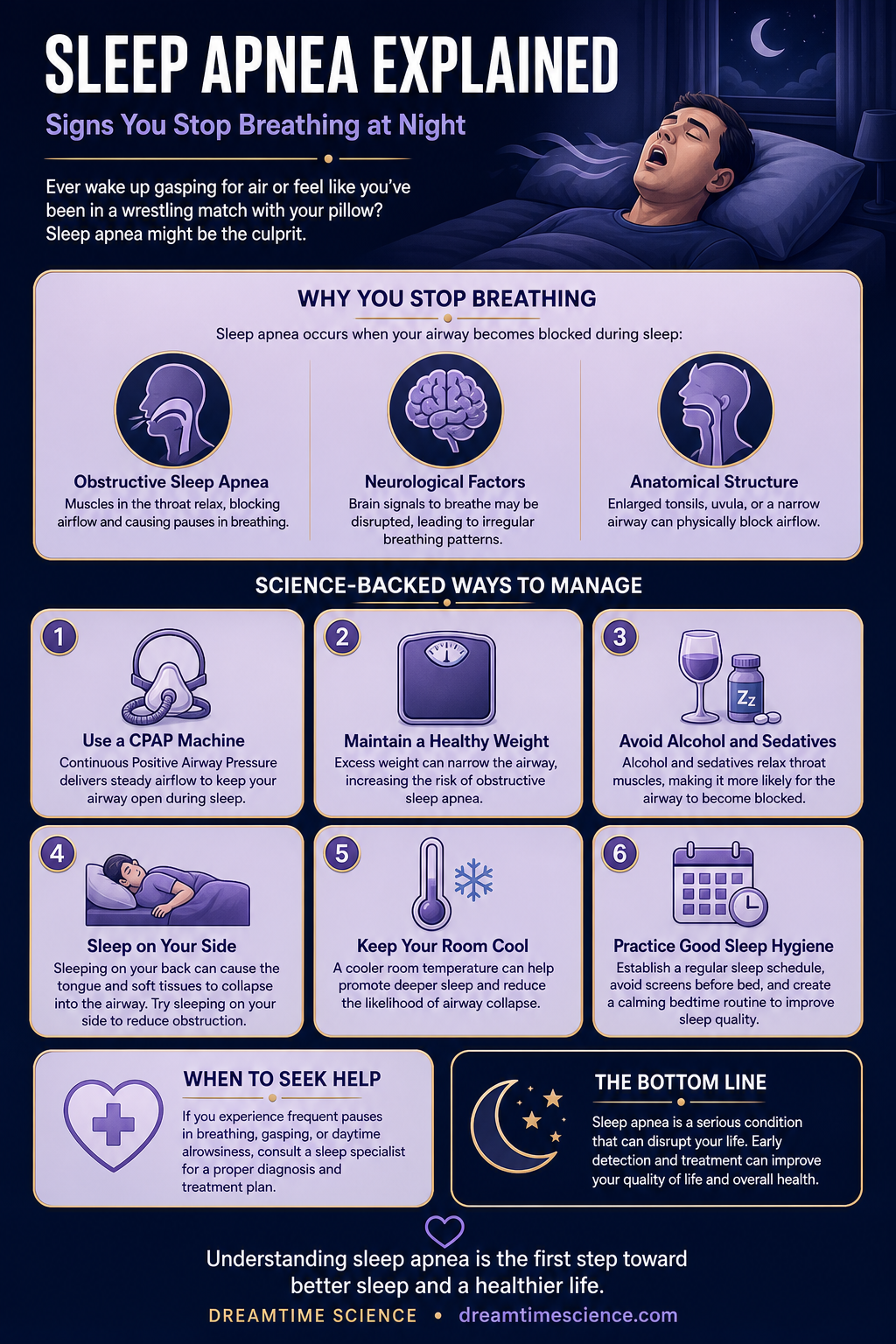
Obstructive sleep apnea, the most common type, happens when the muscles at the back of your throat relax too much. It’s like a roadblock stopping the air from flowing freely, leaving you briefly out of breath. But here’s the kicker: most people don’t even know it’s happening.
What This Means for You
If you suspect sleep apnea is affecting your nights, start by keeping track of your sleep patterns and any symptoms you notice. A sleep diary can help you document episodes of waking up gasping for air or frequent nighttime awakenings. Consulting a sleep specialist is crucial; they can recommend a sleep study to provide a definitive diagnosis.
Snoring vs. Apnea: Nighttime Noisemakers
Not all snores are created equal. Sure, a snore can be harmless, just like a kitten’s little purr. But when it's loud enough to rattle windows, it might be more than just a snore. It could be a warning sign of something more — sleep apnea.
Snoring in sleep apnea is often accompanied by choking, gasping, or long pauses. It’s not just noise; it’s a narrative of interrupted sleep. A signal that the airway’s blocked, and the struggle for air is real. This isn’t just an annoyance. It’s a sign that your body is battling to breathe.
What This Means for You
If your snoring is accompanied by choking or gasping, it's time for a closer look. Consider recording your sleep or asking a partner to note any irregular breathing patterns. It's also worth exploring Snoring Science: Why You Snore and What It Means to understand the underlying causes and when it's time to seek medical advice.
Daytime Drowsiness: The Unseen Consequence
Ever feel like you’re dragging yourself through the day? Coffee can only do so much when sleep apnea robs you of deep, refreshing sleep. Those nighttime pauses in breathing mean your sleep cycles are disrupted. Instead of dipping into the restorative depths of slumber, you’re left splashing in the shallow end. The result? Daytime drowsiness that makes even the simplest tasks feel like Herculean efforts.
And if you’re thinking it’s just about feeling sleepy, think again. This fatigue can ripple through your life, affecting mood, concentration, and even safety. According to a 2013 study in the Journal of Clinical Sleep Medicine, daytime sleepiness due to sleep apnea can increase the risk of accidents by 2.5 times.
What This Means for You
Addressing daytime drowsiness starts with improving your overall sleep hygiene. This might include setting a consistent sleep schedule, creating a restful sleep environment, or exploring Breathing Techniques for Sleep: How Your Breath Affects Rest. If lifestyle changes don't help, it's wise to consult a healthcare provider.
The CPAP Solution: Breathing Easy Again
Enter the CPAP machine — the knight in plastic armor for many. Continuous Positive Airway Pressure therapy involves a mask, a machine, and a promise of better nights. It’s not the most glamorous bedtime accessory, but it’s a game changer. By keeping your airway open, CPAP allows you to breathe steadily through the night. It’s like a gentle push, a persistent hand guiding air into your lungs.
And the results? Waking up with the energy of a morning person — even if you’ve never been one. A 2016 study in the American Journal of Respiratory and Critical Care Medicine found that consistent CPAP use reduced daytime fatigue by 33% and improved the overall quality of life.
When Snoring Needs a Second Look
You might think snoring is just a nighttime nuisance. But if it’s accompanied by gasping, choking, or long silent pauses, it’s worth a closer look. Sleep apnea doesn’t just rob you of sleep; it can also take a toll on your health. Heart disease, high blood pressure, and diabetes — these are the long-term risks that linger in its shadow.
So, if the night is a symphony of snores and the days are marked by exhaustion, it might be time to talk to a doctor.
Finding Nighttime Peace
Sleep is supposed to be a refuge, a sanctuary of rest. If sleep apnea is the thief in the night, it’s time to reclaim your rest. Whether it’s through a CPAP machine, lifestyle changes, or medical interventions, there’s hope for better nights. Nights where you breathe easy, and sleep is as deep as it is quiet.
And remember, it’s not just about the noise. It’s about the silence that follows — the silence where breath should be. Because every breath counts.
Conclusion
Sleep apnea is more than just a snore in the night; it's a silent disruptor with tangible consequences. Recognizing its signs and seeking treatment can transform your nights into restful respites and your days into vibrant ventures.
Want to experience these sleep science concepts with our soothing narration and ambient soundscapes? Check out our latest video on YouTube @dreamtimescience.
Frequently Asked Questions
What is sleep apnea?
Sleep apnea is a sleep disorder characterized by repeated interruptions in breathing during sleep. These interruptions, known as apneas, can last for seconds or even minutes and occur multiple times per hour. The most common type, obstructive sleep apnea, is caused by a blockage of the airway, typically when the soft tissue in the back of the throat collapses.
How do I know if I have sleep apnea?
Common signs of sleep apnea include loud snoring, episodes of breathing cessation during sleep, abrupt awakenings accompanied by gasping or choking, and excessive daytime sleepiness. A sleep study, or polysomnogram, is the most definitive way to diagnose sleep apnea, as it monitors your breathing and other physiological functions during sleep.
Can sleep apnea affect my health?
Yes, untreated sleep apnea can lead to several serious health problems. According to a 2010 study in the Journal of the American College of Cardiology, it increases the risk of high blood pressure, heart disease, stroke, and type 2 diabetes. Addressing sleep apnea can significantly reduce these risks and improve overall health.
Is CPAP the only treatment for sleep apnea?
While CPAP is the most common treatment and highly effective for many, it is not the only option. Other treatments include lifestyle changes, such as weight loss and positional therapy, dental appliances that reposition the lower jaw, and, in severe cases, surgical interventions. Cognitive Behavioral Therapy for Insomnia (CBT-I) can also support better sleep.
Can children have sleep apnea?
Yes, children can also suffer from sleep apnea, though it often manifests differently than in adults. Symptoms in children may include behavioral problems, learning difficulties, and hyperactivity rather than daytime sleepiness. Enlarged tonsils and adenoids are common causes in children, and treatment often involves their removal.
Fall Asleep to a Science Lecture
Put tonight's reading into practice — pick a gentle, softly-narrated episode and let the Professor talk you to sleep.
 Tonight's episodeHow Gravity Can Bend Time: The Cosmic Clock Puzzle
Related articles

Snoring Science: Why You Snore and What It Means
Snoring arises from vibrations in the soft tissues of the throat due to constricted airflow, often stemming from nasal congestion, a relaxed tongue, or a slack jaw.…

Breathing Techniques for Sleep: How Your Breath Affects Rest
Breathing techniques like the 4-7-8 method and deep breathing exercises can significantly improve sleep quality by activating the parasympathetic nervous system. A…

How Caffeine Affects Your Sleep and When to Stop Drinking It
Caffeine's half-life averages 5 to 6 hours, meaning that consumption even six hours before bedtime can significantly disrupt sleep.