
You've probably whispered it to yourself in the dead of night:
"How can one person snore so loudly?"
Or maybe it's the constant tossing and turning, or the blanket thief beside you that keeps your eyes wide open. Partners who move as if dreaming of a marathon can make sleep a distant fantasy.
So, you're not alone in seeking refuge in the calm solitude of separate beds.
Sleep divorce: a term as dramatic as it is practical.
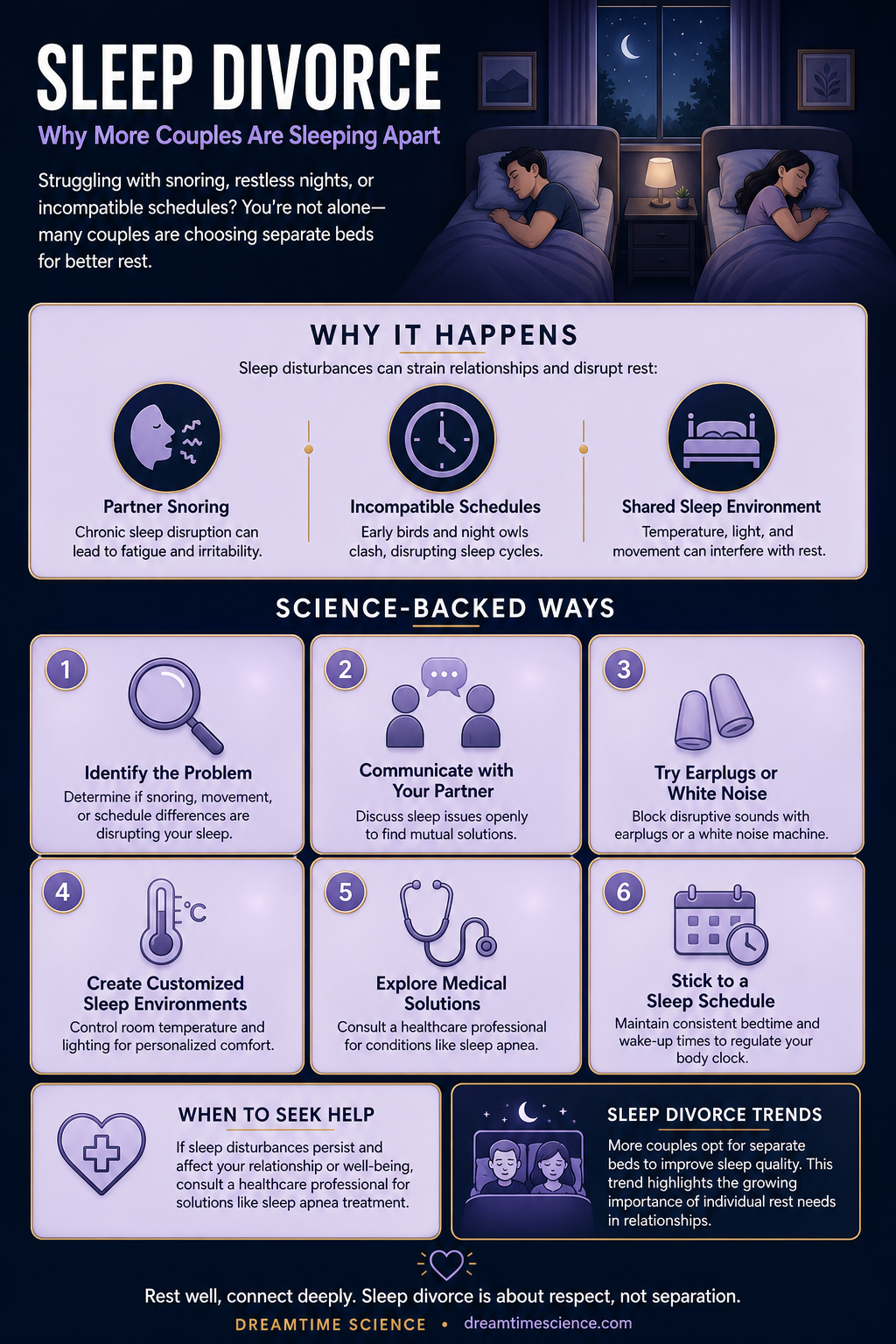
It's a rising trend among couples, not a symptom of failing love, but a quest for sound sleep. In a world where rest is precious, more partners are reclaiming their nights this way.
Key takeaways
- **Sharing a bed is a relatively new tradition,** not an ancient custom rooted in history.
- **Sleep disturbances, like snoring or differing schedules,** can negatively impact both partners’ sleep.
- **Separate beds can offer customized sleep environments,** allowing control over temperature and light.
- **Prioritizing sleep doesn’t signal a lack of intimacy,** but rather a commitment to individual well-being.
- **Communication and exploring solutions,** like earplugs or medical advice, are key to resolving sleep issues.
The Evolution of Sleep Divorce
Here's a fun fact: sharing a bed is a relatively new idea.
Historically, separate sleeping arrangements were the norm. The concept of nightly cuddles is more Victorian romance than ancient tradition. Fast forward to modern times, where the need for quality rest is driving couples back to those old ways.
See, it's not just snoring.
It's the leg jabs, the duvet hogging, the incompatible schedules. One partner’s night owl nature clashes with the other’s early bird habits. Sleep divorce is a rhythm of individuality in a dance of partnership. It’s not about drifting apart; it’s about waking refreshed together.
The Science of Sleep Disturbance
Why does it matter?
When sleep is disrupted, the consequences ripple through our days. Sleep directly impacts cognitive function, mood, and even longevity. Sharing a bed introduces variables that can sabotage this vital process.
Consider the partner who snores. Snoring is not just a nuisance—it's a chronic sleep thief. A 2009 study in the Journal of Clinical Sleep Medicine found that bed partners of snorers can lose over an hour of sleep each night. It's not just the snorer’s partner who suffers; the snorer themselves might be at risk of sleep apnea, a condition that affects about 25% of adults, according to a 2014 study in The Lancet.
Light sleepers find themselves waking at every sound, breathing change, or twitch. When your sleep cycles are out of sync, it’s like two orchestras competing for the same stage. Each disruption is like a cymbal crash in the delicate symphony of sleep.
Shared Beds vs. Personal Space
Why cling to a creaking tradition if it leaves you cranky and unrested?
The intimacy of sharing a bed is powerful. But so is the sanctity of uninterrupted slumber. Separate beds, or even rooms, can offer a suite of benefits many never consider: customized sleep environments, personal bedtime routines, and a reprieve from each other’s nocturnal habits.
- Customized Sleep Environments: Control your own room temperature and lighting.
- Personal Bedtime Routines: Enjoy your unique wind-down habits without disruption.
- Reprieve from Nocturnal Habits: Escape the snoring or restless movements of your partner.
Personal space doesn’t mean emotional distance. It means honoring the individual needs that make for a stronger partnership. A well-rested partner is a happier partner—a truth often forgotten amidst the myth of the perfect couple draped in shared sheets.
Partner Snoring Solutions
If sleep divorce sounds extreme, fear not.
There are partner snoring solutions that can restore harmony without separate quarters. Simple fixes like nasal strips, white noise machines, or even custom earplugs can make a world of difference.
For more persistent cases, medical advice is crucial. Conditions like sleep apnea require intervention beyond a quick fix. A 2013 study in Nature and Science of Sleep emphasized the importance of treating sleep apnea to improve both health and relationship satisfaction.
With love and a little creativity, snoring doesn’t have to sound the death knell for shared beds. Snoring Science: Why You Snore and What It Means provides deeper insights into how snoring affects sleep.
What This Means for You
So what can you do? Evaluate your sleep environment and habits. If disturbances persist, consider these steps:
1. Identify the Problem: Determine what disrupts your sleep—snoring, movements, incompatible schedules. 2. Communicate with Your Partner: Discuss the impact of sleep disturbances openly and without blame. 3. Explore Solutions Together: Try different methods like earplugs, white noise, or medical consultation for snoring.
When Sleep Divorce Makes Sense
When is it time to consider separate sleeping arrangements?
Listen to your body. If you find yourself more tired after a night with your partner, it might be time to talk. Sleep divorce isn’t a defeat. It’s a strategy for well-being.
Evaluate what matters more: nighttime cuddles or a good morning mood. Couples often find that separate beds bring them closer during waking hours, eliminating the sleep-induced irritability that can chip away at relationships. As we explored in Sleep and Relationship Dynamics, sleep quality directly affects emotional and relational health.
The Real Secret to Restful Sleep
At the heart of it all, sleep divorce is about choice.
Choosing to prioritize rest and recognizing that partnership doesn’t mean a constant physical presence. It’s about understanding that love thrives on respect for each other’s needs, including the need for sleep.
As night steals over your home, whether beside your partner or in your own space, remember: love isn’t measured by proximity. It’s felt in the warmth of connection, the shared laughter, and yes, even in the whispered goodnights from separate rooms.
Sleep well, however you choose to do it.
Conclusion
Sleep divorce isn't about separation; it's about rejuvenation. It's about waking up refreshed, ready to connect more deeply with your partner. Prioritizing sleep may just be the secret ingredient to a lasting, loving relationship.
Want to experience these sleep science concepts with our soothing narration and ambient soundscapes? Check out our latest video on YouTube @dreamtimescience.
Frequently Asked Questions
What is sleep divorce?
Sleep divorce refers to the practice of couples sleeping in separate beds or rooms to improve sleep quality. It is not a sign of relationship trouble, but rather a strategy for ensuring both partners get the rest they need. This approach can be particularly beneficial for couples with differing sleep chronotypes, as discussed in Chronotypes Explained: Are You a Morning Person or Night Owl?.
Does sleeping apart affect intimacy?
Sleeping apart does not necessarily affect intimacy negatively. In fact, many couples report improved relationships due to reduced sleep-related tension. A 2016 study in the Journal of Sleep Research found that well-rested individuals are more empathetic and communicative. Additionally, the quality of interactions during the day can be enhanced by the absence of sleep-induced irritability.
Can snoring be treated without medical intervention?
Yes, simple home remedies like nasal strips, positional therapy, or humidifiers can help reduce snoring. However, persistent snoring may require medical evaluation to rule out sleep apnea or other conditions. For more on this, see Sleep Apnea Explained: Signs You Stop Breathing at Night.
Is sleep divorce a modern trend?
While the term "sleep divorce" is modern, the practice of separate sleeping arrangements dates back centuries. It reflects a broader understanding of personal space and sleep health needs. Historical practices often involved separate sleeping quarters, especially among the upper classes, to ensure uninterrupted rest.
How do I approach the topic of sleep divorce with my partner?
Communication is key. Approach the conversation with empathy and focus on the benefits for both partners' well-being. Highlight how improved sleep can enhance your time together during waking hours. It's important to frame the discussion around mutual respect and the shared goal of a healthier relationship.
Fall Asleep to a Science Lecture
Put tonight's reading into practice — pick a gentle, softly-narrated episode and let the Professor talk you to sleep.
 Tonight's episodeHow Gravity Can Bend Time: The Cosmic Clock Puzzle
Related articles

Chronotypes Explained: Are You a Morning Person or Night Owl?
Your chronotype, or natural sleep preference, is influenced by genetics and impacts when you feel most alert. A 2019 study in Nature Communications found genetic…

Snoring Science: Why You Snore and What It Means
Snoring arises from vibrations in the soft tissues of the throat due to constricted airflow, often stemming from nasal congestion, a relaxed tongue, or a slack jaw.…
Nicotine and Sleep: What Smoking and Vaping Do to Your Night
Nicotine significantly affects sleep quality. Whether through smoking or vaping, introducing nicotine into your system can lead to difficulties in falling…