
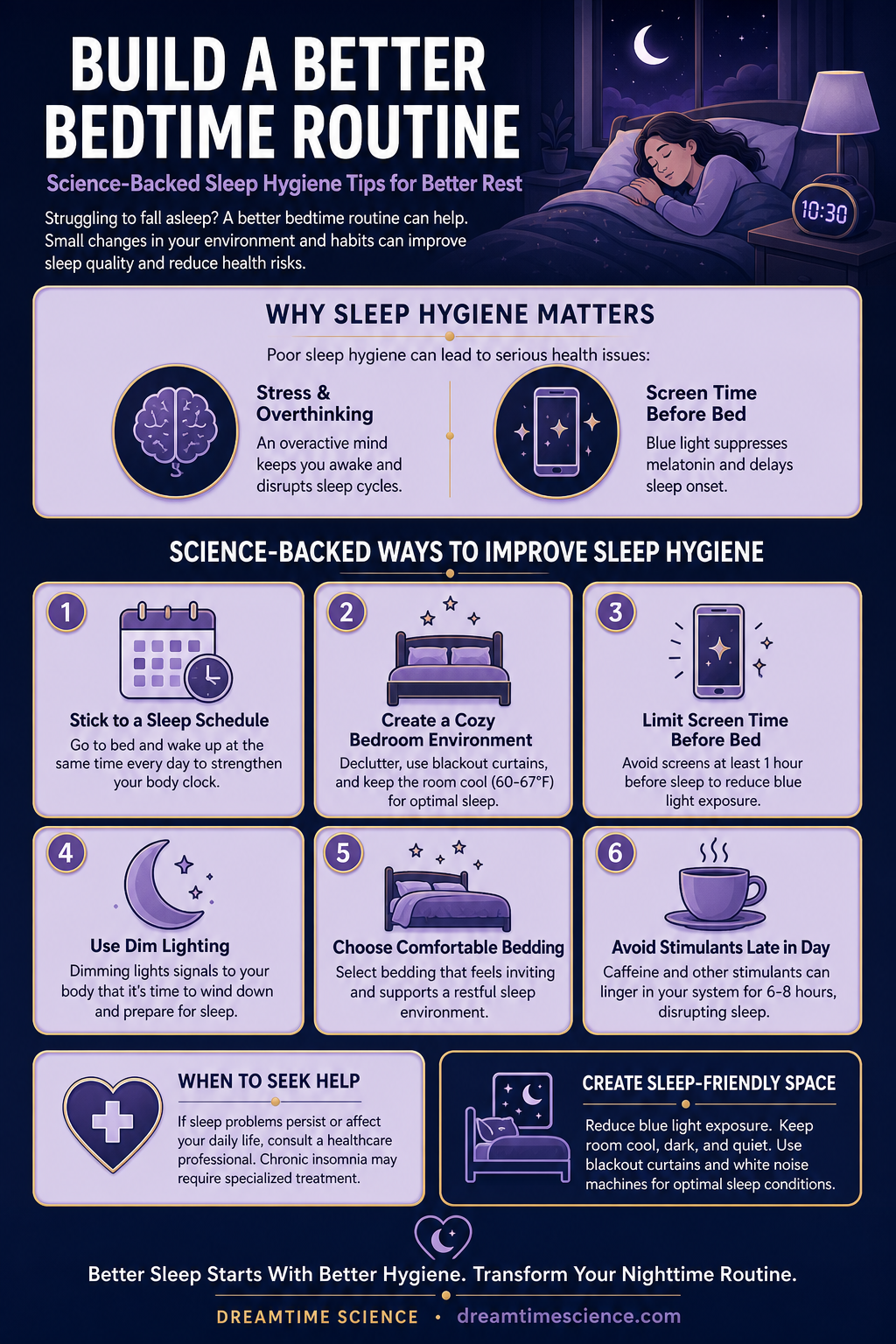
The short answer: Insufficient sleep is linked to serious health conditions like heart disease, diabetes, and depression, highlighting the importance of good sleep hygiene. Creating a relaxing bedroom environment by decluttering, dimming lights, and setting a cooler temperature (around 60-67°F) can significantly improve sleep quality. Establishing a consistent sleep schedule and limiting screen time at least one hour before bed are also crucial steps toward building a better bedtime routine.
Picture this: you're nestled in bed, the day's chaos slowly fading. But your mind, oh your mind, is still dancing, the glow of your phone screen a beacon in the night. Sound familiar? You’re not alone in this nocturnal tug-of-war. The solution might be simpler than you think—it’s all in the rhythm of your evening routine.
Key takeaways
- Consistent sleep and wake times reinforce your body’s natural sleep-wake cycle.
- Decluttering your bedroom reduces distractions and creates a more peaceful environment.
- Calming pre-bedtime activities, like reading or a warm bath, signal your body that it’s time to sleep.
- Limiting screen time before bed minimizes stimulation and promotes relaxation.
- Creating a relaxing bedtime ritual can become powerful cues that encourage sleep.
Why Sleep Hygiene Matters
Sleep isn’t just a nightly pause; it’s your body’s time to recharge, reset, and regenerate. Without it, your cognitive functions and physical vitality begin to lag. According to the Centers for Disease Control and Prevention, insufficient sleep is linked to chronic conditions such as heart disease, diabetes, and depression. When your sleep hygiene is askew, it’s like trying to run a marathon on shaky legs. You can’t go far without resting.
Sleep hygiene is the practice of creating an environment and routine conducive to restful sleep. Think of it as brushing your teeth, but for your sleep. It's preventative care for your mind and body. Without good sleep hygiene, even the most comfortable beds and the fluffiest pillows can't work their magic. It’s time to craft a bedtime routine that whispers sleep in your ear.
The Bedroom Sanctuary
Your bedroom should be a sanctuary—a place where stress has no entry. But often, it becomes a catch-all for life’s clutter. Electronics, laundry piles, unfinished to-do lists. All these speak the language of wakefulness.
Transforming your room into a haven starts with decluttering. Each piece of stray laundry, every glowing device, is a note in the symphony of distraction. Tame the chaos, and you’ll find the calm you’re craving.
Consider your senses: dim lighting, cool temperatures, and cozy textures. A 2012 study in the Journal of Physiological Anthropology found that cooler bedroom temperatures help facilitate falling asleep quicker and enhance sleep quality. A sanctuary is built on simplicity, not excess.
What This Means for You
So what can you do? Create environments that speak the language of sleep. Adjust your thermostat to a comfortable, cooler setting. Use blackout curtains to keep early morning light at bay. Choose bedding that feels inviting. These simple tweaks can transform your sleep environment into a true retreat.
Rhythm of Routine
Routine is the drummer to the dance of sleep. Get it wrong, and the rhythm falters. But when it’s right, it’s symphonic—a seamless transition from wakefulness to rest.
Start by setting a consistent sleep schedule. Your body loves predictability. It craves it. Going to bed and waking up at the same time every day reinforces your body’s natural sleep-wake cycle, as we explored in Circadian Rhythms 101. It’s a rhythm that sings your body to rest.
But it’s not just about timing. Pre-bedtime activities matter. Reading a book, taking a warm bath, or practicing meditation can all set the stage. Let these moments signal your body that sleep is near.
Crafting Your Perfect Routine
To shape your routine, consider these steps: - Set a fixed bedtime: Aim for the same time each night. - Wind down gradually: Start an hour before bed with calming activities. - Limit stimulants: Avoid caffeine and nicotine in the evening. - Create a bedtime ritual: Engage in a calming practice that signals sleep.
The Screen Dilemma
Ah, the screens. Our constant companions, and sometimes, our sleep’s worst enemy. But here's the thing: it’s not just about the blue light. Oh no, it’s also about what those screens bring with them. The world at your fingertips—exciting, yes, but stimulating. Too stimulating.
A 2014 study in the Journal of Clinical Endocrinology & Metabolism found that blue-enriched light suppressed melatonin by 55% compared to dim light. But it's not just the photons; it’s the content. The emotions. The engagement. Screens demand your attention and refuse to let it go.
Try a digital sunset. Turn off screens at least an hour before bed, and let the night ease its way in. Let your mind wander into the realms of dreams, not Instagram feeds. For more on this, read Blue Light Before Bed: Myth or Reality?.
The Power of Ritual
Rituals are the gentle nudges that guide you towards rest. A cup of herbal tea, a few pages of a calming novel, or even a moment of gratitude for the day gone by. These small acts are powerful signals.
Create a ritual that resonates with you. Something that feels as comforting as a lullaby. Over time, these rituals become more than habits—they’re the cues your body needs to know it’s time to switch off.
What This Means for You
Consider these actions to enhance your sleep hygiene: - Choose calming activities: Listen to soft music or practice deep breathing. - Incorporate scents: Use lavender or chamomile essential oils, known for their calming properties. - Reflect on the day: Spend a minute acknowledging a positive event from the day.
When Sleep Won’t Come
Even with the best routine, some nights, sleep remains elusive. It’s frustrating, yes, but it’s also a part of the journey. On these nights, resist the urge to stay in bed, tossing and turning. Instead, rise. Change your environment. Read a book under dim light or listen to soft music.
Avoid watching the clock. Time slips through your fingers like sand when you watch it too closely. Instead, let it pass. Focus on the quiet, the stillness. The rest will come, eventually, like a gentle tide.
Conclusion
Building a better bedtime routine takes time. Trust the process. Each evening is a new opportunity to refine your routine, to listen to your body’s whispers. In time, you’ll find the balance, the rhythm, the peace in your sleep.
Want to experience these sleep science concepts with our soothing narration and ambient soundscapes? Check out our latest video on YouTube @dreamtimescience.
Frequently Asked Questions
What is sleep hygiene?
Sleep hygiene refers to the habits and practices that are conducive to sleeping well on a regular basis. It involves creating an environment and routine that supports good sleep quality.
How can I improve my sleep environment?
Start by decluttering your bedroom, ensuring it's cool, dark, and quiet. Use blackout curtains and consider a white noise machine to block out external noise. A 2010 study in Environmental Health Perspectives found that reducing noise can improve sleep quality by up to 85%.
Are bedtime routines really effective?
Yes, they help signal to your brain that it's time to wind down. Consistent routines can significantly improve sleep latency and quality, according to a 2015 article in the Journal of Clinical Sleep Medicine. The regularity of a routine can also enhance the stability of your circadian rhythm, which is crucial for maintaining a healthy sleep cycle.
Why is it important to avoid screens before bed?
Screens emit blue light, which can suppress melatonin production and delay sleep onset. Beyond the light, the content can be overstimulating, keeping your mind active when it should be winding down. For more insights, explore The Role of Darkness: Why Light Exposure Matters for Sleep.
What if I can't fall asleep despite a good routine?
If sleep eludes you, get out of bed and engage in a quiet, relaxing activity until you feel sleepy. Avoid screens and bright lights during this time. This approach is recommended in Cognitive Behavioral Therapy for Insomnia (CBT-I).
Fall Asleep to a Science Lecture
Put tonight's reading into practice — pick a gentle, softly-narrated episode and let the Professor talk you to sleep.
 Tonight's episodeHow Gravity Can Bend Time: The Cosmic Clock Puzzle
Related articles

The Perfect Bedtime Routine According to Sleep Scientists
The ideal bedtime routine lasts 30-60 minutes and follows a neuroscience-backed sequence: dim lights to signal melatonin production, lower room temperature to 16-19…

Temperature, Darkness, and Sound: The Ideal Sleep Environment (By the Numbers)
The ideal sleep environment maintains a temperature of 16-19 degrees Celsius, complete darkness below 5 lux, and ambient noise under 30 decibels. Your core body…

Pet Sleep: Should Your Dog or Cat Sleep in Your Bed?
Sharing your bed with a pet can be comforting, but it may negatively impact your sleep. Over 20% of pet owners, according to a 2014 Mayo Clinic survey, report sleep…