
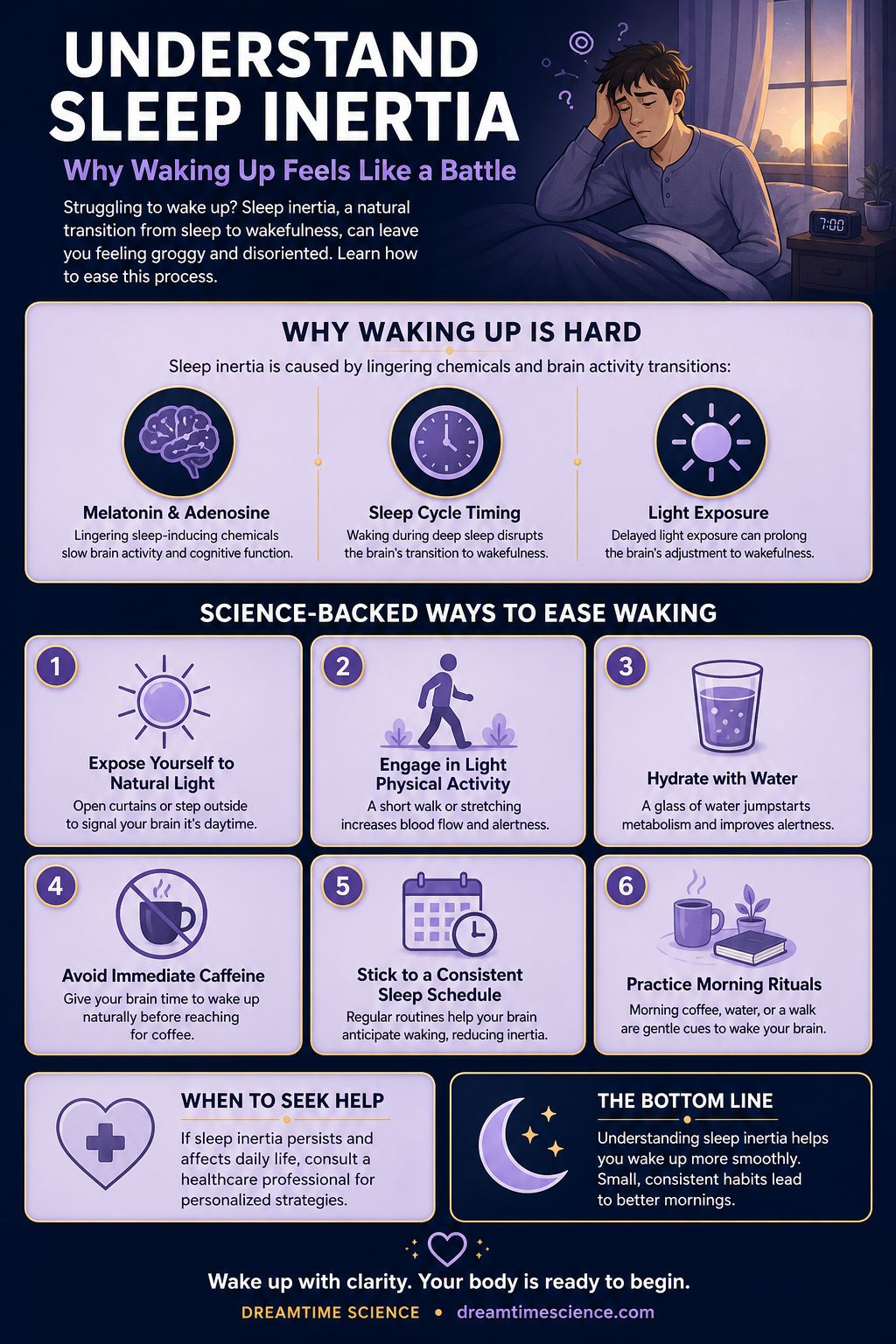
The short answer: Waking up can be surprisingly difficult due to sleep inertia, a period where your brain transitions from sleep to wakefulness. This grogginess is caused by lingering sleep-inducing chemicals like melatonin and adenosine, slowing down cognitive function and brain activity. A 2016 study showed sleep inertia can impair performance similarly to a blood alcohol concentration of 0.06%.
Ever felt like a groggy zombie stumbling out of bed, unsure if you're awake or still dreaming? That's sleep inertia, your brain's way of saying, "Not yet." The morning fog, heavy and unyielding, often feels like a stubborn cloud refusing to lift. It's a universal experience, yet its cause remains a mystery to many.
Why does waking up feel like an uphill battle?
It's not just you. It's biology.
Key takeaways
- Sleep inertia is a natural state of grogginess that occurs after waking.
- It’s caused by lingering sleep-inducing chemicals like melatonin and adenosine.
- Waking during deep sleep can intensify sleep inertia, making it harder to feel alert.
- Morning rituals, like light exposure and movement, can help ease the transition.
- Consistent sleep schedules can help your brain adapt and reduce sleep inertia over time.
The Moment Between Asleep and Awake
Picture this: your alarm blares, yanking you from the depths of a cozy slumber. But instead of springing up, you linger in that strange half-awake state. This is sleep inertia, a deceivingly soft landing between the worlds of sleep and wakefulness.
Your mind is swimming in a blend of melatonin and adenosine, the sleep-inducing chemicals that still have a hold on you. Melatonin, often dubbed the "darkness hormone," regulates your sleep-wake cycle, while adenosine accumulates in your brain during the day, creating a pressure to sleep. They're not ready to let go. Your prefrontal cortex, the part responsible for decision-making and alertness, is still rubbing its eyes. It's as if this part of your brain hit the snooze button.
Grogginess upon waking isn't a defect. It's transition.
The Chemistry of Grogginess
Caffeine may be your morning hero, but it's fighting against powerful forces. Upon waking, your body is still clearing adenosine, a neurotransmitter that builds up during the day to make you sleepy at night. Even as you rise, adenosine's influence lingers, like a shadow refusing to fade.
This sleepy haze is more than a feeling. It's a biochemical reality. Your brain's electrical activity is slow to adjust, leaving you in a cognitive limbo. The neurons, still in their dreamy dance, are reluctant to switch their rhythm. Your body is awake, but your mind is lagging behind.
A 2016 study in the Journal of Clinical Sleep Medicine found that sleep inertia can impair cognitive performance as much as a blood alcohol concentration of 0.06%. It's a symphony of chemicals. And they’re still playing the lullaby.
What This Means for You
So what can you do? In the next sections, we'll explore how understanding the timing of your sleep cycles and engaging in specific morning rituals can help ease this transition.
The Role of Sleep Cycles
It's not just about how much sleep you get, but when you wake up. Drifting through the night, you move cyclically through different stages of sleep. Each cycle is about 90 minutes, and waking up in the midst of deep sleep can amplify inertia's grip. It's like being pulled from a cinematic dream mid-plot.
Your brain waves during deep sleep are slow and steady, contrasting with the rapid, active waves of light sleep. Jarring awake from deep sleep isn't natural and leaves the brain struggling to reboot. You're caught in a slow-motion leap from serenity to reality.
Ever set an alarm for a time that felt wrong? That's your body clashing with its natural rhythm. As we explored in Sleep Cycles Explained, understanding your sleep architecture can help you time your wake-up to a lighter sleep stage, easing the transition.
Morning Rituals and Reality
The ritual of morning coffee, a splash of cold water, or a brisk walk, isn’t just cliché. These are gentle nudges to coax your brain out of its inertia. The body responds to these cues, slowly shedding its grogginess like a second skin.
Even the act of getting out of bed starts the process. Movement stimulates blood flow, helping clear the fog that clings so tightly. Light exposure, too, tells your brain it's daytime, helping to reset your internal clock. A 2013 study in the Journal of Clinical Endocrinology & Metabolism found that exposure to natural light in the morning can advance your circadian phase, reducing the impact of sleep inertia.
Practical Steps to Combat Sleep Inertia
- Expose Yourself to Natural Light: Open your curtains or step outside for a few minutes.
- Engage in Light Physical Activity: A short walk or some stretching can increase blood flow and wakefulness.
- Hydrate: A glass of water can help jumpstart your metabolism and improve alertness.
- Avoid Immediate Caffeine: Wait for about an hour after waking to allow your natural cortisol levels to rise.
Adaptation Over Time
The good news? Your brain adapts. Sleep inertia isn't a permanent affliction. Over time, consistent sleep schedules can teach your brain to anticipate waking, reducing the inertia's hold. It's training, not transformation.
Regular routines sync your body with its environment, minimizing inertia's surprise. It's like practicing an instrument: the more you play, the smoother the tune.
It’s all about rhythm. And your body loves a good beat.
The Myth of the Morning Person
Not everyone greets the dawn with a smile. Chronic grogginess might make you feel less productive, but that's not a character flaw. It's a chronotype. Some of us are night owls, others larks. Your biology, not your willpower, dictates how you wake.
It's okay to need time to fully wake up. Your body is dancing to its own tune, and sometimes it takes a little longer to hit the high notes. The important thing is recognizing your rhythm and working with it, not against it.
The dawn is a beginning, not a race.
Conclusion
So next time you find yourself battling the morning haze, remember it's not just laziness or lack of discipline. It's sleep inertia, your body's natural way of waking up. With understanding, you can turn the struggle into a graceful transition. Your mind will eventually catch up.
And when it does, the day awaits. Ready to greet you, on your terms.
Want to experience these sleep science concepts with our soothing narration and ambient soundscapes? Check out our latest video on YouTube @dreamtimescience.
Frequently Asked Questions
What is sleep inertia?
Sleep inertia is the feeling of grogginess and impaired cognitive performance immediately after waking. It's a transition period where your brain is adjusting from sleep to wakefulness.
How long does sleep inertia last?
It can last anywhere from a few minutes to over an hour, depending on factors like sleep quality, sleep cycle timing, and individual differences. A 2006 study in the Journal of Sleep Research noted that most people feel fully awake within 30 minutes. However, some studies suggest that the effects on cognitive performance can linger for up to two hours, particularly if the individual was abruptly awakened from a deep sleep stage.
Can sleep inertia be harmful?
While generally harmless, sleep inertia can impair decision-making and reaction times. A 2014 study in Sleep Medicine Reviews indicated that it could be risky if you need to perform tasks requiring high alertness immediately upon waking. This is particularly relevant for individuals in professions requiring quick decision-making or operating heavy machinery.
How does caffeine affect sleep inertia?
Caffeine blocks adenosine receptors, reducing the feeling of sleepiness. However, it's best consumed about an hour after waking to align with natural cortisol peaks, as discussed in How Caffeine Affects Your Sleep (And When to Stop Drinking It). This timing allows your body to naturally increase its alertness before caffeine takes effect.
Does waking up at the same time every day help?
Yes, maintaining a consistent wake-up time helps regulate your circadian rhythm, reducing the severity of sleep inertia. This synchronization is akin to setting your body's internal clock, as elaborated in Circadian Rhythms 101. Consistency in sleep patterns can also improve overall sleep quality, further mitigating the effects of inertia.
Fall Asleep to a Science Lecture
Put tonight's reading into practice — pick a gentle, softly-narrated episode and let the Professor talk you to sleep.
 Tonight's episodeThe Inner Battle: How Your Cells Fight & Thrive
Related articles

Daylight Saving Time and Sleep: Why the Clock Change Hits So Hard
Every year, the clock shifts forward or backward, and many individuals experience disruptions to their sleep and overall well-being.

The Science Behind Lucid Dreaming: What's Actually Happening in Your Brain
Lucid dreaming occurs when the prefrontal cortex, responsible for logic and self-reflection, becomes highly active during REM sleep, resembling wakefulness. A 2012…

Why Naps Backfire and When They Actually Help
Naps backfire when they last too long or happen too late. Naps exceeding 30 minutes enter deep sleep, causing grogginess upon waking. Napping after 3pm reduces…