
Your alarm blares. You fumble in the dark, eyes barely open, and slam the snooze button. Sweet relief—nine more minutes. But are those extra moments of half-sleep friend or foe?
In the quiet of dawn, when the world still feels suspended, the allure of a snooze button is undeniable. Yet, those precious minutes might be playing tricks on your brain.
Key takeaways
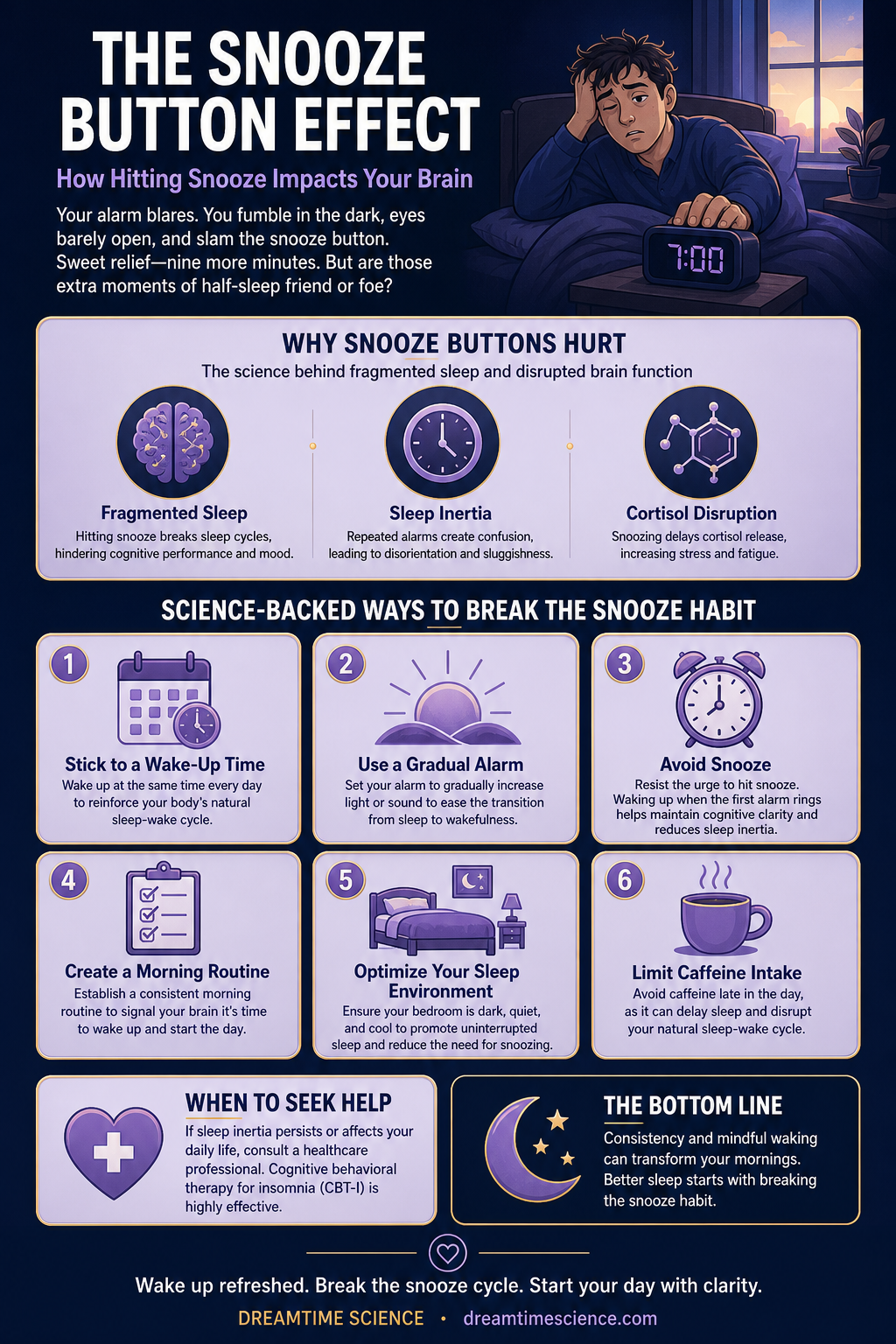
- **Fragmented sleep disrupts brain function**: Hitting snooze breaks up sleep cycles, hindering cognitive performance and mood.
- **Snoozing can worsen sleep inertia**: Repeated alarms create confusion, leading to disorientation and sluggishness.
- **Consistency promotes better mornings**: Regular sleep and wake times reinforce your internal clock for improved alertness.
- **Cortisol rhythms are affected**: Snoozing delays cortisol release, potentially increasing stress and fatigue.
Fragmented Morning Sleep
Think of sleep as a delicate web, intricate and interconnected. Each phase, from the lightest slumber to the depths of REM, serves a purpose in restoring your mind and body. Hitting snooze introduces cracks in this web—fragments your sleep into jagged pieces.
Fragmented sleep is like starting a movie and hitting pause every few minutes. You never quite get back into the flow, and your brain, eager for continuity, gets restless. Research published in the Journal of Sleep Research (2016) found that disrupted sleep patterns can impair cognitive performance and mood, leaving you feeling groggy and unfocused.
The science of sleep tells us that these interruptions can leave you foggy, even if you swear you're just drifting back to dreamland. As noted in a 2018 study in the Journal of Clinical Sleep Medicine, fragmented sleep can lead to decreased alertness and impaired memory, akin to the effects of sleep deprivation.
What This Means for You
So what can you do? The next time your alarm rings, consider resisting the snooze temptation. Instead, establish a consistent wake-up time that allows for uninterrupted sleep. This consistency supports your brain's natural sleep cycles, enhancing both mental clarity and mood.
Alarm Clock Waking
The jarring sound of an alarm yanks you from sleep, a rude awakening for your brain. Your neurons, tasked with easing you into the day, get jolted into action like a startled cat. This abrupt transition, known as sleep inertia, can leave you feeling disoriented and sluggish.
That first alarm breaks the natural rhythm. When you snooze, you reset the cycle, demanding your brain to start again from scratch. The result? A confused cognitive state caught between rest and wakefulness. A 2015 study in the Journal of Biological Rhythms demonstrated that repeated disruptions to sleep can lead to impaired decision-making and reduced reaction times.
Imagine trying to sprint before you've even stretched—your brain feels the same when you hit snooze.
Snooze Button Bad?
Yes, the snooze button feels like a comforting extension of sleep. But those fragmented pieces of rest aren't seamless extensions; they're disruptions. The allure of snooze is a siren call that lures you into a false sense of prolonged rest.
The science suggests a different strategy. Wake up when the first alarm rings, embrace the morning with eyes wide open, and gift your brain clarity instead of confusion. According to a study published in Sleep Medicine Reviews (2017), maintaining a consistent wake-up time can significantly enhance daytime alertness and reduce sleep inertia.
But what are those nine minutes supposed to do? They trick you into thinking you’re resting. But in reality, you’re caught in a loop of low-quality sleep that might be doing more harm than good.
What This Means for You
To break the snooze cycle, set your alarm for the latest possible time you truly need to wake up. This ensures you maximize restful sleep and minimize the temptation to snooze. Consider incorporating a gradual wake-up light or a soothing sound to ease the transition from sleep to wakefulness.
Cortisol and the Morning Rush
As you drift in and out of consciousness, your body's hormonal orchestra is trying to perform a symphony. Cortisol, the hormone that helps you shake off the sleepiness and face the day, peaks in the morning. It's the body's natural coffee.
Hitting snooze delays the crescendo. Your body's natural rhythm falters, and the harmony turns dissonant. Instead of jumping out of bed ready to tackle the day, you might find yourself sluggish, groggy, and craving another dose of caffeine. A 2014 study in Psychoneuroendocrinology found that irregular wake times can disrupt cortisol rhythms, leading to increased stress and fatigue.
Our bodies crave consistency. That snooze button? It’s a sabotaging intermission in an otherwise perfectly timed performance.
The Science of Cortisol
Cortisol is a glucocorticoid hormone produced by the adrenal glands. It plays a crucial role in the body's stress response, metabolism, and immune function. In the morning, cortisol levels naturally rise—a phenomenon known as the cortisol awakening response (CAR). This surge helps you feel awake and alert, preparing you for the day ahead.
Waking Up Mindfully
Consider waking up as a ritual. The moments after you open your eyes set the tone for your day. A mindful approach can transform the way you greet the morning light.
Set your alarm for the latest possible time you need to wake up, and when it rings, rise. Instead of slipping back into interrupted slumber, let your mind and body adjust to reality. This aligns with the concept of circadian rhythms, your body's internal clock that governs sleep and wake cycles. Understanding these rhythms, as explained in Circadian Rhythms 101: How Your Body's Internal Clock Controls Sleep, can help you optimize your sleep schedule.
This creates a consistent waking routine that aligns with your circadian rhythm, reducing the groggy aftereffects of fragmented morning sleep.
The Power of Consistency
The brain loves patterns. It thrives on consistency. Regular sleep and wake times reinforce your natural body clock, making mornings less of a battle and more of a breeze. This consistency can also mitigate the effects of sleep inertia, as detailed in The Science Behind Sleep Inertia: Why Waking Up is So Hard.
Forgoing the snooze button helps your brain find its rhythm. It aligns your internal clock with the external world. When your alarm rings and you rise immediately, you tell your brain it's time to shift gears.
- Improved Alertness: Consistency helps regulate your body's sleep-wake cycle, leading to better alertness and focus.
- Enhanced Mood: Regular sleep patterns can stabilize mood, reducing irritability and mood swings.
- Boosted Energy: A consistent schedule supports optimal energy levels throughout the day.
Consistency is a soothing balm for the mind, guiding you through the morning with clarity and purpose.
Conclusion
In a world that never sleeps, the snooze button offers a brief reprieve. But science whispers a gentle warning: those extra minutes may not be the restful haven they seem.
As you reach for the snooze button, consider what your brain truly needs—a moment of clarity, a commitment to routine, and the courage to greet the day with eyes wide open. Those extra nine minutes? They might just be stealing more than they give.
Want to experience these sleep science concepts with our soothing narration and ambient soundscapes? Check out our latest video on YouTube @dreamtimescience.
Frequently Asked Questions
Why does hitting snooze make me feel more tired?
Hitting snooze fragments your sleep, disrupting the natural sleep cycle. This leads to sleep inertia, a state of grogginess and impaired cognitive function, as noted in a 2018 study in the Journal of Clinical Sleep Medicine.
How can I stop relying on the snooze button?
To break the snooze habit, set your alarm for the latest time you need to wake up and place it across the room. This forces you to physically get out of bed to turn it off, reducing the temptation to snooze.
Does snoozing affect my cortisol levels?
Yes, irregular wake times from snoozing can disrupt your cortisol rhythm, leading to increased stress and fatigue. A consistent wake-up time can help maintain balanced cortisol levels, as shown in a 2014 study in Psychoneuroendocrinology.
Can a consistent wake-up time improve my mood?
Absolutely. Regular sleep and wake times stabilize your body's internal clock, which can enhance mood and reduce irritability. This is supported by research published in Sleep Medicine Reviews (2017).
Is there a better alternative to an alarm clock?
Consider using a gradual wake-up light or soothing sounds instead of a jarring alarm. These methods can ease the transition from sleep to wakefulness, reducing sleep inertia and improving morning alertness.
Fall Asleep to a Science Lecture
Put tonight's reading into practice — pick a gentle, softly-narrated episode and let the Professor talk you to sleep.
 Tonight's episodeDNA's Silent Blueprint: Uncovering Life’s Deepest Secrets
Related articles

The Science of Falling Asleep: What Happens When You Close Your Eyes
Falling asleep takes an average of 14 minutes and involves a precise neurochemical cascade. As adenosine accumulates and melatonin rises, the ventrolateral preoptic…

Hypnagogia: The Strange Minutes Between Waking and Sleep
Ever found yourself teetering on the edge of sleep, dancing with dreams and reality in a hazy twilight?

The Glymphatic System: How Your Brain Cleans Itself While You Sleep
The glymphatic system is your brain's waste-clearance network that activates primarily during deep sleep. Cerebrospinal fluid flushes through brain tissue along…