
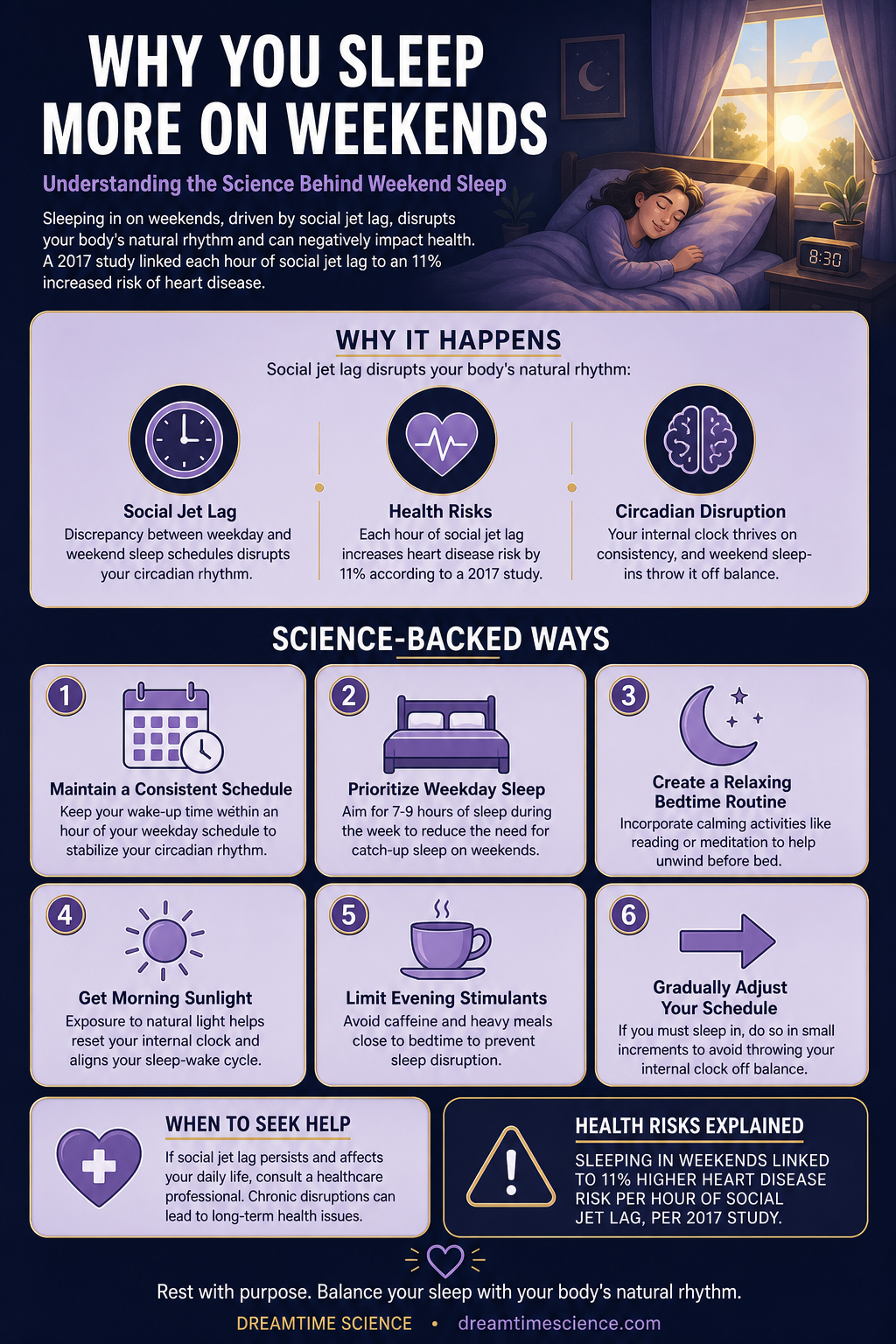
The short answer: Sleeping in on weekends, driven by social jet lag, disrupts your body's natural rhythm and can negatively impact health. A 2017 study linked each hour of social jet lag to an 11% increased risk of heart disease. While extra weekend sleep can help, a 2016 study showed it doesn't fully reverse the physical effects of chronic sleep loss, highlighting the importance of consistency.
You wake up on Saturday morning, and it feels like surfacing from a week-long underwater dive. The sheets wrap around you like a comforting cocoon, begging you to stay, to linger a little longer. So you do. Another hour. Maybe two. But as noon approaches, a question nags at you: Is sleeping in on weekends a treat or a trick?
Your body’s alarm system is snoozing, caught off guard by the late start. It’s a phenomenon known as social jet lag, the jarring difference between your weekday routine and weekend reprieve. While your alarm clock takes a break, your internal clock is still ticking, wondering what happened to the sunrise.
Key takeaways
- Maintaining a consistent sleep schedule, even on weekends, helps regulate your body’s internal clock.
- Sleeping in can provide some restoration, but it doesn't entirely reverse the effects of chronic sleep loss.
- Prioritizing 7-9 hours of sleep each night reduces the need for excessive weekend catch-up sleep.
- Gradual adjustments to your sleep schedule are better than large shifts that disrupt your body's rhythm.
- Exposure to morning sunlight can help reset your internal clock and improve overall sleep quality.
Social Jet Lag: The Weekend Dilemma
Social jet lag is more than a catchy phrase. It’s a real clash between your body's natural rhythm and the artificial schedule imposed by work, school, and society. You spend Monday through Friday obeying the tyranny of the alarm clock, and then, like a rebellious teenager, your sleep pattern throws a weekend party.
Your circadian rhythm—that internal conductor orchestrating sleep and wakefulness—thrives on consistency. It craves patterns like a dancer craves a beat. When you disrupt it on the weekends, it’s like switching musical genres mid-song. The rhythm falters, leaving you disoriented. A 2017 study in the Journal of Clinical Sleep Medicine found that each hour of social jet lag is associated with an 11% increase in the likelihood of heart disease, underscoring the potential health impacts of this weekly disruption.
Is Weekend Sleep for Catch Up?
You might think of weekend sleep as a safety net, catching the precious hours of rest that slipped away during your busy week. A dream catcher of sorts. But is this catch-up sleep helping or hurting?
In theory, catching up on sleep can help balance the scales, restoring some of the lost hours. Your brain uses this extra time to repair and rejuvenate, almost as if it's running a high-priority maintenance check. But sleeping in doesn’t fully erase the debt. It’s like paying off a credit card minimum while the interest keeps compounding. According to a 2016 study published in Current Biology, while extra sleep on weekends can mitigate some cognitive impairments caused by sleep deprivation, it doesn't completely reverse the physical effects of chronic sleep loss.
What This Means for You
So, what can you do to minimize the impact of social jet lag? Here are some actionable steps:
- Maintain a Consistent Sleep Schedule: Try to keep your wake-up time within an hour of your weekday schedule.
- Prioritize Sleep During the Week: Aim for 7-9 hours per night to reduce the need for catch-up sleep.
- Create a Relaxing Bedtime Routine: Incorporate calming activities such as reading or meditation to help unwind before bed.
These strategies can help mitigate the effects of disrupted sleep patterns and improve overall sleep quality. For more tips on managing insomnia, check out our article on 7 Science-Backed Ways to Beat Insomnia Tonight.
The Art of Sleeping In
Sleeping in feels indulgent, doesn’t it? The silence of a world not yet awake, the sun slowly peeking through curtains. It’s a private solace. But it’s a delicate art, one that can tip the scales from restful to restless if not practiced wisely.
Extend your sleep too far, and you risk disorienting your body’s clock. It’s like pressing snooze on your internal morning. The later you wake up, the more you delay the onset of sleep the following night, setting off a domino effect that can leave you groggy come Monday. As explored in our Circadian Rhythms 101 article, your internal clock relies heavily on consistency, and weekend sleep-ins can throw it out of sync.
The Science of Consistency
Your body loves a routine. It’s wired for repetition, for predictability. The science behind sleep hygiene champions this consistency. Setting regular wake and sleep times reinforces your circadian rhythm, making it easier to rise with energy and fall asleep without counting sheep.
A 2018 study published in Sleep found that individuals with irregular sleep patterns were more likely to report symptoms of insomnia and experience fatigue. Yet, life isn’t always conducive to rigid schedules. The occasional weekend indulgence won’t derail your sleep hygiene entirely. Think of it as a dimmer switch, not a sleeping pill. Small adjustments, not sweeping changes.
What This Means for You
Balancing sleep consistency with life's demands is key. Here are some insights to help you navigate:
- Gradually Adjust Your Schedule: If you must sleep in, do so in small increments.
- Get Morning Sunlight: Exposure to natural light can help reset your internal clock.
- Limit Evening Stimulants: Avoid caffeine and heavy meals close to bedtime, as detailed in How Caffeine Affects Your Sleep (And When to Stop Drinking It).
These practices can help maintain the delicate balance between flexibility and routine in your sleep habits.
Balancing Rest and Routine
So, where does that leave you, weekend sleeper? In a balancing act between rest and routine. Listen to your body’s whispers of fatigue, but don’t be seduced by the call to hibernate. Find a middle ground—a wake time that honors both your need for rest and the rhythm your body craves.
Enjoy the luxury of a slower morning when the stars align, but let it be a conscious choice, not a chaotic escape. Acknowledge the pull of your blankets, but remember the power of a predictable pattern.
Embrace the Morning
Waking up on weekends doesn’t have to be a struggle. Let it be an invitation to explore the peaceful hours when the world is still soft and quiet. It’s a chance to recalibrate, to tune into the subtler notes of your day, before the rush of obligations takes over.
The weekend is yours to shape. Consciously. Wisely. As you pull back the covers, remember: each morning is an opportunity to set the tone, to stride confidently into your day, with sleep as your ally, not your adversary.
Conclusion
Social jet lag is a modern dilemma, a testament to the tension between societal schedules and biological rhythms. While weekend sleep-ins offer a tempting escape, they cannot fully compensate for lost rest. Striking a balance between indulgence and routine may hold the key to restful nights and revitalized mornings.
Want to experience these sleep science concepts with our soothing narration and ambient soundscapes? Check out our latest video on YouTube @dreamtimescience.
Frequently Asked Questions
What is social jet lag?
Social jet lag refers to the mismatch between your biological clock and your social schedule, typically resulting from staying up late and sleeping in on weekends. This can disrupt your circadian rhythm and impact your overall health.
Can catching up on sleep during the weekend fully compensate for sleep loss?
While extra sleep on weekends can help alleviate some cognitive deficits, it doesn't entirely offset the physical effects of sleep deprivation. A 2016 study in Current Biology found that chronic sleep loss impacts metabolic health despite weekend recovery sleep.
How can I minimize the effects of social jet lag?
Maintaining a consistent sleep schedule, even on weekends, can help. Aim to keep your wake-up time within an hour of your weekday routine and prioritize sleep hygiene practices.
Is sleeping in occasionally harmful?
Occasional sleep-ins are generally not harmful, but frequent disruptions to your sleep schedule can lead to negative health outcomes. Consistency in sleep patterns is key to maintaining good sleep health.
How does light exposure affect my sleep schedule?
Exposure to natural light in the morning can help reset your circadian rhythm, promoting better sleep-wake cycles. For more details, explore our article on Blue Light Before Bed: Myth or Reality? What Research Actually Shows.
Fall Asleep to a Science Lecture
Put tonight's reading into practice — pick a gentle, softly-narrated episode and let the Professor talk you to sleep.
 Tonight's episodeDNA's Silent Blueprint: Uncovering Life’s Deepest Secrets
Related articles

The Connection Between Stress and Insomnia and How to Break It
Stress significantly disrupts sleep architecture, notably reducing slow-wave sleep, a restorative stage, by up to 18% according to a 2016 study. Elevated cortisol…

Jet Lag Explained: How to Recover From Time Zone Changes
Jet lag occurs when your body's internal clock, the circadian rhythm, doesn't align with the new time zone after travel. This disruption, impacting sleep, mood, and…

Sleep and the Immune System: How Rest Protects Your Health
Lack of sleep significantly weakens the immune system, making you more susceptible to illness. Individuals getting less than six hours of sleep per night are four…