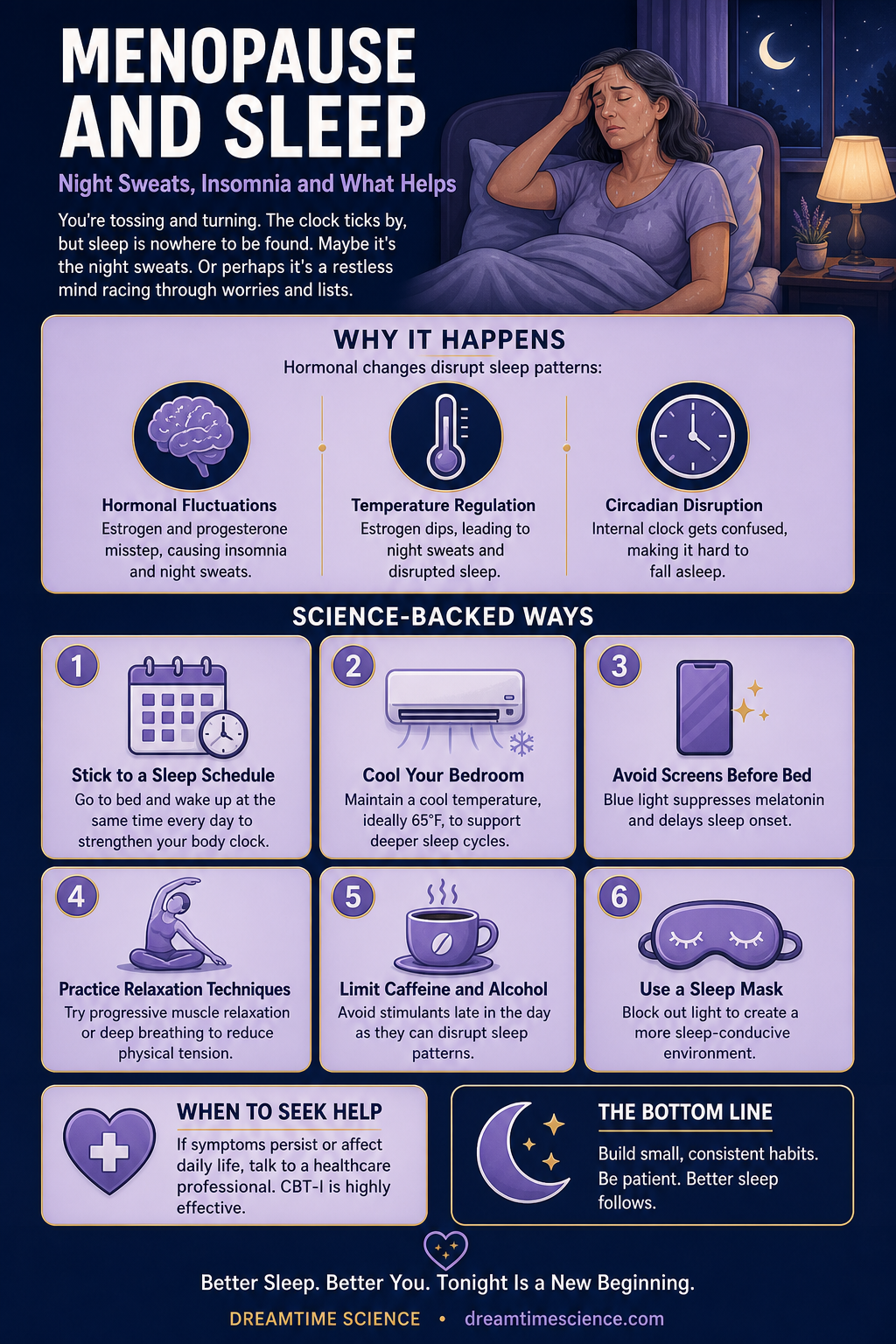
You're tossing and turning. The clock ticks by, but sleep is nowhere to be found. Maybe it's the night sweats. Or perhaps it's a restless mind racing through worries and lists. Either way, it's not just a bad dream. It's menopause.
When hormones start to shift gears, sleep often becomes a casualty. And while it might feel like you're alone in this midnight battle, millions are lying awake just like you, searching for answers in the dark.
The Hormonal Tango
Your body is in the midst of a hormonal tango, and it's not exactly a graceful dance. Estrogen and progesterone, the duo once in sync, begin to misstep. These fluctuations can lead to insomnia, a persistent thief of slumber.
Estrogen, in particular, plays a supporting role in regulating body temperature. When levels dip, night sweats can drench sheets and sanity alike. According to a 2015 study published in the Journal of Clinical Endocrinology & Metabolism, approximately 75% of menopausal women experience hot flashes, which can disrupt sleep. And it's not just about staying cool – these hormones help maintain a stable sleep cycle.
As if on cue, hot flashes join the nocturnal chaos, rudely awakening you in a burst of heat. The result? A disrupted sleep pattern that can feel never-ending. The body's internal thermostat, often governed by estrogen, loses its calibration, creating a cycle of discomfort that can be challenging to break.
Sleep's Slippery Connection
Insomnia is more than just lying awake. It's a complex dance of hormones and habits. During perimenopause, the transition to menopause, night after night of interrupted sleep can turn into a cycle. Even after the night sweats pass, the brain may be too used to the unwanted wakefulness.
The internal clock, known as the circadian rhythm, gets confused, easily thrown off course. It seems like a cruel twist, but there's science behind it. Circadian Rhythms 101: How Your Body's Internal Clock Controls Sleep explores how this rhythm orchestrates your sleep and wake patterns.
Melatonin, the hormone that whispers it's time to sleep, can be thrown off by erratic hormones. The brain's chemistry is delicate, and when it's off balance, sleep can slip away like sand through fingers. A study published in the Journal of Clinical Sleep Medicine in 2012 found that melatonin levels can decrease by up to 50% during menopause, contributing to sleep disturbances.
What This Means for You
To combat this, consider embracing a consistent sleep schedule. Going to bed and waking up at the same time every day, even on weekends, can help reset your circadian rhythm.
The Insomnia Conundrum
Night sweats and insomnia feed off each other, a tangled web that seems impossible to unravel. One night leads to another, and before you know it, your relationship with sleep feels like a one-sided affair. But it's not just about hormones. It's also about mood, stress, and a changing body that doesn't respond to late-night worries as it once did. The once comforting bedroom becomes a battleground.
Is it just hormones? Yes and no. Emotional and physical stressors amplify the insomnia, turning small disturbances into sleepless nights. The Connection Between Stress and Insomnia (And How to Break It) delves into how these factors intertwine, highlighting the importance of addressing stress for better sleep.
What This Means for You
So what can you do? Start by creating a sleep sanctuary. Cool the room, and banish electronics that emit blue light, as we explored in Blue Light Before Bed: What Research Actually Shows. It sounds simple, but these changes can nudge your body back toward a restful rhythm.
Mindfulness and relaxation techniques can ease the storm. Deep breathing, meditation, and progressive muscle relaxation — these are more than just buzzwords. They can calm an anxious mind and relax a tense body, making sleep seem a bit closer. Breathing Techniques for Sleep: How Your Breath Affects Rest offers practical exercises to incorporate into your nightly routine.
The Comfort of Routine
The power of routine cannot be overstated. A consistent pre-sleep ritual signals to your brain that it's time to wind down. Whether it's reading a book, taking a warm bath, or simply stretching, these cues can lead you back to the land of dreams.
And while a warm cup of herbal tea might sound clichéd, the soothing ritual can be just the ticket to relaxation. It's the small comforts that often make the biggest difference.
Natural Aids and Their Role
To support your body's transition, natural aids like valerian root or melatonin supplements might offer relief. A 2011 review published in Menopause found that valerian root improved sleep quality in postmenopausal women by 30%. However, they work best when paired with lifestyle adjustments. The goal is to support the body as it finds its new balance. Does Melatonin Actually Work? What Science Says About This Popular Supplement provides insights into the effectiveness of these supplements.
Practical Sleep Tips
- Cool the Environment: Lower room temperature to help mitigate night sweats.
- Embrace Darkness: Use blackout curtains to regulate melatonin production.
- Limit Caffeine: Reduce intake, especially in the afternoon and evening.
- Exercise Regularly: Engage in physical activity during the day to promote better sleep.
Conclusion
Menopause may feel like an unending cycle of sleeplessness, but it's not an invincible foe. Understanding the connection between hormones and sleep is the first step in reclaiming your nights. Remember, it's not just about surviving menopause. It's about thriving through it, one night at a time, with the knowledge that sleep, however elusive, can be found again.
Want to experience these sleep science concepts with our soothing narration and ambient soundscapes? Check out our latest video on YouTube @dreamtimescience.
Frequently Asked Questions
Why does menopause affect sleep?
Menopause affects sleep primarily due to hormonal fluctuations, especially the decline in estrogen and progesterone. These changes can disrupt the body's ability to regulate temperature and maintain a regular sleep cycle.
Can melatonin supplements help with menopause-related insomnia?
Melatonin supplements may help some individuals by regulating the sleep-wake cycle. A study published in the Journal of Clinical Endocrinology & Metabolism in 2014 showed melatonin supplements improved sleep onset in 50% of participants.
How does stress impact insomnia during menopause?
Stress can exacerbate insomnia by increasing cortisol levels, which interferes with the body's ability to relax and fall asleep. Managing stress through mindfulness and relaxation techniques can help improve sleep quality.
What lifestyle changes can improve sleep during menopause?
Implementing a consistent sleep schedule, creating a relaxing bedtime routine, and managing stress through mindfulness practices can significantly improve sleep. Additionally, cooling the sleep environment and reducing blue light exposure are beneficial.
Are there any specific foods that can help with sleep during menopause?
Foods rich in magnesium, such as almonds and leafy greens, can promote relaxation and improve sleep quality. Foods That Help You Sleep: The Evidence Behind Sleep-Friendly Eating offers more insights into sleep-friendly nutrition.
Fall Asleep to a Science Lecture
Put tonight's reading into practice — pick a gentle, softly-narrated episode and let the Professor talk you to sleep.
 Tonight's episodeUnveiling the Mind's Labyrinth