← Back to Articles
Sleep Science

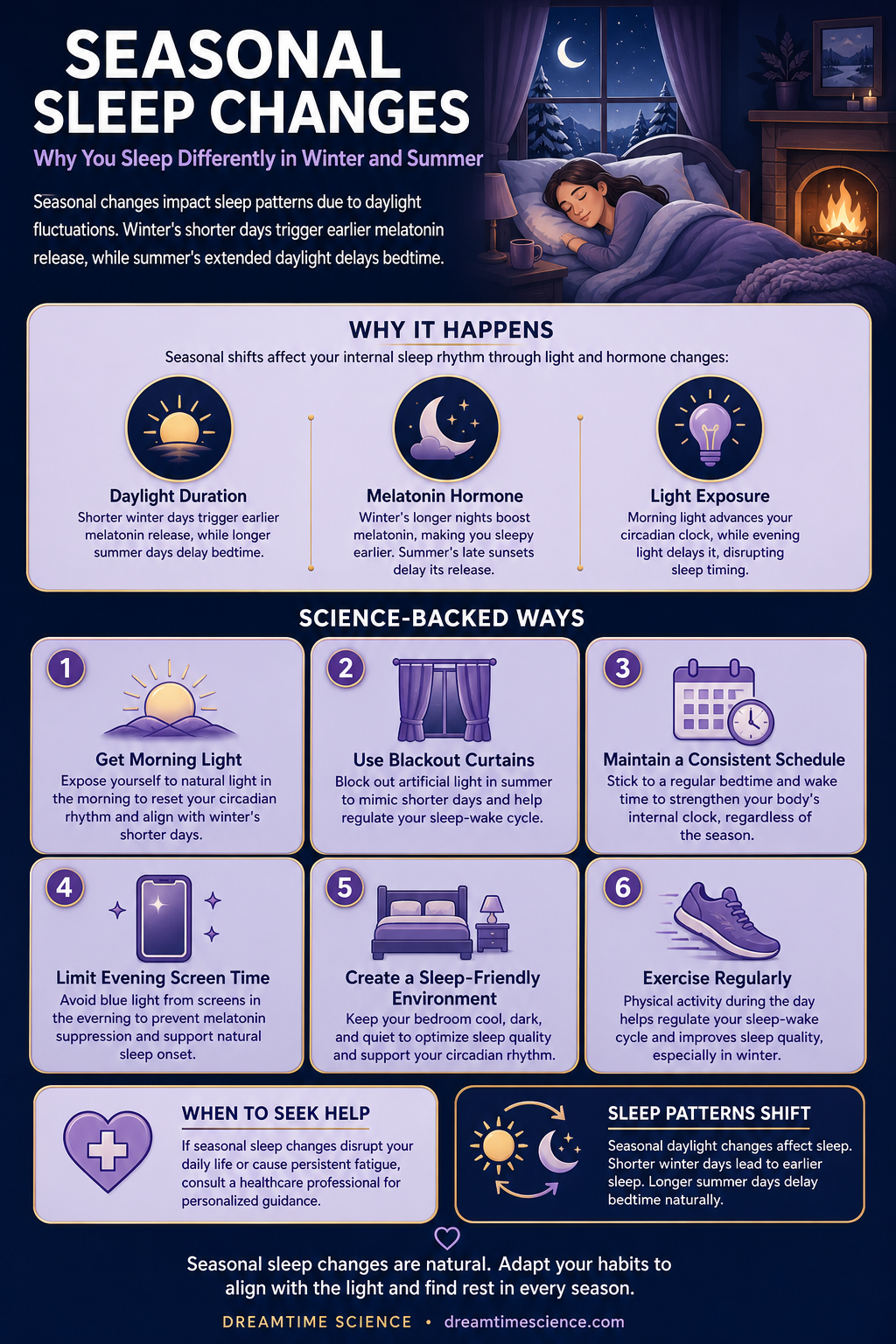
The short answer: Seasonal changes significantly impact sleep patterns due to fluctuations in daylight. Winter's shorter days trigger earlier melatonin release and a craving for sleep, while summer's extended daylight can delay bedtime. To combat these shifts, prioritize morning light exposure in winter and utilize blackout curtains in summer to help regulate your circadian rhythm.
Our sleep patterns naturally change throughout the year, reflecting the Earth’s journey around the sun. Understanding these shifts can help you feel more rested and energized. This article explores how light, hormones, and even time changes influence sleep. We’ll examine the science behind seasonal sleep variations and offer insights into maintaining balance.
Key takeaways
- Longer summer days can sometimes delay your bedtime, making it harder to wind down.
- Shorter winter days often encourage earlier bedtimes, aligning with reduced daylight.
- Morning light exposure helps to advance your body’s internal clock, improving sleep.
- Evening light, especially from screens, can delay your circadian rhythm and sleep onset.
- Maintaining a consistent sleep schedule provides stability during seasonal changes.
Why Does My Sleep Change With the Seasons?
The Earth's movement creates shifts in daylight hours. These changes significantly influence our sleep patterns. Our circadian rhythm, or internal body clock, responds to these changes. It regulates when we feel sleepy and when we wake up.
Summer days are longer, and winter days are shorter. This difference impacts our sleep timing. During summer, we often stay up later. The extended daylight encourages us to linger in the evening. Winter brings earlier darkness, prompting us to seek sleep sooner.
How Light Affects Our Internal Clock
Light is a key signal for our circadian rhythm. Morning light helps to set our body clock for the day. A study showed that morning light can shift our sleep schedule earlier. This is especially important in winter. Limited daylight can disrupt our natural sleep-wake cycle. Evening light, particularly from screens, can delay our sleep. This makes it harder to fall asleep at a regular time.
Here’s how seasonal changes can affect sleep:
- Longer summer days may delay bedtime.
- Shorter winter days may encourage earlier bedtimes.
- Morning light helps advance the circadian rhythm.
- Evening light can delay the circadian rhythm.
- The amount of daylight influences melatonin release.
Melatonin, the Hormone of Night
Melatonin is the star of this nocturnal show. It rises with the setting sun, coaxing you to rest. Longer nights mean longer melatonin production—winter’s gift to your weary self. In summer, the sun's late retreat means melatonin takes its time. Your body waits, patient yet restless, as night falls later and later. The result? A delicate dance between light and hormone, whispering, "Wait just a bit longer."
A 2017 study in the Journal of Pineal Research found that melatonin levels rise approximately two hours before bedtime and are suppressed by light exposure, particularly blue light. This hormone not only signals the onset of sleep but also influences the quality of sleep, helping to regulate the sleep stages we cycle through at night.
What This Means for You
So, how can you work with melatonin's seasonal shifts? In winter, try to get outside in the morning to soak up natural light, helping to reset your circadian rhythm. In summer, consider using blackout curtains to mimic winter's earlier darkness, allowing melatonin to work its magic uninterrupted.
Winter Blues and Sleep: How SAD Affects Your Rest
Seasonal Affective Disorder (SAD) brings more than just a low mood for some. It’s a type of depression linked to changes in seasons, often appearing in winter. SAD can significantly disrupt sleep patterns, leaving you feeling tired and sluggish. This condition impacts how your body responds to the changing light levels.
People with SAD often find their sleep duration increases during the winter. A 2015 observation noted a 40% increase in sleep time during winter months. This shift occurs because the brain interprets reduced sunlight as a signal to slow down. It can throw off your circadian rhythm, your body’s natural sleep-wake cycle.
Understanding the Impact
Light therapy can be a helpful tool for managing SAD symptoms. Light boxes mimic natural sunlight, helping to reset your internal clock. Exposure to this light, typically for 20 to 30 minutes in the morning, can improve mood and sleep. It’s a way to counteract the effects of reduced daylight.
Why Does Daylight Saving Time Disrupt My Sleep?
Daylight saving time (DST) is a human-made change to our clocks. We shift them forward in spring and back in autumn. This disrupts our natural sleep patterns. It’s like suddenly living in a different time zone.
These shifts can have real consequences for our health. A study found a 5% rise in heart attack risk after the spring DST change. This happens because our bodies need time to adjust. The sudden schedule change can impact vital functions.
How Your Body Reacts
Your body’s internal clock, called your circadian rhythm, controls sleep. DST throws this rhythm out of sync. It affects when you feel tired and when you feel alert. This can lead to:
- Difficulty falling asleep
- Waking up earlier than usual
- Feeling groggy during the day
- Reduced concentration
Adapting to the Change
Your body is capable of adapting to these shifts. It takes time to re-align your circadian rhythm. Gradual adjustments can make the process easier. Explore our article on circadian rhythms for more information Circadian Rhythms 101.
Adjusting to Sleep Changes Throughout the Year
Seasonal changes significantly impact how well we sleep. Our bodies are highly attuned to environmental cues like daylight. These cues influence our sleep-wake cycle, also known as our circadian rhythm. Understanding these shifts helps us adapt and find balance.
Practical Steps for Seasonal Sleep Harmony
Here's how to navigate sleep changes across seasons:
- Maximize light exposure: In winter, prioritize morning sunlight. This helps regulate your body clock. Conversely, block late afternoon and evening light during summer.
- Stick to a consistent schedule: Keep your sleep and wake times as regular as possible. This reinforces your internal rhythm.
- Pay attention to your body’s signals: Recognize signs of tiredness, like yawning or feeling sluggish. These signals indicate your body’s needs.
Maintaining a consistent sleep schedule is crucial. It acts as an anchor during times of change. It helps your body adjust to varying daylight hours and seasons.
How Do Seasonal Changes Affect My Sleep?
Sleep patterns naturally change as the year progresses. Our bodies respond to cues like daylight and temperature. These shifts can influence when we feel tired and how deeply we sleep. Seasonal changes impact our internal body clock, called the circadian rhythm.
The Impact of Light and Darkness
Longer days in summer often mean we sleep less. Our bodies produce less melatonin, a hormone that promotes sleep. Conversely, shorter days in winter can increase melatonin production. This can lead to feeling sleepier earlier and sleeping longer.
Adapting to the Cycle
Here are some common ways seasonal changes affect sleep:
- Difficulty waking up early in winter.
- Feeling more alert later at night during summer.
- Changes in core body temperature impacting sleep quality.
- Altered levels of serotonin, a mood-regulating chemical.
- A shift in the timing of sleep stages like deep sleep.
Understanding these patterns can help you adjust. Acknowledging the seasonal rhythm allows for better sleep.
Frequently Asked Questions
How does light affect my sleep cycle?
Light tells your body when to sleep and wake up. Bright light, especially blue light, can reduce melatonin production. A 2014 study found blue light lowered melatonin by 55%, pushing back sleep. This happens because light acts as a signal for your body’s internal clock.
What is melatonin, and why is it important?
Melatonin is a hormone that helps control your sleep schedule. It's made in a small gland in your brain. Melatonin signals your body that it's time to rest, reducing alertness and body temperature. This process prepares you for sleep and helps regulate your body clock.
Can Seasonal Affective Disorder affect sleep?
Yes, Seasonal Affective Disorder (SAD) can affect your sleep. People with SAD often feel very sleepy and have irregular sleep. A 2015 study showed they sleep longer during winter.
How can I adjust to daylight saving time changes?
Adjusting to daylight saving time takes a little planning. Start shifting your bedtime earlier, about 15 minutes nightly. This helps your body clock adjust gently to the new schedule. It can lessen the disruption to your sleep.
Are there other factors that influence seasonal sleep changes?
Yes, warmer weather and changes in your routine can affect sleep. Our bodies naturally adjust to temperature shifts. Summer activities and holiday stress may also disrupt sleep patterns. These factors can influence how easily you fall asleep and stay asleep.
Tonight's Listening
 Tonight's episodeDNA's Silent Blueprint: Uncovering Life’s Deepest Secrets
Fall Asleep to a Science Lecture
Put tonight's reading into practice — pick a gentle, softly-narrated episode and let the Professor talk you to sleep.
Tonight's episodeDNA's Silent Blueprint: Uncovering Life’s Deepest Secrets
Related articles
Body Clock & Timing
Daylight Saving Time and Sleep: Why the Clock Change Hits So Hard
Every year, the clock shifts forward or backward, and many individuals experience disruptions to their sleep and overall well-being.

How Sleep Works
Sleep Architecture Across Your Lifespan: How Sleep Changes as You Age
Sleep architecture changes dramatically across your lifespan. Newborns spend 50% of sleep in REM, declining to 20-25% in adults. Deep slow-wave sleep peaks in…

Body Clock & Timing
Jet Lag Explained: How to Recover From Time Zone Changes
Jet lag occurs when your body's internal clock, the circadian rhythm, doesn't align with the new time zone after travel. This disruption, impacting sleep, mood, and…