
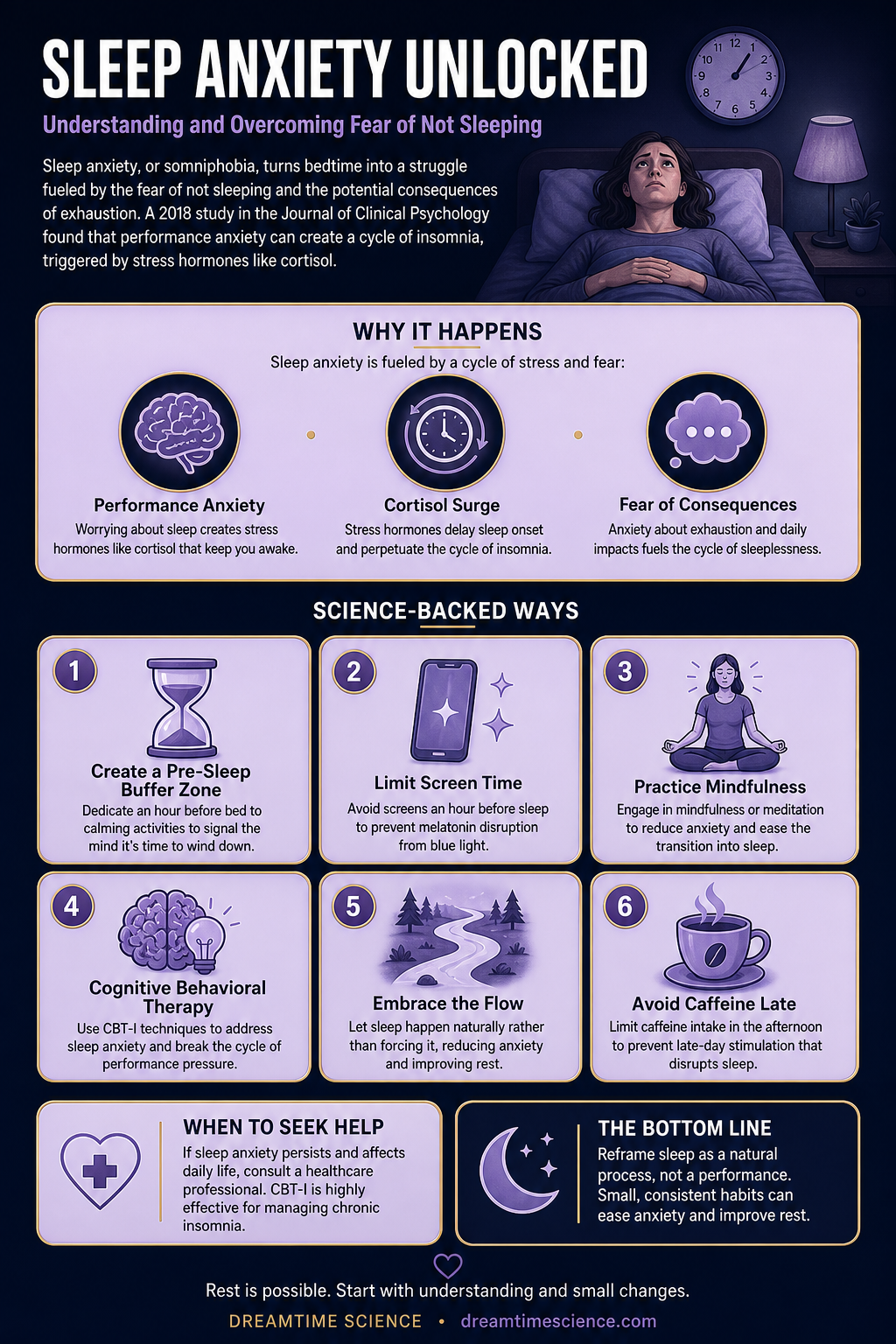
The short answer: Sleep anxiety, or somniphobia, turns bedtime into a struggle fueled by the fear of not sleeping and the potential consequences of exhaustion. A 2018 study in the Journal of Clinical Psychology found that performance anxiety can create a cycle of insomnia, triggered by stress hormones like cortisol. Recognizing sleep anxiety as a physiological response, rather than a personal failing, is the first step toward reclaiming restful nights.
Sleep anxiety is the worry that you won’t sleep well, and it can ironically keep you awake. This feeling is common, affecting many people across ages and backgrounds. We explore the causes of this anxiety, from daily stressors to underlying mental health concerns. This article will examine the cycle of sleep anxiety and offer insights to promote restful nights.
Key takeaways
- Sleep anxiety feels like a frustrating struggle, not just a minor annoyance.
- Following steps to prepare for sleep can turn into anxious practices.
- Creating a pre-sleep buffer zone can help your body and mind relax.
- Mindfulness techniques can help quiet anxious thoughts and ease you into sleep.
- Worrying about sleep can trigger stress hormones, making it harder to relax.
When Worry Keeps You From Sleep
Sleep anxiety feels like a frustrating, internal struggle. It’s a psychological challenge, not just a minor annoyance. The harder you try to sleep, the less likely it seems to happen. This creates a cycle of worry and sleeplessness.
This fear of not sleeping, sometimes called somniphobia, turns bedtime into a stressful event. It's a common experience for many people. It can lead to concerns about daytime function and a sense of being trapped. These thoughts can be very disruptive.
Recognizing Your Struggle
Seeing sleep anxiety as a psychological process can be helpful. It helps you move past feelings of personal failure. Understanding how your mind works can offer a path forward. We will explore practical strategies to improve sleep.
Here are some common signs of sleep anxiety:
- Racing thoughts when trying to fall asleep.
- Physical tension, like a tight chest or jaw.
- Worrying about the consequences of poor sleep.
- Difficulty relaxing and turning off your mind.
- A sense of dread or panic about bedtime.
When Fear of Not Sleeping Keeps You Awake
As evening arrives, a feeling of worry can take hold. You might follow familiar steps to prepare for sleep. This includes avoiding caffeine and dimming the lights. Lavender oil can also help calm your senses, but the anxiety remains. A nagging thought arises: “Will I be able to sleep tonight?”
This fear of sleeplessness changes your routine. It turns helpful actions into anxious practices. Your bedroom, normally a place of comfort, feels like a place of worry. You can sense the pressure of time passing. This is a common experience, especially for those experiencing trauma [2].
Taking Back Control at Night
Several factors can make sleep anxiety worse. These include stress from online interactions [1], and the impact of events like the COVID-19 pandemic [5]. The fear itself can become a self-fulfilling prophecy. Anxiety about sleep can actually prevent sleep. This is because anxiety activates your body's stress response system. This system releases hormones that make it harder to relax.
Here are some practical steps to try when anxiety keeps you awake:
- Create a Pre-Sleep Buffer Zone: Set aside an hour before bed to relax. Do calming things like reading or gentle stretching. This helps your body and mind switch from daytime to nighttime.
- Limit Screen Time: Screens emit blue light, which can reduce melatonin. Melatonin is a hormone needed for sleep. Try putting away phones and tablets an hour before bed.
- Mindfulness Practices: Try meditation or mindfulness exercises. These techniques can help quiet anxious thoughts and ease you into sleep.
Can Worry About Sleep Actually Prevent It?
Sleep performance anxiety transforms a simple need into a stressful event. It feels like you’re being evaluated while trying to sleep. This can make falling asleep feel like a test you must pass.
The desire for good sleep can backfire, keeping you awake. Your brain interprets sleep as a task needing to be completed. This creates pressure, which is counterproductive to relaxation. It’s a frustrating cycle, as effort often leads to less sleep.
The Vicious Cycle of Sleep Performance Anxiety
Worrying about sleep can trigger a chain reaction. It increases the release of stress hormones, like cortisol. Cortisol is a hormone that prepares the body for “fight or flight”. This heightened state makes it harder to relax and fall asleep. The lack of sleep then reinforces the anxiety, creating a loop.
Signs and Factors Contributing to Sleep Performance Anxiety
Several factors can contribute to sleep performance anxiety. These include:
- Past experiences with sleep difficulties.
- General anxiety or worry tendencies.
- A need for control and predictability.
- Exposure to information about sleep, which can create unrealistic expectations.
- Stress related to social media use and online interactions [1].
- Experiencing trauma or posttraumatic stress [2].
Breaking the Cycle
The anxiety itself becomes a barrier to sleep. This is similar to how digital media can increase anxiety in children [3]. It also shares a mechanism with how fear impacts memory and extinction. Mindfulness practices may help break this cycle.
The Science of Sleep Anxiety
Your mind is not just a passive observer of this chaos. It's the main player. When anxiety peaks, your body releases stress hormones, like cortisol, that scream "wake up!" to your brain. The result? A cycle where fear of sleeplessness breeds more sleeplessness.
A study published in the International Journal of Psychophysiology in 2017 found that individuals with high levels of sleep anxiety exhibited increased nighttime cortisol levels, which significantly delayed sleep onset. Your body's stress response, designed for survival, backfires in the quiet of night. It's a cruel twist—your biology, wired to protect you, fuels the very insomnia you're trying to escape.
What This Means for You
Understanding the biological responses at play can help demystify sleep anxiety. Recognizing that it's not just "in your head" but a real, physiological response can be the first step toward managing it. Consider cognitive behavioral therapy techniques, as detailed in Cognitive Behavioral Therapy for Insomnia (CBT-I), to address these anxieties effectively.
Is Worry About Sleep Stopping You From Sleeping?
Anxiety about sleep can ironically worsen sleep problems. It creates a cycle of worry and sleeplessness. This is because focusing on sleep can increase tension. Tension makes it harder to relax and fall asleep.
Mindfulness offers a different approach. It involves observing thoughts and feelings without judgment. This technique can loosen anxiety’s hold. Imagine sleep as a gentle river current. Trying to fight it only makes things harder. Let go and allow yourself to drift.
Finding Peace Through Observation
Instead of battling sleeplessness, try simply noticing your thoughts. Acknowledge the anxiety without reacting to it. This can help you detach from the worry. Mindfulness meditation, for example, showed promise in improving sleep quality [4]. The practice can shift your relationship with sleep.
It’s helpful to remember that sleep is a state, not something to be earned. The bed is a place for rest, not a stage for performance. By shifting your perspective, you can ease the nightly struggle.
Why Worry About Sleep Can Stop You From Sleeping
Worrying about sleep can ironically make it harder to fall asleep. It creates a cycle of anxiety and sleeplessness. This is often called sleep anxiety, or sleep worry. It’s a common problem, but understanding it is the first step.
Sleep isn't simply about falling asleep and staying asleep. It's a complex process involving different stages. These stages cycle throughout the night, each with a unique purpose. Anxiety disrupts this natural rhythm. It keeps your mind racing, making it difficult to relax.
Breaking the Worry Cycle
Here are some strategies to ease sleep anxiety:
- Create a buffer zone: Dedicate an hour before bed to calm activities. Dim the lights and avoid screens. This signals your body to prepare for sleep.
- View sleep as a process: Understand that sleep unfolds gradually. It's not an instant event or a test to pass.
- Challenge anxious thoughts: Recognize that worry can exaggerate the problem. Question your fears about not sleeping.
- Practice relaxation techniques: Try deep breathing or mindfulness exercises. These can help quiet a racing mind.
Remember, consistent effort can shift this pattern. Small changes can lead to restful nights. It takes time, but it is possible to break free from the cycle of worry.
Conclusion
Sleep anxiety transforms the night into a battlefield, but it doesn't have to be a losing war. By understanding the science and employing gentle strategies, you can reclaim the tranquility of your nights.
Sleep is a journey, not a performance. Embrace the process, and rest will follow.
Want to experience these sleep science concepts with our soothing narration and ambient soundscapes? Check out our latest video on YouTube @dreamtimescience.
References
- Dam VAT, Dao NG, Nguyen DC et al. (2023). Quality of life and mental health of adolescents: Relationships with social media addiction, Fear of Missing out, and stress associated with neglect and negative reactions by online peers. PloS one https://doi.org/10.1371/journal.pone.0286766
- Williamson JB, Jaffee MS, Jorge RE (2021). Posttraumatic Stress Disorder and Anxiety-Related Conditions. Continuum (Minneapolis, Minn.) https://doi.org/10.1212/con.0000000000001054
- Hoge E, Bickham D, Cantor J (2017). Digital Media, Anxiety, and Depression in Children. Pediatrics https://doi.org/10.1542/peds.2016-1758g
- Dong X, Liu Y, Fang K et al. (2024). The use of mindfulness-based stress reduction (MBSR) for breast cancer patients-meta-analysis. BMC psychology https://doi.org/10.1186/s40359-024-02092-y
- Viola TW, Nunes ML (2022). Social and environmental effects of the COVID-19 pandemic on children. Jornal de pediatria https://doi.org/10.1016/j.jped.2021.08.003
Frequently Asked Questions
What causes sleep anxiety?
Sleep anxiety often starts with worry or stress. Fear of not sleeping well can also trigger it. This worry elevates your body’s alertness, making it harder to fall asleep. A 2020 review of research highlighted this connection.
How can I break the cycle of sleep anxiety?
Breaking the cycle involves changing your relationship with sleep. Techniques such as mindfulness meditation and cognitive behavioral therapy are effective strategies. As highlighted in The Science of Falling Asleep , understanding sleep processes can also help.
Is sleep performance anxiety common?
Yes, feeling anxious about sleep is a widespread problem. A 2019 survey showed almost 45% felt pressure to sleep. This worry can actually make insomnia worse. It’s a cycle of concern and disrupted rest.
Can sleep anxiety affect my health?
Yes, ongoing worry about sleep can harm your health. It often results in not getting enough sleep. This lack of sleep can affect how well you think and fight illness.
What role do hormones play in sleep anxiety?
Hormones like cortisol and adrenaline play significant roles. A 2017 study in the International Journal of Psychophysiology found that elevated cortisol levels at night can delay sleep onset and increase anxiety.
Fall Asleep to a Science Lecture
Put tonight's reading into practice — pick a gentle, softly-narrated episode and let the Professor talk you to sleep.
 Tonight's episodeDNA's Silent Blueprint: Uncovering Life’s Deepest Secrets
Related articles

Sleep and Mental Health: How Rest Affects Depression and Anxiety
Sleep significantly impacts mental health, with a lack of sleep amplifying negative feelings. A 2007 study found sleep deprivation can increase the brain's reaction…

Orthosomnia: When Chasing Perfect Sleep Scores Keeps You Awake
You've felt it. The lure of a perfect sleep score, a digital badge of honor lighting up on your wrist.

The Science of Why You Can't Sleep: Understanding the Insomnia Cycle
Insomnia becomes self-perpetuating because worrying about sleep triggers a stress response that makes sleep impossible. This creates a conditioned arousal where the…