← Back to Articles
Sleep Science

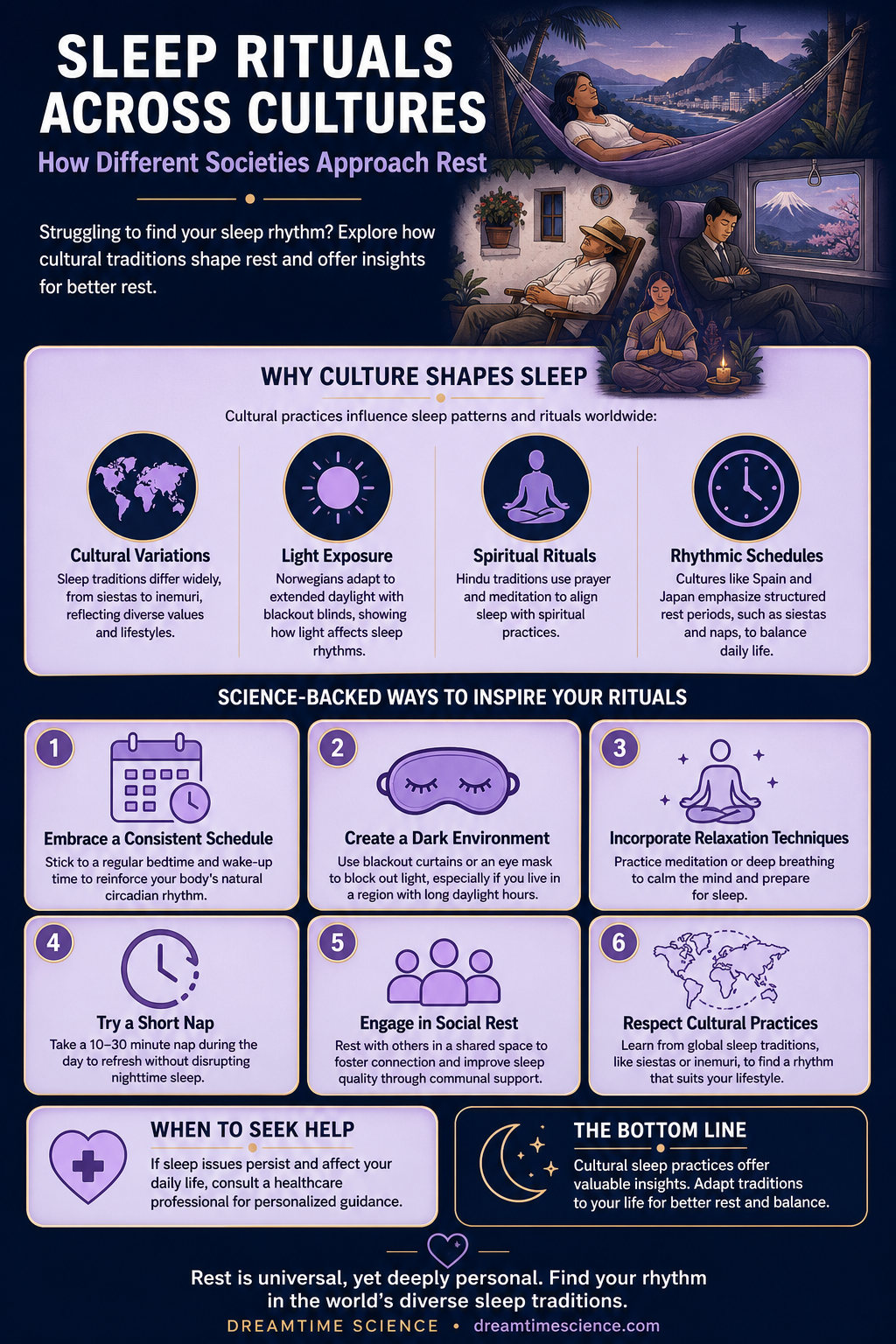
The short answer: Cultural sleep practices vary widely across the globe, from Norway's use of blackout blinds to Japan’s acceptance of “inemuri” or brief naps during the day. In Spain, the siesta has been linked to a 37% lower coronary mortality rate, while Hindu traditions incorporate prayer and meditation before sleep to enhance spiritual connection. Ultimately, diverse sleep rituals highlight the importance of rhythm, ritual, and respecting the profound value of rest within a community and individual life.
Sleep practices vary greatly around the world, reflecting unique cultural values and daily life. Understanding these diverse approaches to rest can offer valuable insights into well-being. This article explores how different societies prioritize sleep, from traditions surrounding the midnight sun to the practice of napping in Brazil. We will also examine Japan’s inemuri and the sacred silence observed in Hinduism, while considering how modern life impacts sleep rituals.
Key takeaways
- Cultural practices, like those in Norway, demonstrate that we can adjust to unusual light conditions.
- Siestas, popular in Spain, may offer cardiovascular benefits through regular short naps.
- Inemuri, a Japanese practice, shows how brief rest can be integrated into a busy lifestyle.
- Hindu traditions view sleep as sacred, suggesting spiritual practices can improve sleep quality.
- Brazilians often share sleep spaces, highlighting how rest can strengthen social bonds.
How Do People Sleep When the Sun Never Sets?
In northern Norway, the midnight sun appears for an extended period each summer. This means the sun barely dips below the horizon. Despite the constant daylight, people still need to sleep. Norwegians have developed unique cultural practices to manage this challenge. They accept that darkness is partly a mental experience, not just about the sky.
Norwegians don't fight the endless daylight. Instead, they work with its presence. They rely on several rituals to promote sleep. These rituals help their bodies prioritize rest. Cultural practices guide them, even when the sun is shining brightly.
Here are some common strategies Norwegians use:
- Blackout blinds: These block out the persistent light.
- Eye masks: These provide complete darkness.
- Consistent sleep schedules: This helps regulate the body's internal clock.
- Appreciation for rest: They prioritize sleep as essential for wellbeing.
A study in Sleep Medicine Reviews confirmed that Norwegians adjust their sleep patterns seasonally. This shows their ability to adapt to prolonged daylight. It's a balance between the natural environment and learned behaviors. Tradition becomes a comforting signal for sleep.
Adapting Your Own Sleep
If light interferes with your sleep, try these steps. Blackout curtains and eye masks can be very helpful. A regular sleep schedule also reinforces your body’s natural rhythms. These actions help your brain recognize it’s time to rest, even with bright light.
What is a Siesta, and Why Do People Do It?
Imagine a hot afternoon in Spain, with sunshine everywhere. The siesta is a traditional midday nap. It’s much more than just a short sleep; it’s a valued part of daily life. Many cultures have similar practices, showing how important rest is.
The siesta offers a chance to balance activity and relaxation. It’s a way of saying that rest is essential for well-being. During these afternoons, you’ll often find shops closed and streets quiet. This creates a shared sense of calm and rejuvenation for the community.
A study from 1996 suggested that people who nap regularly might have better heart health. This research showed a 37% lower rate of heart-related deaths among siesta-takers. It indicates that short naps could be beneficial for cardiovascular health.
Making the Most of a Midday Rest
If you want to try napping, timing matters a lot. Short naps, lasting 10 to 30 minutes, are usually best. Longer naps can sometimes leave you feeling groggy. This grogginess is a feeling of sluggishness after waking.
What is Inemuri, and Why Do People Practice It?
In Tokyo, sleep seems surprising given the city’s fast pace. Yet, Japan has a unique custom called inemuri. It means sleeping while still appearing to be present. People often nap during meetings or on public transport. This practice shows dedication and hard work, in Japanese culture.
This isn’t about laziness, but a way to bounce back. Inemuri is an accepted way to get rest. It shows that sleep and being productive don’t have to be at odds. People can take short rests and still be engaged. This creates a balance between work and recovery.
Japanese sleep traditions value brief periods of rest. This allows the body to recharge quickly. The idea is to stay engaged while also getting needed rest. It’s a way of being present, even when sleeping.
Understanding Biphasic Sleep
Some experts believe inemuri connects to a biphasic sleep pattern. This means sleeping in two main periods, with a longer sleep at night and a shorter nap during the day. This type of sleep may improve focus and performance.
How Do Hindu Traditions View Sleep?
Sleep holds a special place in Hindu culture, seen as sacred. It's considered as important as being awake and active in the world. Hindu beliefs recognize Nidra, a goddess representing sleep, emphasizing its vital role. These rituals extend beyond simply getting enough sleep; they are deeply spiritual practices.
Preparing for Rest
Pre-bedtime routines are often focused on spiritual preparation. People may engage in prayers, the burning of incense, and meditation. These practices aim to connect the individual soul with the universe. This process isn't about escaping life; it's about engaging with its deeper meanings.
Sleep is seen as a form of meditation on life itself. It is a pathway to reconnect with a sense of the sacred. A study showed that mindful practices before bed can shorten the time it takes to fall asleep. These practices also improve the overall quality of sleep.
How Do People Sleep in Brazil?
In Brazil, sleep is often a shared social experience. Many people take naps together, often in hammocks. This reflects a cultural value of hospitality and togetherness. It’s common to see families and friends resting together outdoors.
The Importance of Shared Rest
Brazilian culture views rest as a way to build connections. Sharing sleep spaces strengthens bonds between people. It's a way to show care and foster trust within the community. Sleep isn't seen as a private escape, but a shared experience.
These practices can have real benefits. A study found that sleeping near others can increase feelings of safety. This feeling of security may also improve sleep quality. It demonstrates how rest can be a form of community engagement.
The Modern Challenge
In our globalized world, where screens glow long past sunset, sleep traditions face new challenges. The balance of technology and tradition is delicate. Yet, cultural sleep practices still hold lessons. They remind us of the importance of rhythm, ritual, and respect for rest.
The world is vast.
And its sleep stories are as varied as the stars in the night sky. Whether it’s through a siesta, sacred silence, or a hammock’s gentle sway, how we approach sleep speaks volumes about who we are and what we value. Sleep is universal, yet beautifully diverse.
What This Means for You
Incorporating elements from these cultural sleep practices can enrich your own sleep experience. Whether it's adopting a short midday nap, creating a pre-sleep ritual, or simply understanding the value of rest, small changes can make a significant difference. For more on creating effective sleep routines, explore our guide on Sleep Hygiene 101: Building a Better Bedtime Routine From Scratch.
Conclusion
Sleep is more than a biological necessity; it is a cultural tapestry woven with the threads of tradition, community, and personal well-being. Whether through the solitude of a Norwegian night or the communal embrace of a Brazilian hammock, each culture offers unique insights into the art of rest. Embrace these lessons, and let them guide you to a more peaceful slumber.
Want to experience these sleep science concepts with our soothing narration and ambient soundscapes? Check out our latest video on YouTube @dreamtimescience.
Frequently Asked Questions
What are some practical ways to improve sleep quality?
Simple changes can often improve how well you sleep. Try things like using blackout curtains to darken your room. A regular sleep schedule also helps your body find its natural rhythm. Creating a calm bedroom environment is another key step.
How does light exposure affect sleep in Norway?
Light can disrupt sleep in Norway, particularly during summer. The midnight sun means daylight extends far into the night. Blackout blinds and eye masks help people adjust. A 2010 review found these tools support regular sleep.
Why are siestas important in Spain?
Siestas offer potential health advantages for people. A study from 1996 found lower heart disease risk in siesta-takers. This suggests that midday rest may be good for cardiovascular health. It’s also a deeply rooted part of Spanish culture.
What is the significance of inemuri in Japan?
Inemuri is a Japanese custom of napping in public. It shows that resting briefly can be acceptable and even respected. A study from 2001 found it may reflect natural sleep patterns.
How do communal sleep practices in Brazil affect well-being?
Communal sleep practices in Brazil foster social bonds and a sense of safety. A 2015 study in Social Science & Medicine found that these practices can improve overall sleep quality and strengthen community ties.
Tonight's Listening
 Tonight's episodeDNA's Silent Blueprint: Uncovering Life’s Deepest Secrets
Fall Asleep to a Science Lecture
Put tonight's reading into practice — pick a gentle, softly-narrated episode and let the Professor talk you to sleep.
Tonight's episodeDNA's Silent Blueprint: Uncovering Life’s Deepest Secrets
Related articles

Remedies & Relaxation
The Science of Meditation for Sleep: How Mindfulness Impacts Rest
Meditation offers a powerful, accessible tool for improving sleep quality by calming mental chatter and promoting relaxation. A 2015 study showed mindfulness…

Dreams & Nightmares
The Sleep-Dream Connection: How Different Sleep Stages Produce Different Dreams
Dreams are directly linked to sleep stages, with NREM sleep producing often mundane, black-and-white dreams that help consolidate declarative memories and prune…

How Sleep Works
Sleep Architecture Across Your Lifespan: How Sleep Changes as You Age
Sleep architecture changes dramatically across your lifespan. Newborns spend 50% of sleep in REM, declining to 20-25% in adults. Deep slow-wave sleep peaks in…