← Back to Articles
Sleep Environment

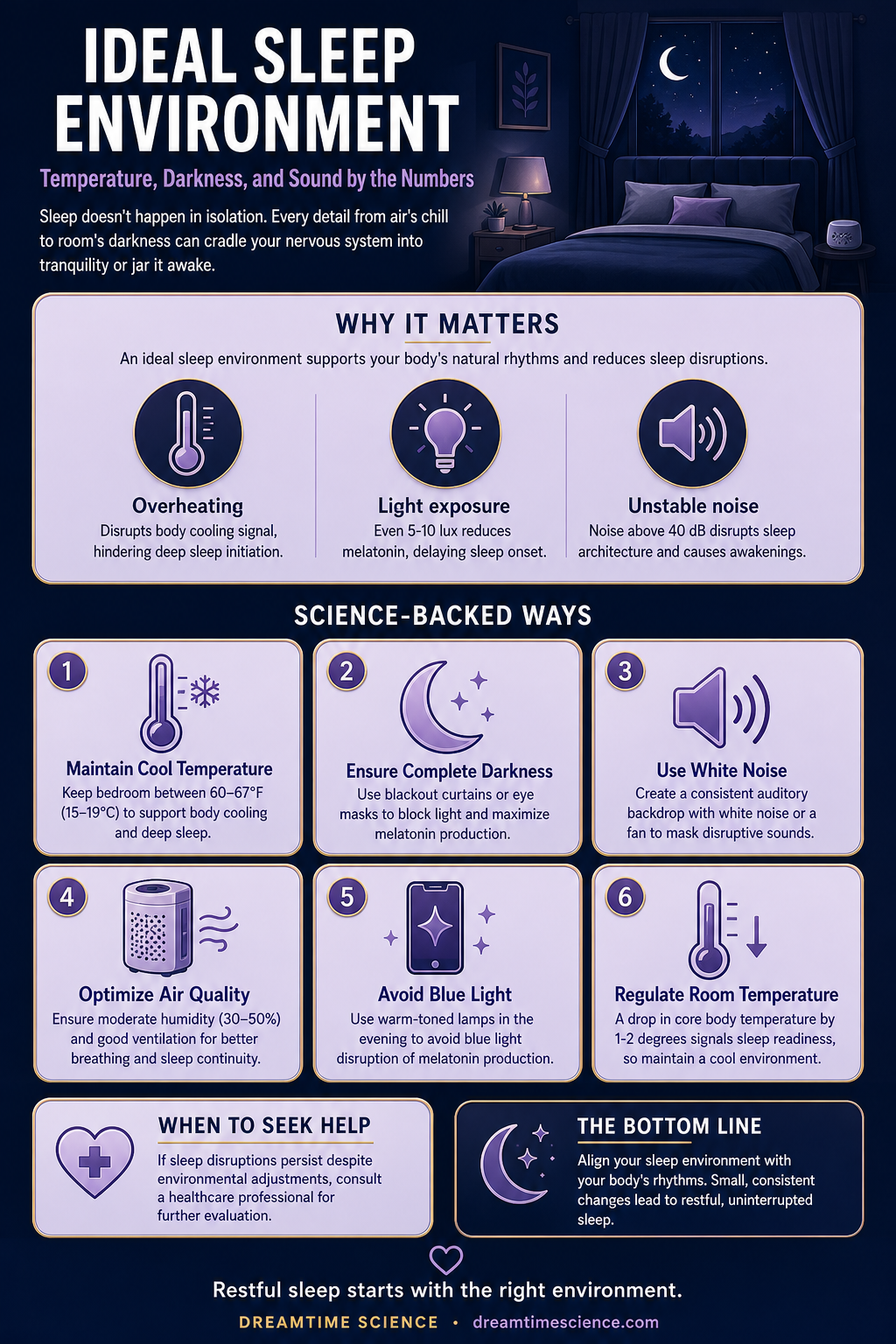
The short answer: The ideal sleep environment maintains a temperature of 16-19 degrees Celsius, complete darkness below 5 lux, and ambient noise under 30 decibels. Your core body temperature must drop by 1-2 degrees to initiate sleep, which is why a cool room is critical. Blackout conditions allow maximum melatonin production, and consistent low-frequency sound such as white or pink noise masks disruptive environmental noises.
Sleep doesn’t happen in isolation. It unfolds within an environment that whispers to your senses, shaping the quality of your rest. Every detail, from the air's chill to the room's darkness, can either cradle your nervous system into tranquility or jar it awake. If you've ever pondered what a scientifically ideal sleep environment looks like, let's delve into the realms of temperature, darkness, and sound — by the numbers and beyond the numbers.
Not obsessively. Just gently informed.
Key takeaways
- A cooler bedroom, between 60–67°F (15–19°C), supports deeper sleep and body temperature regulation.
- Even small amounts of light can interfere with melatonin production and delay the onset of sleep.
- Predictable, consistent sounds are more conducive to sleep than sudden, irregular noises.
- Maintaining moderate humidity levels (30–50%) supports better breathing and reduces nighttime awakenings.
- Creating a predictable and calming sleep environment can reduce nervous system hyperarousal.
Temperature: The Body’s Cooling Signal
As you drift toward sleep, your body initiates a fascinating ritual: it cools down. This drop in body temperature acts like a gentle nudge from your internal conductor, signaling that it's time for rest. But what happens if your bedroom is too warm? This cooling signal can be disrupted, leading to restless nights.
According to a comprehensive review by the National Sleep Foundation, the ideal bedroom temperature for most adults lies between 60–67°F (15–19°C). Cooler environments are more than just comfortable; they play a crucial role in nurturing deep sleep. Deep sleep, or slow-wave sleep, is critical for processes like immune repair and memory consolidation. A 2018 study published in Nature Reviews Neuroscience highlights that overheating, particularly during the early sleep cycles, impedes the quality of these restorative stages.
What This Means for You
Ensuring your bedroom is cool can help reduce nighttime awakenings and enhance how quickly you fall asleep. Consider using breathable linens and adjusting your thermostat to fall within the recommended range. For more on the importance of deep sleep, see our article on Sleep Deprivation's Impact on Memory, Learning, and Your Immune System.
Darkness: How Dark Is Dark Enough?
Light is not just a visual experience; it is a powerful regulator of your circadian rhythm, that internal clock orchestrating sleep and wakefulness. Even low levels of light — as little as 5–10 lux — can reduce melatonin production and delay sleep onset in sensitive individuals.
In stark contrast, the average bright office is lit at about 300–500 lux, and even the gentle glow of a full moon is about 0.1–0.3 lux. A 2017 study from the University of Colorado Boulder reveals that minimizing exposure to artificial light at night significantly strengthens circadian alignment, thereby improving sleep quality.
Strategies for Darkness
To embrace the night fully, consider these strategies:
- Blackout curtains: These can help eliminate stray light from street lamps or passing cars.
- Eye masks: Simple yet effective for blocking light when sharing a room.
- Warm-toned lamps: Use these in the evening to avoid blue light, which is notorious for disrupting sleep. For more insights, explore Blue Light Before Bed: Myth or Reality? What Research Actually Shows.
- No overhead lighting in the final hour: This helps signal to your brain that night has begun.
Sound: Silence vs. Stable Noise
Sound, much like light, can either soothe or disrupt your sleep. Total silence isn't always a necessity, but predictability in sound is. The World Health Organization suggests that consistent noise levels above 40 decibels can start disturbing sleep architecture.
To put this into perspective:
- A whisper measures about 30 dB.
- A quiet bedroom typically ranges between 30–40 dB.
- Light traffic can be around 50–60 dB.
Sharp, irregular noise spikes are more disruptive than steady background sounds. This is where white noise or natural ambient sound comes into play, masking sudden auditory changes and helping maintain a peaceful sleep environment.
What This Means for You
Consider using a white noise machine or a fan to create a consistent auditory backdrop. This can help mask disruptive sounds and promote uninterrupted sleep.
Air and Breathability
Air quality, though less quantifiable, is a silent partner in your quest for restful slumber. A well-ventilated room with moderate humidity levels (30–50%) supports better breathing, reducing the likelihood of awakenings. Cool air further aids your body's natural temperature drop, reinforcing the signals that it's time to sleep.
The Nervous System Factor
Beyond numbers and measures, the essence of an ideal sleep environment lies in its ability to reduce vigilance. Dim light, cool air, and stable sound create a cocoon of predictability and safety. According to a 2020 study in the Journal of Clinical Sleep Medicine, insomnia often involves hyperarousal, where the nervous system remains on high alert. Crafting a predictable, calming environment can become a pivotal part of treating insomnia, as discussed in Cognitive Behavioral Therapy for Insomnia (CBT-I): Evidence-Based Sleep Fixes.
Your bedroom should be a sanctuary — boring in its predictability, yet profoundly restful.
Conclusion: Small Shifts, Big Signals
Creating the ideal sleep environment is less about expense and more about biology. A room that's cool enough to encourage your body's natural temperature drop, dark enough to boost melatonin, and quiet enough to lower vigilance can transform sleep from an effort into a natural embrace.
When your environment aligns with your body's rhythms, sleep becomes less of a struggle and more of a restoration.
Want to experience these sleep science concepts with our soothing narration and ambient soundscapes? Check out our latest video on YouTube @dreamtimescience.
Frequently Asked Questions
Is colder always better?
No, overly cold rooms can lead to discomfort and micro-awakenings. The key is finding a balance that promotes comfort and supports your body's natural cooling process.
Can a nightlight disrupt sleep?
Yes, particularly for those sensitive to light. Blue-enriched light is especially disruptive to melatonin production, affecting sleep quality. Use warm-toned nightlights if needed.
Is white noise safe?
Yes, at moderate levels, white noise is safe and beneficial. It masks disruptive sounds and can enhance sleep continuity, but avoid high-volume exposure to protect hearing.
Does sleeping with the TV on harm sleep?
Yes, the unpredictable light and sound from the TV can fragment sleep cycles, leading to poor sleep quality. It's best to keep screens off at night.
How quickly do environmental changes help?
Environmental adjustments can sometimes lead to immediate improvements, especially changes in temperature and darkness, which directly influence sleep signals.
Tonight's Listening
 Tonight's episodeHow Gravity Can Bend Time: The Cosmic Clock Puzzle
Fall Asleep to a Science Lecture
Put tonight's reading into practice — pick a gentle, softly-narrated episode and let the Professor talk you to sleep.
Tonight's episodeHow Gravity Can Bend Time: The Cosmic Clock Puzzle
Related articles

Remedies & Relaxation
White Noise and Sleep: Does Background Sound Help or Hurt?
White noise can potentially improve sleep by masking distracting sounds and creating a calming auditory environment. Studies have shown it can help people fall asleep…

Remedies & Relaxation
Pink Noise vs White Noise: Which Sounds Help You Sleep Deeper
You've probably felt it: the restless tossing, the heavy eyelids that refuse to close.

Bedroom & Bedtime Habits
Bedroom Air Quality: How Humidity, CO2, and Plants Affect Sleep
The air in your bedroom significantly impacts how well you sleep each night.