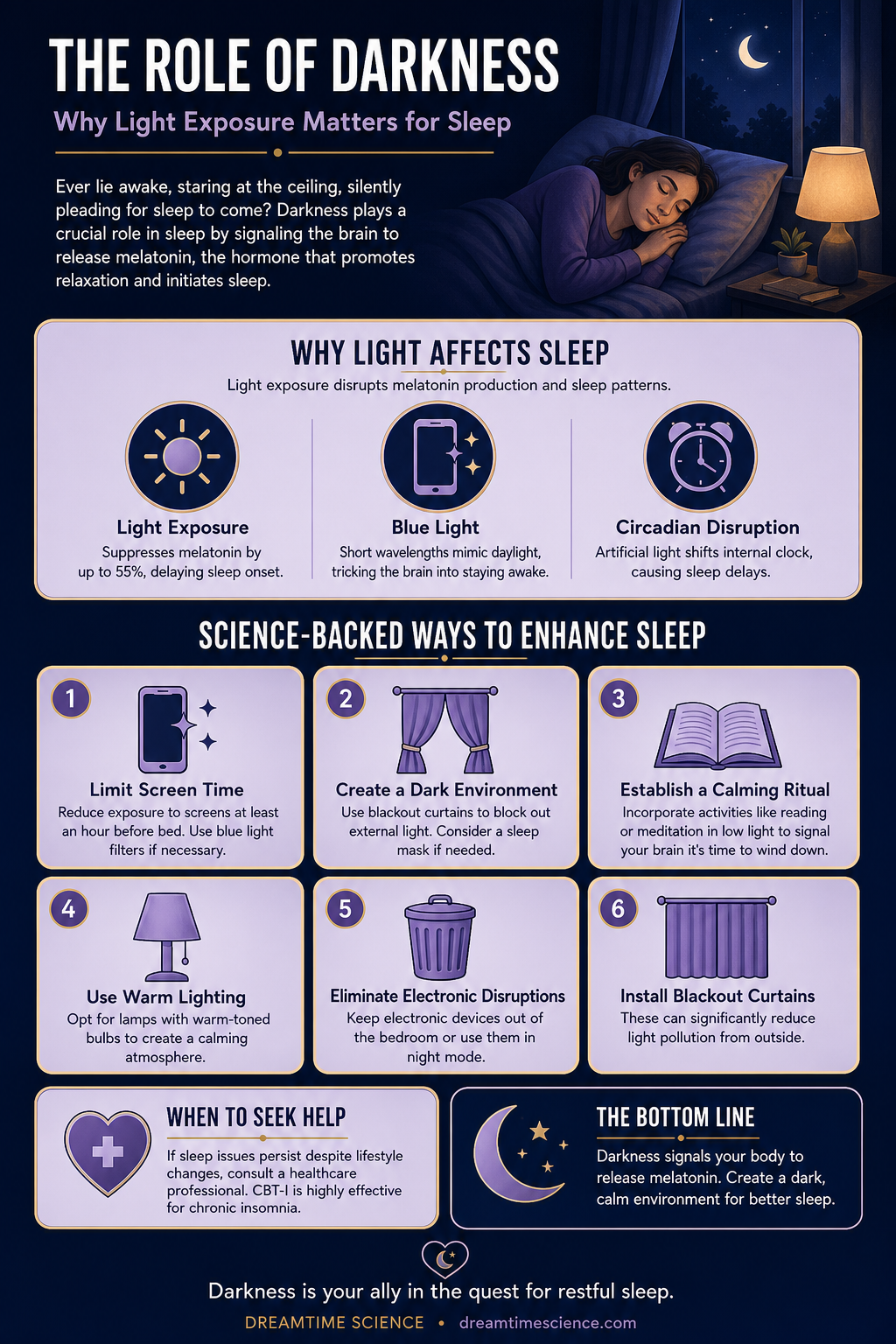
The short answer: Darkness plays a crucial role in sleep by signaling the brain to release melatonin, the hormone that promotes relaxation and initiates sleep. Exposure to light, especially blue-enriched light, can suppress melatonin production by as much as 55%. Creating a dark environment, like using blackout curtains, is essential for establishing a healthy sleep-wake cycle and optimizing melatonin release.
Ever lie awake, staring at the ceiling, silently pleading for sleep to come? You might be surprised to learn that the answer to your restless nights could be as simple as flipping a switch. Not just any switch, though. The dimmer switch of darkness itself.
In our brightly lit world, darkness often feels like an afterthought. But what if I told you that embracing the dark might just be the key to unlocking your deepest slumber?
Key takeaways
- Darkness signals your brain to release melatonin, a hormone that promotes sleep.
- Limiting screen time before bed can help your body naturally produce melatonin.
- Creating a dark sleep environment, like with blackout curtains, supports better sleep.
- Blue light from screens can disrupt your circadian rhythm and delay sleep.
- Establishing a calming bedtime routine in low light can prepare your body for rest.
The Dance of Light and Dark
The sun rises, and the world awakens. Sunsets whisper goodnight, wrapping the earth in a gentle cloak of darkness. This dance between light and dark is the stage on which our sleep plays out.
Your circadian rhythm, the internal clock ticking away inside, is deeply attuned to this cosmic ballet. Light exposure, or the lack of it, cues your body to either rise and shine or slip into the serene embrace of slumber. This rhythm is like an internal conductor orchestrating sleep and wakefulness, as explored in Circadian Rhythms 101: How Your Body's Internal Clock Controls Sleep.
Darkness isn’t just a backdrop for sleep; it’s a biological cue. A signal for your brain to release melatonin, the hormone of darkness that lulls you into dreamland. Without darkness, your body's natural sleep signals may become little more than whispers.
Melatonin: The Night’s Conductor
Enter melatonin, the unsung hero of the night. A hormone that thrives in darkness, guiding your body into restful sleep. Think of it as the conductor of your nocturnal symphony, orchestrating the rhythms of rest.
Melatonin’s production hinges on the absence of light. When darkness falls, your brain releases this sleep-inducing hormone. But a world flooded with artificial light can disrupt this natural process. Light exposure, especially from screens, can trick your brain into believing it’s still daytime, delaying melatonin’s soothing call. A 2014 study in the Journal of Clinical Endocrinology & Metabolism found that blue-enriched light can suppress melatonin by 55% compared to dim light.
Imagine your body as a well-tuned orchestra. If light is the baton of disruption, darkness is the gentle hand that sets the tempo right.
What This Means for You
To harness melatonin's full potential, consider adjusting your evening routine:
- Limit screen time: Reduce exposure to screens at least an hour before bed. Use blue light filters if necessary.
- Create a dark environment: Use blackout curtains to block out external light. Consider a sleep mask if needed.
- Establish a calming pre-sleep ritual: Incorporate activities like reading or meditation in low light to signal your brain that it’s time to wind down.
The Blue Light Dilemma
Ah, blue light – the modern villain of the sleep saga. It’s the light that keeps your screens aglow and your mind alert, long past bedtime. But why does this particular hue hold power over slumber?
Blue light, with its short wavelengths, mimics the brightness of daytime. It’s a beacon for your circadian rhythm, telling it to stay awake. While this is beneficial during daylight hours, come nightfall, it spells trouble. Blue Light Before Bed: Myth or Reality? What Research Actually Shows delves deeper into this topic.
Your screen, a portal to the world, becomes a double-edged sword. Its blue light can stall melatonin, pushing back the arrival of sleep like a delayed train you can't quite catch. A 2011 study from Harvard Medical School revealed that blue light can shift circadian rhythms by about three hours, creating an effect similar to jet lag.
When Nighttime Becomes Daytime
Consider your bedroom, a sanctuary turned stage. The glow of streetlights sneaks through curtains; electronic gadgets flash persistently. Darkness, real and enveloping, feels elusive in a world that never truly sleeps.
Yet, embracing darkness means more than just turning off the lights. It’s about creating a space where night reigns. Thick curtains, dimmed screens, and muted alarms become your allies.
Imagine it: a sanctuary where the outside world's brightness fades, and only the gentle caress of darkness remains.
What This Means for You
Transform your bedroom into a sleep haven:
- Install blackout curtains: These can significantly reduce light pollution from outside.
- Eliminate electronic disruptions: Keep electronic devices out of the bedroom or use them in night mode.
- Use warm lighting: Opt for lamps with warm-toned bulbs to create a calming atmosphere.
Rituals in the Dark
Picture this: a nightly ritual, simple yet profound. As you dim the lights, you cue your body to unwind. A warm bath, a book by lamplight, or a quiet moment of reflection. All under the soft glow of a single, warm-toned bulb.
Here, darkness is a partner, inviting calm. It whispers to your busy mind to slow, to pause. It gently nudges your internal clock toward rest. A practice not just of removing light but of welcoming the night.
The darkness doesn’t demand; it offers an invitation. To listen. To breathe. To dream.
Historical Context: The Evolution of Artificial Lighting
The relationship between humans and artificial light has evolved dramatically over the centuries. The invention of the electric light bulb by Thomas Edison in 1879 revolutionized our interaction with light. Before this, people relied on natural light cycles, with activities largely dictated by the sun's rise and fall. This shift extended waking hours and altered sleep patterns, contributing to the modern challenge of maintaining a healthy sleep-wake cycle. The pervasive use of artificial lighting has been linked to increased exposure to blue light, further complicating the natural production of melatonin and our overall sleep quality.
Conclusion
The next time you find yourself tossing and turning, think of darkness not as an absence but as a presence. A presence that signals rest and renewal. Your body knows the rhythm. With a little help from the night, sleep isn't just a destination, but a journey. One where the role of darkness is not just important; it’s essential.
Want to experience these sleep science concepts with our soothing narration and ambient soundscapes? Check out our latest video on YouTube @dreamtimescience.
Frequently Asked Questions
Why is darkness important for sleep?
Darkness signals the brain to produce melatonin, the hormone responsible for promoting sleep. A 2014 study in the Journal of Clinical Endocrinology & Metabolism found that exposure to light at night can significantly reduce melatonin production, disrupting sleep patterns.
How does blue light affect sleep?
Blue light, especially from screens, can suppress melatonin production and shift circadian rhythms. According to a Harvard study, it can delay sleep onset by several hours, simulating the effects of jet lag.
Can artificial light impact sleep quality?
Yes, artificial light can interfere with the body’s natural sleep-wake cycle. A 2013 study in The Journal of Neuroscience found that exposure to artificial light can reduce sleep quality and increase the likelihood of waking during the night. This is further supported by research indicating that even low levels of light can affect sleep architecture, altering the duration of REM and deep sleep stages, which are crucial for cognitive function and physical health. For more on sleep architecture, see Sleep Architecture Across Your Lifespan: How Sleep Changes as You Age.
What are some ways to reduce light exposure before bed?
You can reduce light exposure by using blackout curtains, avoiding screens at least an hour before bed, and opting for warm-toned lighting in the evening.
Does melatonin supplementation work?
Melatonin supplements can be effective for some individuals, particularly those with disrupted sleep cycles. However, it's best to consult with a healthcare provider before starting any supplementation. More insights can be found in Does Melatonin Actually Work? What Science Says About This Popular Supplement.
Fall Asleep to a Science Lecture
Put tonight's reading into practice — pick a gentle, softly-narrated episode and let the Professor talk you to sleep.
 Tonight's episodeDNA's Silent Blueprint: Uncovering Life’s Deepest Secrets
Related articles

The Role of the Pineal Gland: Understanding Melatonin Production
The pineal gland, often called the "third eye," produces melatonin, the hormone that signals the body to wind down and prepare for sleep. Exposure to blue light, like…

Deep Sleep vs Light Sleep: Which Matters More?
Both deep and light sleep are essential components of a complete sleep cycle, contributing uniquely to physical and cognitive restoration.
REM Sleep Explained: Why This Stage Matters Most
REM sleep is the brain's nightly maintenance cycle for emotional processing and memory consolidation. During REM, your brain is nearly as active as when awake,…